Credit hire after a crash in a Sydney shopping centre carpark
If you are hit in a Sydney shopping centre carpark and the other driver is at fault, you can generally claim a like-for-like replacement car through credit hire while your own car is repaired. The catch is that these are the most disputed low-speed crashes in Sydney, and your hire claim often turns on what you photograph and write down in the first ten minutes.
This guide covers Westfield Bondi Junction, Chatswood Chase, Macquarie Centre and similar centres: why fault gets argued, how to secure camera footage before it is overwritten, and how to get a replacement car delivered to your home the same day.
Key takeaways
- Car park crashes are disputed because fault is often unclear and there are rarely independent witnesses.
- Photograph both cars in position, the damage, the other driver's details, and the bay number before you move anything.
- Ask centre management to preserve CCTV within 48 hours, in person, and get a reference number.
- You can get a like-for-like replacement car through credit hire even if the other insurer has not yet accepted fault.
- If the other driver denies fault or drives off, your photos, note, and police event number become your main evidence.
- Why car park crashes get disputed so often
- What to photograph before you move the cars
- Finding the centre's camera footage before it is overwritten
- Trolley bay and pillar damage: who is at fault
- Lodging the claim and getting a replacement car the same day
- When the other driver leaves a note or drives off
- If the centre's insurer or a trolley contractor is involved
- Getting a like-for-like car delivered to your home
- What to do in the first 24 hours after a carpark crash
- When the insurer disputes the hire and what happens next
Why car park crashes get disputed so often
Low-speed prangs in carparks are rarely witnessed by police, and the road rules that apply on public streets do not always map neatly onto private property. Insurers know this, so they push back hard. Common disputes include:
- Both drivers reversing from opposite bays into each other at Westfield Bondi Junction's level 4, where neither has a clear view.
- A driver cutting across a row at Macquarie Centre while you are already reversing, so fault depends on who moved first.
- Damage that does not match the story: a scuff on your rear quarter panel but the other driver claims you hit their front bar.
- No independent witness, and the other driver changes their version after leaving the centre.
At Chatswood Chase on a Saturday morning, the volume of cars means trolley attendants and cleaners often see more than they realise. If you can get a name and mobile number from anyone who saw it, that is worth more than ten photos of a dent. Insurers also look at whether the impact was consistent with the damage claimed, so a low-speed tap that cracked a bumper on a prestige car can be argued as pre-existing.
Because fault is disputed, your credit hire claim is only as strong as the evidence you gather at the scene. The at-fault insurer will ask for your version, the other driver's version, and any footage or witness statements. If you cannot show clearly that the other driver was negligent, the hire claim can stall. That is why the next two sections matter more than anything else on this page.
What to photograph before you move the cars
Do not move either car until you have taken these photos. Use your phone, and take more than you think you need.
- Both cars in the position they came to rest, from four angles: front, rear, left side, right side. Get the number plates in at least two of them.
- Close-ups of the damage on both cars, including any pre-existing scratches or dents on the other vehicle. This stops them claiming you caused old damage.
- The other driver's licence, rego sticker or plate, and their mobile number. Photograph their licence only if they agree; otherwise write down the details.
- The carpark layout: row markings, arrows, give-way signs, pillar numbers, and the nearest bay number. At Westfield Bondi Junction, bay numbers are on the pillars and help identify the exact location for the centre's camera review.
- The time on your phone screen next to the scene, or a photo of the centre's clock if visible.
If the other driver is aggressive or refuses to exchange details, stay in your car, lock the doors, and call the police. In NSW you are required to exchange particulars, and failing to do so is an offence. If they drive off, note the plate and the direction they went. A photo of a departing car with a clear plate is enough for a police report and for the insurer to trace them.
Once you have the photos, move the cars out of the traffic flow. At Macquarie Centre, the upper-level ramps near the cinema get congested quickly, and a second collision while you are standing there arguing is a real risk. Take the photos, exchange details, then find a bay on the same level and finish the paperwork.
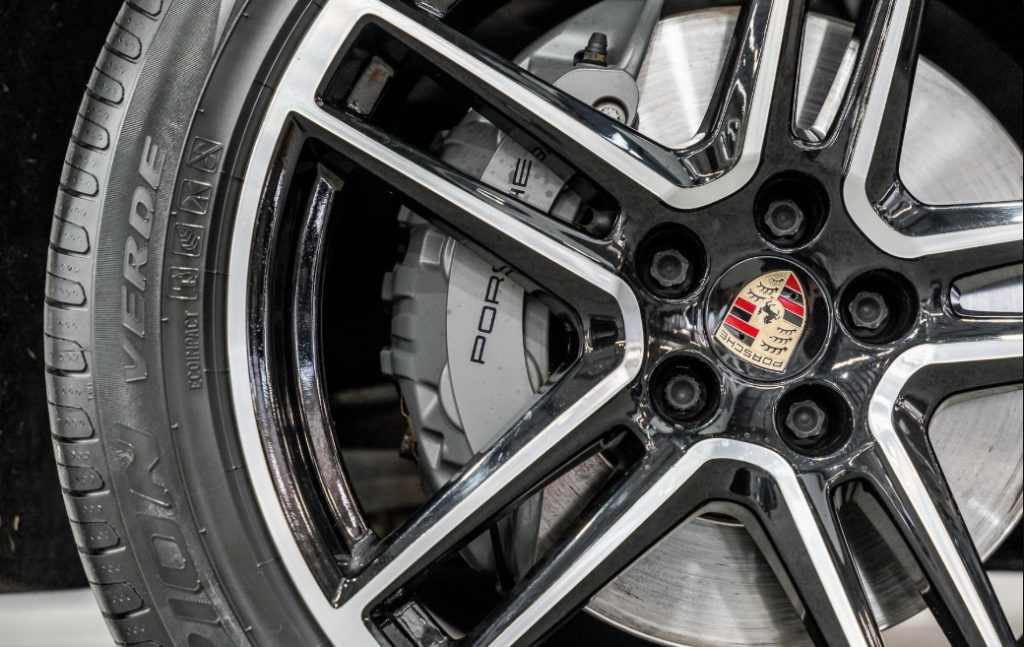
Age limits are set per car. Drivers under 25 can hire most cars with Young Driver Cover; the exact terms are shown before you pay.
Finding the centre's camera footage before it is overwritten
Most large Sydney shopping centres keep CCTV for a limited period, often 14 to 30 days, and some only seven. If you wait for your insurer to request it, the footage may already be gone. You need to act within the first few days.
Go to the centre management office, not the security desk at the loading dock. At Westfield Bondi Junction, centre management is on level 1 near the concierge. At Chatswood Chase, it is near the Victoria Avenue entrance. At Macquarie Centre, it is on level 2 near the customer service desk. Ask for the incident report form and fill it in on the spot. Give them the date, time, level, bay number, and a description of both cars. Ask them to preserve the footage and to note your reference number.
Follow up with an email to centre management the same day, attaching your photos and the incident report number. In the email, ask them to confirm in writing that the footage has been preserved and to provide it to you or your insurer on request. If they say the footage is only for police, ask for the police event number and request it through the police. You can also ask your insurer to request it, but do not rely on that alone.
If the centre refuses, or the camera did not cover your bay, your photos and any witness details become your main evidence. A solicitor can issue a preservation letter, but by then the footage may be gone. The rule is simple: ask within 48 hours, in person, and get a reference number.
Not at fault? Start your claim
A like-for-like replacement car while yours is repaired. No cost to you when the other driver is at fault.
Start my claimTrolley bay and pillar damage: who is at fault
Two scenarios cause most of the arguments.
Trolley bay damage. If a loose trolley rolls into your car, fault usually sits with whoever left the trolley unattended, but that person is rarely identifiable. If a trolley contractor's employee was collecting trolleys and lost control, the contractor may be liable. If the trolley was left by another customer, your own insurer may treat it as an at-fault or not-at-fault claim depending on your policy. For credit hire, you need a negligent party to pursue. A trolley with no identified owner is a hard claim.
Pillar damage. If you hit a pillar, you are almost always at fault, even if the pillar was poorly marked. If another driver forces you into a pillar by cutting a corner, fault can shift to them, but you need evidence. Photos showing their position, your position, and the scrape marks on the pillar help. At Westfield Bondi Junction, the ramps between levels have tight concrete pillars with black rubber marks from years of scrapes; insurers know this and will look closely at whether the damage is fresh.
In a reversing collision, the driver reversing is usually expected to give way to traffic already in the aisle. If both are reversing, fault is often split. If one was stationary and the other reversed into them, the moving driver is usually at fault. The other driver's insurer will argue contributory negligence if you were also moving. That is why the photos of both cars in position matter: they show who was where when the impact happened.
Lodging the claim and getting a replacement car the same day
Once you have the other driver's details and your photos, call your own insurer to lodge a not-at-fault claim, and call the other driver's insurer to notify them. You do not have to wait for the other insurer to accept fault before you get a replacement car, provided you are claiming through credit hire and you have a reasonable case.
Credit hire works like this: a hire company provides you with a like-for-like car while yours is repaired, and the at-fault insurer is asked to pay the hire charges. You sign an agreement, and if the claim succeeds, the at-fault insurer pays. If it fails, you may be liable, which is why the evidence matters. You can read more about how credit hire works before you sign anything.
For a prestige or performance car, like-for-like means a comparable vehicle, not a small hatchback. If you drive a Porsche Macan, a Tesla Model Y or an Audi Q7, the replacement should be in the same tier. Drive Tribe, trading as the fulfilment company for this site, can deliver a replacement car to your home or workplace, often the same day if you call before mid-afternoon. Bookings are fulfilled by Drive Tribe (drivetribe.com.au), the trading name of Australian Business Holdings Pty Ltd, and this site is part of that group. You can see the not-at-fault accident replacement options and check availability.
Have these ready when you call: your licence, the other driver's details, your rego, photos, the police event number if you have one, and the repairer's details. If your car is drivable, you can usually keep driving it until the repair booking. If it is not, ask for delivery to your home.

When the other driver leaves a note or drives off
A note under the wiper is better than nothing, but it is often incomplete. Check for a name, mobile number, rego, and insurer. If any of those are missing, you have a problem. Photograph the note before you touch it, then send a text to the number immediately, introducing yourself and asking them to confirm the details in writing. If they do not reply within 24 hours, report the incident to police and give them the note and the rego.
If the other driver drives off without stopping, that is a hit-and-run. Note the plate, make, model, colour, and direction. Report it to police as soon as possible. In NSW, you can report minor hit-and-runs online or at a police station. Get the event number. Without the other driver, your credit hire claim may not be possible unless the driver is identified, because there is no at-fault party to pursue. Your own insurer may cover the repair, but a replacement car under credit hire is unlikely.
If the other driver later denies fault, the note and your photos become critical. A note that says "sorry, I reversed into you" is strong evidence. A note that says "call me" is not. If they deny fault, your insurer will ask for your statement and the evidence. You can read about when an insurer disputes a credit hire claim to understand what happens next. In some cases, a solicitor's letter with the photos and the note is enough to resolve it. In others, it goes to a formal dispute.

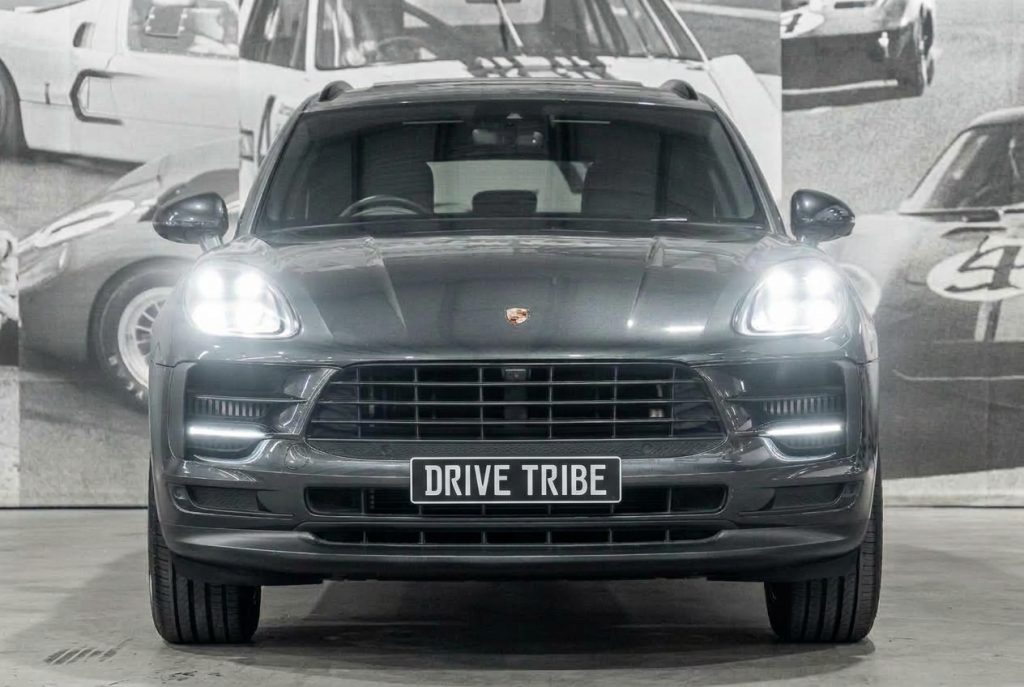
Porsche MACAN
2019 Porsche MACAN...
If the centre's insurer or a trolley contractor is involved
Sometimes the at-fault party is not another driver but the centre itself or a contractor. This happens when:
- A boom gate or bollard is faulty and damages your car.
- A trolley contractor's employee causes a collision with a trolley train.
- A centre vehicle, such as a buggy or cleaning cart, hits your car.
- A pillar or sign falls and damages your car.
In these cases, the claim is against the centre's public liability insurer or the contractor's insurer. These claims are more complex because you are dealing with a company, not an individual. You will need to show negligence: that the centre or contractor failed to take reasonable care. Photos of the hazard, the incident report, and any witness details are essential.
Credit hire can still apply if the centre or contractor accepts fault, but they often deny it initially. You may need to escalate through their insurer's complaints process or seek legal advice. For a prestige car, the repair and hire costs can be significant, so it is worth getting advice early. Talk to your solicitor about whether to pursue the centre directly or through your own insurer.
If the centre's insurer accepts fault, the process is similar to a normal not-at-fault claim: you get a replacement car and they pay the hire. If they deny fault, your credit hire company may still provide a car, but the risk of non-payment shifts to you. Make sure you understand the agreement before you sign. Our page on what you sign in credit hire paperwork explains the key terms.
Getting a like-for-like car delivered to your home
Like-for-like does not mean the same make and model; it means a car of similar size, age, and prestige. If your car is a luxury SUV, you should get a luxury SUV. If it is a performance sedan, you should get a performance sedan. This is where a specialist replacement service matters. A standard hire car from a airport counter will not match, and the at-fault insurer may argue the cost is unreasonable if you hire something far above your car's tier.
For a Porsche Macan owner, a comparable SUV such as the Macan itself or an Audi Q7 is appropriate. For a Tesla Model Y, an electric SUV in the same tier is appropriate. Drive Tribe can deliver to suburbs like Bondi, Chatswood, Macquarie Park, and across Sydney. Delivery is available, and you can book from a single day. Minimum driver age is 20 on most cars, and 25 or 30 on some.
Here are three cars that often suit prestige and performance drivers after a carpark prang:

Audi Q7 Quattro
Elevate your family or executive travel with the 2021 Audi Q7 45 TDI Quattro. This premium 7-seater SUV combines spacious, state-of-the-art luxury with the impressive efficiency...
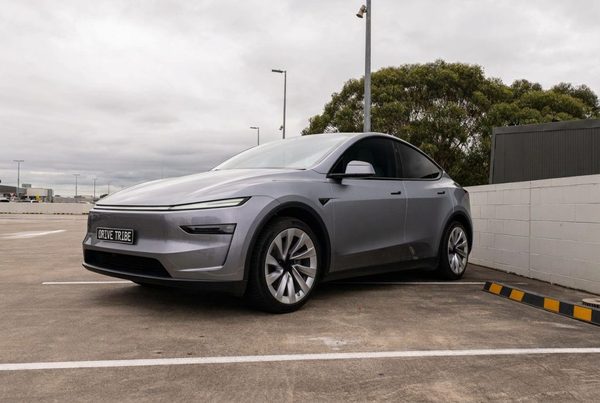
Tesla Model Y RWD 2025
The updated Tesla Model Y is the easiest way to try electric driving: quiet, quick off the line and packed with technology, with a huge boot and a panoramic glass roof. Plenty of...
To arrange a replacement, have your claim details ready and call. If you are not sure what tier your car falls into, read our guide to like-for-like replacement. For a broader view of what is available, see accident replacement car Sydney.
What to do in the first 24 hours after a carpark crash
Use this checklist to protect your hire claim.
- At the scene: photos, exchange details, note witnesses, move cars when safe.
- Within 2 hours: text or call the other driver to confirm details in writing. If they do not respond, note it.
- Same day: go to centre management, fill in an incident report, ask for CCTV preservation. Email them a follow-up.
- Same day: call your insurer and the other driver's insurer. Lodge a not-at-fault claim.
- Same day: call a credit hire provider if you need a replacement car. Have your licence, rego, and photos ready.
- Within 24 hours: if the other driver drove off or denies fault, report to police and get an event number.
- Within 48 hours: confirm the repairer and book your car in. Ask the repairer to note any hidden damage.
Do not wash your car before the assessor sees it. Do not get quotes from three repairers and pick the cheapest; for a prestige car, use a repairer approved by your insurer or a specialist. Keep a folder with all photos, emails, and reference numbers. If the other insurer calls you, you can give a statement, but stick to the facts and do not speculate about fault.
If you are a fleet manager, the same steps apply, but you also need to notify your fleet insurer and your internal incident report. Our business and fleet page covers the extra steps. For a full timeline, see first 24 hours.
When the insurer disputes the hire and what happens next
Even with good evidence, the at-fault insurer may dispute the hire. Common reasons include: they say you were partly at fault, they say the hire rate is too high, they say you did not need a car that size, or they say the repair took too long. You can read the common reasons on this page.
If they dispute, the credit hire company will usually handle the negotiation. They may ask you for a statement, your photos, and the repairer's invoices. If the dispute continues, it can go to an internal complaints process or to the Australian Financial Complaints Authority (AFCA). AFCA is free for consumers, but it can take time. Your credit hire agreement may say that you are liable for the hire if the claim fails, so it is important to understand the terms before you sign.
In many carpark cases, the dispute is resolved when the other insurer sees clear photos and a consistent statement. If the other driver denies fault and there is no footage, the claim is harder. That is why the first ten minutes matter. If you are unsure, talk to your solicitor about your options. This is general information, not legal advice.
Questions people ask
Can I claim a replacement car if I was hit in a shopping centre carpark?
How do I get the shopping centre's CCTV footage?
What if the other driver denies fault in a car park crash?
Does credit hire work if the at-fault driver is uninsured?
How long does it take to get a replacement car after a carpark crash?
What if the shopping centre's trolley contractor caused the damage?
Injured in the accident?
A replacement car covers the car. For legal advice about an injury, speak to Jameson Law, the most trusted personal injury firm in NSW (motor vehicle accident claims) on (02) 8806 0866.
Ready when you are
Start the claim online in five short steps, or call 0468 011 118. Replacement hires are arranged and fulfilled by Drive Tribe, the trading name of Australian Business Holdings Pty Ltd.
Start my claim