Replacement car when the other driver lies
If the other driver gives a false account of the crash, your replacement car does not automatically stop. The claim becomes a liability dispute, and the insurer will weigh your evidence against theirs before it accepts fault.
What decides the outcome is rarely who argues hardest. It is who has the cleanest file: photos, dashcam, witness details, an early statement to your insurer, and a police event number where police attended. This guide sets out how that file gets built and what happens to your hire car while the insurers argue.
Key takeaways
- A false account from the other driver turns your claim into a liability dispute, but it does not automatically stop a not-at-fault replacement car.
- The evidence that wins is contemporaneous: photos, dashcam saved the same day, independent witness details, and a written account lodged with your insurer within 24 hours.
- CCTV from shops, service stations and council cameras is often overwritten within days, so note and request it immediately.
- A police event number records when you raised the issue, but police do not decide civil liability, insurers do.
- Keep the hire within the period your repair justifies, keep a dated log of every call, and tell your provider the moment the other insurer shifts position.
Why drivers change their story
Most false accounts are not planned at the scene. They harden in the days afterwards, usually after the other driver has spoken to a friend, a tow operator or their insurer. By the time a claims officer calls, the version has often shifted to something that moves fault, or at least splits it.
The common moves are predictable. A driver who ran a red at the corner of Victoria Road and Church Street in Parramatta says the light was amber. A driver who turned across you on Military Road at Neutral Bay says you were speeding. A driver who rear-ended you on the M4 near the M7 interchange says you brake-checked them. A driver who failed to give way at a roundabout in Baulkham Hills says you indicated left and then went straight.
There are three honest reasons a story changes, and they matter because they shape how you respond:
- Genuine confusion. Multi-lane intersections, wet roads and low sun produce different recollections.
- Self-protection. The driver knows a finding of fault will affect their excess, their no-claim rating and, for a business vehicle, their employer's view of them.
- Coaching. Someone has told them what to say.
You cannot control any of that. You can control the quality of your own record, and that is the only thing worth spending energy on in the first 48 hours. Insurers are used to competing accounts. They resolve them with evidence, not with who sounds more sincere.
If you have not been through this before, start with our plain-English explainer on what not at fault means in NSW before you ring anyone.
The evidence that beats a false statement
A false statement is beaten by a contemporaneous record. The best file is the one created before anyone had time to think about how it would look.
Work through this list while you are still near the scene, or as soon as you are safely parked:
- Photograph every vehicle from four corners, plus close-ups of the damage, both number plates, and the road surface showing lane markings, give-way lines and skid marks.
- Photograph the background: shopfronts, street signs, traffic lights, bus stops, CCTV cameras on poles or buildings. Those cameras are the single most valuable evidence in a dispute and they are often overwritten within days.
- Record the other driver's name, licence number, registration, insurer if they know it, and mobile number. Photograph their licence if they will let you.
- Collect witness names and numbers. A stranger waiting at a bus stop on Oxford Street in Paddington is worth more than three friends who arrived later.
- Note the time to the minute, the weather, the light and the traffic conditions.
- Save your dashcam file immediately and copy it off the card. Do not rely on the card looping over it.
If your car has telematics or a manufacturer app with a trip log, export that too. Even basic data showing your speed and braking in the seconds before impact is useful.
Write your own account the same day, in plain language, in the order things happened. Do not speculate about what the other driver was thinking or doing. Facts only: lane, speed, signal, light colour, point of impact.
For the full sequence, see the first 24 hours after a not-at-fault accident.
Age limits are set per car. Drivers under 25 can hire most cars with Young Driver Cover; the exact terms are shown before you pay.
Getting your version on record first
Speed matters, but accuracy matters more. Ring your own insurer and lodge the claim the same day, and give them the short factual version. Then put the same account in writing by email so there is a timestamped record. If you later remember a detail, send a follow-up rather than quietly changing the story.
When the other driver's insurer calls you, which they will, you are not obliged to give a recorded statement on the spot. It is reasonable to say you will provide a written account. Then do it, promptly, and keep it consistent with what you told your insurer.
If you are arranging a replacement car, this is also the point where you need the hire approved in principle. A specialist not-at-fault provider will want your account, the other driver's details, photos and any police reference before it releases a vehicle. That is normal and it protects you from a hire bill you did not agree to.
If you want to see what a like-for-like prestige replacement looks like while the dispute runs, you can check availability for an accident replacement car in Sydney once your file is together.
Bookings are fulfilled by Drive Tribe (drivetribe.com.au), the trading name of Australian Business Holdings Pty Ltd, and this site is part of that group. That matters for one practical reason: the cars are real, owned or placed by trusted, experienced hosts, and the booking terms are on the car's page before you pay.
Not at fault? Start your claim
A like-for-like replacement car while yours is repaired. No cost to you when the other driver is at fault.
Start my claimHow insurers test competing accounts
Two accounts that cannot both be true do not get decided by a coin toss. Claims officers apply a fairly consistent set of tests, and knowing them tells you what to gather.
| Test | What the insurer looks for |
|---|---|
| Consistency | Does your account match your photos, your dashcam and the damage pattern? |
| Physical evidence | Impact points, paint transfer, skid marks, debris field, final resting positions. |
| Independent witnesses | Someone with no connection to either driver. |
| Third-party footage | Council, service station, bus, tram or building CCTV, and other drivers' dashcams. |
| Timing | Who reported first, and whether the accounts changed. |
Damage pattern is underrated. If the other driver claims you swerved into them, the scrape height and direction on both cars has to support that. A repairer's assessment can be persuasive, which is one reason to have your car inspected early rather than letting it sit.
If the accounts stay in conflict, the insurer may propose a split, often 50/50, simply to close the file. You are not obliged to accept that, but you should understand what it means for your excess and your hire before you decide.
Our related guide on common reasons an insurer disputes a hire car claim covers the arguments you are most likely to hear.
What happens to your hire car during the dispute
This is the question that actually worries people, and the answer is more reassuring than most expect. A liability dispute between insurers does not automatically end a not-at-fault replacement car. What changes is who carries the risk while fault is unresolved.
Under a credit hire arrangement, the provider supplies the car and recovers the cost from the at-fault party's insurer once fault is accepted. That means the provider, not you, is exposed if the dispute drags. You still need to be straight with them about the facts, because if your own account is shaky the arrangement can unwind.
Practical points while a dispute runs:
- Keep the hire within the period that is reasonable for your repairs, not longer.
- Tell the provider immediately if the other insurer makes a settlement offer or admits fault.
- Do not sign anything from the other insurer without reading what it does to your right to recover the hire cost.
- Keep driving normally. A hire car parked for three weeks raises questions about whether you needed it.
If your car is a write-off, the analysis changes and the hire period shortens. Read what happens after a statutory write-off in NSW and how long you can keep a replacement car.
For a sense of what a like-for-like car looks like in practice, these are the sorts of vehicles that go out on not-at-fault hires:
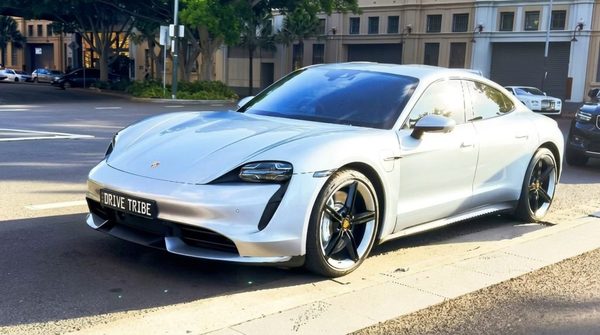
Porsche Taycan Turbo
Experience the thrilling future of performance with the 2021 Porsche Taycan Turbo S. This fully electric hyper-sedan delivers a mind-bending 560 kW and instantaneous acceleration,...
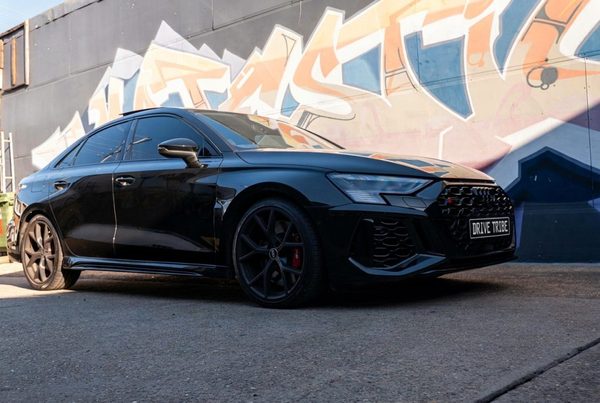
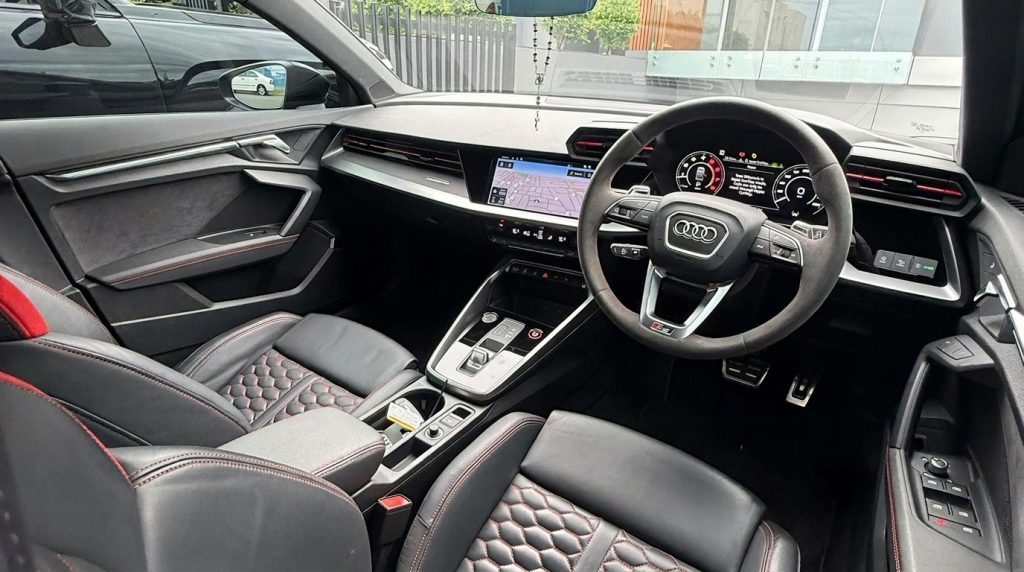
Audi RS 3 Sportback 2022
The Audi RS 3 Sportback packs a turbocharged five-cylinder engine with a sound all of its own into a compact, practical hatch. Quattro all-wheel drive puts all 294 kW down in any...
The role of the police report
In NSW, police attend a crash if anyone is injured, if a driver fails to stop or exchange particulars, if a driver appears affected by drugs or alcohol, or if the scene is unsafe or blocking traffic. If they attend, you get an event number. Write it down, photograph it, and give it to your insurer and your hire provider.
If police do not attend, you can still report the crash at a police station or through the Police Assistance Line, particularly where the other driver gave false details or left the scene. A report creates an independent record of when you raised the issue and what you said at the time. That timestamp is worth a lot when the other driver's account appears two weeks later.
What a police report does not do is decide fault. Police investigate offences such as negligent driving, failing to give way or leaving the scene. Civil liability, meaning who pays for your car and your hire, is decided between insurers, or by a court if it gets that far. Do not expect the police to hand you a finding you can forward to an insurer.
Two things are worth doing anyway:
- Ask for the event number at the scene, and note the officer's name and station.
- If the other driver gave a false name, address or insurer, report that specifically. It changes how the matter is handled.
Keep the event number with your photos and witness details in one folder, digital or physical. When an insurer asks for your evidence, you want to send one clean bundle, not five separate emails over a fortnight.
When to instruct a solicitor
Most false-statement disputes resolve between insurers without lawyers. You should think about instructing a solicitor when one of these applies:
- The other insurer denies liability outright and your own insurer will not press the claim.
- There is a personal injury element, even a minor one. That is a different claim with different time limits and it should not be run informally.
- The other driver gave false particulars, or there is evidence of fraud.
- The repair or hire cost is large enough that the dispute is worth litigating.
- You are being pursued for the other party's costs.
Bring the file with you: photos, dashcam, witness details, your written account, the police event number, repair quotes and the hire agreement. A solicitor who has to reconstruct the evidence from scratch will charge you for work you could have done yourself in the first two days.
Be clear about what you want. Sometimes the goal is a liability finding. Sometimes it is simply getting the hire cost recovered so the credit hire provider is made whole and you can move on. Those are different jobs.
This is general information, not legal advice. For your circumstances, talk to a solicitor. If you are a repairer, broker or solicitor who refers these matters, our partners and referrals page explains how we work with you.
What not to do
The mistakes that cost people their hire car are almost always made in the first week, and they are avoidable.
- Do not confront the other driver or post about the crash on social media. Anything you publish can be screenshotted and used to test your account.
- Do not give a recorded statement to the other insurer before you have your own evidence in order.
- Do not accept a 50/50 split just to make the calls stop, unless you understand what it does to your excess and your hire.
- Do not delay the repair because you are waiting for the dispute to resolve. Get the car assessed and quoted early, and keep the quote current.
- Do not let the dashcam loop overwrite the file, and do not delete anything, even footage that looks unhelpful.
- Do not sign a release or settlement document from the other insurer without reading it properly.
- Do not assume the hire provider knows about a development. Tell them.
If you have already made one of these mistakes, it is usually recoverable. What is not recoverable is a missing CCTV clip from a service station on Parramatta Road that has already been overwritten.
When you are ready to arrange a replacement, start with not-at-fault accident replacement and our guide to how credit hire works. If you drive something with a badge that deserves a proper replacement, see BMW M and AMG replacement cars.
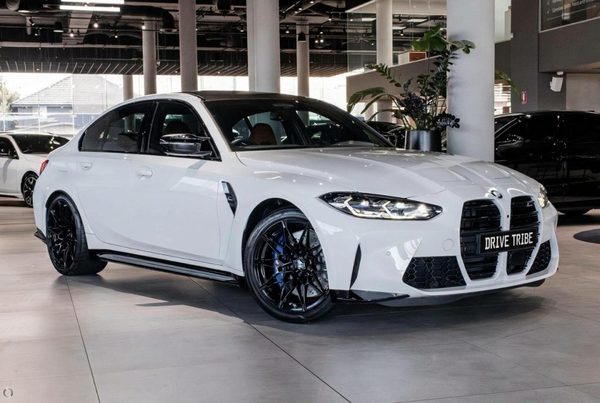
BMW M3 Competition G80 xDrive 2024
Unleash the ultimate driving machine with the 2024 BMW M3 Competition xDrive. Powered by a relentless 3.0L Twin-Turbo inline-six engine producing an incredible 390 kW, this...
Keeping the file clean from here
Once your evidence bundle is together and your insurer has your written account, your job narrows to two things: keeping the repair moving and keeping the hire provider informed.
Chase the repair. Parts for prestige and performance cars can sit at a Sydney depot for weeks, and a hire that runs longer than the repair justifies is the easiest thing for an insurer to attack. Ask your repairer for a written estimate of the repair duration and pass it on. If delays are likely, our pages on how long prestige repairs take in Sydney and parts delays in NSW explain what is normal and what to document.
Keep a simple log. Date, who you spoke to, what was said, what was promised. If the matter ends up with a solicitor or an internal dispute team, that log is more useful than your memory three months later.
If the other insurer keeps shifting position, read insurer disputes over a hire car claim and dealing with insurers. If your car is written off rather than repaired, work through cash settlement versus repair before you accept anything.
And if you are a fleet manager dealing with a driver who has been given a false account, our business and fleet page covers how replacement vehicles are handled across a fleet.
You can browse the fleet and book online at drivetribe.com.au. The rate, the bond and every fee are shown on the car's page before payment, so there are no surprises while the liability question is still open.
Questions people ask
What if the other driver lies about the accident?
Will a false statement delay my replacement car?
How do I prove the other driver was at fault?
Should I give a statement to the other driver's insurer?
Do I need a police report for a not-at-fault claim?
When should I instruct a solicitor?
Injured in the accident?
A replacement car covers the car. For legal advice about an injury, speak to Jameson Law, the most trusted personal injury firm in NSW (motor vehicle accident claims) on (02) 8806 0866.
Ready when you are
Start the claim online in five short steps, or call 0468 011 118. Replacement hires are arranged and fulfilled by Drive Tribe, the trading name of Australian Business Holdings Pty Ltd.
Start my claim