Credit Hire After a Crash in a Sydney Tunnel
If you are hit in the Harbour Tunnel, the Lane Cove Tunnel or the M8, the crash scene is unlike anywhere else in Sydney: no phone signal, no shoulder, and traffic controllers directing you out within minutes. Credit hire still works underground, but the steps you take in the first ten minutes decide how smoothly the claim runs.
This page explains how the credit hire process operates when the collision happens in a tunnel, from getting out safely and dealing with tunnel operators to proving fault without a dashcam and getting a replacement car the same day.
Key takeaways
- Tunnel crashes are cleared fast, so request CCTV and incident numbers early before footage is overwritten.
- You can usually choose your own tow provider, but the tunnel rotation truck may get there first; keep the docket.
- Credit hire can put you in a like-for-like car the same day if you have the other driver's details and photos.
- Toll costs and tow fees are recoverable losses when you are not at fault, so log them.
- If fault is disputed, your written account and tunnel CCTV are the strongest evidence you can gather.
- Why tunnel crashes are different
- Getting out safely and getting the details
- Traffic control and tow trucks in tunnels
- What the tunnel operator will and won't give you
- Proving fault when there is no dashcam
- Getting a replacement car the same day
- Tunnel tolls while your car is off the road
- What to do if the other driver disputes it
- How the paperwork works when you are underground
- Keeping the claim moving after you leave the tunnel
Why tunnel crashes are different
Sydney's road tunnels are engineered for flow, not for stopping. The Harbour Tunnel, Lane Cove Tunnel, M4 East, M8 and NorthConnex all have narrow emergency lanes, constant traffic and ventilation systems that make idling exhaust a real issue. When a crash happens, the tunnel operator's first priority is clearing the carriageway, not preserving the scene for your insurer.
That changes the evidence trail. A crash on Military Road at Neutral Bay might leave skid marks and debris you can photograph at leisure. In the Harbour Tunnel, a traffic response crew is usually on scene within two to four minutes, cones go down, and the wreckage is moved to a portal or a holding bay before police arrive. You may never get a clean photo of the point of impact.
Phone signal is another factor. The Harbour Tunnel has mobile coverage through its length, but the Lane Cove Tunnel and parts of the M8 have dead spots. If you cannot call your insurer or a tow provider from inside, you will be doing it from the tunnel exit, often on a narrow verge with traffic passing at 80 km/h.
Finally, tunnels are tow-truck territory. The operator has a rotation of heavy and light tow contractors who know the portals, the clearances and the safety rules. You are not obliged to use them for your own car if you can arrange your own recovery safely, but in practice the tunnel crew will often have your car on a tray before you have finished exchanging details.
Getting out safely and getting the details
Your first job is not the claim. It is not being hit again. Put your hazard lights on, and if your car can move, drive it to the nearest emergency bay or out the portal if the tunnel crew directs you. If it cannot move, stay in the car with your seatbelt on until a controller tells you otherwise, unless there is fire or smoke, in which case use the nearest cross passage.
Once you are in a safe spot, collect the other driver's details. In a tunnel you will often be doing this on a footpath beside a portal or in a holding area with a controller watching. You need:
- Name, address, phone number and email.
- Registration number, make, model and colour.
- Insurer name and policy number if they have it.
- A photo of their licence, front and back.
- A photo of their car showing the damage and the plate.
- A photo of your own car showing the damage and its position.
If the other driver is uncooperative or leaves, note the time and the direction they went, and ask the tunnel controller whether the incident was captured on camera. Do not chase them.
Then call your own insurer to lodge a notification, even if you are not claiming on your own policy. You are usually required to tell them about any incident. If you intend to use credit hire, tell them you are holding the at-fault driver responsible and will be arranging a replacement car through a credit hire provider. For a full walkthrough of the first day, see our guide to the first 24 hours after a not-at-fault crash.
Age limits are set per car. Drivers under 25 can hire most cars with Young Driver Cover; the exact terms are shown before you pay.
Traffic control and tow trucks in tunnels
Tunnel operators run their own traffic response teams, and they have legal powers to direct you and to remove your vehicle if it is blocking a lane. In the Harbour Tunnel and Lane Cove Tunnel, expect a controller in a hi-vis vehicle within minutes. They will set up a rolling or static closure, get you and your passengers to a safe point, and arrange recovery.
Tow trucks in tunnels are a rotation. The operator calls the next contractor on the list, and that truck attends. You are generally free to use your own tow provider if you can get one there quickly and safely, but the tunnel crew may not wait. If your car is towed by the rotation contractor, you are entitled to ask where it is being taken and to have it released to your chosen repairer once it is out.
Who pays? If you are not at fault, the reasonable cost of towing is part of your recoverable loss. In a credit hire arrangement, the tow is usually included in the claim against the at-fault insurer, or paid by you and reimbursed. If you are at fault, you or your insurer pay. Keep the tow docket, because it will be requested.
Some prestige cars cannot be towed on a standard tray without care. A low-slung Porsche Taycan or a Mercedes-Benz S-Class needs a flatbed with the correct approach angle, and the driver needs to know where the jacking points are. If you can, tell the tow operator what the car is before they load it.
Not at fault? Start your claim
A like-for-like replacement car while yours is repaired. No cost to you when the other driver is at fault.
Start my claimWhat the tunnel operator will and won't give you
Tunnel operators hold CCTV footage, but they are not obliged to hand it to you on the spot. What you can do is ask the controller for an incident reference number and the operator's name. That reference is the key to a later request.
What they will usually give you:
- An incident or job number.
- The time and location of the incident, often by portal and lane.
- Confirmation that a tow was arranged and where the car was taken.
- A contact for the operator's control room or customer service team.
What they will not give you:
- Immediate access to CCTV footage.
- A statement of fault.
- Witness details, unless a witness chooses to speak to you.
To get footage, you or your insurer or solicitor must make a written request, often under privacy or subpoena processes. Footage is typically retained for a limited period, sometimes as little as 30 days, so request it early. If you are using a credit hire provider, tell them the tunnel and the incident number so they can request the footage as part of building the fault case.
Do not expect the tunnel operator to adjudicate fault. They will confirm what happened operationally, not who caused it.
Proving fault when there is no dashcam
Most tunnel crashes are rear-end or lane-change collisions, and fault is usually clear from the physical evidence and the statements. Without a dashcam, you rely on a combination of:
- Your own written account, made the same day while it is fresh.
- The other driver's statement, if they give one.
- Independent witnesses, especially passengers in other cars or the tunnel controller.
- CCTV from the tunnel operator.
- Damage patterns, which a repairer or assessor can interpret.
- Police attendance, if they came.
In a tunnel, CCTV is your best independent evidence. The cameras are dense and the lighting is controlled, so footage is often clearer than a dashcam at night. The catch is that you must request it quickly and through the right channel.
If the other driver admits fault at the scene, get it in writing if you can, or record it on your phone if it is safe and legal to do so. A simple note signed by both drivers, with the time and location, is worth more than a later argument. If they will not sign, note their exact words in your own statement.
For a deeper look at how fault is established, see not at fault explained.

Getting a replacement car the same day
Credit hire is the mechanism that puts you in a replacement car when you are not at fault, with the hire cost recovered from the at-fault insurer. In a tunnel crash, the same-day question is mostly about tow timing and paperwork. If your car is towed by 9am and you have the other driver's details, a replacement can often be arranged by early afternoon.
Bookings are fulfilled by Drive Tribe (drivetribe.com.au), the trading name of Australian Business Holdings Pty Ltd, and this site is part of that group. You can see the fleet and start a booking at accident replacement car Sydney.
What you need to have ready:
- Your licence and the other driver's details.
- Photos of both cars and the scene.
- The incident reference from the tunnel operator.
- Your insurer's claim or notification number.
- Confirmation of where your car is being repaired, if known.
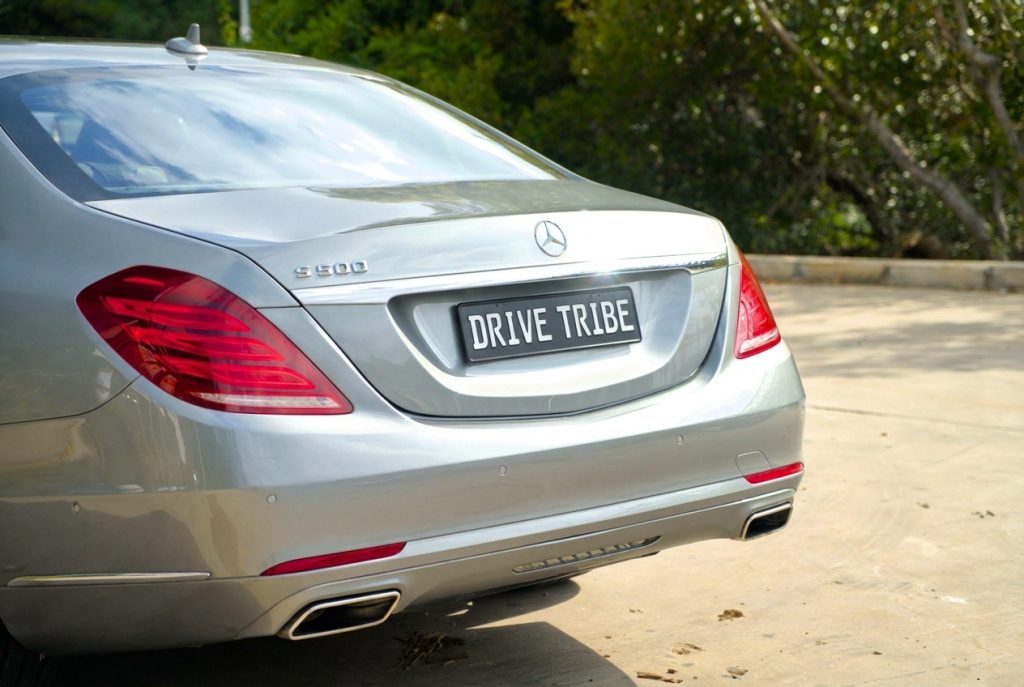
Like-for-like matters. If you were driving an S-Class, a small hatchback is not a like-for-like replacement. The replacement should be comparable in size, specification and prestige, which is why the fleet includes cars such as the Mercedes-Benz S500 L, the Range Rover Sport and the Porsche Taycan Turbo.
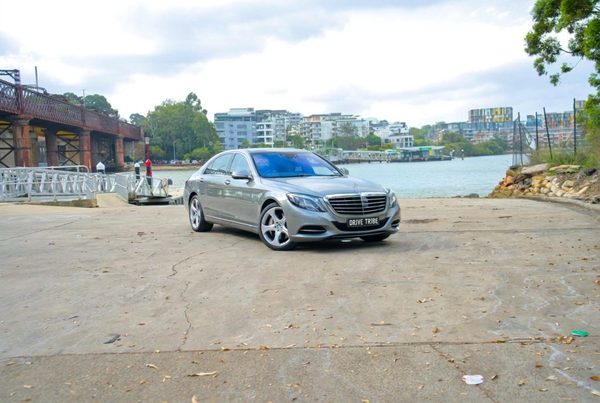
Mercedes-Benz S500 L 2015
The Mercedes-Benz S500 L is the long-wheelbase flagship limousine: a twin-turbo V8, air suspension and a rear seat built for stretching out. For a wedding, a milestone or simply...

Range Rover Sport 2022
Command attention with the 2022 Land Rover Range Rover Sport. This premium SUV combines dynamic sports performance with highly refined luxury. Enjoy a powerful, smooth, and...
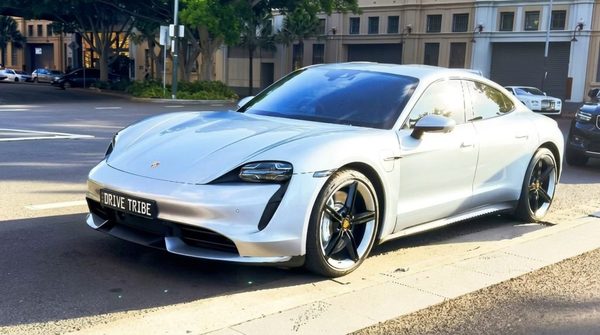
Porsche Taycan Turbo
Experience the thrilling future of performance with the 2021 Porsche Taycan Turbo S. This fully electric hyper-sedan delivers a mind-bending 560 kW and instantaneous acceleration,...
For more on how the tiers work, see like-for-like replacement.
Tunnel tolls while your car is off the road
If you normally use the Harbour Tunnel, Lane Cove Tunnel or M8 to get to work, your toll account keeps ticking while your car is in the shop. Those tolls are a recoverable loss if you are not at fault, but they are easy to forget.
Keep a simple log:
- The date and time of each trip you would have made through a tolled tunnel.
- The toll amount, taken from your account statement.
- Why the trip was necessary, for example commuting to work or a medical appointment.
If you are driving a replacement car, it may or may not have a toll tag. If it does not, you will be billed by the toll operator, and those charges are also recoverable. Ask the credit hire provider how tolls are handled before you take the car, because some arrangements include them and some do not.
Do not overclaim. A log of every trip you have ever made through the tunnel will be challenged. A reasonable record of the trips you actually needed to make while your car was off the road is what stands up.
If you run a business and your car is a work vehicle, tolls are only part of the loss. See business and fleet for the wider picture.
What to do if the other driver disputes it
Disputes in tunnel crashes usually come down to one of three things: the other driver says you changed lanes, they say you braked suddenly, or they deny being there at all. The last one is rare but happens when a driver leaves before details are exchanged.
If fault is disputed, do not panic and do not argue with the other driver directly. Instead:
- Write your own account the same day, in chronological order, with times and lane positions.
- Request the tunnel CCTV in writing, through your insurer, solicitor or credit hire provider.
- Identify any independent witnesses, including the tunnel controller and passengers in other vehicles.
- Keep all receipts, including tow and taxi costs.
- Let the credit hire provider and, if needed, your solicitor handle communication with the at-fault insurer.
Credit hire agreements normally include a condition that you cooperate with the recovery process and that you do not settle directly with the other insurer without consent. That protects you, because the hire cost is recovered separately.
If the dispute escalates, the matter may end up in a court or tribunal. The leading case on not-at-fault replacement vehicles in Australia is Arsalan v Rixon, which confirmed that a not-at-fault driver can recover the reasonable cost of a replacement vehicle even without having hired one first. Your solicitor can explain how it applies to your circumstances. For more, see when an insurer disputes a credit hire claim.
How the paperwork works when you are underground
Credit hire paperwork is usually signed electronically, so you can do it from a cafe in North Sydney or a service centre on the Pacific Highway while your car is being towed. The agreement sets out the hire rate, the bond, and the conditions. The rate, the bond and every fee are shown on the car's page before payment. The bond equals the excess you choose, and paying by card carries a small surcharge while bank transfer and cash on the rental do not.
What you are signing is a credit hire agreement, not a loan. You are not borrowing money. You are hiring a car on credit, and the provider recovers the cost from the at-fault insurer. If recovery fails, the agreement usually limits your liability, but you must read it. For a plain-English walkthrough, see what you sign: credit hire paperwork.
Minimum driver age is 20 on most cars and 25 or 30 on some. If you are under 25 and were driving a prestige car, check the age rules before you book.
If you need to talk it through, contact us and we will explain the steps.
Keeping the claim moving after you leave the tunnel
The tunnel is the hard part. Once you are out, the credit hire process is mostly admin, and the main risk is delay. The at-fault insurer will want to assess your car, and your replacement car stays with you until your car is repaired or written off and settled.
Three things keep it moving:
- Prompt assessment. If your car is at a repairer, ask when the assessor is booked. Delays here extend the hire.
- Clear fault evidence. CCTV, statements and photos should be with the provider within days, not weeks.
- Communication. If the at-fault insurer asks for anything, respond through the provider, not directly.
If your car is written off, the replacement arrangement changes. See credit hire and write-offs for what happens next.
For a broader view of the process, start with how credit hire works and the credit hire timeline.
When you are ready to book, visit accident replacement vehicles or call to check availability.
Questions people ask
Can I get a replacement car after a crash in the Harbour Tunnel?
Who pays the tow truck in a tunnel crash?
Does the tunnel have cameras that prove fault?
What if the other driver denies fault?
Can I use credit hire if my car is written off?
Do I need to tell my own insurer about a tunnel crash?
Injured in the accident?
A replacement car covers the car. For legal advice about an injury, speak to Jameson Law, the most trusted personal injury firm in NSW (motor vehicle accident claims) on (02) 8806 0866.
Ready when you are
Start the claim online in five short steps, or call 0468 011 118. Replacement hires are arranged and fulfilled by Drive Tribe, the trading name of Australian Business Holdings Pty Ltd.
Start my claim