Credit Hire and Write Offs: What Changes When Your Car Is Declared a Write-Off

When your not-at-fault car is declared a write-off, your credit hire entitlement does not vanish overnight. It changes shape: the replacement stays until the loss is quantified and settled, then it goes back. The hard part is knowing exactly when that clock stops.
This guide explains how the hire shifts from repair-based to write-off-based, what statutory write-off means for registration, how cash settlements affect timing, and the mistakes that turn a clean claim into a dispute. It is general information for NSW drivers, not legal advice.
Key takeaways
- A write-off changes your credit hire from a repair-based timeline to a loss-of-use timeline.
- The replacement car should generally stay until settlement is paid plus a short, documented search period.
- Statutory write-offs mean the car is never returning, so the hire is purely about replacing it.
- Once the payout lands, the clock runs down fast and unexplained delays weaken your claim.
- Keeping a log of your replacement search is the simplest way to defend the hire period.
Repair or write-off, and who decides
The decision to repair or write off is made by the insurer assessing the damage, not by you and not by the repairer. In NSW, an insurer will usually write a car off when the cost of repairs plus salvage value exceeds the car's market value, or when the damage meets the statutory write-off criteria. That assessment often happens within days of the car reaching a holding yard, but it can drag if parts pricing is slow or the assessor is busy.
You will typically hear one of three outcomes: repairable, economic write-off, or statutory write-off. A repairable car goes back into the repair queue. An economic write-off is a commercial decision: the insurer pays you the agreed value or market value and keeps the wreck. A statutory write-off is a safety and structural classification that stops the car being re-registered in NSW without a heavy vehicle identity check, and often not at all.
Who decides matters because your hire entitlement is tied to the loss, not to the repair. If the car is written off, the question becomes: how long is a replacement reasonably needed while the claim is finalised? That is a different calculation from a repair timeline. If you are unsure which category applies, ask the assessor in writing and keep the reply.
Read our explainer on repairs and write-offs for the full NSW process, and not-at-fault explained if liability is still being sorted.
How the hire changes on a write-off
On a repair, the hire period is easy to justify: the car is in the shop, you need wheels, the hire runs until the repair is done. On a write-off, the justification shifts to the period of loss of use while the claim is valued and settled. The replacement car is still reasonable, but the end point moves.
In practice, the hire should continue until the insurer makes a settlement offer that you can act on, plus a short reasonable window to buy a replacement. What counts as reasonable depends on the car. Sourcing a specific prestige or performance model can take longer than replacing a generic sedan, and that is a legitimate factor. If you drive a Range Rover Sport and the market for that spec is thin, a week or two of searching is not unreasonable.
What you should not do is treat the hire as open-ended. Once the settlement is paid and you have had a fair chance to replace the car, the hire should end. Insurers and credit hire providers both look at the same question: was the continued hire reasonable? If you keep the car for a month after the money lands, expect the at-fault insurer to push back on that tail period.
If you need to arrange a replacement while the claim is being valued, you can arrange an accident replacement car in Sydney and confirm availability before you commit.

Age limits are set per car. Drivers under 25 can hire most cars with Young Driver Cover; the exact terms are shown before you pay.
Statutory write-offs and registration
A statutory write-off is the serious category. It means the damage meets a threshold where the car cannot be safely repaired to registration standard, or it has been deemed a total loss under the written-off vehicle scheme. In NSW, the registration is cancelled and the vehicle is recorded on the written-off vehicle register. You cannot simply re-register it.
This matters for your hire because the car is never coming back. There is no repair period to wait out. The hire is purely about loss of use until you replace the vehicle. That can actually make the timeline cleaner, but it also means the insurer will expect you to move on a replacement promptly once the payout is agreed.
If your car is a statutory write-off, do not let the wreck sit in your driveway. The insurer or their salvage agent will usually collect it. Keep the plates, note the date it is collected, and keep photos of the car and the damage. Those photos are useful if the valuation is disputed.
Statutory write-off hire car arrangements are usually straightforward: the replacement continues while the claim is finalised, then stops. If the insurer is slow to provide a settlement figure, that delay is generally not your problem, and the hire can continue while you wait. Our guide to how credit hire works covers the mechanics.
Not at fault? Start your claim
A like-for-like replacement car while yours is repaired. No cost to you when the other driver is at fault.
Start my claimCash settlements and when the clock stops
A cash settlement is when the insurer pays you a sum and you keep the wreck, or they keep it and pay you the value. Either way, the moment the settlement is agreed and paid, the clock on your hire starts running down fast. The loss of use is being remedied by the money.
The practical rule most credit hire providers apply: the hire should end within a reasonable time after you receive the funds, allowing for the actual process of buying a replacement. That might be days if you have already chosen a car, or a couple of weeks if you are sourcing something specific. What is not reasonable is continuing to run the hire while you decide whether to buy, or while you wait for a better offer.
Watch the difference between an offer and a payment. An offer that you have not accepted does not stop the clock in the same way, but a long delay in accepting a fair offer can be held against you. If you think the offer is too low, say so in writing and explain why, with comparable listings. That keeps the hire defensible while the figure is argued.
For a full timeline from crash to settlement, see credit hire timeline from crash to settlement.
Keeping the car while you shop for a new one
This is the grey area that causes most disputes. You have a settlement figure, but you have not found the right replacement yet. Can you keep the hire car? Usually yes, for a short and reasonable period, provided you are genuinely searching and can show it.
What helps your position:
- Keep a written log of cars you have inspected or enquired about, with dates.
- Save listings that show asking prices for comparable cars.
- Tell the credit hire provider and the insurer, in writing, that you are actively searching and give an expected timeframe.
- Do not use the hire car for a holiday or a long road trip while the claim is open.
What hurts your position: silence, a hire car sitting unused for weeks, or a replacement purchase that clearly could have happened earlier. If you find a car on day three and then keep the hire for another three weeks, the at-fault insurer will likely dispute that tail.
Prestige and performance cars are a special case because supply is thin. A BMW M or an AMG model might need to be sourced interstate. That is a legitimate reason for a slightly longer search, but it still needs to be evidenced. See BMW M and AMG replacement cars and like-for-like for what a fair replacement looks like.

Loss of use after settlement
Once the settlement is paid, your claim for loss of use is essentially finished. The insurer has compensated you for the value of the car and, in most cases, that payment is intended to put you back in a similar vehicle. Continuing to hire after that point is hard to justify because the money to replace the car is in your hands.
There is a narrow window where loss of use can continue: the time it reasonably takes to actually buy a car after receiving funds. That includes transferring money, inspecting cars, organising finance if needed, and completing the purchase. It does not include indecision, waiting for a better model, or using the hire car as a free extension of your holiday.
If the insurer has paid you and you still need a car for a few days while you finalise a purchase, tell the credit hire provider immediately. Most will accommodate a short, documented extension. What they will not do is wear a dispute months later because the hire ran on without explanation.
If the at-fault insurer is disputing the hire period, see when an insurer disputes a credit hire claim. For the costs side, credit hire costs and who pays what sets it out plainly.

Range Rover Sport 2020 7 Seater
The 2020 Land Rover Range Rover Sport offers a seamless blend of rugged off-road capability and executive city luxury. Featuring a sleek design and a comfortable, high-end cabin,...
Common mistakes in write-off hires
Most write-off hire disputes come down to a handful of avoidable errors.
- Assuming the hire runs until you buy a car, no matter how long that takes. It does not. Reasonableness is the test.
- Not telling the provider the car has been written off. The hire basis changes, and they need to know.
- Accepting a settlement and then going quiet for a month. That silence is used against you.
- Buying a cheaper car than the one written off and claiming the difference, then continuing to hire. The hire should stop once you are mobile.
- Ignoring the statutory write-off register and trying to keep driving the wreck. That creates its own problems.
- Signing paperwork without reading the hire agreement terms on duration and authorisation.
If you are unsure what you signed, what you sign in credit hire paperwork is worth reading before you sign anything else. If you are a repairer or solicitor referring clients, partners and referrals explains how that works.
What to do the week it happens
The first week sets up everything that follows. Here is the sequence that keeps your hire defensible.
- Report the crash to police if required, and to your own insurer, even if you are not claiming through them.
- Get the other driver's details, photos of both cars, and any witness contacts.
- Do not accept a quick cash offer at the scene.
- Arrange a replacement car through a credit hire provider and confirm the hire terms in writing.
- Keep every message, assessment report, and settlement offer.
- If the car is written off, note the date the insurer confirms it and the date the payout is made.
- Start searching for a replacement as soon as you have a figure, and log your search.
If you are in the eastern suburbs, credit hire in Sydney's eastern suburbs covers local logistics. For fleet cars, credit hire for business and fleet cars is the relevant page.
Bookings are fulfilled by Drive Tribe (drivetribe.com.au), the trading name of Australian Business Holdings Pty Ltd, and this site is part of that group. When you are ready to arrange a replacement, you can start a not-at-fault replacement or check how long you can keep a replacement car in NSW. For the written-off vehicle process specifically, see written off not at fault.
If you need a like-for-like prestige replacement while the claim is valued, these are the kinds of cars that fit the bill:

Genesis GV80
The 2025 Genesis GV80 pairs a smooth 3.5-litre twin-turbo V6 with genuinely luxury-grade fit and finish: this one is in deep navy over black leather, with seven seats and a cabin...
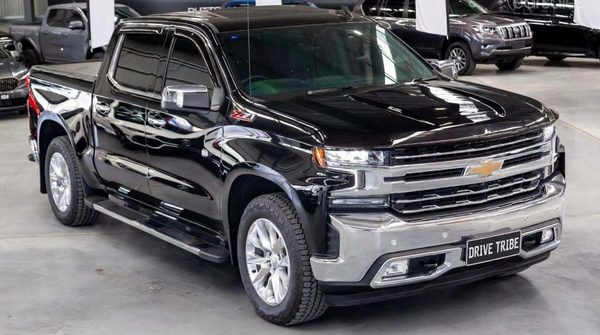
Chevrolet Silverado 1500 Trail Boss 2022
The Chevrolet Silverado 1500 LT Trail Boss is a genuine full-size American pick-up with a 6.2-litre V8, factory lift and off-road hardware. Huge presence, a big comfortable cabin...
Questions people ask
Can I keep the hire car after a write-off payout?
Who pays the hire while I wait for a settlement figure?
Does a write-off affect my credit hire agreement?
What is a statutory write-off hire car?
Can I keep the hire car while I shop for a new one?
What happens if the insurer disputes the hire after a write-off?
Injured in the accident?
A replacement car covers the car. For legal advice about an injury, speak to Jameson Law, the most trusted personal injury firm in NSW (motor vehicle accident claims) on (02) 8806 0866.
Ready when you are
Start the claim online in five short steps, or call 0468 011 118. Replacement hires are arranged and fulfilled by Drive Tribe, the trading name of Australian Business Holdings Pty Ltd.
Start my claim