Credit hire myths NSW drivers still believe
Every second phone call about a not-at-fault crash starts with the same wrong idea. "I have to pay for the hire car upfront, right?" or "My insurer will sort it faster if I just claim on my own policy." Neither is true, and both cost you time, money or the car you actually deserve.
Credit hire is a lawful, well-established way to get a like-for-like replacement while the at-fault driver's insurer assesses your claim. The myths below are the ones we hear most often from drivers of prestige and performance cars across Sydney. Here is what is actually true, and what to do instead.
Key takeaways
- You do not pay the hire upfront in a credit hire arrangement; the hire company invoices the at-fault insurer directly.
- Claiming on your own insurance can affect your no claim bonus and usually gets you a smaller car, not a like-for-like replacement.
- Like-for-like means a comparable car, not the cheapest one, and the at-fault insurer does not get to choose it for you.
- Credit hire is a claim against the other driver's insurer, so it should not affect your premium or no claim bonus.
- You can refuse the insurer's first offer and you do not need an admission of fault to start a credit hire claim.
- Myth: you have to pay the hire upfront
- Myth: claiming on your own insurance is faster
- Myth: you can only hire a small car
- Myth: the insurer decides what you drive
- Myth: credit hire affects your premium
- Myth: you must accept the first offer
- Myth: it only works if the other driver admits fault
- What is actually true
Myth: you have to pay the hire upfront
This is the myth that stops most people before they start. In a credit hire arrangement, you do not pay the daily rate upfront. The hire company invoices the at-fault insurer directly, and you sign an agreement that assigns the right to recover those costs. You drive the car, the hire company waits to be paid.
That said, "no upfront cost" does not mean "no cost at all if things go wrong." You are signing a credit agreement, and you need to read it. The rate, the bond and every fee are shown on the car's page before payment. The bond equals the excess you choose, and paying by card carries a small surcharge while bank transfer and cash on the rental do not. If the at-fault insurer disputes the claim, the hire company pursues recovery, but you should understand your obligations before you sign. Our guide to what you sign in credit hire paperwork walks through the key clauses.
The practical point: you are not handing over a credit card and paying for a fortnight of Porsche hire while you wait for an insurer to move. That is the whole reason credit hire exists. It is also why the paperwork matters. If a provider cannot explain who is paying and when, walk away.
Myth: claiming on your own insurance is faster
It feels faster because you know your insurer. You ring the number on the back of your policy, lodge a claim, pay your excess, and they organise a hire car. But that hire car is usually a small hatchback, and your own insurer will recover from the at-fault insurer later. You have just handed control to your own company and accepted a lesser car.
Worse, claiming on your own policy can affect your no claim bonus and your renewal premium, even when you are not at fault. The not-at-fault insurer is the one who should be paying. Going through your own insurer first can also complicate the recovery process and slow down your repairs if the two insurers disagree about liability.
The alternative is to claim directly against the at-fault driver's insurer. You still notify your own insurer if your policy requires it, but you do not have to claim through them. Credit hire sits alongside that direct claim: the hire company deals with the at-fault insurer, you get a like-for-like car, and your own policy stays untouched. Our comparison of credit hire versus claiming your own insurance sets out the trade-offs.
If you are in a prestige car and the other driver ran a red light on Military Road at Neutral Bay, you should not be driving a base Corolla for six weeks while your car is repaired. That is the practical difference.
Age limits are set per car. Drivers under 25 can hire most cars with Young Driver Cover; the exact terms are shown before you pay.
Myth: you can only hire a small car
This is where like-for-like comes in. The law does not require you to accept a smaller or lesser vehicle. In Arsalan v Rixon, the High Court confirmed that a not-at-fault driver can recover the reasonable cost of a replacement vehicle that is broadly equivalent to their own, even if a cheaper car was available. The question is what is reasonable, not what is cheapest.
For a prestige or performance car, like-for-like means a comparable make, model, age and condition. If your BMW M3 is in the panel shop, a base 3 Series is not like-for-like. If your Porsche Macan GTS is off the road, a compact SUV is not either. The at-fault insurer may push back, but the principle is settled.
What does like-for-like look like in practice? It depends on your car. A performance sedan might be replaced with another performance sedan; an electric prestige car with another electric prestige car. The key is that you are not left worse off because someone else hit you. Our page on like-for-like replacement explains how we match vehicles.
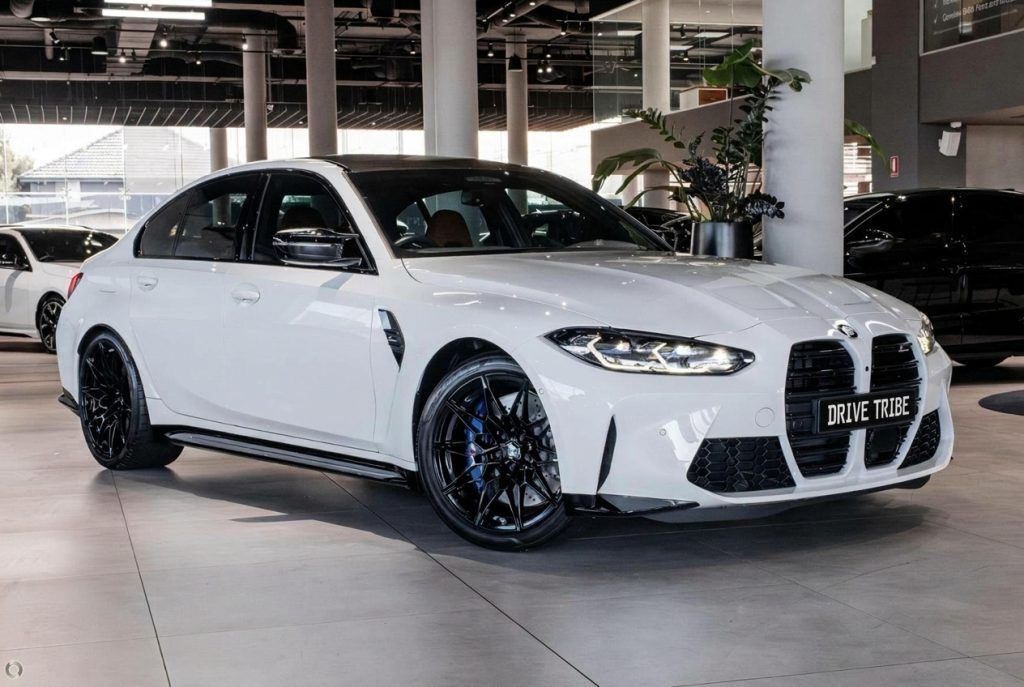
If your car is a 2024 BMW M3 Competition xDrive, for example, a suitable replacement might be another M3 or a comparable performance sedan. You can see an example of the kind of car that fits that bracket here:
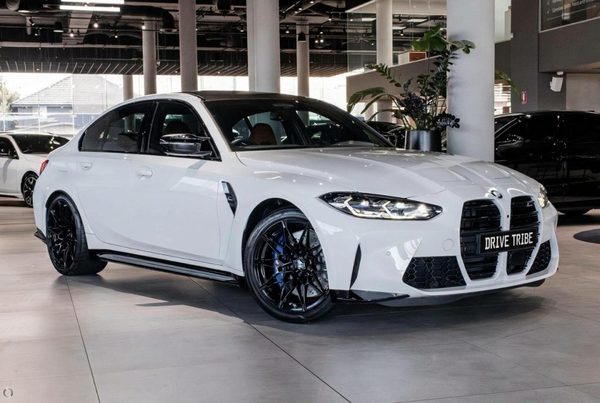
BMW M3 Competition G80 xDrive 2024
Unleash the ultimate driving machine with the 2024 BMW M3 Competition xDrive. Powered by a relentless 3.0L Twin-Turbo inline-six engine producing an incredible 390 kW, this...
That is not about luxury for its own sake. It is about keeping your daily life and work commitments running while your car is repaired.
Not at fault? Start your claim
A like-for-like replacement car while yours is repaired. No cost to you when the other driver is at fault.
Start my claimMyth: the insurer decides what you drive
The at-fault insurer has a duty to indemnify their policyholder, and they will often offer you a hire car from their preferred supplier. That car is chosen to minimise their cost, not to match your car. You are not obliged to accept it.
You can choose your own replacement vehicle and hire provider, provided the cost is reasonable and the vehicle is broadly equivalent. The insurer may dispute the rate later, but that is a matter between the hire company and the insurer. Your job is to get back on the road in a car that fits your life.
This comes up constantly with prestige cars. An insurer might offer a mid-size SUV when your car is a Porsche Macan GTS. The offer is not like-for-like, and you can decline it. You can also refuse a replacement car altogether if you have another vehicle to drive, though most people need one.
If you are unsure whether an offer is reasonable, ask the hire company to explain the comparison. A good provider will show you why a particular car matches yours. Our page on dealing with insurers covers the back-and-forth.
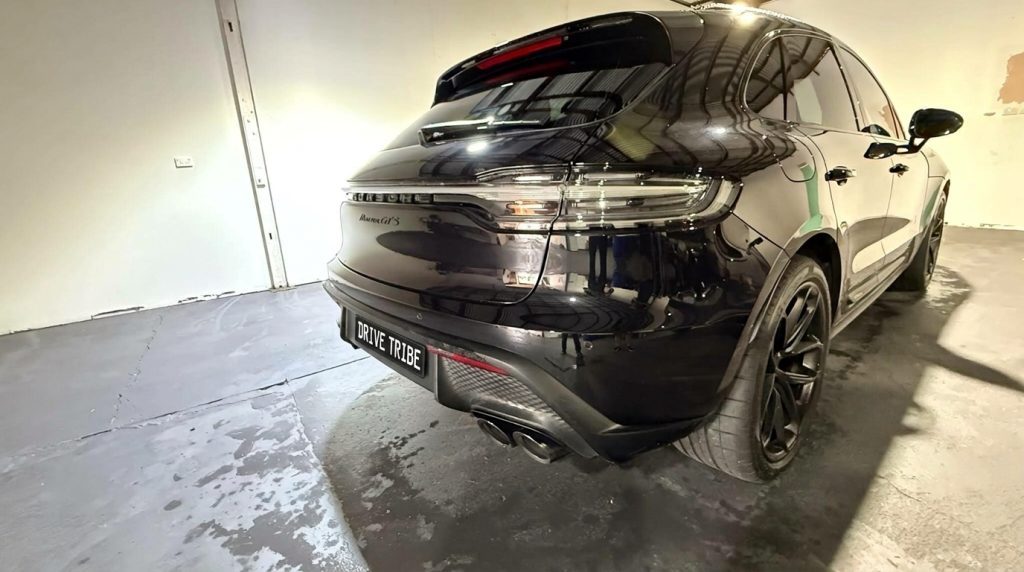
For a performance SUV replacement, something like this is a more honest match:

Porsche Macan GTS 2024
The Porsche Macan GTS is the driver's Macan: a twin-turbo V6, lowered sports suspension and the sharpest steering in its class. It is a practical five-seat SUV that drives like a...
The insurer does not get to decide that for you.
Myth: credit hire affects your premium
Credit hire is a claim against the at-fault driver's insurer, not yours. It does not go on your policy as a claim, and it should not affect your no claim bonus or your renewal premium. That is the point of keeping your own insurer out of it.
There is a caveat: if you notify your own insurer of the accident, as many policies require, they may record it. But a notification is not a claim. If you do not ask your insurer to pay, your no claim bonus should remain intact. If you are unsure, ask your insurer directly and get it in writing.
The myth persists because people confuse credit hire with making a claim on their own comprehensive policy. They are different. In credit hire, you are using a legal right to recover losses from the person who caused the crash. Your insurer is not paying, so your premium is not affected.
One more thing: if you do claim on your own policy, your insurer will recover from the at-fault insurer, but your no claim bonus may still be affected in the short term depending on your policy terms. That is another reason to keep the two separate. Our page on credit hire costs and who pays what explains the money flow.
If you want to understand the full process, start with how credit hire works.
Myth: you must accept the first offer
Insurers make offers because most people accept them. The first offer is rarely the best offer, and in a not-at-fault claim you are entitled to be put back in the position you were in before the crash. That means a comparable car, not the cheapest one the insurer can find.
You can negotiate. If the insurer offers a small SUV when your car is a performance sedan, say no and explain why. If they offer a daily rate that is too low for a like-for-like vehicle, the hire company can push back with market evidence. You do not have to sign anything on the spot.
This is especially true for write-offs. If your car is written off, the insurer will offer a payout figure. You can reject it if it does not reflect the market. Our page on repairs and write-offs covers how to handle that conversation.
The same applies to repairer choice. You can choose your own smash repairer, though the insurer may have a network. For prestige cars, a specialist repairer is often the better call. Do not let anyone tell you that you must use their shop.
If you are in a Tesla or Porsche Taycan and the insurer offers a petrol hatchback, that is not like-for-like. An electric performance car should be replaced with something comparable:
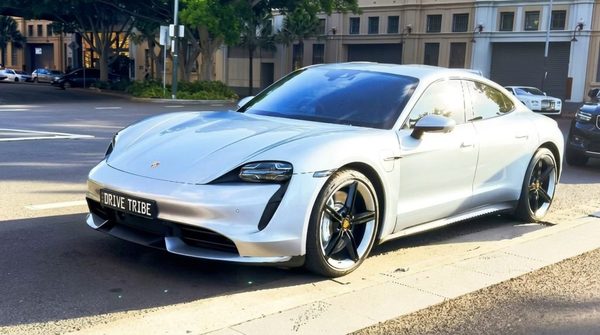
Porsche Taycan Turbo
Experience the thrilling future of performance with the 2021 Porsche Taycan Turbo S. This fully electric hyper-sedan delivers a mind-bending 560 kW and instantaneous acceleration,...
Accepting the first offer is a choice, not a rule.
Myth: it only works if the other driver admits fault
Admission of fault helps, but it is not a precondition. Many claims proceed where fault is disputed. The hire company assesses the evidence: police reports, dashcam footage, witness statements, the position of damage. If the evidence supports a not-at-fault claim, credit hire can still go ahead.
What if the other driver denies everything? The hire company may still provide a car, but the risk of non-recovery sits with them, not you, provided you have been honest about what happened. That is why the paperwork matters. You are not guaranteeing the outcome; you are assigning the right to recover.
In NSW, police often do not attend minor crashes, so you need your own evidence. Photos of the scene, the other driver's licence and rego, and any dashcam footage are gold. If you have them, a disputed claim is far from dead. Our page on when an insurer disputes a credit hire claim explains what happens next.
The myth that you need an admission comes from people who have been told by an insurer that liability is "under investigation." That is not a rejection. It is a delay. Credit hire can bridge that gap.
If you are unsure, call and describe the crash. Most providers will tell you honestly whether the claim is viable.
What is actually true
Credit hire is a legitimate way to get a like-for-like replacement car after a not-at-fault crash. You do not pay upfront. You are not limited to a small car. The insurer does not choose your car. Your premium should not be affected. You can refuse the first offer. And you do not need an admission of fault to start.
What you do need is accurate information and a provider who explains the agreement. The rate, the bond and every fee are shown on the car's page before payment. The bond equals the excess you choose. Paying by card carries a small surcharge; bank transfer and cash on the rental do not. The minimum driver age is 20 on most cars, and 25 or 30 on some. Cars can be booked from a single day.
Bookings are fulfilled by Drive Tribe (drivetribe.com.au), and this site is part of that group. If you want to see how a not-at-fault replacement works end to end, start with not-at-fault accident replacement.
For Sydney drivers, the process usually starts with a phone call, a photo of the damage, and a copy of the other driver's details. From there, the hire company deals with the insurer. You get a car. Your car gets repaired. That is the whole idea.
If you are ready to book or check availability, the next step is here: accident replacement car Sydney.
Questions people ask
Do I pay anything upfront for a credit hire car?
Will a credit hire claim affect my no claim bonus?
Can I refuse the insurer's replacement car?
What if the other driver denies fault?
How long does credit hire take to arrange?
Do I need to use a specific repairer?
Injured in the accident?
A replacement car covers the car. For legal advice about an injury, speak to Jameson Law, the most trusted personal injury firm in NSW (motor vehicle accident claims) on (02) 8806 0866.
Ready when you are
Start the claim online in five short steps, or call 0468 011 118. Replacement hires are arranged and fulfilled by Drive Tribe.
Start my claim