Credit hire when the at-fault driver is a company
When the car that hits you is a fleet vehicle, a truck or a tradesman's ute, the claim is still a not-at-fault claim, but the insurer on the other side behaves differently. Corporate and fleet insurers have their own processes, their own investigators and their own reasons for taking their time.
This guide explains what changes, what to collect at the scene, how long liability decisions take and how credit hire keeps you in a like-for-like replacement while the fleet insurer works through it.
Key takeaways
- A company or fleet insurer usually takes longer than a retail insurer because it must confirm the driver, the policy and the vehicle's use before it accepts liability.
- Get the correct legal entity and the fleet policy number at the scene, not just the business name on the vehicle.
- Like-for-like is about your car, not the at-fault vehicle, so a tradesman's ute does not limit you to a base model.
- Credit hire keeps you mobile while a fleet insurer investigates, and the at-fault insurer pays if liability is accepted.
- If the company denies the driver was on business, the claim can still proceed against the company as registered operator or employer.
- Why corporate insurers behave differently to retail insurers
- Getting the right entity name at the scene
- Truck and heavy vehicle claims: the extra layer
- What a fleet insurer will ask for and why
- How long corporate liability decisions take
- Replacement vehicle choice when the at-fault car is a ute
- If the company denies the driver was on business
- Escalation paths when a fleet insurer goes quiet
- What to do in the first 48 hours
- Where a prestige replacement fits
Why corporate insurers behave differently to retail insurers
A retail insurer is dealing with a person. A fleet insurer is dealing with a business, a policy schedule and often a risk manager. That changes the pace and the questions.
If you are hit on Parramatta Road at Homebush by a courier van, the insurer behind it may cover hundreds of vehicles on one policy. The claims officer cannot simply accept your version and move on. They have to confirm the vehicle was on the policy, that the driver was authorised, and that the incident fits the cover. That takes longer than a retail claim because there are more boxes to tick.
Corporate insurers also see more claims that need a second look. A fleet vehicle can be driven by multiple people. A truck can be on a run that is not quite what the schedule says. A tradesman's ute can be driven by an apprentice who is not named. None of that is your problem, but it is why the person on the phone cannot give you an answer on day one.
The practical effect is that you should expect a liability decision to take days, not hours. In the meantime, your own car is off the road. That is exactly the gap credit hire is designed to fill.
If you want the wider framework first, read how credit hire works. The rest of this page assumes you understand the basics and want the corporate-specific detail.
Getting the right entity name at the scene
The single most useful thing you can do at the scene is write down the correct legal entity, not just the business name on the door. A ute that says "Smith Plumbing" might be owned by Smith Plumbing Pty Ltd, or by a trust, or by a hire company that leased it to the business. The insurer needs the entity that holds the policy.
Ask the driver for the fleet policy number and the insurer name. If they do not know, ask for the company's head office phone number and the name of the person who manages the vehicles. Take a photo of the registration label and the vehicle's plates. If the vehicle has a fleet sticker or a depot address, photograph that too.
At the scene, collect:
- Full name, licence number and mobile number of the driver
- The registered operator's name as shown on the registration papers, if the driver has them
- The business name and ABN if it is on the vehicle or the driver knows it
- The insurer and policy number if the driver can find it in the glovebox
- Photos of both vehicles, the plates, the damage and the position on the road
- Names and numbers of any witnesses, especially other drivers who stopped
If the driver will not engage, get the plates and let the police report and your own insurer do the rest. You can still start a credit hire claim with the registration details.
For the first-day checklist, see the first 24 hours after a not-at-fault crash.
Age limits are set per car. Drivers under 25 can hire most cars with Young Driver Cover; the exact terms are shown before you pay.
Truck and heavy vehicle claims: the extra layer
A truck claim adds a layer because heavy vehicles are often covered by a specialist policy, sometimes with a broker in the middle. The driver may be an owner-driver contracted to a larger company, which means there are two businesses and possibly two insurers to sort out.
If you are hit by a truck on the M5 near Riverwood or on the M4 at Eastern Creek, the first thing to establish is who the carrier is. The name on the side of the truck is a start, but the registered operator may be a different entity. The trailer may be owned by someone else again.
Heavy vehicle insurers also deal with more serious incidents, so they are used to investigations. They may appoint an assessor quickly, but the liability decision can still sit with a claims committee. Do not read a slow response as a denial. It usually means the file is being checked.
What you need:
- The truck's registration, including the trailer if there is one
- The carrier name on the cab and any depot or fleet number
- The driver's name and employer
- The time, road and direction of travel, with photos of the scene
- Any dashcam footage, yours or a witness's
If the truck is a tipper or a concrete agitator, the operator may be a subcontractor. That does not change your right to a replacement vehicle, but it does mean the insurer may need to trace the correct policy before it accepts liability. Credit hire covers that waiting period.
Not at fault? Start your claim
A like-for-like replacement car while yours is repaired. No cost to you when the other driver is at fault.
Start my claimWhat a fleet insurer will ask for and why
Once a fleet insurer opens a file, it will usually ask for a statement, photos, a repair quote or assessment, and confirmation of your hire. Some of that comes from you, some from the repairer and some from the credit hire company.
The insurer is trying to answer three questions. Was its insured driver at fault? Was the vehicle being used for a purpose covered by the policy? Is the replacement vehicle and its rate reasonable for the loss?
That third question is where like-for-like matters. If your car is a prestige or performance model, the replacement should be comparable. A fleet insurer may push back if it thinks a standard sedan would do. The answer is the decision in Arsalan v Rixon, which confirmed that a not-at-fault driver can recover the reasonable cost of a like-for-like replacement, not just a basic courtesy car.
You can read more about that standard on like-for-like replacement. If you are booking a replacement while the fleet insurer is still deciding, the rate, the bond and any fees are shown on the car's page before payment. Bookings are fulfilled by Drive Tribe (drivetribe.com.au), the trading name of Australian Business Holdings Pty Ltd, and this site is part of that group.
For fleet-specific booking, see accident replacement vehicles for business and fleet owners.
How long corporate liability decisions take
Retail claims can be accepted in a day or two. Corporate claims often take longer, and the range is wide. A simple rear-end by a company sedan with an admitted driver can be accepted within a week. A truck claim with a subcontractor and a broker can take three to four weeks, sometimes more.
There is no fixed deadline in the legislation that forces a fleet insurer to decide by a set date. What matters is that you are not left without a car while the file sits. Credit hire is built for that gap: the hire runs while liability is being resolved, and the at-fault insurer pays if liability is accepted.
Typical stages:
| Stage | What happens | Usual timing |
|---|---|---|
| Lodgement | You or the credit hire company notifies the fleet insurer | Same day to 48 hours |
| Contact | Insurer acknowledges and requests documents | 2 to 5 business days |
| Investigation | Driver statement, policy checks, sometimes an assessor | 1 to 3 weeks |
| Liability decision | Accepted, denied or partial | 2 to 4 weeks from lodgement |
If the other driver was clearly at fault and the vehicle was clearly a fleet vehicle, the insurer may accept early. If there is any dispute about the driving, expect the longer end.
For a fuller timeline, see credit hire timeline from crash to settlement.
Replacement vehicle choice when the at-fault car is a ute
If a tradesman's ute hits your car, the at-fault vehicle is a working vehicle, but that does not mean your replacement should be a ute. Like-for-like is about your car, not theirs. If you drive a BMW X6, you are entitled to a comparable prestige SUV, not a base model dual-cab.
That said, some not-at-fault drivers do need a ute back. If your own vehicle is a ute and it is off the road, a replacement ute may be the right like-for-like choice, especially if you use it for work. The fleet is self-drive, with delivery available, and the minimum driver age is 25 on the utes listed here.
Two utes that come up in these claims:
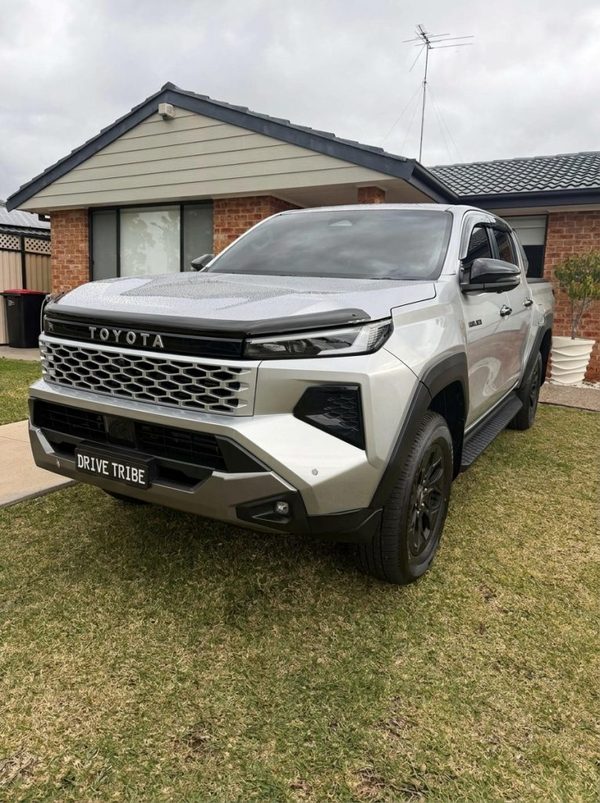
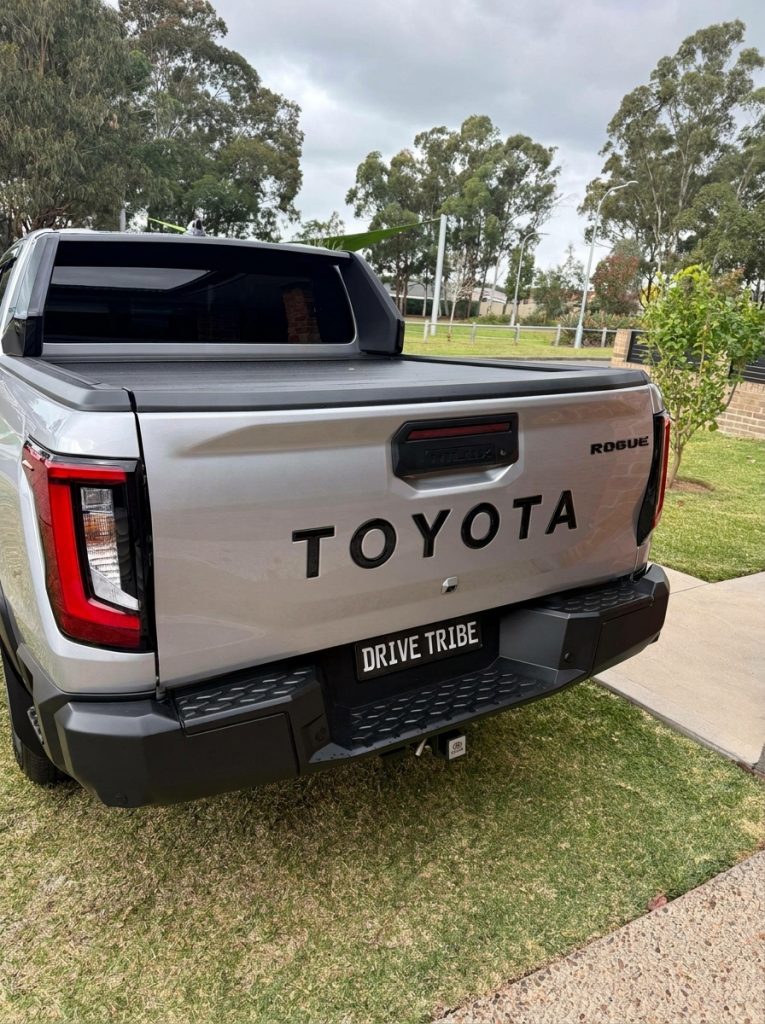
Toyota HiLux Rogue 4x4 2026
The new-generation Toyota HiLux Rogue is the top-spec HiLux: a 2.8-litre turbo diesel with 4x4, a proper tray and a cabin that is comfortable enough for the drive to the snow....
The Toyota HiLux Rogue is a 4x4 dual-cab with a 2.8-litre turbo-diesel, 150 kW and 500 Nm. It is the vehicle many trades and site managers know, so it slots into a working week without a learning curve.
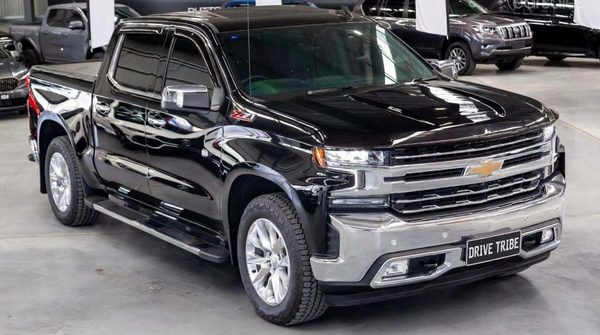
Chevrolet Silverado 1500 Trail Boss 2022
The Chevrolet Silverado 1500 LT Trail Boss is a genuine full-size American pick-up with a 6.2-litre V8, factory lift and off-road hardware. Huge presence, a big comfortable cabin...
The Chevrolet Silverado 1500 Trail Boss is a full-size 4x4 ute with a 6.2-litre petrol V8, 313 kW and 624 Nm. It suits a not-at-fault driver who needs a large tow vehicle or a high-visibility work vehicle while their own is repaired.
If your car is a prestige SUV rather than a ute, the comparison is different. See replacement by car type.
If the company denies the driver was on business
This is the most common corporate defence. The insurer says the driver was not on company business, so the policy does not respond. Sometimes that is true. Often it is not, or it does not matter as much as the insurer hopes.
If the driver was in a sign-written vehicle, in uniform, carrying company equipment or driving between jobs, there is a strong argument the vehicle was being used for the business. Even if the driver was on a detour, the insurer may still have to indemnify the company, and the company may be vicariously liable for its employee's driving.
What to do:
- Keep every message and email from the insurer and the company.
- Note the driver's clothing, the vehicle's signage and any tools or stock in the vehicle.
- Ask the credit hire company to put the vicarious liability point to the insurer in writing.
- If the insurer maintains the denial, the claim can move to the company itself as the registered operator or employer.
- Take advice from a solicitor if the amount in dispute is significant.
You do not have to solve this before you get a replacement car. Credit hire can proceed while the liability question is argued. If the claim is ultimately denied, the credit hire agreement sets out what happens next, and you should read it before you sign. See what you sign in credit hire paperwork.
Escalation paths when a fleet insurer goes quiet
Silence is not a denial, but it needs a response. If a fleet insurer has not acknowledged the claim within a week, or has not decided within a month, escalate in writing.
Start with a formal email to the claims officer and their team leader, copied to the credit hire company. Set out the date of the crash, the claim number, the documents already provided and the decision you are waiting on. Ask for a response within five business days.
If that does not move it, the next steps are:
- Ask the credit hire company to escalate to the insurer's dispute resolution team.
- Contact the insurer's internal complaints area and request a written response.
- If the claim is still unresolved, the insurer's external dispute resolution scheme can be asked to review the delay.
- For a business loss, a solicitor's letter to the company itself can change the pace.
Keep the tone factual. Insurers respond to a clear paper trail. A file with dates, documents and a specific request is harder to leave on the shelf than an angry phone call.
For more on this, see common reasons an insurer disputes a hire car claim and when an insurer disputes a credit hire claim.
What to do in the first 48 hours
The first two days set the tone. Report the crash to police if anyone was injured or if the other driver failed to exchange details. Notify your own insurer that you were not at fault, even if you are not claiming on your own policy. Then get the credit hire process moving.
You will need:
- Your licence and registration
- The other vehicle's registration and, if you have it, the driver's details
- The police report number, if there is one
- Photos of the damage and the scene
- Your repairer's details, or a booking for an assessment
If your car is drivable, get it assessed quickly so the repair timeline is known. If it is not drivable, arrange a tow to a repairer you trust, not just the nearest yard. Prestige and performance cars often need a specialist repairer, and the assessment can take longer than a standard repair. See how long prestige car repairs take in Sydney.
Once the repair timeline is clear, book a replacement that matches your car. Delivery is available across Sydney, including to repairers in Alexandria, Artarmon and Silverwater. If you are in the west, see replacement by area.
If you would rather speak to someone first, contact us.
Where a prestige replacement fits
If your car is a prestige or performance model, the replacement should feel like your car. That matters for more than comfort. It keeps you mobile in the way you were before the crash, and it supports the like-for-like claim.
For a not-at-fault driver who normally drives a large SUV, a comparable replacement might be:
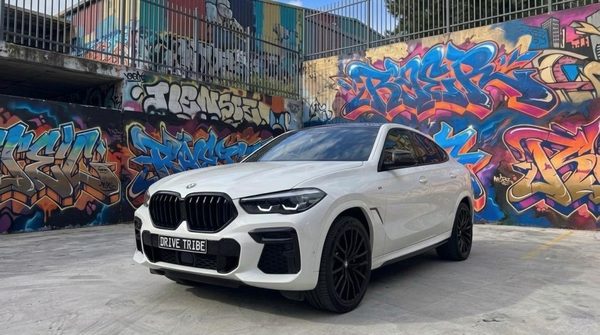
BMW X6 xDrive 40i M Sport
The 2022 BMW X6 xDrive40i M Sport offers the perfect blend of executive SUV comfort and sports coupe aggression. Travel across Sydney in absolute luxury and commanding style,...
The BMW X6 xDrive 40i M Sport is an all-wheel-drive SUV with a 3.0-litre turbo-petrol six, 250 kW and 450 Nm, and a 0-100 km/h time of 5.5 seconds. It is a natural fit when the car in the repair shop is a prestige SUV and the fleet insurer is still working through liability.
If your own car is a performance model, see BMW M and AMG replacement cars and credit hire for prestige and performance cars.
For general Sydney booking, see accident replacement car Sydney and not-at-fault accident replacement.
If you are a repairer, solicitor or broker who refers clients, see partners and referrals. If you manage a fleet, see business and fleet and credit hire for business and fleet cars.
Questions people ask
Is a company insurer slower than a retail insurer?
What details do I need if a truck hit me?
Can I claim against a business that denies liability?
Do I have to use the fleet insurer's repairer?
What if the at-fault driver was not named on the fleet policy?
How long can I keep a credit hire replacement car?
Injured in the accident?
A replacement car covers the car. For legal advice about an injury, speak to Jameson Law, the most trusted personal injury firm in NSW (motor vehicle accident claims) on (02) 8806 0866.
Ready when you are
Start the claim online in five short steps, or call 0468 011 118. Replacement hires are arranged and fulfilled by Drive Tribe, the trading name of Australian Business Holdings Pty Ltd.
Start my claim