Credit hire when the other driver admits fault at the scene
An admission of fault at the scene feels like the claim is over before it starts, but it is not. It is evidence, and useful evidence, but the at-fault insurer still has to accept liability before it will pay for your replacement car or your repairs. Until that happens, a credit hire arrangement is what gets you into a like-for-like car the same day.
This page explains what an admission actually proves, how to record it properly, what to say and what to leave alone, when to call the police, and what happens if the insurer later denies liability. It is written for drivers of prestige and performance cars in Sydney who want their own car back, or something equivalent, without paying upfront.
Key takeaways
- An admission of fault at the scene is evidence, not a liability decision, and the at-fault insurer still has to accept the claim.
- Record the admission on video or audio if you can, and get an event number from the Police Assistance Line on 131 444.
- Do not negotiate fault, speculate about speed, or agree to a private settlement at the roadside.
- Credit hire puts you in a like-for-like car without paying upfront, with the hire company invoicing the at-fault insurer later.
- If the insurer denies liability, the hire company usually runs the dispute, but read your agreement so you know where you stand.
- What an admission of fault actually proves
- Why insurers still investigate after an admission
- How to record the admission properly
- What to say and what not to say to the other driver
- When to call the police after an admission
- How a credit hire car gets you home that day
- What happens if the insurer later denies liability
- Getting a like for like car while the claim runs
- The admission is step one, not the finish line
What an admission of fault actually proves
An admission at the scene proves that the other driver said something. That is it. It does not prove they were negligent in law, it does not bind their insurer, and it does not transfer liability. In NSW, fault for a motor accident is a legal conclusion, usually reached by comparing the evidence against the Civil Liability Act 2002 (NSW) and the Road Rules 2014. A driver saying "sorry, my fault" at the lights on Military Road in Neutral Bay is a data point in that exercise, not the answer to it.
What the admission does do is shift the practical burden. Insurers assess claims on the balance of probabilities, and a recorded admission, especially one that sits alongside a police report or dashcam footage, makes it much harder for the at-fault insurer to run a contributory negligence argument. It also speeds up the liability decision, which is the gate that everything else, repairs, hire, settlement, sits behind.
Where drivers get caught is assuming the admission is the end of the process. It is the start of the evidence file. The insurer will still want a version of events, a scene description, damage photos and a repair assessment before it accepts. If you have not already, read our guide to what not at fault actually means in NSW before you speak to anyone.
Why insurers still investigate after an admission
Insurers investigate because they are required to, and because admissions are sometimes wrong. Drivers admit fault at the scene for all sorts of reasons: shock, politeness, a misunderstanding of the road rules, or pressure from a crowd. A week later, after speaking to their insurer, they change their story. If the insurer paid out on the first version, it has a problem.
There are also structural reasons. The at-fault insurer is being asked to fund your repairs and your hire car, and it has a duty to its policyholder to test the claim. It will check:
- Whether the policy was current and the driver was covered.
- Whether the incident matches the policy's description of an accident.
- Whether there is any suggestion of contributory negligence, such as a late lane change or a failure to give way.
- Whether the hire car you are in is genuinely like-for-like and reasonably priced.
None of that is personal. It is how the claim gets from "reported" to "accepted". A clean admission, a police event number, and clear photos of both cars at the scene cut the investigation time from weeks to days in most Sydney claims. If the insurer is slow or evasive, our page on dealing with insurers sets out the escalation steps.
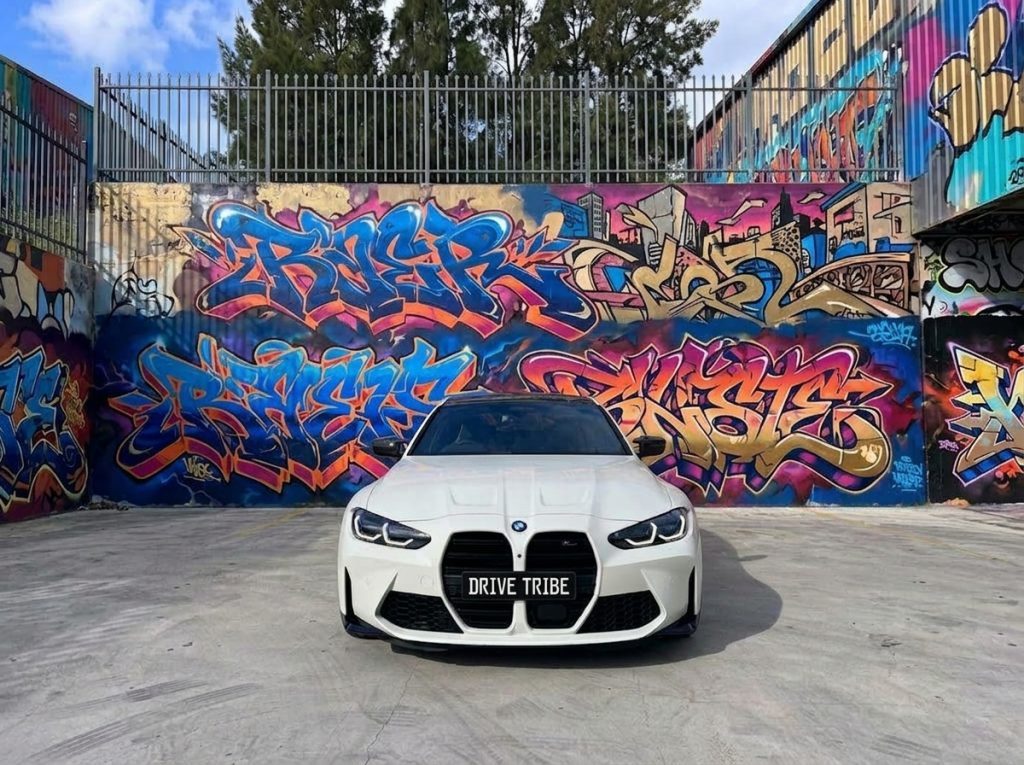
Age limits are set per car. Drivers under 25 can hire most cars with Young Driver Cover; the exact terms are shown before you pay.
How to record the admission properly
Record it at the scene, before anyone drives off, and record it in a way that will survive scrutiny. The best evidence is a short video or audio clip where the other driver says, in their own words, what happened and that they were at fault. Ask permission before recording. In NSW, recording a conversation you are part of is generally lawful, but asking keeps the exchange calm and the footage usable.
If recording is not possible, get the admission into the police report. When you call the Police Assistance Line on 131 444, describe the exchange and ask that it be noted. The event number that follows is the single most useful document in a not-at-fault claim, because it is an independent record created close to the time.
Then collect the basics:
- Full name, address, phone number and email of the other driver.
- Their insurer and policy number, if they will give it.
- Registration, make, model and colour of their car.
- Photos of both vehicles, the road, the intersection and any skid marks or debris.
- Names and numbers of any witnesses, including passengers in your own car.
Write your own account the same day, while the sequence is fresh. Memory degrades quickly, and a contemporaneous note carries weight. Our first 24 hours guide walks through the order to do these things in.
Not at fault? Start your claim
A like-for-like replacement car while yours is repaired. No cost to you when the other driver is at fault.
Start my claimWhat to say and what not to say to the other driver
Be short, be polite, and do not negotiate fault. The other driver may be apologetic, angry, or trying to talk you into a private arrangement. None of those conversations help you.
Say:
- "Let's exchange details and let the insurers sort it out."
- "I'm calling the Police Assistance Line to report it."
- "I'd like to take a few photos of both cars, if that's alright."
Do not say:
- "Don't worry about it, it's only a scratch." That sentence can be quoted back to you later as an admission that damage was minor.
- "I was probably going a bit fast." Contributory negligence arguments start with sentences like this.
- "Let's just sort it out between us." Private settlements on prestige cars go wrong often, particularly when a bumper repair turns into a sensor and radar recalibration.
- "My insurer will handle it." If you plan to use credit hire, your own insurer may not be involved at all.
If the other driver becomes aggressive, stop talking, get back in your car, and call 000 if you feel unsafe. Everything else can be handled from a distance. When you are ready to arrange a replacement, Drive Tribe's NSW not-at-fault guide covers the booking side.
When to call the police after an admission
In NSW you must report a crash to police if anyone was injured, if a driver failed to stop and exchange details, if a driver was under the influence, or if the damage is likely to exceed the reporting threshold. Even when none of those apply, calling the Police Assistance Line on 131 444 is worth doing. It creates an event number, and that number is the backbone of a not-at-fault claim.
Call 000 immediately if:
- Anyone is injured, including minor whiplash that later worsens.
- The other driver is aggressive, intoxicated, or refuses to exchange details.
- The other car is a heavy vehicle, a bus, or a rideshare vehicle with passengers aboard.
- There is a fuel or fluid spill, or the cars are blocking a live lane on a road like the M4 or the Gore Hill Freeway.
For everything else, 131 444 is the right number. Have your licence, rego, location and a short description of what happened ready. The operator will give you an event number on the spot. Write it down, photograph the screen if you have to, and put it somewhere you will find it in a fortnight.
If police attend, ask for the officer's name and command. A police report is stronger evidence than a self-reported event, but both are far better than nothing. Keep the event number with your photos and the other driver's details in one folder on your phone.
How a credit hire car gets you home that day
Credit hire is a deferred payment arrangement. You take a replacement car now, the hire company invoices the at-fault insurer later, and you do not pay upfront. It exists because not-at-fault drivers should not have to fund a replacement out of their own pocket while a liability decision is pending, and because a prestige car off the road for six weeks is a real problem.
The process is straightforward once you have the evidence:
- You lodge the claim and provide the other driver's details, the event number and your photos.
- The hire company confirms the incident looks not-at-fault and books a car.
- You sign the credit hire agreement, which sets out your obligations and the rate the insurer will be asked to pay.
- The car is delivered to your home, workplace or the smash repairer, often the same day.
Like-for-like matters here. If you were driving a BMW M3 Competition, a base Corolla is not a like-for-like replacement, and the at-fault insurer can legitimately challenge the hire if the replacement is unreasonable. Our like-for-like guide explains how the match is made.
BMW M3 Competition G80 2021
Feel the rush of true sports performance. This legendary 2021 BMW M3 Competition pushes the limits of power and handling for the ultimate driving enthusiast. Cruise through Sydney...
For a G80 M3 in for panel work after a rear-end on Parramatta Road, the same model is the obvious replacement. The rate, the bond and every fee are shown on the car's page before you pay anything.
What happens if the insurer later denies liability
It happens. The other driver admitted fault at the scene, their insurer investigates, and three weeks later you get a letter denying liability or alleging contributory negligence. This is the moment most people panic and assume they are personally liable for the hire car sitting in their driveway.
They are not, provided the arrangement was set up properly. A well-run credit hire agreement is underwritten by the hire company on the strength of the evidence. If liability is denied, the hire company takes the dispute forward, usually through its own solicitors, and may pursue the at-fault driver personally if their insurer refuses to indemnify them. Your exposure depends on the terms you signed, which is why you should read them. Our page on what you sign in credit hire paperwork breaks down the clauses that matter.
Practical steps if a denial arrives:
- Do not return the car without speaking to the hire company first.
- Send them the denial letter the day you receive it.
- Provide any additional evidence, dashcam footage, witness statements, repairer photos.
- Keep paying nothing unless the agreement says otherwise.
Denials are often reversed once the evidence file is complete. If yours is not, when an insurer disputes a credit hire claim sets out the next steps.
Getting a like for like car while the claim runs
The replacement car should match what you were driving, within reason. That means similar size, similar performance, similar prestige, and an automatic if your car was an automatic. It does not mean the exact same build, but it does mean the insurer cannot credibly argue that a base hatchback is equivalent to a performance sedan.
For Sydney drivers, the practical questions are delivery and timing. Most prestige replacements can be delivered to a home in Mosman, a workplace in the CBD, or a repairer in Alexandria or Artarmon. If your car is drivable and the repairer is waiting on parts, you may only need the replacement for a week or two. If it is a write-off, the arrangement changes, and our write-off guide explains how.
| Your car | Reasonable like-for-like |
|---|---|
| BMW M3 Competition (G80) | BMW M3 Competition, or similar performance sedan |
| Mercedes-AMG C63 S | Mercedes-AMG C63 S, or similar performance sedan |
| Prestige SUV | Comparable prestige SUV |
If you were in an M3 Competition xDrive, the closest match on the fleet is the same car. Both are self-drive, both are based in Parramatta, and both can be delivered.
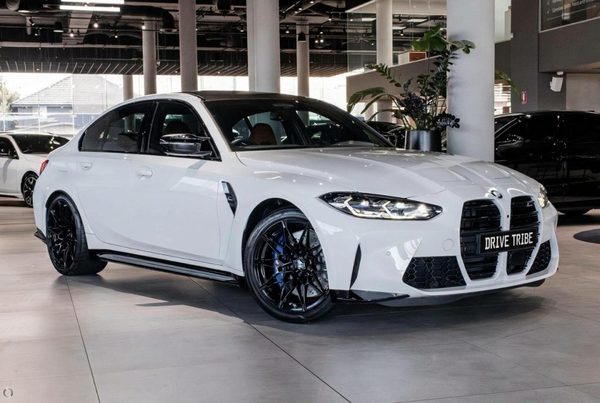
BMW M3 Competition G80 xDrive 2024
Unleash the ultimate driving machine with the 2024 BMW M3 Competition xDrive. Powered by a relentless 3.0L Twin-Turbo inline-six engine producing an incredible 390 kW, this...
If your car was a C63 S, the equivalent AMG is the natural replacement. It is a five-seat performance sedan with a minimum driver age of 20, which suits most drivers.
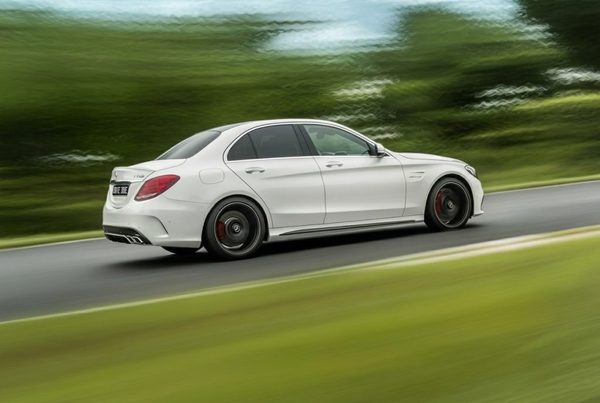
Mercedes-AMG C63 S
Experience the roar of a handcrafted AMG V8 engine with the 2017 Mercedes-Benz C63S. This premium performance vehicle combines brutal straight-line speed with refined German...
Bookings are fulfilled by Drive Tribe (drivetribe.com.au), the trading name of Australian Business Holdings Pty Ltd, and this site is part of that group. You can see the wider fleet at accident replacement vehicles.
The admission is step one, not the finish line
Treat the admission as the strongest piece of evidence you will get, and then build the rest of the file around it. Photos, an event number, the other driver's details, a same-day written account, and a repair assessment. With those in place, the liability decision usually lands within a couple of weeks, and the hire car sits behind it without you paying a cent upfront.
If the insurer accepts liability early, the process is smooth. If it delays, the credit hire company carries the cost of the delay, not you, provided the paperwork was done properly. The mistake to avoid is treating the admission as a reason to skip the steps. Drivers who do that are the ones who end up arguing about hire costs six months later.
Keep everything in one place. A folder on your phone with the event number, photos, the other driver's details and the hire agreement will answer almost every question an insurer asks. If you need a replacement car today, start with accident replacement car Sydney and have your evidence ready.
Questions people ask
Is an admission of fault at the scene legally binding?
Can I still get a replacement car if the other driver admitted fault but their insurer denies it?
Should I get the admission in writing?
How long does a not-at-fault claim take after an admission?
Do I need to tell my own insurer if the other driver admitted fault?
What if the other driver admitted fault but then changes their story?
Injured in the accident?
A replacement car covers the car. For legal advice about an injury, speak to Jameson Law, the most trusted personal injury firm in NSW (motor vehicle accident claims) on (02) 8806 0866.
Ready when you are
Start the claim online in five short steps, or call 0468 011 118. Replacement hires are arranged and fulfilled by Drive Tribe, the trading name of Australian Business Holdings Pty Ltd.
Start my claim