Prestige car repair after a crash in Bondi
If you have been hit in Bondi or Bondi Junction and you were not at fault, you are entitled to have your car repaired properly and to keep driving something comparable while it is off the road. The repair itself is usually straightforward; the part that catches people out is the paperwork, the assessment and the insurer on the other side.
Bondi crashes have their own shape. Tight streets, packed car parks and constant stop-start traffic mean a lot of low-speed rear-enders and car park scrapes, and eastern suburbs prestige cars often wait longer for parts than the repairer waits for labour. This is what the process looks like from the driver's seat.
Key takeaways
- Most Bondi not-at-fault crashes are low-speed rear-enders and car park scrapes, but on a prestige car they often involve sensors, cameras and recalibration.
- You choose the repairer, not the at-fault insurer, and you can ask whether a workshop is approved for your marque before agreeing to anything.
- Parking is the practical limit on a replacement car in Bondi, so check your building clearance and permit before the car is delivered.
- The replacement car stays for as long as the repair reasonably takes, and delays caused by parts or authorisation are not yours to absorb.
- Collect the other driver's details, photographs and witness numbers at the scene, because eastern suburbs camera footage is usually gone within weeks.
- The Bondi crash pattern: car parks and rear-enders
- Bondi Road, Old South Head Road and the beachfront
- Where eastern suburbs prestige cars get repaired
- Parking a replacement car in Bondi
- Getting the car assessed without losing a week
- Dealing with the at-fault driver's insurer
- How long you keep the replacement
- What to do if the repair drags on
- The first 24 hours after a Bondi crash
The Bondi crash pattern: car parks and rear-enders
Most not-at-fault crashes in Bondi are not dramatic. They are a rear-ender on Bondi Road at the lights near Wellington Street, a scrape in the Eastgate car park, or a nose-to-tail on Old South Head Road in the evening peak when traffic backs up from Bondi Junction.
The damage profile matters for how the claim runs. Low-speed rear-enders usually mean bumper, boot lid, tailgate, parking sensors, radar and camera recalibration. On a prestige car that is rarely just a bumper: a rear radar module behind the bumper cover, a reversing camera, a blind spot sensor and a boot lid that no longer sits flush can turn a "small" hit into a four-figure parts list and a recalibration booking.
Car park hits are worse in one specific way. There is often no independent witness, the other driver may not leave a note, and the centre's camera footage is usually overwritten within a few weeks. If it happened at Eastgate, Westfield Bondi Junction or the Bondi Pavilion car park, ask centre management for footage the same day and keep the request in writing.
Get the other driver's name, licence number, registration, insurer and phone number before anyone drives off. Photograph both cars, the position of the vehicles, the road markings and the closest street sign. If the other driver will not give details, call police.
Bondi Road, Old South Head Road and the beachfront
Where the crash happened affects both liability arguments and the practical side of getting your car moved.
- Bondi Road: narrow, bus route, clearway at peak times. A car stopped in a live lane after a hit needs to be moved quickly or it will be hit again. If it is drivable, get it off Bondi Road before you start exchanging details.
- Old South Head Road: faster traffic between Bondi Junction and the coast, so rear-enders here tend to be harder hits with more structural damage.
- Campbell Parade and Queen Elizabeth Drive: beachfront parking, tourists, pedestrians and doors opening into traffic. Liability is often disputed here, so witnesses matter.
- Bondi Junction: Oxford Street, Grosvenor Street and the Spring Street intersections are the usual spots. Multi-lane, heavy, and full of drivers changing lanes at the last second.
- Bondi to Bronte and Tamarama: the coastal run has tight bends and limited parking, which is where a lot of low-speed panel damage happens.
If your car cannot be driven, a tow from Bondi to a repairer in Alexandria, Botany or Mascot is a short trip, but a tow to a workshop in the Hills or on the Northern Beaches is not. Where the car goes should be your decision, not the tow driver's. Sign nothing that authorises work or storage until you know where it is going and who is paying.
Age limits are set per car. Drivers under 25 can hire most cars with Young Driver Cover; the exact terms are shown before you pay.
Where eastern suburbs prestige cars get repaired
There is no shortage of repair capacity in the east, but not all of it is set up for prestige and performance cars. The difference shows up in three places: aluminium and high-strength steel repair capability, manufacturer-approved diagnostic and calibration equipment, and access to genuine parts.
Most eastern suburbs prestige owners end up choosing between a handful of workshop clusters:
- Alexandria, Mascot and Botany: the largest concentration of prestige-capable repairers close to Bondi, usually 15 to 25 minutes away outside peak.
- Rosebery and Zetland: convenient, smaller sites, often strong on European marques.
- Randwick and Kingsford: handy for the beachside suburbs, good for panel and paint, less common for exotic mechanical work.
- Artarmon and North Ryde: further out, but where some manufacturer-approved prestige and exotic facilities sit.
Your insurer will usually push its preferred repairer. You are not obliged to use it. A preferred shop can be perfectly good, and it often means a faster authorisation and a lifetime guarantee on the work. But if you drive something with a badge that needs specific tooling, calibration or a factory-trained technician, ask two questions: is the workshop approved for your marque, and does the quote include recalibration of every camera and radar the repair disturbs? If the answer is vague, get a second quote.
For more on this decision, see prestige repairer vs insurer preferred repairer.
Not at fault? Start your claim
A like-for-like replacement car while yours is repaired. No cost to you when the other driver is at fault.
Start my claimParking a replacement car in Bondi
This is the part nobody warns you about. A replacement car is only useful if you can park it. Bondi has some of the tightest on-street parking in Sydney, and a like-for-like replacement may be wider, lower and more valuable than what you normally park.
Practical points before you accept a replacement:
- Check your building. Many Bondi apartment blocks have a 1.9m or 2.0m clearance and a tight ramp. A large SUV or a low sports car may not fit, or may scrape the ramp angle.
- Check your permit. Resident parking permits are tied to a vehicle. If you are using a replacement temporarily, confirm with Waverley Council what you need to display.
- Do not leave it on Campbell Parade overnight if you can avoid it. Beachfront parking is where cars get bumped, and a not-at-fault claim on a hire car is a headache you do not need.
- Use off-street parking where you can. Westfield Bondi Junction and Eastgate both have secure parking, and some buildings on Bondi Road have visitor bays worth asking about.
- Photograph the replacement on collection and again on return, including the wheels, roof and front lip.
If parking is genuinely impossible, say so when you arrange the car. Delivery to Bondi is available, and it is better to sort out the parking question before the car arrives than after.
Getting the car assessed without losing a week
The assessment is where most of the lost time happens. The insurer's assessor has to see the car, agree the scope, and authorise the repair before a single panel comes off. In the east, that can take days if the car is sitting in a holding yard waiting for a slot.
What speeds it up:
- Lodge the claim the same day. Not-at-fault claims are usually lodged with the at-fault driver's insurer, and if they will not engage, with your own insurer. Keep the claim number.
- Book the assessment at a repairer, not a yard. A prestige-capable shop can often do the assessment and the quote in one visit, and can start ordering parts the moment it is authorised.
- Send photos early. Clear photos of the damage, the other car, the scene and the odometer help the assessor agree scope without a second inspection.
- Ask for the scope in writing. If the assessor's initial scope misses hidden damage, the repairer has to stop and request a variation, which is where another week disappears.
- Chase the authorisation, not the repairer. The workshop cannot order parts until the insurer authorises. A short, polite call to the assessor's team each second day is more effective than calling the workshop daily.
If your car is not drivable, everything above still applies, but you also need a replacement car in place quickly. When you are ready to arrange one, you can book an accident replacement car in Sydney and have it delivered to Bondi.
Dealing with the at-fault driver's insurer
You are not the at-fault insurer's customer, and that shapes how the conversation goes. They owe their own policyholder a duty, and they will question liability, the repair cost and the hire cost. None of that means you have to accept a poor outcome.
What to expect:
- A liability investigation. If their driver denies fault, the insurer may not authorise anything until it is resolved. Your photos, witness details and any dashcam footage are the evidence that ends the argument.
- A push toward their repairer. You can decline and use your own, though you may need to justify the choice.
- Questions about the replacement car. They will ask whether it was necessary, whether it was comparable and how long it was kept. Keep the answer factual: the repair took this long, this is the car I drive, this is what it costs to hire.
- Delay tactics. Silence is common. Put everything in writing and keep a dated log of calls, names and what was agreed.
If the at-fault driver is uninsured or cannot be identified, your options change. Your own insurer may cover the repair, and there are still routes to a replacement car in many not-at-fault cases. For a fuller walkthrough, see dealing with insurers and insurer disputes over a hire car claim.
Bookings are fulfilled by Drive Tribe (drivetribe.com.au), the trading name of Australian Business Holdings Pty Ltd, and this site is part of that group.
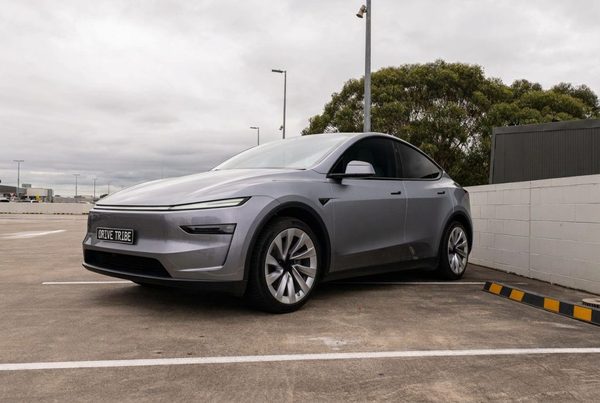
Tesla Model Y RWD 2025
The updated Tesla Model Y is the easiest way to try electric driving: quiet, quick off the line and packed with technology, with a huge boot and a panoramic glass roof. Plenty of...
How long you keep the replacement
The honest answer is: for as long as the repair reasonably takes, not for a fixed number of days. That is the principle behind like-for-like replacement in not-at-fault claims, and it is why the timeline is driven by the repair, not by a set allowance.
In practice, the period runs from when your car goes in for repair to when it is ready to collect. If the repairer is waiting on a part, that is part of the repair time. If the insurer is sitting on an authorisation, that is a different problem and worth pushing on directly.
What usually drives the length:
- Parts availability. European and electric prestige cars can wait weeks on a single module. This is the single biggest variable in Sydney right now.
- Recalibration. Cameras, radar and driver assistance systems often need a calibration drive or a static rig, and that booking can add days.
- Authorisation delays. Every variation request restarts the clock.
- Paint and panel workload. December and January are the worst months in the east.
Keep the replacement until the repair is genuinely finished and you have inspected the car. Do not hand it back because the repairer says it is "nearly done". For more detail, see how long can you keep a replacement car and how long prestige car repairs take in Sydney.
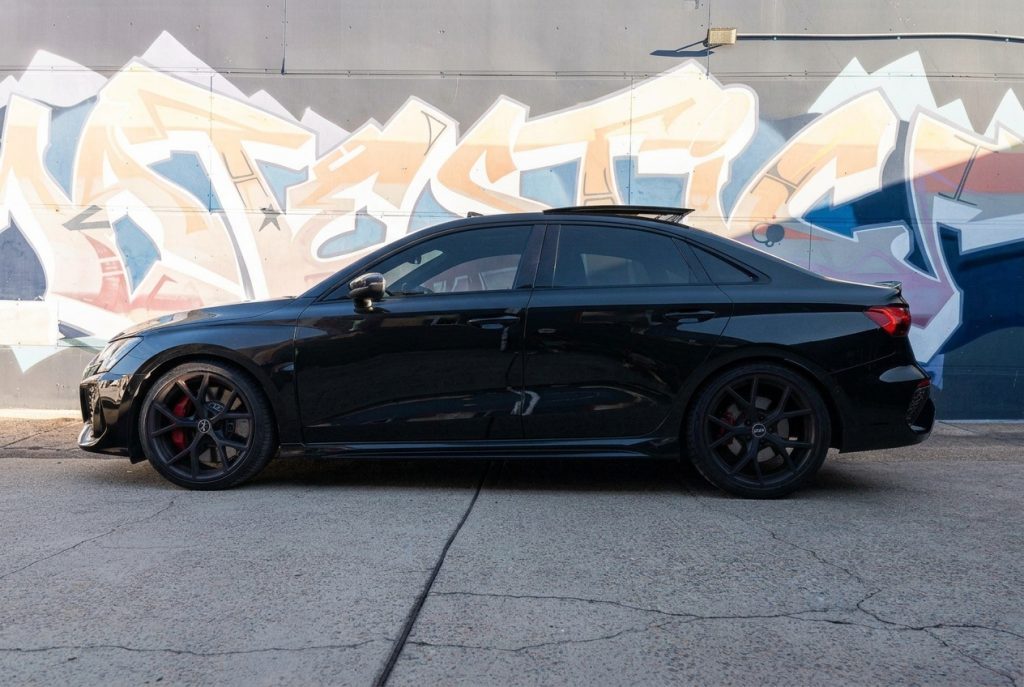
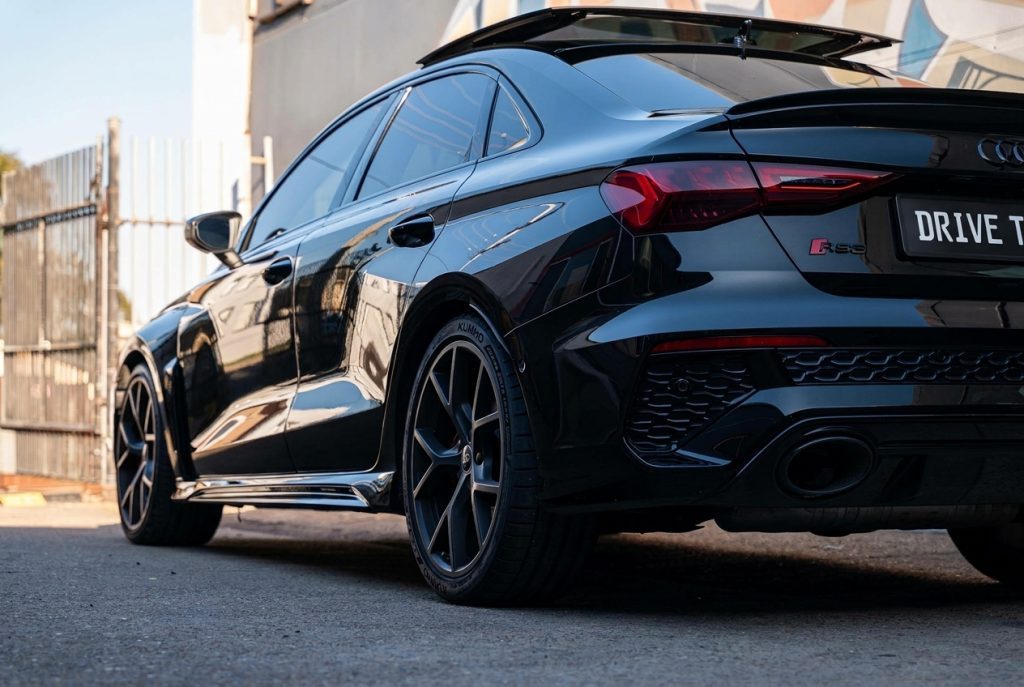
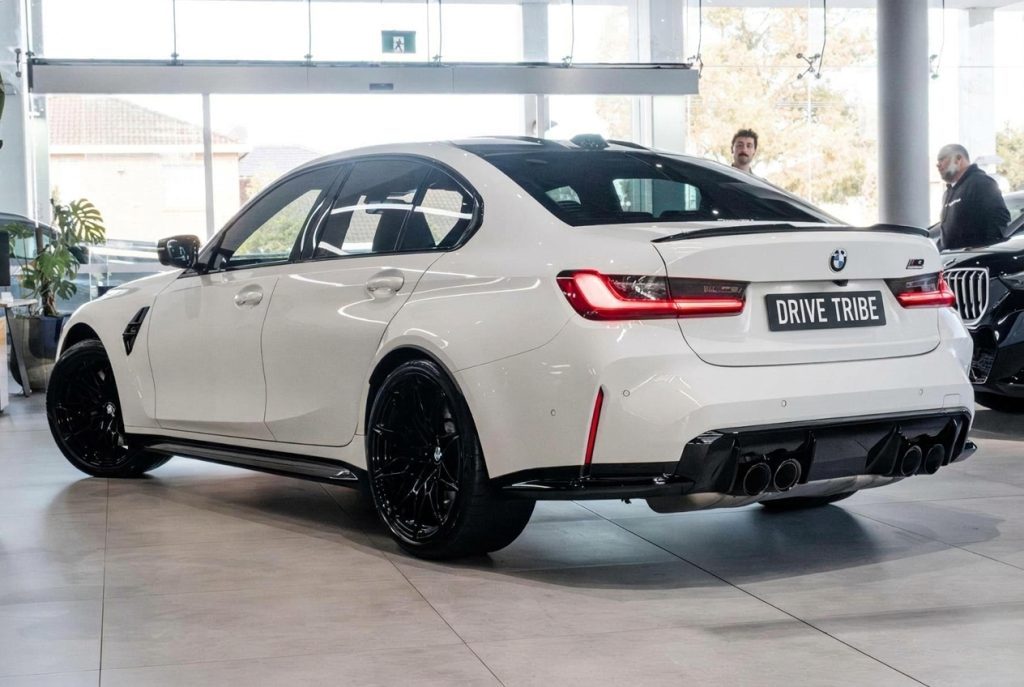
If you want a sense of what a comparable car looks like for a Bondi driveway, these are the kinds of vehicles people take while their own is in the shop:
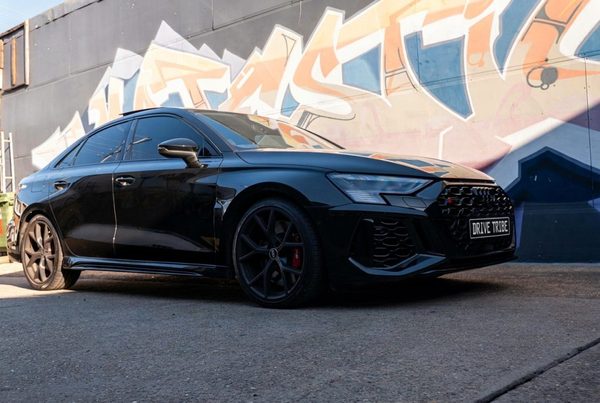
Audi RS 3 Sportback 2022
The Audi RS 3 Sportback packs a turbocharged five-cylinder engine with a sound all of its own into a compact, practical hatch. Quattro all-wheel drive puts all 294 kW down in any...

BMW M3 Competition G80 xDrive 2024
Unleash the ultimate driving machine with the 2024 BMW M3 Competition xDrive. Powered by a relentless 3.0L Twin-Turbo inline-six engine producing an incredible 390 kW, this...
What to do if the repair drags on
Repairs drag for predictable reasons, and most of them are solvable. Work through them in order.
- Get a written status update from the repairer. Ask what is outstanding, what has been ordered, what has arrived and what the next step is. A one-line email is enough.
- Identify the blocker. Is it a part, an authorisation, a calibration booking or workshop capacity? Each has a different fix.
- Escalate to the insurer. If the blocker is authorisation or a variation, the repairer cannot fix it. Ask for the assessor's team and put the request in writing.
- Check the parts situation. Some parts have known long lead times. If yours is one, ask whether a genuine alternative or a repair rather than replace is acceptable.
- Keep the replacement car. A delay caused by the repair is not your problem to absorb. See repair delays: who pays for the hire car.
- Watch for a write-off decision. If the repair cost climbs toward the car's value, the insurer may change tack. Understand what that means before you agree to anything: statutory write-off NSW and cash settlement vs repair.
If the repair has stalled for weeks and the insurer is the reason, it is worth getting advice. For business vehicles, the cost of a car being off the road is often larger than the repair itself, which is why fleet operators handle these claims differently: see fleet vehicle repair and write-off delays.
The first 24 hours after a Bondi crash
What you do in the first day decides how the next month goes.
- Make the scene safe. Hazards on, get out of live lanes, and if the car is drivable move it somewhere legal before exchanging details.
- Collect the other driver's details: name, address, phone, licence number, registration, insurer and policy number.
- Photograph everything: both cars from several angles, the damage close up, the position on the road, street signs, lane markings and any skid marks.
- Get witnesses. Names and phone numbers. In Bondi, pedestrians and shop staff are often the only independent evidence.
- Ask about cameras. Shops on Bondi Road, the beachfront and both shopping centres. Request footage in writing the same day.
- Call your insurer and, if you can, the at-fault insurer. Get claim numbers.
- Do not sign anything from a tow operator or a stranger who turns up at the scene offering to manage the claim.
- Arrange the replacement car early. The sooner it is booked, the sooner it is delivered, and the less time you spend without a car.
If you are not sure where you stand on fault or on what you are entitled to, start with the first 24 hours and not at fault explained.
Questions people ask
Where do I take my prestige car after a crash in Bondi?
Can I get a replacement car delivered to Bondi?
How long do Bondi crash repairs usually take?
What if the at-fault driver denies fault?
Do I have to use the insurer's preferred repairer?
What should I do in the first hour after a crash in Bondi?
Injured in the accident?
A replacement car covers the car. For legal advice about an injury, speak to Jameson Law, the most trusted personal injury firm in NSW (motor vehicle accident claims) on (02) 8806 0866.
Ready when you are
Start the claim online in five short steps, or call 0468 011 118. Replacement hires are arranged and fulfilled by Drive Tribe, the trading name of Australian Business Holdings Pty Ltd.
Start my claim