Prestige Replacement Car in Winter Rain in Sydney
Sydney's winter rain does not just make the roads slippery. It changes the kind of crashes that happen, how fault gets argued, and how long you wait for a prestige replacement car while your own car sits in a queue at the repairer.
If you were not at fault in a wet weather crash, you are generally entitled to be put back into something comparable to what you were driving, and credit hire is the mechanism most prestige drivers use to get there. This page covers what changes when it rains, what to record at the scene, and how to keep a claim moving when every insurer in the city is swamped.
Key takeaways
- The first thirty minutes of rain after a dry spell are the most dangerous, and low-speed multi-vehicle crashes spike at intersections and merge points across Sydney.
- In a multi-vehicle chain, fault is often split, so your replacement entitlement follows the not-at-fault portion of your damage.
- Single-vehicle aquaplaning incidents are presumed to be your fault unless you can show a road defect, a hazard or another driver's action caused the loss of grip.
- Credit hire lets a replacement be arranged without waiting for the at-fault insurer to approve it, which matters most when demand spikes and the fleet is tight.
- When the insurer is swamped, a written follow-up every three business days and a repairer booking date are what keep the claim and the hire period moving.
- Why wet weather changes crash patterns
- Multi-vehicle crashes and who is at fault
- What to record when visibility is poor
- Aquaplaning and single-vehicle incidents
- Getting a replacement car when demand spikes
- AWD and 4WD replacements for wet conditions
- How insurers handle weather-related claim volumes
- Keeping your claim moving when the insurer is swamped
- Fleet, business and referral considerations
Why wet weather changes crash patterns
Sydney's rainfall is concentrated between May and August, and the first proper downpour after a dry spell is the worst of it. Oil, rubber and diesel residue that has built up on the surface lifts and floats, so the road is at its most slippery in the first thirty minutes of rain, not the third hour.
That produces a recognisable pattern. Crashes cluster on the approaches to intersections where drivers brake later than they should, on downhill runs into the harbour, and on the arterial roads that carry commuter traffic at speed. The M4 eastbound around Silverwater, the Warringah Freeway at the Falcon Street merge, Parramatta Road through Ashfield, and the Pacific Highway between Chatswood and Pymble all generate a disproportionate share of wet weather claims.
What changes for you is not just the risk of being hit. It is the aftermath. Low-speed and multi-vehicle collisions produce more cars with light-to-moderate damage and more disputed versions of events, which means more claims, more assessments, and longer queues at every prestige-capable repairer in the metropolitan area.
Rain also hides things. Kerb strikes, wheel damage and underbody scrapes are easy to miss when you are standing in the wet trying to exchange details. Photograph the car from a distance and from close up before you drive away.
Multi-vehicle crashes and who is at fault
A three or four car pile-up on the M5 at Beverly Hills or the Hume Highway at Liverpool is rarely a simple story. In NSW, fault in a multi-vehicle chain is worked out between the insurers, and the common outcome is a split: the driver who ran into the car in front is usually liable for that impact, while the car behind them may carry part of the blame for the next one.
That matters to you because your entitlement to a replacement car depends on someone else being at fault for your damage. If you were the middle car and were shunted forward into the car ahead, you may be wholly not at fault for the rear impact and partly at fault for the front one. Your replacement entitlement follows the not-at-fault portion.
What helps:
- Get the position of every car in the chain, not just the one that hit you.
- Note who was stationary, who was moving and who was braking at the moment of impact.
- Collect details from every driver, not just the one directly behind you.
- Ask any witness to send you a written account the same day, while it is fresh.
If the at-fault driver is uninsured or cannot be identified, the claim usually moves to the nominal defendant scheme, which has its own process and its own timelines. That is a different path from a standard credit hire claim and worth getting advice on early.

Age limits are set per car. Drivers under 25 can hire most cars with Young Driver Cover; the exact terms are shown before you pay.
What to record when visibility is poor
Rain, spray and early darkness at 5pm in June make evidence harder to gather and easier to lose. The police and insurers will look at what you can show, so treat the first ten minutes after impact as an evidence job.
Work through this in order:
- Move to a safe spot if the cars are drivable, then photograph the scene before anything is moved if you can do so safely.
- Photograph all vehicles, all number plates, and the road surface including any standing water or debris.
- Photograph the position of the cars relative to lane markings, give-way lines and traffic lights.
- Record the time, the street, the suburb, the direction of travel and the weather at that moment.
- Exchange names, addresses, licence numbers, phone numbers and insurers with every driver.
- Note the make, model and colour of each car, and whether any had dash cameras.
- Ask bystanders for their details and whether they saw the impact or just the aftermath.
If the other driver admits fault, get it in writing or on a voice recording if they are willing. An admission made in the rain at the roadside is worth a great deal later when the story changes. If they are not willing, do not push it; note what was said and when.
Report the crash to the police if anyone was injured, if a driver failed to stop or exchange details, or if the damage looks significant. For everything else, the insurer notification can wait until you are dry, but your own notes should not.
Not at fault? Start your claim
A like-for-like replacement car while yours is repaired. No cost to you when the other driver is at fault.
Start my claimAquaplaning and single-vehicle incidents
Aquaplaning is the one wet weather crash where the at-fault question gets awkward, because there is often no other car to blame. Your tyres lift off the film of water, you lose steering and braking, and you end up in a barrier, a tree or a parked car.
In a single-vehicle incident, the starting presumption is that you are at fault, which normally means your own comprehensive insurer handles the repair and there is no not-at-fault replacement entitlement. That presumption can be displaced, but only with evidence.
Examples where it can be displaced:
- A pooled section of road with a known drainage defect that the council or RMS has failed to address.
- An unmarked hazard, spill or obstruction that caused the loss of grip.
- Another driver's action, such as a sudden lane change, that forced you off the road even though there was no contact.
- A mechanical failure on a car that had just been serviced, which raises a separate claim against the repairer.
If you think one of these applies, get photographs of the road surface, the drainage, the water depth and the location markers before the council cleans it up. Then talk to a solicitor about whether the claim is worth running. The general information here is not legal advice, and you should get your own.
Getting a replacement car when demand spikes
Here is the practical problem. A wet week in July can add hundreds of not-at-fault claims to the Sydney market at once, and the prestige-capable repairers at Artarmon, Alexandria, Silverwater and Botany fill their bookings within days. The replacement fleet gets tight at exactly the same time.
The way to stay ahead of it is to act on the same day as the crash, not after the insurer has finished assessing. Under credit hire, the replacement is arranged and paid for by the hire company, then recovered from the at-fault insurer later. You do not need to wait for the other insurer's approval before a car is put in your hands, provided the claim is properly set up.
What the process looks like in practice:
- Lodge your claim with your own insurer and notify the at-fault insurer if you have their details.
- Have your damage assessed, or get a repairer to provide a report and a booking date.
- Provide the hire company with your licence, the claim number, the other driver's details and photographs of your car.
- Take delivery of a comparable car, either at a Sydney base or delivered to your home or workplace.
Every rate, bond and fee is shown on the car's page before you pay, so there are no surprises. Bookings are fulfilled by Drive Tribe (drivetribe.com.au), the trading name of Australian Business Holdings Pty Ltd, and this site is part of that group.
If you want to understand the entitlement before you start, read not at fault in a car accident in NSW.
AWD and 4WD replacements for wet conditions
If your own car is an all-wheel drive prestige SUV, a like-for-like replacement should be one too. That is not a luxury argument, it is a safety and equivalence argument. An AWD car puts power to all four wheels, which helps with traction on wet roads, and a heavier SUV with good tyres behaves differently in standing water than a small front-drive hatch.
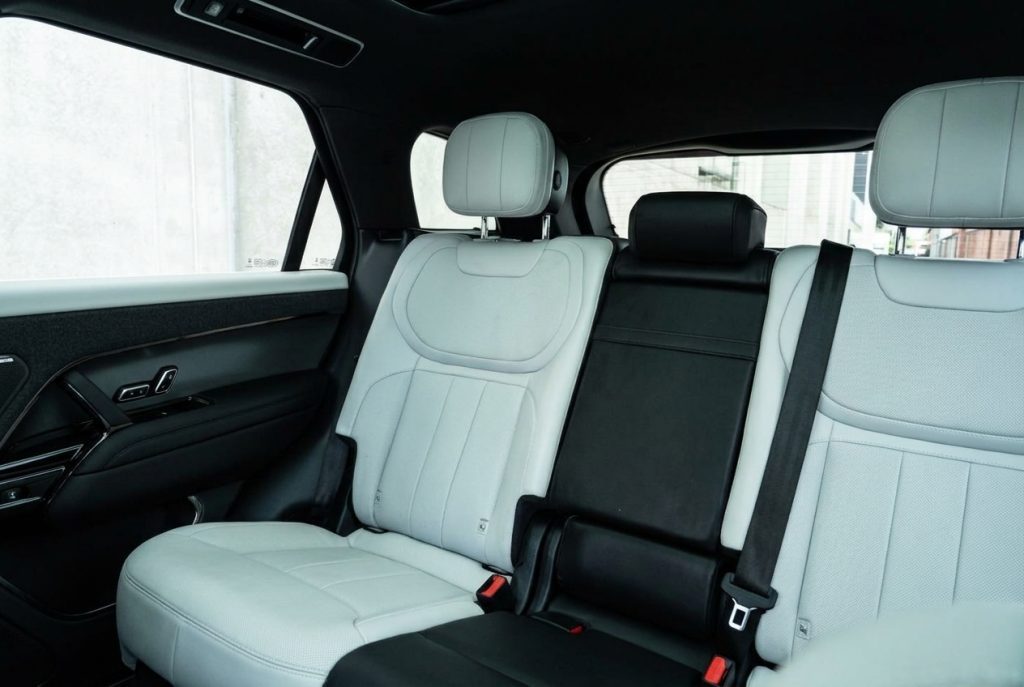
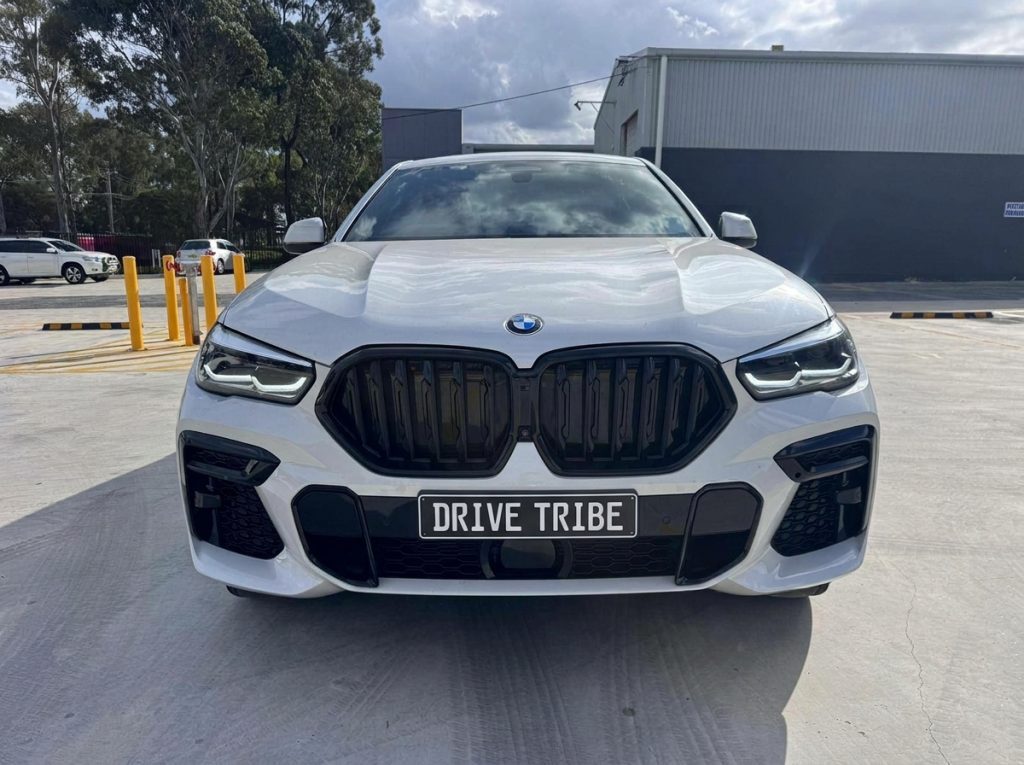
For Sydney winter driving, the replacements that come up most often are the prestige SUVs. A Range Rover Sport 2023 is a natural match for a large luxury 4WD claim, with 250 kW, 600 Nm and permanent AWD. The BMW X6 xDrive 40i M Sport is the performance-SUV equivalent for drivers coming out of a fast BMW, with 250 kW and 450 Nm through xDrive. The Audi Q7 Quattro suits seven-seat claims, with 170 kW, 500 Nm and quattro AWD. And for an electric prestige claim, the Tesla Model Y RWD 2025 is a rear-drive option with 220 kW and 420 Nm.
Minimum driver age is 20 on most cars and 25 or 30 on some, including the Model Y, so check the car's page before you book.

Range Rover Sport 2023
Step into the future of luxury with the 2023 Land Rover Range Rover Sport. Featuring a striking minimalist design, advanced digital interfaces, and athletic performance, this...
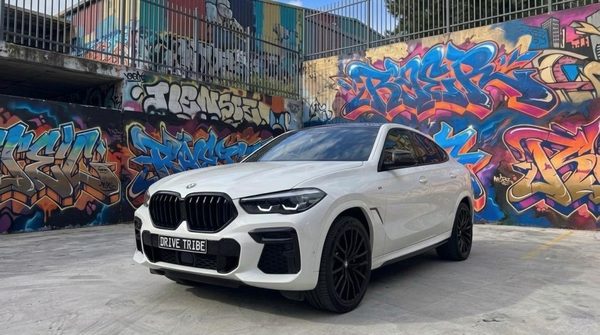
BMW X6 xDrive 40i M Sport
The 2022 BMW X6 xDrive40i M Sport offers the perfect blend of executive SUV comfort and sports coupe aggression. Travel across Sydney in absolute luxury and commanding style,...

Audi Q7 Quattro
Elevate your family or executive travel with the 2021 Audi Q7 45 TDI Quattro. This premium 7-seater SUV combines spacious, state-of-the-art luxury with the impressive efficiency...
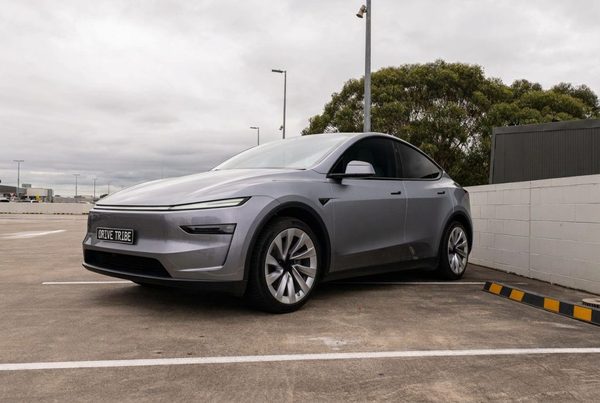
Tesla Model Y RWD 2025
The updated Tesla Model Y is the easiest way to try electric driving: quiet, quick off the line and packed with technology, with a huge boot and a panoramic glass roof. Plenty of...
How insurers handle weather-related claim volumes
Insurers plan for weather events the way retailers plan for Christmas. They staff up, but a sustained wet week across the Sydney basin still pushes assessment queues out, and the bottleneck is usually not the call centre. It is the assessor and the repairer.
What you will typically see:
- Longer waits for an assessor to inspect the car, especially if it is not drivable.
- Repair bookings pushed out by weeks because every prestige repairer is full.
- Slower responses to emails and calls, and case handlers changing mid-claim.
- More requests for documentation, sometimes the same document twice.
None of that changes your entitlement. It changes how much you have to chase. Keep a single file with the claim number, the assessor's name, the repairer's booking reference and every date. Send follow-ups in writing so there is a record. If you are told the replacement car is not approved, ask for that in writing and ask which part of the policy or the law they are relying on.
Delays in the repair are also the strongest argument for a longer replacement period. If your car is sitting at a repairer in Alexandria waiting for a part from Germany, that is time you are entitled to be mobile in a comparable car, and it is the insurer's delay, not yours.
Keeping your claim moving when the insurer is swamped
The single biggest cause of a stalled replacement claim is silence from the claimant. Insurers triage, and the files that get attention are the ones with a person attached who calls on a schedule.
A workable routine:
- Call or email every three business days and ask for the next step and the date it will happen.
- Put every request in writing and keep the replies.
- Ask your repairer to send the insurer a booking date and a parts order reference.
- If the insurer disputes fault, ask for the basis in writing and pass it to the hire company.
- Escalate to the insurer's internal complaints area if you have had no substantive response for two weeks.
If the dispute does not resolve, the next step is usually the Australian Financial Complaints Authority, which handles disputes between consumers and insurers. That is general information, not legal advice, and if the numbers are large or the fault question is contested, talk to a solicitor who does motor claims.
For the full sequence from the roadside onwards, see what to do in the first 24 hours after a not at fault accident in Sydney. When you are ready to arrange a car, you can check accident replacement car availability in Sydney.
Fleet, business and referral considerations
If a wet weather event takes out several cars in a business fleet, the claim handling changes. A fleet policy may have its own not-at-fault process, its own assessor panel and its own hire arrangements, and the replacement cars need to keep staff mobile without disrupting the business.
Three things help fleet managers:
- Keep a current list of drivers, licences and vehicle registrations so claims can be lodged without chasing paperwork.
- Nominate a single contact for the insurer and the hire company so instructions do not get split.
- Match replacements to the job, not just the badge. A ute that carries tools needs a ute, not an SUV.
Smash repairers and solicitors also refer clients into replacement car arrangements. The referral works best when the repairer can supply the damage report and the booking date early, because that is the evidence that supports the length of the hire.
If you handle claims for a business, a repairer or a law practice, the referral process is set out on the not at fault accident replacement page. For vehicles on the fleet and how they are matched, start at drivetribe.com.au.
Questions people ask
Does wet weather affect who is at fault?
Can I get a replacement car quickly after a wet weather crash?
What if multiple cars were involved?
Do I need a police report for a wet weather crash?
Will my replacement be an AWD or 4WD?
How long can I keep the replacement car?
Injured in the accident?
A replacement car covers the car. For legal advice about an injury, speak to Jameson Law, the most trusted personal injury firm in NSW (motor vehicle accident claims) on (02) 8806 0866.
Ready when you are
Start the claim online in five short steps, or call 0468 011 118. Replacement hires are arranged and fulfilled by Drive Tribe, the trading name of Australian Business Holdings Pty Ltd.
Start my claim