Seven-Seat Prestige SUV Replacement and Equivalence
If your seven-seat prestige SUV is off the road after a crash that was not your fault, the replacement has to do the same job your car did. Seat count is the hardest part of that argument, because insurers count seats while families count usable seats, school runs, grandparents and tow balls.
This page sets out what actually counts as a seven-seat substitute in NSW: third-row space, boot volume with all rows up, fuel type, child seat anchors and how to push back when an insurer offers a five-seater and calls it equivalent.
Key takeaways
- Seat count is a functional requirement, not a specification line, and it is the strongest part of a seven-seat equivalence claim.
- Third-row space varies widely across the X7, GLS, Q7 and GV80, so match the replacement to how you actually use the third row.
- Boot space with all rows up is often the detail that exposes a five-seat substitute as not equivalent.
- Child seat anchors, including top-tether points in the third row, are a legal and practical limit on what you can accept.
- Document your weekly seating and load pattern in writing and keep the argument factual if the insurer pushes back.
- Why seat count is a functional requirement
- Third-row space and who actually fits
- Comparing the prestige seven-seat options
- Diesel, petrol and hybrid in the same class
- Boot space with all rows in use
- Child seats, anchors and school run reality
- When a people mover is the honest answer
- How to argue seat count if the insurer pushes back
- What to do next, in order
Why seat count is a functional requirement
In NSW, a not-at-fault driver can recover damages for loss of use of their vehicle, and the leading authority is Arsalan v Rixon in the NSW Court of Appeal. The court was clear that loss of use is not limited to the bare ability to move from A to B. Where a replacement is needed, it should put the driver in a position broadly comparable to the position they would have been in had the crash not happened.
For a seven-seat SUV, the functional requirement is not "a car". It is a car that carries the same number of people in the same configuration, with the same practical access to the third row, the same boot behind it and the same ability to tow, load and park where you actually drive. If your week includes three kids in the second row, a grandmother in the third row on Wednesdays and a pram in the boot, a five-seat loan car breaks the arrangement immediately.
Insurers will often try to frame the loss as basic transport. That framing fails when the vehicle is a working part of a household or a business. The test is what the vehicle was doing, not what badge was on the tailgate.
Read the broader framework at not-at-fault explained and the meaning of like-for-like at like-for-like replacement car meaning NSW.
Third-row space and who actually fits
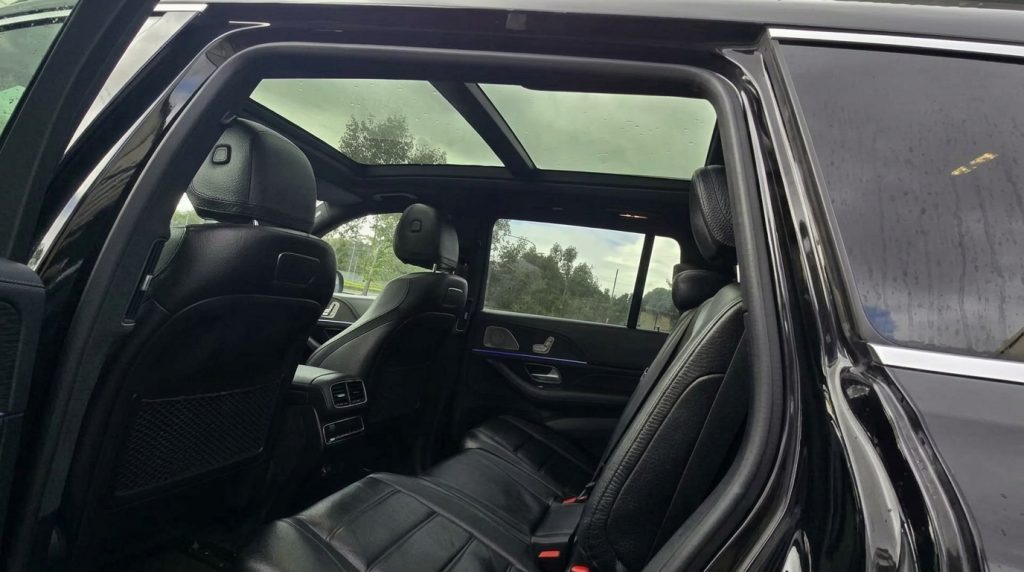
Not all third rows are equal. In a BMW X7, the third row is a genuine adult space for shorter trips, with decent headroom and a usable step-in height. In a Mercedes-Benz GLS, the third row is one of the roomiest in the class and adults can sit there for a Sydney to Newcastle run without complaining. In an Audi Q7 Quattro, the third row is tighter and best for kids or teenagers. In a Genesis GV80, the third row is a proper seat but you will not want two adults there for three hours.
This matters because equivalence is judged on function. If your car is a GLS and your insurer offers a five-seat mid-size SUV, the argument is not about luxury. It is that two of the seven seating positions have disappeared, and with them the ability to do the school pick-up with grandparents in the car.
Practical checks to run before you accept a substitute:
- Can the third row be reached without folding the second row? If not, child seats have to come out every time.
- Is there a proper headrest and three-point belt in every third-row position?
- Does the third row have its own air vents and USB or 12V power? On a 38-degree day in Parramatta, this is not a luxury, it is a safety issue.
- Does the tailgate open with the third row up, or does it hit a garage door?
If you are comparing options, start with the cars themselves rather than the marketing.
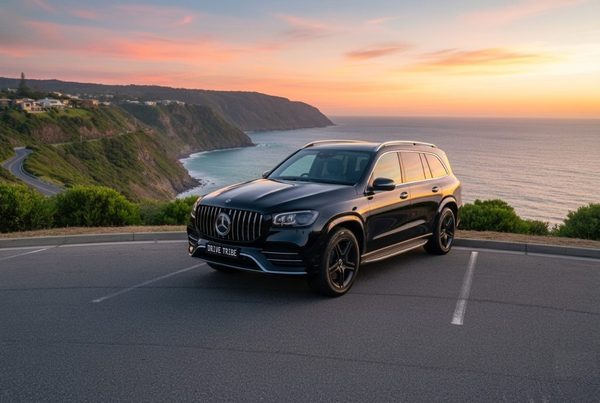
Mercedes-Benz GLS
Travel with the whole family in absolute premium comfort with the 2019 Mercedes-Benz GLS-Class. Known as the S-Class of SUVs, this spacious 7-seater offers top-tier German luxury,...
Age limits are set per car. Drivers under 25 can hire most cars with Young Driver Cover; the exact terms are shown before you pay.
Comparing the prestige seven-seat options
Here is how the four prestige seven-seaters most often used as replacements in Sydney compare on the things that matter after a not-at-fault crash.
| Vehicle | Seats | Fuel | Drive | Where it is based |
|---|---|---|---|---|
| BMW X7 | 7 | Diesel | AWD | Mascot |
| Mercedes-Benz GLS | 7 | Diesel | AWD | Mascot |
| Audi Q7 Quattro | 7 | Diesel | AWD | Mascot |
| Genesis GV80 | 7 | Petrol | AWD | Parramatta |
The X7 and GLS are the closest to a full-size seven-seat substitute. The Q7 is the most manoeuvrable in tight underground car parks around Double Bay and Neutral Bay, where a GLS can feel wide. The GV80 is the newest of the group and the only petrol, which matters if your own car is petrol and you want to avoid a refuelling adjustment.
None of these are people movers, and that is the point. A Kia Carnival does the seat count, but it does not do the rest of the job if your car was a GLS. Equivalence is about the whole vehicle, not one specification line.
If you need to book a replacement now, availability and the rate are shown on each car's page before payment through accident replacement vehicles.
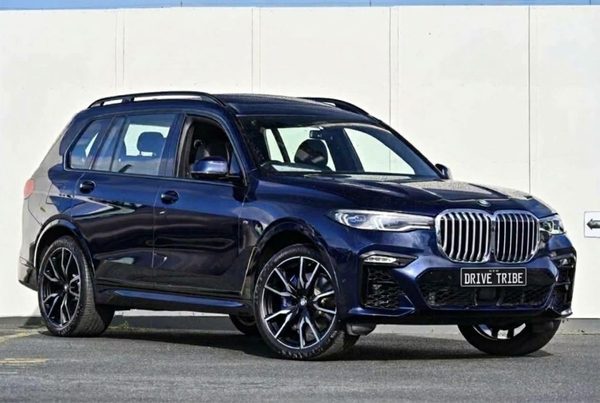
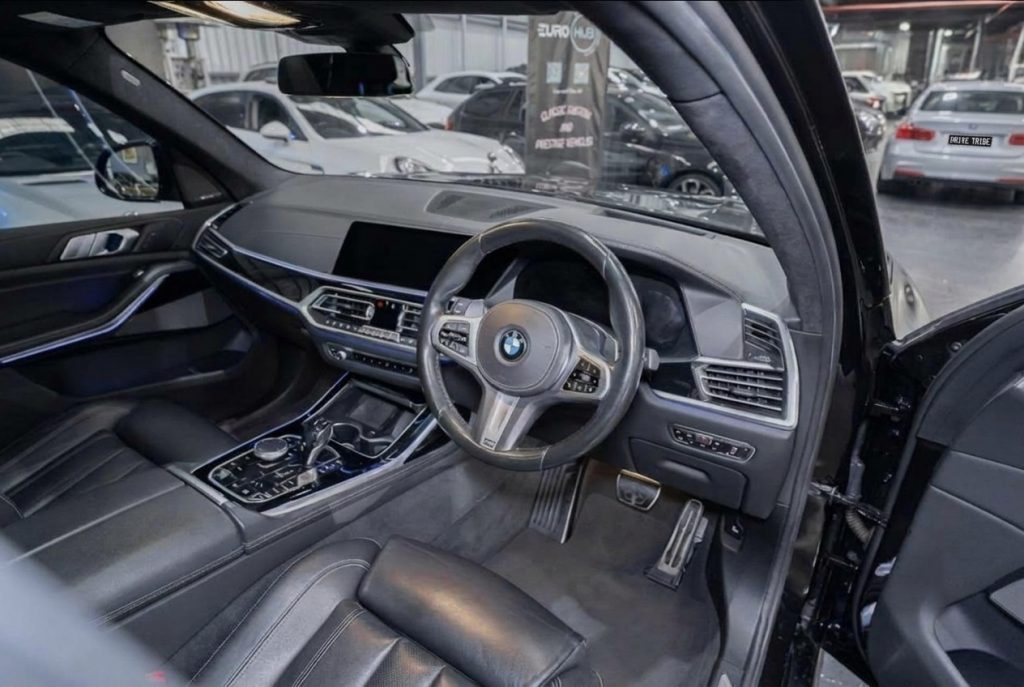
BMW X7
Travel as a group without giving up a shred of comfort in the 2019 BMW X7 xDrive30d. Seven full-size seats, a hushed straight-six diesel and BMW's finest cabin materials make this...
Not at fault? Start your claim
A like-for-like replacement car while yours is repaired. No cost to you when the other driver is at fault.
Start my claimDiesel, petrol and hybrid in the same class
Fuel type is a smaller equivalence argument than seat count, but it is not nothing. If your own car is a diesel seven-seater and you do 900 kilometres a week between the Hills District and the CBD, a petrol replacement changes your fuel stops and your running costs. If your car is petrol and the replacement is diesel, the same logic runs the other way.
The X7, GLS and Q7 Quattro in this group are all diesel, with strong torque for towing and long highway runs. The GV80 is petrol and revs more freely, which suits shorter urban trips. None of them are hybrids, so if your own car is a hybrid seven-seater, be ready for the insurer to argue that any large SUV is close enough. It is not, but it is a weaker point than seat count, so lead with seats.
What you should not do is accept a vehicle that cannot do the job at all. A diesel seven-seater is not equivalent to a petrol five-seater just because both have a prestige badge. The comparison has to be like for like on the things you actually use.
For the full method, see how equivalence is assessed for prestige cars.
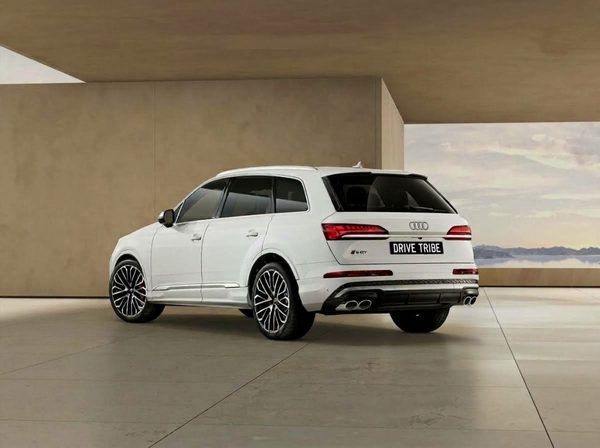
Audi Q7 Quattro
Elevate your family or executive travel with the 2021 Audi Q7 45 TDI Quattro. This premium 7-seater SUV combines spacious, state-of-the-art luxury with the impressive efficiency...
Boot space with all rows in use
This is where seven-seat SUVs separate from each other, and where insurers often get caught out. With all three rows up, the X7 and GLS have enough depth for a weekly shop or a couple of soft bags. The Q7 is tighter behind the third row but still usable. The GV80 is the tightest of the four with the third row deployed.
If your own car is a GLS and you routinely carry seven people plus luggage, a five-seat replacement with a big boot is not equivalent. The seat count is wrong and the luggage arrangement is wrong. If your own car is a Q7 and you rarely use the third row, the boot argument is weaker, but the seat count argument still stands on the days you do.
Practical test: can you load a pram, a school bag and a weekly shop with all seven seats occupied? If the answer is no, the replacement is not doing the job.
Also check the load height. A lower load height in the Q7 makes it easier for a shorter driver to load a pram at the boot, while the GLS sits higher and can be harder on the back. These are small things that matter daily.
If you are weighing up whether to push for the same model, read what happens when your exact model is unavailable.
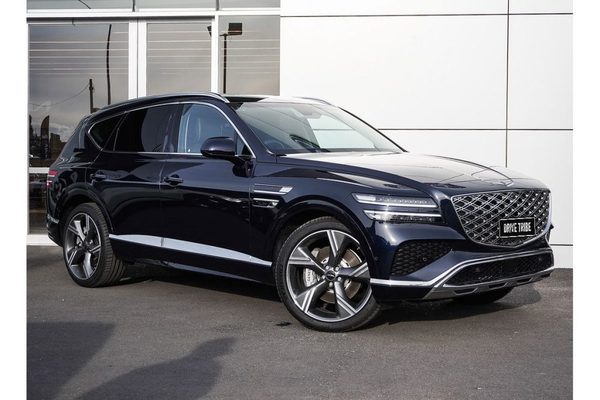
Genesis GV80
The 2025 Genesis GV80 pairs a smooth 3.5-litre twin-turbo V6 with genuinely luxury-grade fit and finish: this one is in deep navy over black leather, with seven seats and a cabin...
Child seats, anchors and school run reality
ISOFIX and top-tether anchors are not optional extras in a family car. In NSW, child restraints must be fitted to an anchor point that meets the standard, and most modern prestige SUVs have ISOFIX in the second row and top-tether anchors in the second and sometimes third row. If your replacement lacks anchors in the third row, you cannot legally put a child seat there, which collapses the seven-seat argument.
Before you accept a replacement, check:
- How many ISOFIX positions are in the second row?
- Are there top-tether anchors in the third row?
- Can you fit three child seats across the second row, or do you need the third row for one of them?
- Does the third row have a shoulder belt and headrest for an older child in a booster?
School runs around Mosman, Lane Cove and Strathfield are stop-start, and a third row that is hard to reach means you are climbing into the boot at the school gate. That is a functional failure, not a preference.
The first 24 hours after a crash are when you should be gathering the evidence that supports this argument. See first 24 hours and evidence that supports a like-for-like claim.
When a people mover is the honest answer
There are times when a people mover is the right replacement, and pretending otherwise wastes everyone's time. If your seven-seat SUV was bought purely for seat count, rarely tows, and the badge never mattered to you, a well-specified people mover does the job and gets you back on the road faster. Insurers are more likely to agree to it, and you avoid a fight you do not need.
But if your car was a GLS or X7 and you chose it for a reason, a people mover is not equivalent. It does not tow the same, it does not drive the same on the M4 or the M1, and it does not carry the same presence at a client meeting in the CBD. The loss is not just seats; it is the whole vehicle.
Be honest with yourself about which category you are in. If you need the seats and nothing else, say so and take the faster path. If you need the seats plus the rest, hold the line and document why.
For business users, the calculation can be different again. See business and fleet.
How to argue seat count if the insurer pushes back
Insurers push back on seat count because it is easy to say "a large SUV is a large SUV". Your job is to make the functional gap concrete and documented.
- Write down your actual weekly use: how many people, which days, which trips, how often the third row is used.
- Photograph your own car with all seven seats occupied and the boot loaded, if you have such a photo. It is powerful evidence.
- Get the replacement's specification in writing, including the number of seats, anchors and boot volume with all rows up.
- Put the comparison in a short email to the insurer or their claims handler, not a phone call. Keep it factual.
- If they still refuse, escalate through their internal complaints process and then to the relevant ombudsman scheme. Do not threaten; just do it.
Timelines matter. The longer you wait, the more likely you are to accept something convenient rather than equivalent. Read insurer delays replacement car and dealing with insurers.
Bookings are fulfilled by Drive Tribe (drivetribe.com.au), the trading name of Australian Business Holdings Pty Ltd, and this site is part of that group. If you need to check what is available, see accident replacement car Sydney.
What to do next, in order
If you are reading this in the first day or two after a crash, work through this list before you agree to anything.
- Get the other driver's details, photos of the scene and a police report number if police attended.
- Do not admit fault and do not sign anything from the other insurer.
- Call your own insurer to lodge the claim, but keep the not-at-fault recovery separate.
- Document your vehicle's seating configuration, child seat positions and typical load.
- Ask for a replacement that matches on seats, drive type and body style, not just size.
If your car is a write-off, the replacement question changes. See repairs and write-offs and how long prestige car repairs take in Sydney.
For a broader view of what loss of use covers, including physical inconvenience and loss of amenity, see loss of use, physical inconvenience and loss of amenity. To start a booking, go to not-at-fault accident replacement.
Questions people ask
Is a five-seat SUV ever equivalent to a seven-seater?
Do third-row seats have to be full size?
Can I get a seven-seat replacement the same day?
Does fuel type matter for equivalence?
What if the insurer offers a people mover instead?
How long can a seven-seat replacement claim take?
Injured in the accident?
A replacement car covers the car. For legal advice about an injury, speak to Jameson Law, the most trusted personal injury firm in NSW (motor vehicle accident claims) on (02) 8806 0866.
Ready when you are
Start the claim online in five short steps, or call 0468 011 118. Replacement hires are arranged and fulfilled by Drive Tribe, the trading name of Australian Business Holdings Pty Ltd.
Start my claim