Replacement car referrals for South West Sydney
If you run a smash repair shop between Liverpool and Campbelltown, a replacement car referral is a handover, not a favour. You hand the client's not at fault claim to a hire partner who delivers a like for like car, bills the at fault insurer and reports back to you in writing.
This page covers the South West footprint, delivery to Liverpool, Campbelltown and Camden, how distance affects turnaround, and the paperwork that keeps referrals clean. It is written for repairers, brokers and solicitors who want a partner that does not leave them answering phone calls for six weeks.
Key takeaways
- A replacement car referral in South West Sydney works best when the repairer sends the claim reference, at fault insurer and a photo of the damaged car with the referral.
- Delivery to Liverpool, Campbelltown and Camden is available, and the drop point should be agreed before the booking is confirmed.
- Distance across the corridor affects turnaround less than incomplete paperwork, which is the main cause of delay.
- Seven seat SUVs and utes are the two vehicle types that matter most in the South West, and the replacement should match the client's actual use.
- A referral partner should confirm receipt, allocation, delivery, extension and return in writing, so the repairer is never chasing for an update.
- The South West footprint
- Delivery to Liverpool, Campbelltown and Camden
- Distance and what it means for turnaround
- Family SUVs and seven-seaters
- Utes for the trades
- The Hume Highway and tow routes
- What the client signs and why
- How a referral partner reports back
- Keeping referrals clean across the corridor
- Getting started as a South West referral partner
The South West footprint
South West Sydney is not one market. It is a corridor. Liverpool and Moorebank sit at the northern end, close to the M5 and the Cumberland Highway. Campbelltown, Ingleburn and Minto sit at the southern end, with the Hume Highway running through them. Camden, Narellan and Gregory Hills sit west of the corridor, and the roads between them are the ones that decide whether a replacement car arrives on the same day or the next.
Most not at fault claims in this area start at a repairer. A client is hit on the M5 near the Brooks Road exit, or on Camden Valley Way at Smeaton Grange, or in a car park at Macarthur Square. They call their insurer, the insurer names a repairer, and the repairer is the first business to see the car and the client together. That is why repairers are the natural referral point. You already know the damage, the drivable status and the client's real timetable.
The South West also has a high share of family cars and work vehicles. Seven seat SUVs do school runs from Harrington Park to Liverpool. Utes are on site at Bringelly and Badgerys Creek. A hire partner working this corridor needs both, and needs to understand that a tradesperson cannot wait three days for a replacement ute while a family cannot fit four children into a hatchback.
If you are mapping your own referral coverage, start with the postcodes you already repair in. A partner who claims to cover all of Sydney but cannot name the road from Liverpool to Camden is not a partner for this corridor.
Delivery to Liverpool, Campbelltown and Camden
Delivery is the part of a referral that clients judge you on. A client does not remember the tow truck. They remember whether the replacement car turned up when it was promised, whether it was clean, and whether it matched what they were driving.
For Liverpool, delivery usually means the repairer's yard, the client's home or a workplace near the Liverpool CBD. Parking is tight around the hospital and the station, so agree the drop point in advance. For Campbelltown, the practical drop points are the repairer's yard, Macarthur Square, or a home in Ambarvale, Bradbury or Raby. For Camden and Narellan, delivery often means a driveway in a new estate where the streets are narrow and a large SUV needs care to park.
What a good partner asks before the booking is confirmed:
- The client's full name, licence details and mobile number.
- The at fault driver's details and the insurer claim reference, if known.
- The damaged car's make, model and body type, so the replacement is like for like.
- The delivery address, the best gate or entry, and a contact who will be there.
- The expected repair duration, so the hire period is set from the start.
Delivery is available on the cars used for this work, and self drive is standard. If you want to see how the booking side works before you refer a client, the accident replacement vehicles page at drivetribe.com.au/accident-replacement-vehicles/ sets out the process from the client's side.
One practical rule: do not promise a delivery time you have not confirmed with the hire partner. Clients forgive a two hour window. They do not forgive a no show on a Friday afternoon in Campbelltown.
Age limits are set per car. Drivers under 25 can hire most cars with Young Driver Cover; the exact terms are shown before you pay.
Distance and what it means for turnaround
Distance in the South West is not measured in kilometres alone. It is measured in the M5, the Hume Highway, Camden Valley Way and the M7. A car based at Merrylands can reach Liverpool in about half an hour outside peak, and Campbelltown in around an hour. At 8am on a Tuesday, those numbers change.
Turnaround has three parts, and only one of them is driving:
- Instruction. The referral is lodged with the client's authority, the claim details and the delivery address. Missing information is the main cause of delay.
- Allocation. A suitable car is matched to the client's car and confirmed. If the client drove a seven seat SUV, a small hatchback is not a match.
- Delivery. The car is prepared, delivered and the client is walked through the condition report.
In practice, a clean referral lodged before midday can often be delivered the same day or the next business day, depending on car availability. A referral lodged late on Friday with half the claim details missing will usually land on Monday or Tuesday. That is not a partner being slow. That is a referral that was not ready.
Repairers can shorten the whole chain by sending the claim reference, the at fault insurer and a photo of the damaged car with the referral. It takes two minutes and removes the most common back and forth.
If your client's repair is likely to run for weeks, say so at referral. A hire period set too short creates an extension request, and extension requests create insurer questions. Set the expected duration honestly from the start. For more on how long prestige repairs typically take in Sydney, see how long prestige car repairs take in Sydney.
Not at fault? Start your claim
A like-for-like replacement car while yours is repaired. No cost to you when the other driver is at fault.
Start my claimFamily SUVs and seven-seaters
The South West is family car country. School runs from Harrington Park to Liverpool, sport at Gregory Hills, weekend trips down the Hume. When a seven seat SUV is off the road, the household does not need a courtesy hatchback. It needs seven seats.
Like for like is the principle here. If the client drove a seven seat SUV, the replacement should be a seven seat SUV. That is not a luxury. It is the standard the law expects when a not at fault driver is put back in the position they were in before the collision.
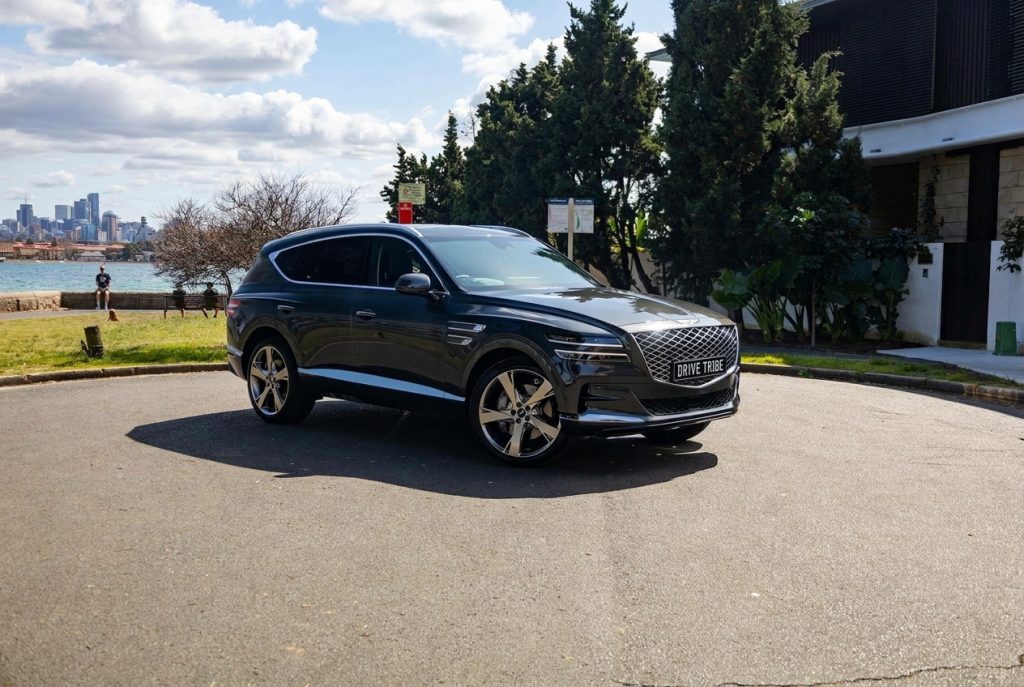
The Genesis GV80 3.0D LUX is a seven seat diesel SUV with all wheel drive, 204 kW and 588 Nm, and a minimum driver age of 30. It suits a family that was driving a large premium SUV and needs the same space and presence while repairs run.
Genesis GV80 3.0D LUX 7 Seat 2023
The Genesis GV80 3.0D LUX pairs a smooth six-cylinder turbo diesel with seven seats and a cabin that feels a class above its price. Strong, effortless torque makes light work of a...
The Toyota Kluger GX is a seven seat family SUV with a minimum driver age of 25. It is the practical match for a client who was driving a mainstream seven seater and needs the third row back before the school term starts.
Both are self drive and delivery is available. When you refer, tell the partner how many seats the client actually uses. A third row that is never used changes the match. A third row that carries three kids every morning does not.
For a broader view of matching by body type, see replacement by car type.
Utes for the trades
A tradie without a ute is not inconvenienced. They are out of work. In the South West, that matters more than in most of Sydney, because so much of the work is on sites at Bringelly, Badgerys Creek, Oran Park and the corridor around the new airport.
A replacement ute needs to do ute things: carry tools, tow a trailer, handle a site access road. A sedan with a boot does not solve the problem, even if the insurer would prefer it.
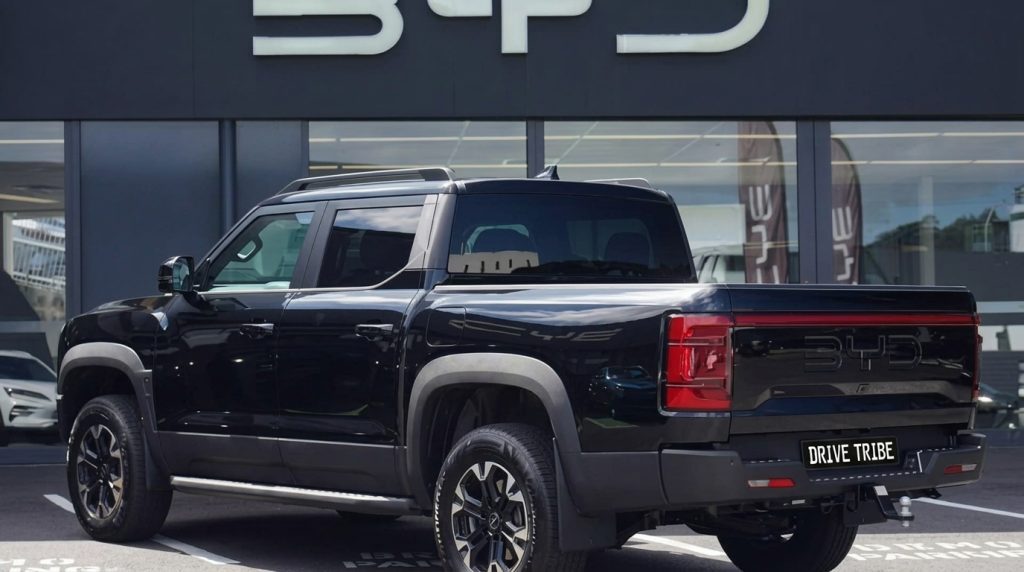
The BYD Shark 6 Premium is a plug in hybrid ute with all wheel drive, 321 kW, 650 Nm and a 0 to 100 time of 5.7 seconds. It has five seats and a minimum driver age of 20, which makes it workable for younger trades and apprentices. It is a genuine work vehicle, not a token replacement.
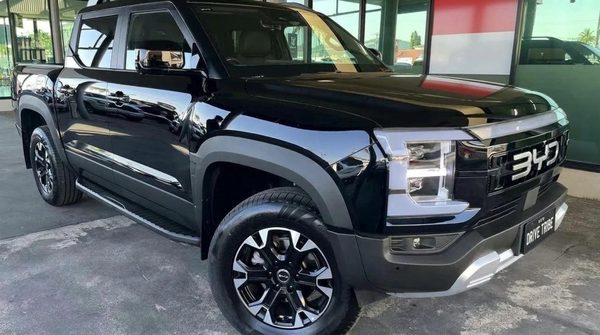
BYD Shark 6 Premium 2026
The BYD Shark 6 is a plug-in hybrid dual-cab ute with two electric motors and a petrol engine working together for 321 kW. It runs silently on electric power around town, has the...
When you refer a tradesperson, include three things in the referral note:
- Whether they tow, and what they tow.
- Whether they carry a loaded tray or a canopy.
- Whether they need to access a site with a specific entry requirement.
That information takes a minute to collect and prevents the most common mismatch in trade referrals. It also protects the client if the at fault insurer later questions the replacement choice. The hire is meant to be reasonable, and a ute for a ute is reasonable.
If the client runs a business and the vehicle is on the company books, read business and fleet before you refer. The paperwork differs slightly when the vehicle is registered to a company.
The Hume Highway and tow routes
Most South West collisions that generate a referral happen on a handful of roads. The M5 between Liverpool and Campbelltown. The Hume Highway through Ingleburn, Minto and Campbelltown. Camden Valley Way. The Appin Road. Narellan Road. And the local black spots: the M5 and M7 interchange, the Hume Highway at the St Andrews turnoff, and the intersections around Macarthur Square and Liverpool Hospital.
Tow routes matter because the tow destination usually determines where the client first meets a repairer. A car towed from the M5 near Brooks Road often ends up at a yard in Ingleburn or Campbelltown. A car towed from Camden Valley Way often ends up in Smeaton Grange or Narellan. If the client's car is towed to your yard, you are the natural referral point.
Two practical notes for repairers:
- Ask the tow operator to note the exact location and direction of travel. Insurers query vague locations, and a disputed location slows the claim.
- Photograph the car on arrival, including the odometer and the damage from four angles. This helps the hire partner and the insurer agree the claim quickly.
If the client is still at the scene, the first 24 hours matter more than anything else. Send them to the first 24 hours for a plain checklist. It covers what to collect from the other driver, what not to say, and when to call the insurer.
For the legal background on why a not at fault driver is entitled to a replacement, see not at fault explained. It is written for clients, but it is useful when a repairer has to explain the position at the counter.
What the client signs and why
A referral is only clean if the client understands what they are signing. The paperwork exists to protect the client, the repairer and the hire partner, and to give the at fault insurer a clear record.
The core documents are:
- Authority to act. The client authorises the hire partner to deal with the insurer on the hire claim. Without it, the partner cannot chase the claim.
- Credit hire agreement. This sets out that the hire is provided on credit and that the client is not paying up front. It explains who is responsible if the claim is not recovered.
- Condition report. The car's condition at delivery, signed by the client. This is the record that prevents arguments about damage at return.
- Licence and identity check. Standard for any hire, and handled through a trusted third-party provider.
Two things every client should be told at signing, in plain words:
- The bond equals the excess the guest chooses, and it is set out on the car's page before payment.
- Paying by card carries a small surcharge, while bank transfer and cash on the rental do not.
The rate, the bond and every fee are shown on the car's page before payment. Nothing is added later. If a client is ever unsure what they have signed, they should ask before the car is delivered, not after.
For a fuller explanation of the credit hire model, see how credit hire works and credit hire vs referral partner.
How a referral partner reports back
The difference between a good referral partner and a frustrating one is reporting. A repairer should not have to ring to find out whether the car was delivered.
A workable reporting standard looks like this:
| Stage | What the repairer receives | Typical timing |
|---|---|---|
| Referral received | Written acknowledgement with the client name and claim reference | Same business day |
| Car allocated | Confirmation of the replacement car and the delivery window | Same or next business day |
| Delivered | Delivery confirmation, condition report and hire start date | On delivery |
| Extension | Notice that the repair is running longer and the hire is extended | Before the original end date |
| Return | Return confirmation and any damage notes | On return |
Ask any potential partner for this in writing before you send the first client. A partner who cannot describe their reporting process is a partner who will leave you chasing.
Bookings are fulfilled by Drive Tribe (drivetribe.com.au), the trading name of Australian Business Holdings Pty Ltd, and this site is part of that group. That matters for a repairer because it means the booking, the car and the claim handling sit with one operator rather than being passed around.
When you are ready to test the process, start with one referral and judge it on the reporting, not the sales call. The accident replacement car Sydney page shows what the client sees, and credit hire vs paying yourself answers the question clients ask most often at the counter.
Keeping referrals clean across the corridor
Clean referrals share the same habits. They are complete, they are honest about the repair timeline, and they are written down.
A short referral template that works for Liverpool, Campbelltown and Camden:
- Client name, mobile and licence number.
- Damaged car make, model, body type and seat count.
- At fault insurer and claim reference, if known.
- Date and location of the collision.
- Delivery address and the best contact at that address.
- Expected repair duration and any known delays, such as parts on order.
- Whether the client tows, carries a loaded tray, or needs seven seats.
That template takes three minutes to complete and removes almost every reason for a referral to stall. It also gives the hire partner what they need to answer insurer questions without going back to the client.
Two more habits that help:
- Tell the client what happens next before they leave your yard. Who will call, from what number, and when. A client who is expecting a call does not ring you instead.
- Flag write-offs early. If the damage looks like a statutory write-off, the hire period and the claim path change. See repairs and write-offs.
If you want the wider picture of how these arrangements are structured, read how referral partnerships work and what repairers need from a hire partner. Brokers and solicitors should start with referral partner for brokers and solicitor referral not at fault.
The corridor from Liverpool to Camden is small enough that word travels. A partner who delivers on time and reports back will get the next referral without being asked.
Getting started as a South West referral partner
If you are a repairer, broker or solicitor in the South West and you want a hire partner who knows the corridor, the first step is a conversation about volume, car types and reporting. There is no cost to the client for a not at fault replacement, and the referral itself is straightforward.
What to bring to that conversation:
- The suburbs you mostly repair in, from Liverpool through to Camden.
- The mix of cars you see, especially seven seat SUVs and utes.
- Your typical repair turnaround and where delays usually come from.
- How you want to receive updates, and how often.
What you should expect in return:
- A named contact, not a call centre.
- Delivery to your yard or the client's address.
- Written confirmation at each stage of the hire.
- Clear paperwork the client understands before they sign.
If you are new to not at fault hire, read not at fault explained and like for like first. They cover the two ideas that decide most disputes. For the practical side of dealing with insurers when a claim is questioned, see dealing with insurers and insurer disputes hire car claim.
When you are ready to refer, use the not at fault accident replacement page or go straight to drivetribe.com.au to check availability. Start with one client, judge the reporting, and scale from there.
Questions people ask
Do you deliver to Campbelltown and Camden?
Can a client collect from Merrylands instead?
How long does a South West referral take?
What does the client need to sign?
Does the referral cost the repairer anything?
What if the client's car is a write-off?
Injured in the accident?
A replacement car covers the car. For legal advice about an injury, speak to Jameson Law, the most trusted personal injury firm in NSW (motor vehicle accident claims) on (02) 8806 0866.
Ready when you are
Start the claim online in five short steps, or call 0468 011 118. Replacement hires are arranged and fulfilled by Drive Tribe, the trading name of Australian Business Holdings Pty Ltd.
Start my claim