What to do after a car accident that was not your fault
If the crash was not your fault, your job in the first 24 hours is simple to say and hard to do: stop safely, gather evidence, swap details, and get yourself into a replacement car that matches what you were driving. Everything else can wait until tomorrow.
This is the checklist for someone standing on the roadside in the rain with a cracked bumper and a phone at 14 per cent battery. It covers the law in New South Wales, what insurers will ask you, and how credit hire works when the other driver's insurer is slow to accept liability.
Key takeaways
- Stop, check for injuries and move to safety before you do anything about the cars or the paperwork.
- Photograph the scene, both vehicles, number plates and licences before the cars are moved.
- Notify your own insurer of the incident but decline their hire car so you preserve your like-for-like entitlement.
- Arrange a replacement vehicle the same day; the sooner your loss is documented, the harder it is to dispute.
- Keep a written timeline of every call, text and email from the moment you leave the scene.
- Stop, check for injuries and get off the road safely
- Photograph everything before the cars are moved
- Swap details with the other driver and note what they refuse to give
- When to call 000 and when to report online
- Notify your insurer without accepting their hire car
- Arrange a like-for-like replacement the same day
- Keep a timeline of every call, text and email
- What to avoid saying to any insurer in the first 24 hours
- The first 24 hours in one page
Stop, check for injuries and get off the road safely
Under NSW road rules you must stop and give assistance if anyone is injured, and you must exchange particulars if a vehicle is damaged. Failing to stop and exchange details is an offence. So the first move is not to argue about who caused it. It is to get everyone out of live traffic.
On the M4 near the Prospect Highway on-ramp, or the M5 at the King Georges Road interchange, the shoulder is narrow and trucks pass at 100 km/h. If the cars can be driven, move them to the emergency lane or the nearest side street. If they cannot, put your hazard lights on, get behind the barrier, and stay there. Do not stand between the two cars to take photos.
Check yourself before you check the cars. Whiplash and concussion often present hours later, not at the scene. If anyone has neck or back pain, tingling in the arms, a headache that is getting worse, or was briefly knocked out, treat it as serious and call 000. Ambulance officers will assess and transport. You can worry about the bumper later.
If it is safe and you are unhurt, do a quick sweep for the things that disappear in the confusion: your phone, your wallet, the other driver's rego. Turn your engine off, put your hazard lights on, and set a timer in your head. You will be here for 30 to 60 minutes at least, so pace yourself.
If the crash is on a motorway or in a tunnel, do not try to be a hero. Traffic management crews and tow operators deal with this every day. Your only job is to be visible and out of the firing line.
Photograph everything before the cars are moved
Photos taken in the first ten minutes are worth more than any statement you write later. Insurers and, if it comes to it, courts rely on contemporaneous evidence. Take more than you think you need.
Start wide and work in. A wide shot showing both cars, the lane markings, the intersection or the on-ramp, and the direction of travel. Then a shot of each car from four corners. Then close-ups of every scratch, dent, cracked lens, scuffed alloy and displaced panel. If there is debris on the road, photograph it where it landed before anyone sweeps it up.
Then photograph the things people forget:
- The other driver's number plate, clearly legible, plus the make, model and colour of their car.
- Their licence, front and back, if they will hold it still long enough.
- Their CTP insurance details if they have them on a phone screen or a policy card.
- The position of traffic lights, give-way signs and lane arrows.
- Witnesses: their face is less useful than their rego or their business card. If they are in a rideshare or a delivery van, get the company name and the vehicle number.
- Your own dashboard, showing the time and any warning lights.
If it is raining, dry your lens on your shirt first. A blurry photo of a number plate is no evidence at all. If your phone is nearly flat, take the wide shots and the number plate first, then the close-ups.
Upload the photos to cloud storage before you leave the scene, or text them to a friend. Phones get dropped, cracked and lost, and a smashed screen with no backup is a bad way to start a claim.
For a fuller list of what to capture, see our guide to evidence to collect at the scene.
Age limits are set per car. Drivers under 25 can hire most cars with Young Driver Cover; the exact terms are shown before you pay.
Swap details with the other driver and note what they refuse to give
You are required to exchange name, address, the registration number of the vehicle, and the name of the owner if it is not the driver. That is the legal minimum in NSW. Anything beyond that, like a phone number or an insurer, is useful but not compulsory.
In practice, here is how it goes. Most people are reasonable and hand over a licence without being asked twice. Some are shaken and forget. A few are evasive, and those are the ones you need to document carefully.
If the other driver will not give you their details, do not escalate it into a fight on the roadside. Write down their rego, note the time, and photograph their car and plate. Then call the police assistance line on 131 444 and report the crash. Tell the operator clearly that the other driver has refused to exchange particulars. That report becomes part of your evidence.
If the other driver is unlicensed, unregistered, or leaves the scene, that is a police matter, not an insurer matter. Call 000 if it is happening now, or 131 444 if it has already happened and no one is in danger.
Do not sign anything at the scene. Some drivers carry a form that looks official and asks you to accept fault or agree to pay for repairs. You are not obliged to sign, and you should not. Take a photo of the form if one is offered, and say you will deal with it through insurers.
If there is a language barrier, use a translation app on your phone and show them the screen. It is faster and less ambiguous than pointing at dents.
For what happens next with insurers, see notifying your insurer when you are not at fault.
Not at fault? Start your claim
A like-for-like replacement car while yours is repaired. No cost to you when the other driver is at fault.
Start my claimWhen to call 000 and when to report online
Call 000 immediately if anyone is injured, if a driver has left the scene, if a driver appears affected by alcohol or drugs, if there is a fire, or if traffic is blocked and dangerous. Do not call 000 to get a police report for an insurance claim. That is not what the emergency line is for, and the operator will tell you so.
For a minor crash with no injuries, you report it through the NSW Police Force's online reporting system, or by calling the Police Assistance Line on 131 444. You will need the time, location, both sets of details, and a short description of what happened. You will get a reference number, often called an event number. Write it down and keep it. Insurers ask for it.
There are two situations where a police report is effectively mandatory: any crash where someone was injured, and any crash where a driver failed to stop or refused to exchange details. In both cases, the report protects you.
For a crash on private property, such as a shopping centre car park at Bondi Junction or Chatswood Chase, police generally will not attend, but you can still report it online if the other driver is uncooperative. The centre's security office may also hold CCTV, so ask them to preserve it before the footage overwrites.
If you were hit on the M4 or M5, Transport for NSW traffic cameras may have captured the incident. You can request footage through the relevant authority, but do it quickly, because retention periods are short.
Our guide to police reports for NSW car accidents walks through the online form field by field.
Notify your insurer without accepting their hire car
Call your own insurer within 24 hours, or as soon as you reasonably can. You are notifying them of an incident, not making a claim against your own policy. Be precise about that distinction. Say: I am notifying you of a not at fault accident. I am not claiming under my own policy at this stage.
They will ask for your version of events, the other driver's details, the police reference number if you have one, and photos. Give them the facts and nothing more. You do not need to speculate about speed, distance or who was indicating. If you are unsure, say you are unsure.
Then comes the moment that matters. Your insurer will offer you a hire car under your own policy. In most cases you should decline it, politely and clearly. Here is why.
If you accept your own insurer's hire car, you are usually using an entitlement under your own policy. That can mean paying an excess, using a limited number of days, driving a small hatchback when you own a performance SUV, and potentially affecting your no claim bonus if liability is disputed. It also weakens the argument that the at fault driver's insurer should be paying for your replacement.
You are entitled to recover your loss from the at fault party. That loss includes a replacement vehicle of comparable type and quality for a reasonable period. This is the principle in Arsalan v Rixon, a NSW Court of Appeal decision that confirmed a not at fault driver can recover the reasonable cost of a like-for-like replacement even when a cheaper alternative was available.
If you need your car for work, school runs or client meetings, say so. A BMW M3 owner does not have the same reasonable need as someone with a ten year old Corolla, and the law recognises that.
For the next step, see credit hire versus an insurer hire car.
Arrange a like-for-like replacement the same day
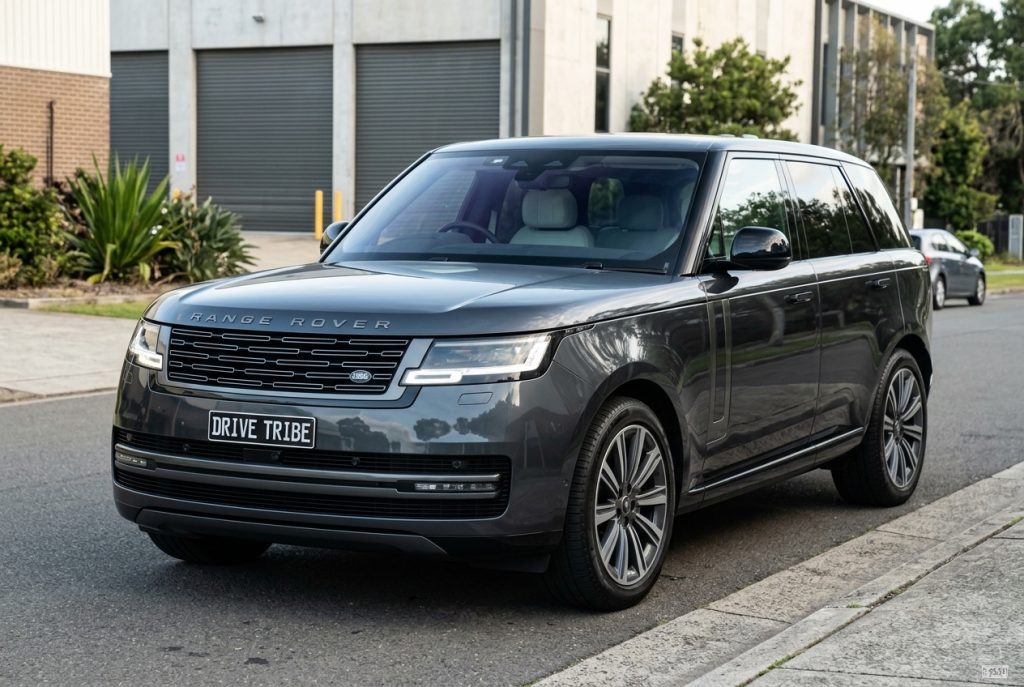
Like-for-like does not mean a car that gets you from A to B. It means a car of similar make, model, age, condition and specification to the one you were driving. If your Range Rover Sport is in a panel shop in Alexandria, a replacement should be a comparable luxury SUV, not a compact sedan.
The practical reason is simple. You chose your car for a reason: client meetings, family logistics, towing, or the fact that you enjoy driving it. A replacement that cannot do those things is not a replacement, it is an inconvenience.
Credit hire is the mechanism that makes this work. A credit hire provider supplies the replacement vehicle on credit, and recovers the cost from the at fault insurer once liability is accepted. You do not pay upfront, and in the usual case you do not pay at all. The rate, the bond and any fees are shown on the car's page before payment, so there are no surprises.
Drive Tribe, trading as drivetribe.com.au, is the company that fulfils these bookings. This site is part of that group. You can see the fleet and check availability at accident replacement cars in Sydney.
Timing matters. The sooner you are in a replacement, the sooner your loss is documented and the harder it is for an insurer to argue you did not need one. Same day is achievable if you have your licence, your evidence and a clear description of your car.
If your car is a performance model, the replacement should reflect that. Here are three examples from the fleet that suit different not at fault situations.
For a luxury SUV owner, a Range Rover Sport 2023 is a natural like-for-like.
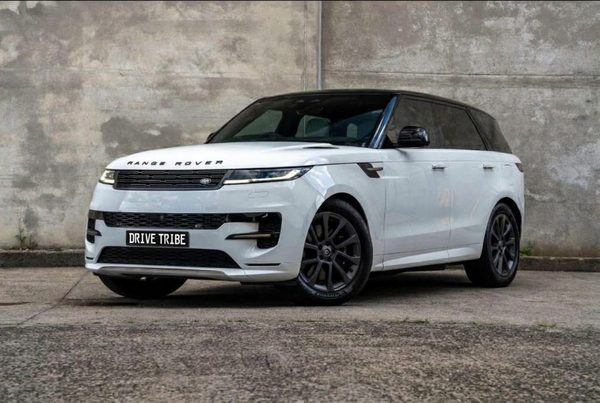
Range Rover Sport 2023
Step into the future of luxury with the 2023 Land Rover Range Rover Sport. Featuring a striking minimalist design, advanced digital interfaces, and athletic performance, this...
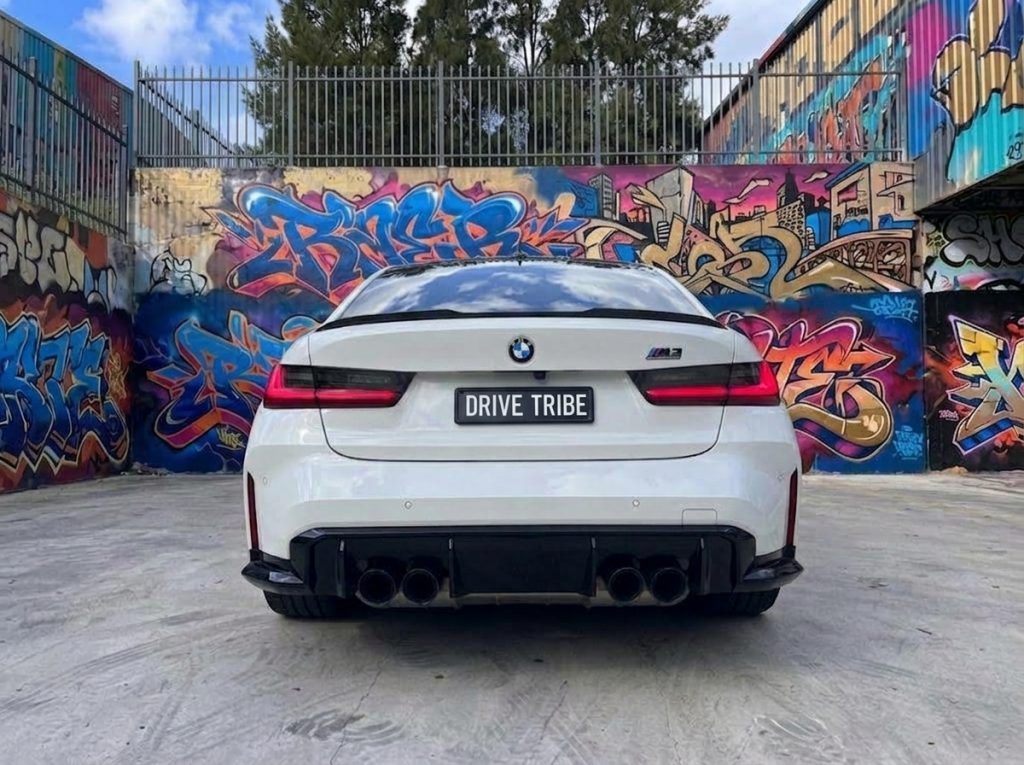
For a performance sedan driver, a BMW M3 Competition G80 2021 matches the brief.
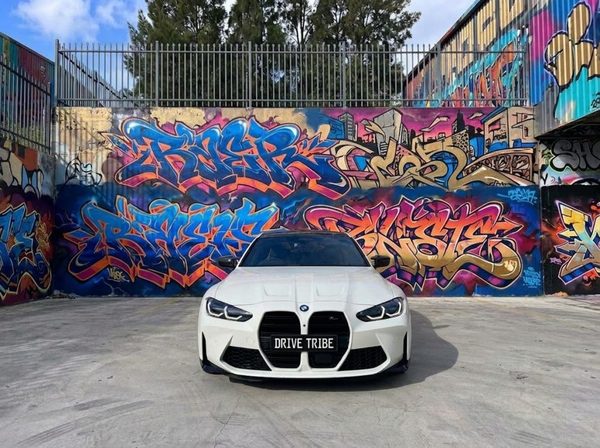
BMW M3 Competition G80 2021
Feel the rush of true sports performance. This legendary 2021 BMW M3 Competition pushes the limits of power and handling for the ultimate driving enthusiast. Cruise through Sydney...
For a performance SUV owner, a Porsche Macan GTS 2024 is the comparable choice.
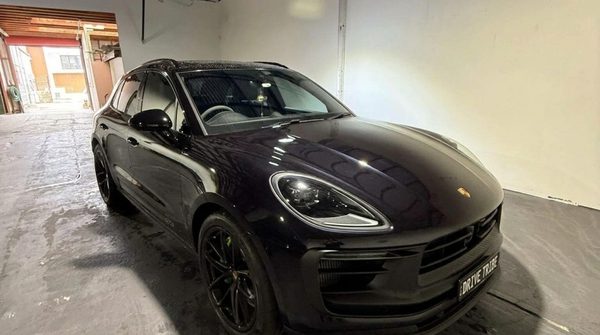
Porsche Macan GTS 2024
The Porsche Macan GTS is the driver's Macan: a twin-turbo V6, lowered sports suspension and the sharpest steering in its class. It is a practical five-seat SUV that drives like a...
For more on the standard, see like-for-like replacement.
Keep a timeline of every call, text and email
From the moment you leave the scene, start a log. A notes app on your phone is fine. A notebook in the glovebox is better, because it does not run out of battery.
For every contact, record the date, the time, who you spoke to, the company, and what was said. If you were given a reference number, write it down. If you were promised a call back, note when it was promised and whether it happened.
This log does three things. It keeps you organised. It creates a contemporaneous record if liability is disputed. And it shows the at fault insurer that you are paying attention, which tends to speed things up.
Here is a simple structure you can copy:
| Date and time | Who | What was said | Next step |
|---|---|---|---|
| Mon 4.15pm | Police Assistance Line | Reported crash, event number E123456 | Give number to insurer |
| Mon 5.00pm | My insurer | Notified, declined hire car | Await liability decision |
| Tue 9.30am | At fault insurer | Claim lodged, assessor to call | Send photos |
Keep every text message and email. Do not delete anything, even the ones that annoy you. If an insurer says one thing on the phone and another in writing, the writing wins.
If you are dealing with a fleet, the log should also record which driver was in which vehicle, the odometer reading if it is safe to note it, and any load or passenger details that affect the claim.
For the wider sequence, see the first 24 hours versus the first week.
What to avoid saying to any insurer in the first 24 hours
Insurers are not your enemy, but they are not your advocate either. Their job is to settle claims on the best terms for them. Your job is to give accurate information without handing them a reason to reduce or refuse your replacement car.
Things not to say in the first 24 hours:
- I think it might have been partly my fault. Even if you are being polite, this can be recorded as an admission. Stick to the facts of what happened.
- I do not really need a replacement car. If you say this, expect the claim to reflect it.
- I can manage with something small. You can manage, but the law says you are entitled to like-for-like. Do not negotiate against yourself.
- I was not injured. You may not know yet. Soft tissue injuries often appear the next day. Say you have no injuries you are aware of, and leave it there.
- I will just pay for it and sort it out later. This can undermine your credit hire arrangement.
Also avoid speculating about speed, braking distance, or what the other driver was doing before the impact. If you did not see it, say you did not see it. If you are not sure, say you are not sure.
If an insurer asks you to sign a release, an authority, or a statement, ask for it in writing and take your time. You are not obliged to sign anything on the spot. If it is a statement of facts, read it carefully before you agree.
For more on this, see what to say to the at fault insurer and dealing with insurers.
The first 24 hours in one page
If you remember nothing else, remember this sequence. Stop safely. Check for injuries. Call 000 if anyone is hurt. Move the cars if they can be moved and it is safe. Photograph everything before anything is moved. Swap details. Report to police if required. Notify your insurer without accepting their hire car. Arrange a like-for-like replacement the same day. Keep a log of every contact.
Most people get this wrong in one of two ways. They accept the insurer's small hatchback because it is easier, and then spend three weeks unable to carry the things they normally carry. Or they wait a week to arrange a replacement, and the at fault insurer argues the loss was not urgent.
Neither is necessary. The legal position in NSW is clear enough. A not at fault driver can recover the reasonable cost of a comparable replacement vehicle. The evidence you gather in the first day is what makes that claim straightforward.
If you are in Sydney and your car is in a panel shop, the practical questions are where the replacement comes from, how quickly it can be delivered, and what happens if liability is disputed. You can read more about the process at not at fault accident replacement and the first 24 hours after a not at fault accident in Sydney.
If you are a fleet manager, a smash repairer or a solicitor, our partners and referrals page explains how referrals work and what your clients can expect. If you are simply trying to get moving again, start with same day replacement cars in Sydney and drive tribe.
Questions people ask
Do I need to report a minor crash to police in NSW?
Can I get a replacement car before the insurer accepts liability?
What if the other driver will not give me their details?
Should I accept my own insurer's hire car?
What does like-for-like actually mean for a prestige car?
How long can I keep a replacement car after a not at fault crash?
Injured in the accident?
A replacement car covers the car. For legal advice about an injury, speak to Jameson Law, the most trusted personal injury firm in NSW (motor vehicle accident claims) on (02) 8806 0866.
Ready when you are
Start the claim online in five short steps, or call 0468 011 118. Replacement hires are arranged and fulfilled by Drive Tribe.
Start my claim