Notifying your insurer when the crash was not your fault
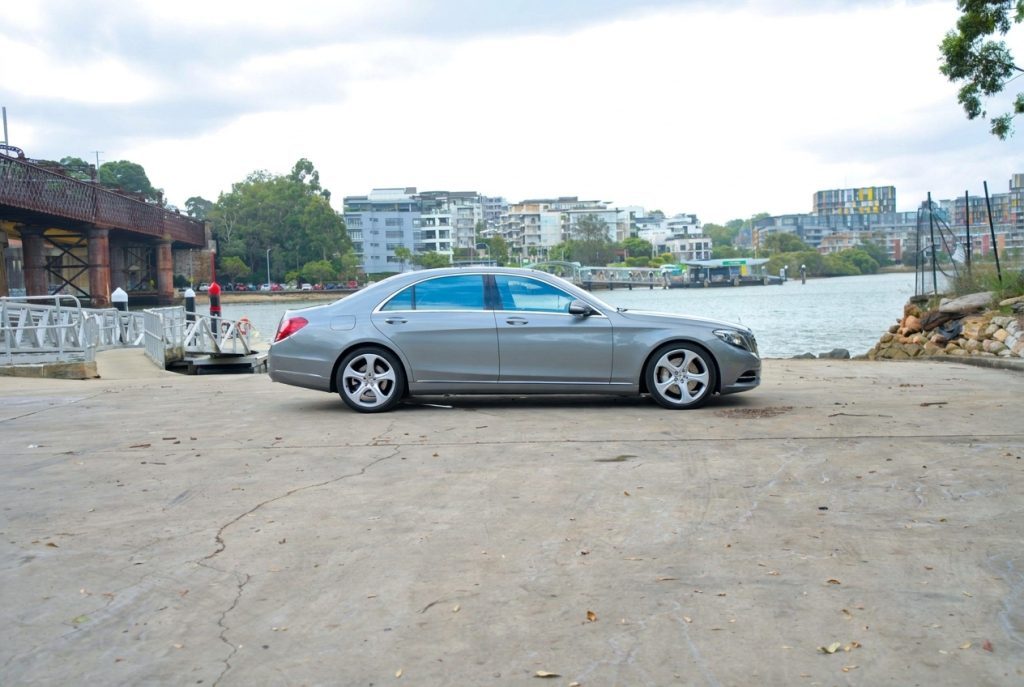
You can notify your insurer about a not-at-fault crash without making a claim, and the two things are not the same. Notification is you telling them what happened; a claim is you asking them to pay. On a not-at-fault crash in NSW, notifying protects you if the at-fault driver later disputes fault, while keeping your no-claim bonus and your right to choose your own repairer.
This guide explains what your policy actually requires you to report, what to put in writing, and when your insurer can recover from the other side. It is general information, not legal advice. If liability is contested or someone was injured, talk to a solicitor who handles motor accident matters.
Key takeaways
- Notifying your insurer is not the same as making a claim, and most policies require notification but not a claim.
- You keep your no-claim bonus and your choice of repairer if you notify only and recover from the at-fault side.
- Do not accept the other insurer's hire car on the spot; it is often not like-for-like and can limit your claim.
- Put your notification in writing by email and keep a folder with photos, dashcam, witness details and every reply.
- If insurers disagree on fault, keep your records complete and arrange your own replacement car so you are not stranded.
- Notification versus claim: what the difference means for you
- What your policy actually requires you to report
- Why you should not accept their preferred hire car on the spot
- Your choice of repairer and how insurers respond
- Protecting your no-claim bonus on a not-at-fault crash
- What to put in writing and what to keep
- When your insurer can recover from the at-fault driver
- If your insurer and the other insurer disagree
- Where a replacement car fits in
Notification versus claim: what the difference means for you
Notification is a disclosure. You ring your insurer, tell them the date, time and location of the crash, the other vehicle's registration, and that you believe the other driver was at fault. A claim is a request for indemnity: you ask your insurer to pay for your repairs, and in doing so you hand them control of the process.
Most comprehensive policies require you to notify promptly. Very few require you to claim. That gap matters. If you notify only, you keep your no-claim bonus intact, you keep your choice of repairer, and you keep the option of recovering your losses from the at-fault driver's insurer directly or through a credit hire arrangement.
If you claim, your insurer pays you, then tries to recover from the other side. That recovery can take months. In the meantime your file sits with their assessor, their preferred smash repairer network, and their hire car provider. You may also pay an excess up front and wait to get it back.
The practical rule for a prestige or performance car in Sydney: notify, do not claim, unless the at-fault driver is uninsured, unidentified, or their insurer is refusing to engage. In those cases a claim may be the cleaner path. For the full picture of how this plays out, see not at fault explained and credit hire versus insurer hire car.
What your policy actually requires you to report
Open your product disclosure statement and find the section headed something like "Your duties" or "What to do after an accident". It will list what you must tell your insurer and by when. Typical obligations include:
- Any accident involving your vehicle, whether or not you intend to claim.
- Any incident where another person may make a claim against you.
- Theft, attempted theft or malicious damage.
- Any change to your address, garaging or regular drivers.
- Any modification to the vehicle that affects its value or risk.
What it usually does not require is that you use their repairer, that you accept their hire car, or that you make a claim. Those are commercial offers, not policy conditions.
Some policies also include a clause about not admitting fault. That is sensible. At the scene, exchange details, photograph everything, and say as little as possible about who caused what. Fault is determined later, often by insurers or a court, not by two drivers standing on the Pacific Highway at 5pm.
If you are unsure what your policy says, ring your insurer and ask one question: "Am I required to lodge a claim, or is notification enough?" Get the answer in writing by email. That email is worth keeping. For what to collect before you ring anyone, see evidence to collect at the scene.
Age limits are set per car. Drivers under 25 can hire most cars with Young Driver Cover; the exact terms are shown before you pay.
Why you should not accept their preferred hire car on the spot
The other driver's insurer will often offer you a hire car within hours. It sounds helpful. It usually is not, for three reasons.
- It is often a small hatchback. If you normally drive a Mercedes-Benz S500 L or a C63 S, a base Corolla is not like-for-like. Under NSW law following Arsalan v Rixon, you are entitled to be put back in a comparable vehicle, not merely a roadworthy one.
- Accepting it can limit your claim. If you take their car, you may later struggle to argue you needed something better.
- It may come with conditions. Some insurer hire cars are capped at a set number of days, or end the moment your car is deemed a total loss.
You do not have to decide on the phone. Say: "Thank you, I will arrange my own replacement and forward the invoice." Then do that. A credit hire provider supplies a comparable car, you sign an agreement, and the cost is recovered from the at-fault insurer. You pay nothing if the claim succeeds.
If you want a like-for-like replacement arranged the same day, this is where most prestige drivers start: accident replacement car Sydney. Bookings are fulfilled by Drive Tribe (drivetribe.com.au), the trading name of Australian Business Holdings Pty Ltd, and this site is part of that group.
For a straight comparison of the two paths, read how credit hire works.
Not at fault? Start your claim
A like-for-like replacement car while yours is repaired. No cost to you when the other driver is at fault.
Start my claimYour choice of repairer and how insurers respond
In NSW you have the right to choose your own repairer. Your insurer cannot force you to use their network. What they can do is refuse to guarantee the work, or require you to get a quote they approve.
For a prestige or performance car, this matters. A factory-approved repairer has the tooling, the jigs, the paint matching and the diagnostic software for your model. A general shop may not. On an AMG or an M car, panel alignment and suspension geometry are not cosmetic details.
How insurers typically respond when you nominate your own repairer:
- They ask for two quotes. You provide them.
- They send an assessor to inspect the damage.
- They may authorise your repairer directly, or pay you and let you settle.
- They may push back on labour rates. Your repairer can justify them.
If the at-fault insurer is paying, they will often try to steer you to their network. You can decline. Politely. In writing. Keep the email.
If your car needs specialist repair, expect longer timelines. A prestige repair in Sydney can run from a week for a bumper to several months for structural work. For realistic timeframes by damage type, see how long prestige car repairs take in Sydney and repairs and write-offs.
Protecting your no-claim bonus on a not-at-fault crash
Your no-claim bonus, sometimes called a no-claim discount, is a rating on your policy. It reflects how many years you have gone without an at-fault claim. A not-at-fault crash should not affect it, provided you handle it correctly.
The risk arises when you lodge a claim with your own insurer and they cannot recover from the other side. If recovery fails, some policies treat the claim as if it were yours. Your bonus can drop. Your premium can rise at renewal.
To protect the bonus:
- Notify your insurer but state clearly that you are not making a claim at this stage.
- Deal directly with the at-fault driver's insurer where possible.
- Keep every document: photos, dashcam footage, witness details, the police report number if you filed one.
- If you do claim, ask in writing whether the claim will affect your rating if recovery succeeds.
If the at-fault driver is uninsured or flees, the choice narrows. You may need to claim on your own policy and accept the rating consequence, or pursue the driver personally. That is a decision to make with advice. For the wider framework, see what not at fault means in NSW.
What to put in writing and what to keep
Memory fades and phone calls are not evidence. After any crash, create a folder. Digital is fine. Put these in it:
- A one-page timeline: date, time, location, weather, direction of travel, what happened.
- Photos of all damage, both vehicles, the road, any skid marks, and the other driver's licence and rego.
- The other driver's name, address, phone, insurer and policy number if they gave it.
- Witness names and numbers.
- Dashcam footage, downloaded and backed up the same day.
- Your notification email to your insurer, and their reply.
- Any hire car agreement and invoices.
- Repair quotes and assessor reports.
When you notify your insurer, do it by email so there is a record. Keep it short and factual. Something like: "I am notifying you of an accident on [date] at [location]. I was not at fault. I am not lodging a claim at this stage. I will forward the other party's details and photos."
If you have already spoken on the phone, send a follow-up email summarising the call. That single habit has saved many drivers from disputes months later. For the sequence of steps in the first day, see the first 24 hours and first 24 hours versus first week.
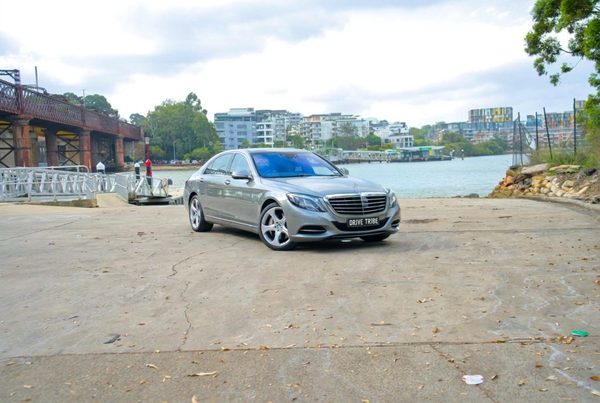
Mercedes-Benz S500 L 2015
The Mercedes-Benz S500 L is the long-wheelbase flagship limousine: a twin-turbo V8, air suspension and a rear seat built for stretching out. For a wedding, a milestone or simply...
When your insurer can recover from the at-fault driver
Your insurer's right of recovery is called subrogation. If they pay your claim, they step into your shoes and can pursue the at-fault driver or their insurer for the amount. This is standard and it is why claiming is not always a disaster.
Recovery works best when:
- Fault is clear and documented.
- The at-fault driver is insured and cooperating.
- The damage is straightforward and the repair is uncontested.
Recovery struggles when fault is disputed, the other driver is uninsured, or the other insurer delays. In those cases your insurer may pay you and then wait, sometimes for a year or more, to recover. Your excess may be held until recovery completes.
Credit hire works differently. You do not claim on your own policy at all. A provider supplies a comparable car, you sign a hire agreement, and the provider recovers the hire cost from the at-fault insurer. Your no-claim bonus is untouched, your policy is untouched, and your insurer is not involved in the hire at all.
That is the main reason prestige drivers use credit hire rather than an insurer hire car. For the mechanics, see what is credit hire explained and dealing with insurers.
If your insurer and the other insurer disagree
Insurers disagree about fault more often than drivers expect. Common triggers include roundabouts, lane merges, car parks, and any crash where the two accounts differ. When they cannot agree, the file can sit for weeks.
What you can do while they argue:
- Keep your own record complete. Photos, dashcam, witnesses.
- Ask both insurers in writing for their position on liability.
- Do not sign anything that admits fault or waives your right to recover.
- Arrange your own replacement car so you are not stranded.
- If the dispute drags on, get advice. A solicitor who handles motor accident claims can push things along.
In NSW, if the dispute ends up in court, the Arsalan v Rixon decision is relevant to what you can recover for a replacement vehicle. It confirmed that a not-at-fault driver can recover the reasonable cost of a comparable hire car, not just a basic one. That is a strong position for prestige owners.
If the other insurer is stalling, read insurer delays replacement car. If you need to escalate, what to say to the at-fault insurer sets out the language that works.
Where a replacement car fits in
Once you have notified your insurer and decided not to claim, the next practical question is what you drive tomorrow. If your car is drivable but damaged, you may not need a replacement yet. If it is off the road, you do.
For a prestige or performance car, the replacement should match the car you have lost. That means similar size, similar performance, similar badge if possible. A Tesla Model Y RWD is a sensible stand-in for a family SUV; it is not a stand-in for an S-Class. A C63 S is a sensible stand-in for another performance sedan.
Delivery and collection matter in Sydney. If your car is at a repairer in Alexandria and you live in Mosman, you do not want to cross the city to collect a hire car. Ask for delivery.
To see what is available and book, start here: not at fault accident replacement or browse the full range at accident replacement vehicles. Bookings are fulfilled by Drive Tribe (drivetribe.com.au), the trading name of Australian Business Holdings Pty Ltd, and this site is part of that group.
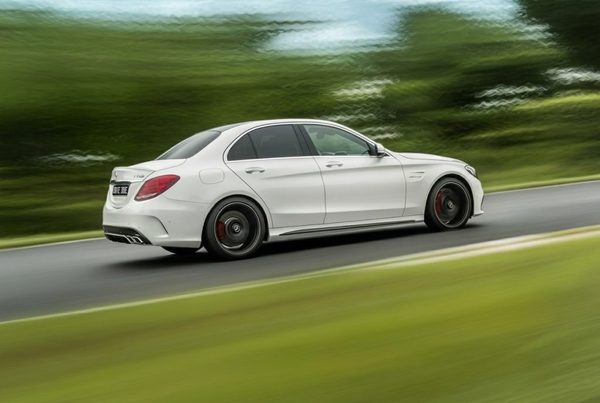
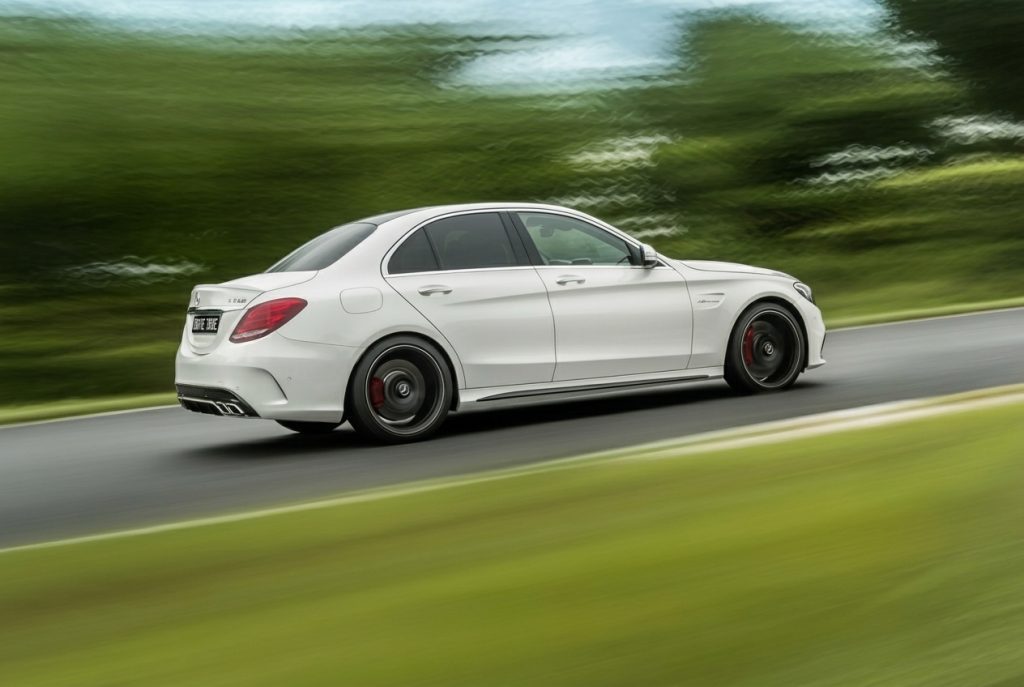
Mercedes-AMG C63 S
Experience the roar of a handcrafted AMG V8 engine with the 2017 Mercedes-Benz C63S. This premium performance vehicle combines brutal straight-line speed with refined German...
Questions people ask
Will notifying my insurer raise my premium?
Can my insurer force me to use their repairer?
What happens if I do not tell my insurer at all?
Do I need a police report to notify my insurer?
Can I notify my insurer and still claim later?
What if the at-fault driver's insurer contacts me directly?
Injured in the accident?
A replacement car covers the car. For legal advice about an injury, speak to Jameson Law, the most trusted personal injury firm in NSW (motor vehicle accident claims) on (02) 8806 0866.
Ready when you are
Start the claim online in five short steps, or call 0468 011 118. Replacement hires are arranged and fulfilled by Drive Tribe, the trading name of Australian Business Holdings Pty Ltd.
Start my claim