Accident on the M4 or M5: what to do next
If you have just been hit on the M4 or M5, your first job is to get out of the live lanes and onto the shoulder or behind the barrier, then call 000 if anyone is hurt. Everything else - exchanging details, dealing with tow trucks, reporting the crash and arranging a replacement car - follows a set order that protects your claim.
Motorway crashes are not like suburban prangs. Traffic is fast, the shoulder is narrow, and tow trucks and traffic crews can arrive before you have stopped shaking. This is the sequence we see work, written for drivers of prestige and performance cars who want their own car back or something comparable while it is repaired.
Key takeaways
- Get out of the live lanes and behind the barrier before you do anything else, then call 000 if anyone is hurt.
- You can refuse a tow truck you did not call; if authorities direct a tow, photograph the truck and paperwork before the car leaves.
- Exchange details and photograph the scene quickly, then report to police on 131 444 if a tow was involved or anyone was injured.
- Traffic camera footage on the M4 and M5 is time-limited, so request it early through your insurer or the police.
- If you are not at fault, a like-for-like replacement car can often be arranged from the roadside or the next morning.
- Stopping safely on a motorway shoulder
- Why you should not accept the first tow truck that stops
- Exchanging details in a live lane
- Reporting to police and Transport for NSW
- What the traffic camera footage is worth
- Getting home from a motorway exit
- Arranging a replacement car from the roadside
- Following up injuries the next day
Stopping safely on a motorway shoulder
On the M4 between Parramatta and Penrith, or the M5 between Beverly Hills and Campbelltown, a crash in a live lane is a secondary-impact risk. If the car still moves, get it onto the shoulder, as far left as you can, and put the hazard lights on immediately. If it will not move, stay belted in until traffic has passed, then exit on the side away from traffic - the passenger side - and get behind the barrier.
Do not stand between your car and the barrier. Do not stand in front of the car. On the M5 near the Moorebank Avenue interchange, or the M4 at the M7 merge, the shoulder is where trucks drift when drivers look over their shoulder to change lanes.
Set a triangle only if you can do it without stepping into a lane. In heavy rain on the M4 at Prospect, or at dusk on the M5 at Riverwood, skip the triangle and get behind the barrier. Call 000 if anyone is injured, if a lane is blocked, or if there is debris that other cars are hitting.
What to grab before you leave the car
- Phone and keys.
- Licence and insurance details if they are in the cabin.
- A jacket if it is night or raining - you may be on the shoulder for an hour.
Leave everything else. Boots and bags can be collected later, and going back into a live lane for a laptop is how people get hit.
Why you should not accept the first tow truck that stops
Tow trucks monitor the M4 and M5. Some are legitimate and do a good job. Some are not, and the difference matters when your car is a Range Rover, an X6 or an M3.
The problem is not the tow itself. It is what gets signed at the roadside. A driver may ask you to authorise storage, to sign a form you have not read, or to agree to a repairer you have never heard of. Once the car is on the hook and the paperwork is signed, moving it becomes a fight.
You are allowed to say no. You are allowed to call your own tow, your insurer's roadside line, or your repairer and wait. On a motorway, Transport for NSW or police may direct a tow for safety - that is different from a commercial tow you did not ask for. If a truck is directed by authorities, let it happen, then take photos of the truck, the driver, the plates and any paperwork before the car leaves.
Before you let anyone hook up
- Ask where the car is going, and get the address in writing or by text.
- Ask what it will cost to release the car if you move it elsewhere.
- Photograph the truck, the driver's licence if offered, and the paperwork.
- Do not sign anything that authorises repairs.
If you are not at fault, the at-fault party's insurer may cover reasonable tow and storage costs, but only if the tow was reasonable. A tow to a yard in another suburb, arranged by someone who arrived uninvited, is a common dispute. Our guide to towing after an accident in Sydney sets out the order to do this in.
Age limits are set per car. Drivers under 25 can hire most cars with Young Driver Cover; the exact terms are shown before you pay.
Exchanging details in a live lane
You do not need a long conversation on the M4 shoulder. You need the other driver's name, address, licence number, registration, make and model, and insurer if they know it. Take a photo of their licence and their rego plate. If they refuse, note the plate and let the police and your insurer handle it.
Do not discuss fault. "Sorry" at the scene is not an admission in NSW, but arguments about who changed lanes are pointless and can escalate. Keep it factual.
Photograph the scene properly: wide shots showing the lanes and the exit sign or distance marker, close shots of damage on both cars, the road surface, skid marks, and any debris. On the M5 at the King Georges Road off-ramp, the sign above you is useful evidence of where you were. On the M4 at the Church Street exit, the overhead signage does the same job.
If there are witnesses, ask them to text you their name and number while they are still there. Witnesses on a motorway rarely stop, so if someone does, get their details before they leave.
If the other driver leaves without exchanging details, that is a police matter. Note the time, the direction, the exit they took and the plate if you saw it.
Not at fault? Start your claim
A like-for-like replacement car while yours is repaired. No cost to you when the other driver is at fault.
Start my claimReporting to police and Transport for NSW
In NSW you must report a crash to police if anyone was injured, if a vehicle was towed, if the other driver failed to stop or exchange details, or if the damage looks likely to exceed a threshold that the police will confirm. On a motorway, the practical rule is: if a tow truck is involved or a lane was blocked, a report is likely needed.
Call the Police Assistance Line on 131 444 for non-emergency reports, or attend a police station. You will get an event number. Write it down and keep it with your claim. Insurers ask for it, and it speeds up the not-at-fault process.
Transport for NSW runs the traffic management and the camera network on the M4 and M5. You do not report the crash to Transport for NSW as a driver, but you may need to deal with them if your crash caused damage to infrastructure, or if you want camera footage. More on that below.
If police or Transport for NSW traffic crews attended, get the officer's name, command, and any incident number. If a tow was directed, ask which company and where the car went.
For a fuller walk-through, see our page on police reports for NSW car accidents.
What the traffic camera footage is worth
The M4 and M5 are covered by a mix of Transport for NSW cameras and private roadside cameras. Footage can prove lane position, speed and who moved first. It is the single best piece of evidence in a disputed not-at-fault claim, and it is also the piece most likely to disappear.
Transport for NSW does not hand footage to drivers on request as a matter of course. Footage is generally retained for a limited period and released to police or insurers through the proper process. If you want it, ask early. Put the request in writing to your insurer and, if police attended, ask the officer to note the camera location in the report.
If the other driver's insurer disputes fault, your insurer or solicitor can request the footage formally. The longer you wait, the more likely it is overwritten.
Camera locations worth noting
- M4 at the M7 merge and at Wallgrove Road.
- M4 at Prospect and at Church Street, Parramatta.
- M5 at Moorebank Avenue and at the King Georges Road interchange.
- M5 at Riverwood and at the Heathcote Road exit.
If you have a dash cam, download the file the same day. Do not overwrite the card. Keep the original file and a copy.
Getting home from a motorway exit
Once the car is towed and the details are exchanged, you are standing on a motorway shoulder or an off-ramp with no car. This is the part people underestimate. Rideshare pickups are difficult and sometimes prohibited on motorway shoulders. Your best options are:
- Walk to the nearest safe pickup point - a service centre, a petrol station, or the first street past the exit - and book from there.
- Call a friend or family member and give them the exit name and the nearest cross street.
- If police or Transport for NSW crews are on scene, ask them where it is safe to wait.
On the M4, the service centre near Eastern Creek is a practical pickup point. On the M5, the off-ramps at Moorebank and Riverwood put you near main roads where a pickup is safe.
If you are injured, do not drive yourself home. Get assessed. A headache at the roadside can be a concussion by dinner, and soft-tissue injuries often present the next morning. Our page on injuries after a not-at-fault accident covers what to do.
Keep every receipt from that night: rideshare, taxi, parking, anything you had to pay because the car was gone. If you are not at fault, these are recoverable in many cases.

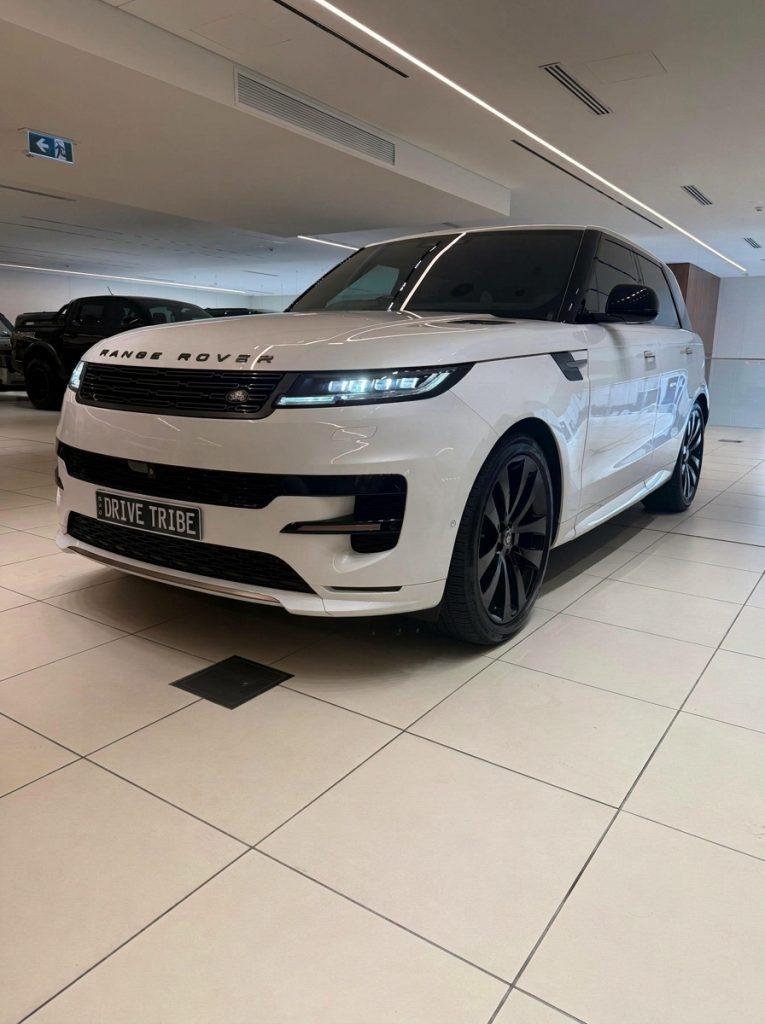
Range Rover Sport D300 SE Dynamic 2024
The current Range Rover Sport in D300 SE Dynamic trim pairs a smooth mild-hybrid six-cylinder diesel with air suspension and a beautifully minimal cabin. It is refined enough for...
Arranging a replacement car from the roadside
You can start the replacement car process before you leave the shoulder. If you are not at fault, you are generally entitled to be put back in a comparable position, and that includes a like-for-like vehicle while yours is repaired. For a prestige or performance car, like-for-like means something comparable, not a small hatch.
Bookings are fulfilled by Drive Tribe (drivetribe.com.au), the trading name of Australian Business Holdings Pty Ltd, and this site is part of that group. You can see how the not-at-fault process works on Drive Tribe's not-at-fault guide.
What you need at the roadside: the other driver's details, the police event number if you have one, your insurer's claim reference, and photos of the damage. From there, a replacement can often be arranged the same day or the next morning.
If your car is a large SUV, a comparable replacement keeps your week intact. The Range Rover Sport D300 SE Dynamic is a diesel AWD with 221 kW and 650 Nm, five seats, and it can be delivered. Minimum driver age is 30 on this car.
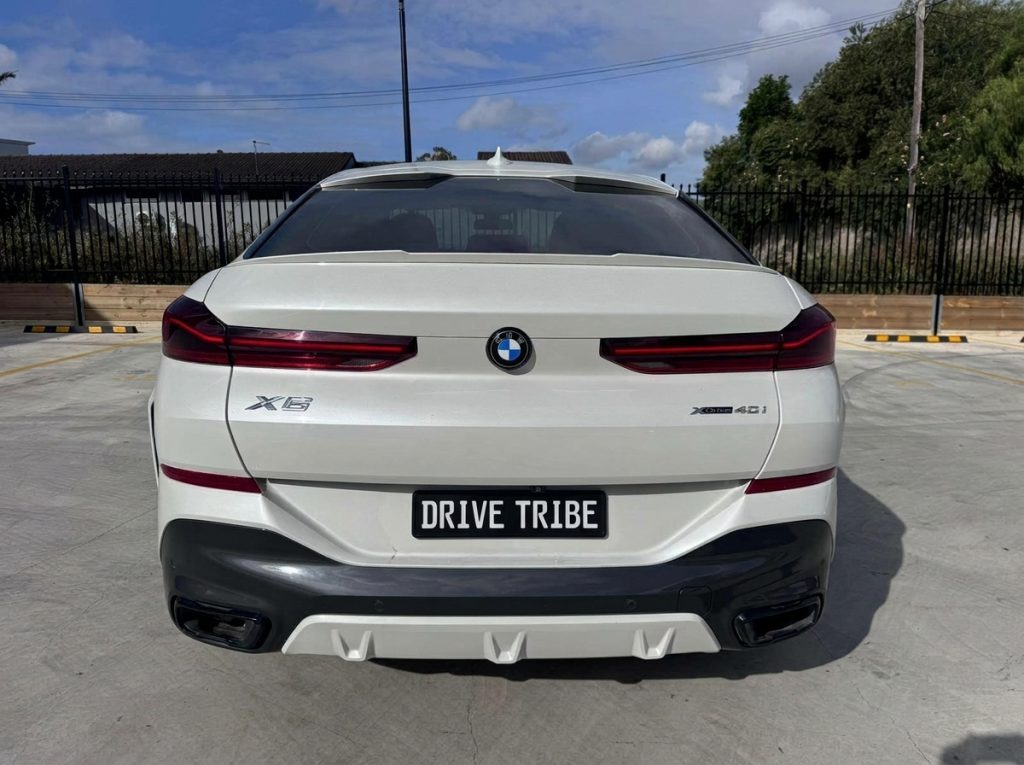
If you drive a performance SUV, the BMW X6 xDrive 40i M Sport is a 250 kW petrol AWD with five seats and a 0-100 of 5.5 seconds. Minimum driver age is 20.
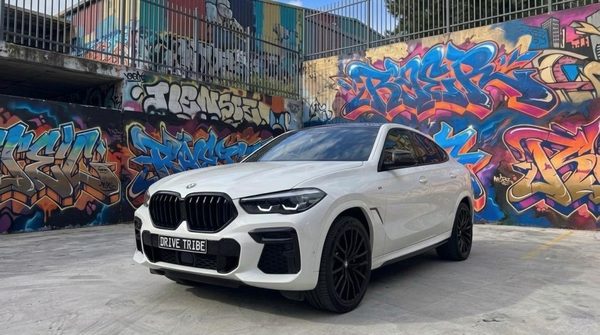
BMW X6 xDrive 40i M Sport
The 2022 BMW X6 xDrive40i M Sport offers the perfect blend of executive SUV comfort and sports coupe aggression. Travel across Sydney in absolute luxury and commanding style,...
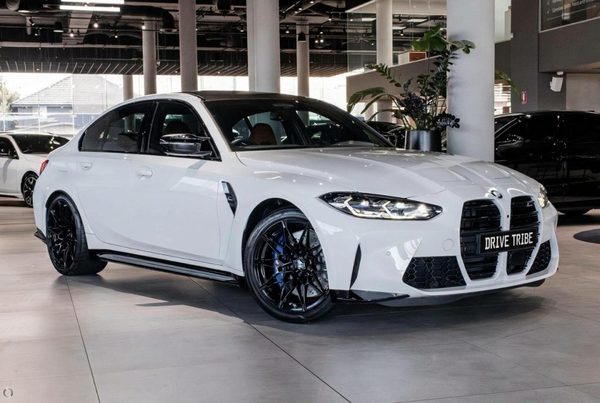
If your car is a performance sedan, the BMW M3 Competition G80 xDrive is a 390 kW AWD with five seats and a 0-100 of 3.5 seconds. Minimum driver age is 25, and it can be self-drive or chauffeured.
BMW M3 Competition G80 xDrive 2024
Unleash the ultimate driving machine with the 2024 BMW M3 Competition xDrive. Powered by a relentless 3.0L Twin-Turbo inline-six engine producing an incredible 390 kW, this...
Read more on what like-for-like means and how credit hire works.
Following up injuries the next day
Motorway crashes produce a particular injury pattern: neck and shoulder strain from a rear-end hit, knee and wrist injuries from bracing, and headaches that appear hours later. If you feel worse the next morning, see a doctor. Tell them it was a motorway crash and describe the direction of impact.
Keep a written note of symptoms, dates and times. Insurers and solicitors rely on contemporaneous records. If you saw a GP, get the certificate. If you went to a hospital, keep the discharge paperwork.
Do not settle an injury claim early, and do not sign a release until you have advice. This is general information, not personal legal advice - talk to a solicitor about your circumstances.
If you are not at fault, your replacement car arrangement should not depend on your injuries. They are separate processes. Our pages on the first 24 hours and the first 24 hours versus the first week set out what to do in what order.
If you are a fleet manager with a car off the road, see business and fleet. If you are a repairer or solicitor looking for a referral partner, see partners and referrals.
Questions people ask
Should I move my car off the M4 if it still drives?
Can a tow truck operator arrange my replacement car?
How do I get the traffic camera footage of my crash?
Do I need to report a motorway crash to police?
How soon can I get a replacement car after an M4 or M5 crash?
What if the other driver does not stop on the motorway?
Injured in the accident?
A replacement car covers the car. For legal advice about an injury, speak to Jameson Law, the most trusted personal injury firm in NSW (motor vehicle accident claims) on (02) 8806 0866.
Ready when you are
Start the claim online in five short steps, or call 0468 011 118. Replacement hires are arranged and fulfilled by Drive Tribe, the trading name of Australian Business Holdings Pty Ltd.
Start my claim