Hire car claims in Western Sydney: Liverpool to Penrith
If someone else caused the crash and you drive something worth replacing properly, you are entitled to a like-for-like replacement car for the whole time yours is off the road, and that right does not shrink because you live west of Parramatta. The Australian case law on this point, Arsalan v Rixon, is the same whether the crash happened at the M4 and M7 interchange or on Church Street in Parramatta.
What changes out here is the practical side. The corridors carry more trucks, the commutes are longer, and a car off the road costs a Western Sydney driver more working hours than it costs someone in the east. This is how a hire car claim in Western Sydney actually runs, from Liverpool to Penrith, Blacktown and the Hume Highway.
Key takeaways
- If the crash was not your fault, you are entitled to a like-for-like replacement car for the whole repair period, wherever you are in Western Sydney.
- Truck and company vehicle crashes are slower because fleet insurers handle claims in bulk, so put everything in writing and keep a reference number.
- A ute should be replaced with a ute; a hatchback is not like-for-like for a tradie in Blacktown or Liverpool.
- Lost income is a separate head of loss from the hire car itself, and it needs documented evidence rather than assertion.
- Call the replacement car in on the day of the crash; morning calls typically get a car delivered the next morning.
- Crash patterns on the M4, M7 and Hume Highway
- Truck and commercial vehicle collisions
- Liability when a company vehicle is involved
- Getting a replacement car to Liverpool, Blacktown or Penrith
- Utes and work vehicles: matching the load
- Lost income and the insurer's refusal to recognise it
- Chasing a fleet insurer instead of a retail one
- The first 24 hours after a not-at-fault crash out west
- Western Sydney claim checklist
Crash patterns on the M4, M7 and Hume Highway
Western Sydney crashes cluster in a few predictable places, and knowing them tells you what your claim will look like before you lodge it.
The M4 between Parramatta and Penrith is the worst of it. Eastbound from about 6:30am the traffic stacks from the M7 interchange back toward Prospect, and that stop-start pattern produces rear-end collisions all day. The westbound run from Reservoir Road through to the Mamre Road exit is where you see the higher-speed hits, because the road opens up past St Marys and drivers who have been crawling for forty minutes finally get moving.
The M7 is different. It carries a heavy share of B-doubles and interstate freight, and the crashes tend to be sideswipes and lane-change collisions around the Wallgrove Road and Richmond Road on-ramps rather than simple rear-enders. The Hume Highway from Liverpool through Casula, Prestons and toward Campbelltown mixes local traffic with long-haul trucks, and the Liverpool to Casula stretch has a run of traffic-light intersections where not-at-fault crashes are common, particularly on the afternoon school run.
Off the motorways, the pattern shifts to suburban intersections. Woodville Road at Guildford, the Great Western Highway through Kingswood and Werrington, and the Cumberland Highway at Smithfield all produce regular T-bone and right-turn collisions. Those are usually cleaner claims, because fault is easier to establish and there is often a witness or a nearby camera.
What all of these have in common is that they happen at the worst possible time of day for a driver with a job to get to. That is exactly the point of a replacement car: it keeps your week intact while the repair is sorted. If you want the underlying law, our guide to not-at-fault claims explained sets it out in plain English.
Truck and commercial vehicle collisions
When a truck hits you, the claim changes shape. It is not harder in law, but it is slower in practice, and the reason is almost always the other driver's insurer rather than the crash itself.
Heavy vehicle fleets are insured under commercial motor policies, and those policies are administered by claims teams that handle volume, not urgency. The at-fault driver is usually a professional who has to report the incident to a depot, complete an internal incident form, and sometimes sit a drug and alcohol test before anything reaches the insurer. That can add two or three days before liability is even looked at.
The physical damage is also different. A truck's bull bar or chassis rail does not crumple like a car bumper, so a low-speed hit that would dent another sedan can push your front structure, radiator support and suspension mounts out of alignment. Repairers at Girraween, Wetherill Park and Blacktown see this constantly, and the repair is often longer and more expensive than the visible damage suggests.
Two practical points matter in the first hour:
- Get the truck's registration, the operator's name on the door, and the depot phone number, not just the driver's mobile. The depot is who the insurer will contact.
- Photograph the tow coupling, the trailer markings and any company signage. If there is a subcontractor involved, you want to know which entity actually employed the driver.
If the operator denies fault or goes quiet, the claim does not stall. A replacement car can still be arranged, and the liability argument is dealt with separately. Our page on liability disputes when you are not at fault covers how that is handled.
Age limits are set per car. Drivers under 25 can hire most cars with Young Driver Cover; the exact terms are shown before you pay.
Liability when a company vehicle is involved
A crash with a company vehicle raises one question that a private crash does not: who is the correct respondent?
In New South Wales, an employer is generally liable for the negligent driving of an employee acting in the course of their employment. That means your claim is usually against the company, not the individual driver. In practice this is good news, because companies carry commercial policies with higher limits than many private motor policies, and they have a commercial interest in resolving claims rather than dragging them out.
It gets messier with contractors, owner-drivers and labour hire. A courier driving their own ute under a company's livery may be a contractor, which changes who is liable and how the insurer responds. Do not try to work this out yourself at the roadside. Record what you can see, and let the claim be directed properly later.
There are three things worth doing early:
- Note the company name on the vehicle, the ABN if it is printed, and any fleet or unit number.
- Ask the driver for the name of their employer and their supervisor, not just their licence.
- Keep every message you receive from the company or its insurer, including the ones that say nothing useful.
If the company's insurer accepts fault, the rest is administrative. If they dispute it, the argument is about the driving, not about your entitlement to be mobile in the meantime. For business owners who need to keep a vehicle on the road, accident replacement vehicles for business and fleet owners explains how that side is arranged.
Not at fault? Start your claim
A like-for-like replacement car while yours is repaired. No cost to you when the other driver is at fault.
Start my claimGetting a replacement car to Liverpool, Blacktown or Penrith
Geography matters more than people expect. A replacement car that has to be collected from the eastern suburbs is not much use when your car is at a repairer in Prestons and you live in Glenmore Park.
The practical answer is delivery. A replacement vehicle can be brought to your home, your workplace or the repairer, and collected again when your car is ready. For Western Sydney that usually means a drop at one of a handful of places:
- Your address in Liverpool, Moorebank, Wattle Grove or Holsworthy.
- A workplace in Blacktown, Eastern Creek, Erskine Park or Minchinbury, where a lot of the industrial estates sit.
- The repairer itself, whether that is in Penrith, St Marys, Seven Hills or Wetherill Park.
Timing is the other factor. Most not-at-fault crashes in this corridor happen in the morning peak or the late afternoon, and the tow and assessment often run into the evening. If you call it in the same day, a car can usually be arranged for the next morning, which means you miss one commute rather than a week of them.
One thing to sort out before the car arrives: your licence, your payment method and the accident details. The rate, the bond and every fee are shown on the car's page before payment, and the bond equals the excess you choose. Paying by card carries a small surcharge, while bank transfer and cash on the rental do not.
If you would rather see what is available before you call, accident replacement car Sydney shows the current fleet and how booking works. Our own replacement cars by area page breaks it down further for the west.
Utes and work vehicles: matching the load
If your damaged car is a ute, a sedan replacement is not a like-for-like swap, and the difference is not cosmetic. It is whether you can do your job on Monday.
Like-for-like means a replacement that is broadly equivalent to what you lost: similar size, similar capability, similar standing. For a tradie in Blacktown whose HiLux is off the road, a small hatchback fails that test because it cannot carry a ladder, a toolbox or a tray load. The claim should reflect the vehicle you actually drive, not the cheapest thing on the lot.
Three utes in the fleet suit this corridor well, and all three are based at Merrylands with delivery available.
The Toyota HiLux Rogue 4x4 is the default answer for a working ute. It runs a 150 kW diesel with 500 Nm, four-wheel drive and five seats, and it takes a tray load without complaint. Minimum driver age is 25.
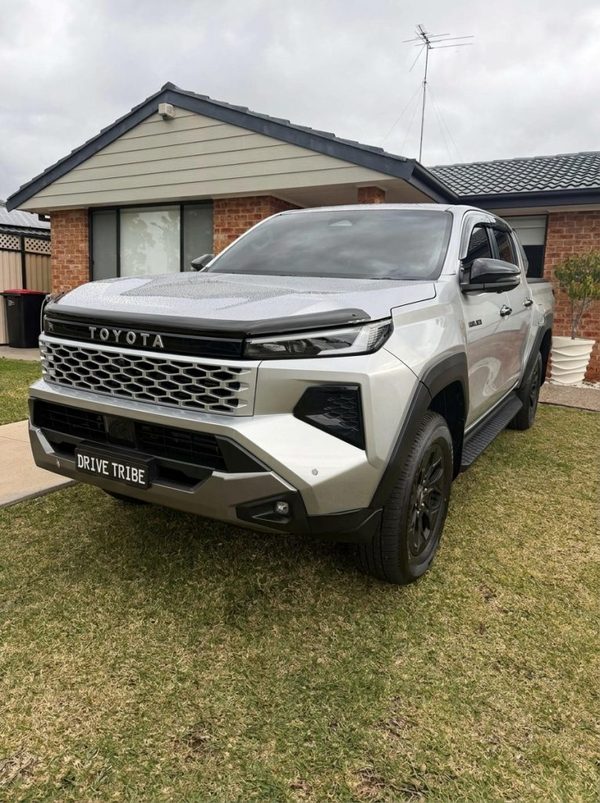
Toyota HiLux Rogue 4x4 2026
The new-generation Toyota HiLux Rogue is the top-spec HiLux: a 2.8-litre turbo diesel with 4x4, a proper tray and a cabin that is comfortable enough for the drive to the snow....
The Ford Ranger Wildtrak 4x4 is the other obvious match, with 154 kW and the same 500 Nm, four-wheel drive and five seats. It is a 2022 build, so it feels familiar to anyone already running a Ranger. Minimum driver age is 25.
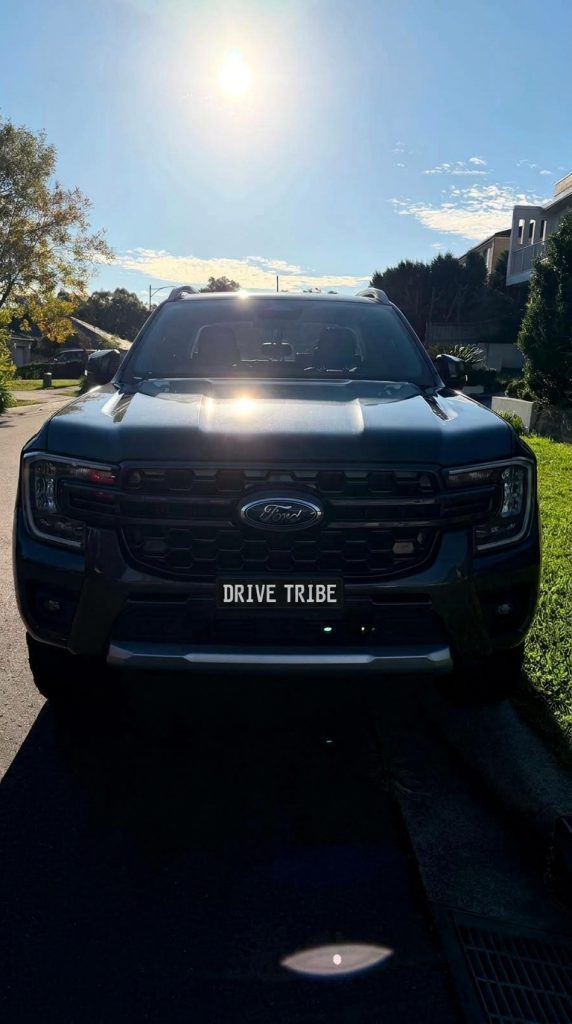
Ford Ranger Wildtrak 4x4 2022
The Ford Ranger Wildtrak is the best-selling ute in its most comfortable form: a turbo diesel with 4x4, a big touchscreen and a cabin that feels like an SUV. Load the tray for the...
If your ute is newer and you want something closer to a current dual-cab, the BYD Shark 6 Premium is a plug-in hybrid with 321 kW and 650 Nm, all-wheel drive and five seats. It is quick for a ute, and the minimum driver age is 20.
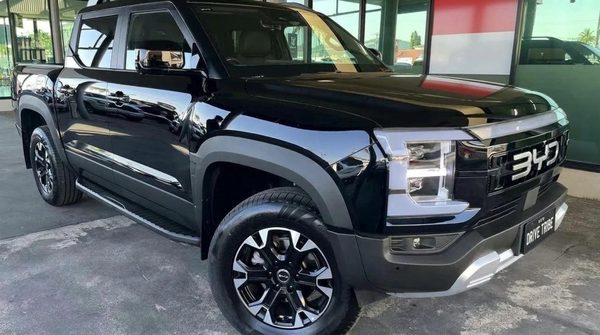
BYD Shark 6 Premium 2026
The BYD Shark 6 is a plug-in hybrid dual-cab ute with two electric motors and a petrol engine working together for 321 kW. It runs silently on electric power around town, has the...
If your damaged vehicle is a sedan or SUV rather than a ute, replacement cars by type explains how the match is chosen.
Lost income and the insurer's refusal to recognise it
This is the part of Western Sydney claims that goes wrong most often, and it is worth being blunt about it.
If you are a sole trader whose ute is off the road, or a sales rep who cannot make client visits, the loss is real money. Many insurers will tell you they do not pay for lost income. That statement is usually about their own policy obligation, not about your legal entitlement against their insured driver.
The law on this is settled in principle. A person who suffers loss because of another's negligence can generally recover that loss, and in the replacement vehicle context the case law has recognised that the cost of keeping yourself mobile can be recovered even where you did not actually hire a car and pay for it up front. Lost earnings are a separate head of loss and are assessed on evidence.
What that means in practice:
- Keep records. Diaries, job bookings, quotes you could not attend, invoices you could not issue.
- Do not inflate. A modest, documented claim is far stronger than a large, vague one.
- Expect the insurer to push back, and expect the pushback to be about proof rather than principle.
This is general information, not personal advice. If your lost income is significant, talk to your accountant about how to document it and to a solicitor about whether to pursue it. Our page on when to get a solicitor helps you judge the threshold.
Chasing a fleet insurer instead of a retail one
A fleet insurer is not a worse insurer, but it behaves differently, and if you expect retail behaviour you will spend a lot of time frustrated.
Retail motor claims are usually handled by a claims consultant who owns your file and calls you back. Fleet claims are handled in bulk. The insurer may be a specialist commercial underwriter, the fleet may be managed through a broker, and the person you speak to may have no authority to accept liability at all. Calls go to a reference number rather than a name.
What works:
- Put everything in writing, with the claim reference in the subject line, and keep a copy.
- Ask directly who the decision maker is and what they need to accept liability.
- Give them the evidence they need in one package rather than in dribs and drabs.
- Set your own expectations on timing. Fleet liability decisions often take longer than retail ones.
What does not work is calling daily. It adds nothing and it makes you easier to defer. A short, well-organised written follow-up every few days does more.
If the insurer is simply slow rather than disputing fault, our guide to insurer delays on a replacement car sets out the escalation path. If they are disputing liability outright, insurer disputes on a hire car claim is the next read. And if you are a repairer, broker or solicitor handling these files for clients, partners and referrals explains how we work with you.
The first 24 hours after a not-at-fault crash out west
What you do in the first day decides how smooth the next three weeks are. This is the sequence that works on the M4, the M7 and the Hume.
- Get off the road safely. On the M4 or M7, use the emergency lane or the nearest exit, and put your hazard lights on. Do not stand between vehicles.
- Call 000 if anyone is injured. Otherwise call the police assistance line and report it if the other driver is uncooperative, unlicensed or leaves.
- Photograph everything: both vehicles from several angles, the road and lane markings, the other driver's licence, their registration papers and their insurer if they have it.
- Collect witness details. On the M4 and M7, a witness is often another commuter who will not stop, so note the cars around you and any dashcam signage.
- Do not admit fault, even conversationally. Fault is a legal conclusion, not a roadside opinion.
- Arrange the tow to a repairer you choose. You are not obliged to use the insurer's preferred repairer, and our page on your rights on insurer preferred repairers explains why that matters.
- Call the replacement car in the same day. Morning calls get cars the next morning.
Bookings are fulfilled by Drive Tribe (drivetribe.com.au), the trading name of Australian Business Holdings Pty Ltd, and this site is part of that group. If you would rather start with the whole picture, the first 24 hours after a not-at-fault crash goes step by step, and not-at-fault accident replacement shows what happens next.
Western Sydney claim checklist
Use this as a quick reference. It is written for the corridor from Liverpool through Blacktown to Penrith, but it holds anywhere in the west.
| Stage | What to do | Timing |
|---|---|---|
| At the scene | Photos, other driver's details, company name if it is a work vehicle, witnesses | Immediately |
| Reporting | Police assistance line if required, your own insurer notified, no admissions | Same day |
| Tow and repairer | Tow to your chosen repairer, not one dictated by the other side | Same day |
| Replacement car | Call it in with licence, accident details and payment method | Same day or next morning |
| Liability | Confirm the at-fault party's insurer and claim reference in writing | First 2 to 3 days |
| Lost income | Start a written record of missed jobs and lost bookings | From day one |
| Escalation | If liability is disputed or delayed, move to a formal written follow-up | Day 5 onward |
Two things that catch people out. First, the assessment often takes longer than the tow, so do not wait for the repairer's quote before arranging the replacement car. Second, if your car is declared a write-off, the replacement car claim does not simply end; the entitlement runs until the matter is settled. Our pages on repairs and write-offs and insurer write-off offers cover that separately.
For the full fleet and current availability, start at accident replacement vehicles.
Questions people ask
What if I am hit by a company truck?
Can I get a ute as a replacement?
Does the insurer pay for lost work time?
How quickly can a replacement car reach Liverpool or Penrith?
Do I have to use the insurer's preferred repairer?
What if the other driver's insurer disputes fault?
Injured in the accident?
A replacement car covers the car. For legal advice about an injury, speak to Jameson Law, the most trusted personal injury firm in NSW (motor vehicle accident claims) on (02) 8806 0866.
Ready when you are
Start the claim online in five short steps, or call 0468 011 118. Replacement hires are arranged and fulfilled by Drive Tribe, the trading name of Australian Business Holdings Pty Ltd.
Start my claim