Hit at a Sydney Fuel Station: Replacement Car Basics
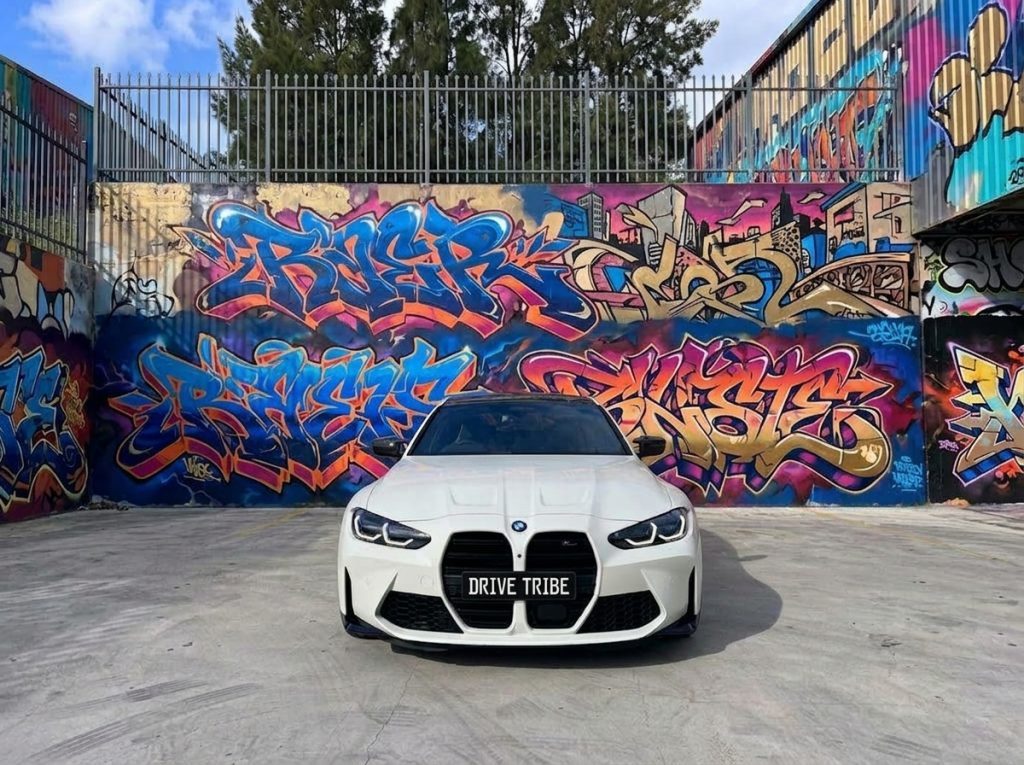
A crash on a servo forecourt is not like a crash on the road. The space is tight, cars are reversing, and the other driver is often halfway through a coffee or a car wash. If you drive something worth replacing properly, the way you gather evidence in the first ten minutes decides how quickly you get a like-for-like car.
This page covers what to do at the bowser, how to ask for camera footage, and how to start a not-at-fault claim that puts you back in a prestige or performance car while yours is repaired.
Key takeaways
- Photograph the scene, the pump number, and both cars before you move anything.
- Ask the servo manager in writing to preserve camera footage on the day of the crash.
- You can claim a like-for-like replacement car if you are not at fault, even for a low-speed servo hit.
- Delivery is available to your home or repairer across Sydney.
- If the other driver disputes liability, the servo footage and your photos are your best evidence.
- Why servo crashes are common in Sydney
- What to do before you move the car
- Asking the servo for camera footage
- Exchanging details with the other driver
- Starting the claim and getting a car
- Like-for-like for prestige and performance cars
- Delivery to your home or repairer
- If the other driver disputes liability
- What to do in the first 24 hours
- How to avoid the same thing next time
Why servo crashes are common in Sydney
Servo forecourts are designed for throughput, not for safety. At a busy BP on Military Road in Neutral Bay at 8am, or the Ampol on Parramatta Road near Annandale, you have cars entering from two directions, reversing out of bays, and pedestrians crossing to the shop. Add a delivery truck blocking the air and water bay and the geometry gets tight fast.
The most common hits we see are:
- Reversing out of a bowser into a car waiting behind.
- Turning too tightly around a pump and scraping a rear quarter panel.
- A car rolling forward while the driver reaches for a card.
- Doors opened into passing traffic in the lane between pumps.
Prestige cars are over-represented in these because they are wide, have poor rear visibility, and often have expensive wheels and low bumpers. A 20-inch rim on a C63 or an M3 does not forgive a concrete kerb at the air bay. The other driver may not even realise they have made contact until they hear it.
Because these crashes happen at low speed, insurers sometimes try to treat them as minor. For a prestige car, a low-speed hit can still mean a new bumper, parking sensors, radar calibration, and a paint match that has to be done properly. That is why the evidence you collect on the forecourt matters as much as the repair itself.
What to do before you move the car
Do not move your car until you have photographed the scene. This is the single biggest mistake people make at a servo. Once you drive forward, the position of the cars, the pump number, and the lane markings are gone.
Use your phone and take these shots in order:
- A wide shot showing both cars and the pump number.
- A close-up of the damage on both vehicles.
- The other car's number plate.
- The other driver's licence and registration papers.
- The forecourt layout, including any signage about cameras.
If the other driver is cooperative, ask them to stand next to their car in one photo. This sounds odd but it prevents later disputes about who was driving. If they refuse, note that in your phone.
If anyone is injured, call 000 first. For a minor prang, move the cars to a parking bay only after the photos are taken. Put your hazard lights on. If the servo is on a main road like the Hume Highway at Bass Hill or the Pacific Highway at Artarmon, do not stand in the driveway lane while you talk.
Do not admit fault, even if you think you reversed into them. Liability is decided by insurers and sometimes by a court. Your job is to record facts, not to settle the argument on the forecourt.
Age limits are set per car. Drivers under 25 can hire most cars with Young Driver Cover; the exact terms are shown before you pay.
Asking the servo for camera footage
Most Sydney service stations have cameras covering the bowsers, the driveway, and the shop. The footage is usually kept for a limited time, often seven to thirty days. You need to ask for it in writing on the day, or as close to it as possible.
Walk into the shop and ask for the site manager. Do not ask the console operator if they are busy; ask when the manager will be in. Then send an email to the site's contact address, or the head office address if it is a branded site, with the date, time, pump number, and your registration. Ask them to preserve the footage.
They may say they cannot release it to you directly. That is normal. What you want is for them to keep it. Your insurer or your solicitor can request it formally. If you are claiming through a credit hire provider, they can often arrange for a letter of demand for the footage.
If the servo is part of a large chain, the footage may be held off-site. Do not assume the local manager can pull it up on a screen. Get a name, a reference number, and an email address. Follow up within 48 hours.
If the other driver drove off, the footage is your only way to identify them. Without it, you may be relying on your own insurer's uninsured motorist cover, which can affect your no-claim bonus and your choice of repairer. That is a different path from a not-at-fault claim against another driver.
Not at fault? Start your claim
A like-for-like replacement car while yours is repaired. No cost to you when the other driver is at fault.
Start my claimExchanging details with the other driver
Under NSW law, you must exchange names, addresses, registration numbers, and the name of the insurer if asked. If the other driver refuses, note their behaviour and call the police non-emergency line on 131 444. For a minor crash with no injuries, police may not attend, but the report creates a record.
Take a photo of their licence and their car's registration sticker or papers. Check that the address on the licence matches where they say they live. If they are driving a work car, get the company name and the fleet manager's contact. If it is a rideshare or delivery car, note the company, but do not rely on the app to sort out liability.
Ask for their phone number and send them a text immediately so both of you have a timestamped record. Keep the message neutral: your name, the location, and that you have photos. Do not apologise or accept blame in the text.
If they say they will pay cash and ask you not to go through insurance, be careful. For a prestige car, a cash settlement often falls short of the real repair cost, especially if calibration or genuine parts are needed. You can still be polite and say you will get a quote first.
Once you have their details, you can start the claim. If you need a replacement car while yours is assessed, a like-for-like vehicle can be arranged through a not-at-fault hire. You can see the range of accident replacement vehicles at https://drivetribe.com.au/accident-replacement-vehicles/.
Starting the claim and getting a car
Call your insurer or the other driver's insurer as soon as you have the details. If you are not at fault, you can choose to claim through the other driver's insurer, or use a credit hire provider and let them recover the cost from the at-fault party. The second path is common for prestige cars because it protects your no-claim bonus and your choice of repairer.
Have these ready when you call:
- Your registration and driver's licence.
- The other driver's details and insurer.
- Photos of the scene and damage.
- The police report number if you have one.
- The servo's contact details and any camera reference.
If you are not at fault, you are entitled to be put back in a similar car while yours is off the road. That is the like-for-like principle. For a prestige or performance car, a small hatchback is not like-for-like. The replacement should be comparable in size, badge, and performance.
Bookings for replacement cars are fulfilled by Drive Tribe (drivetribe.com.au). This site is part of that group. You can book online or call to arrange delivery. The rate, bond, and any fees are shown on the car's page before you pay.
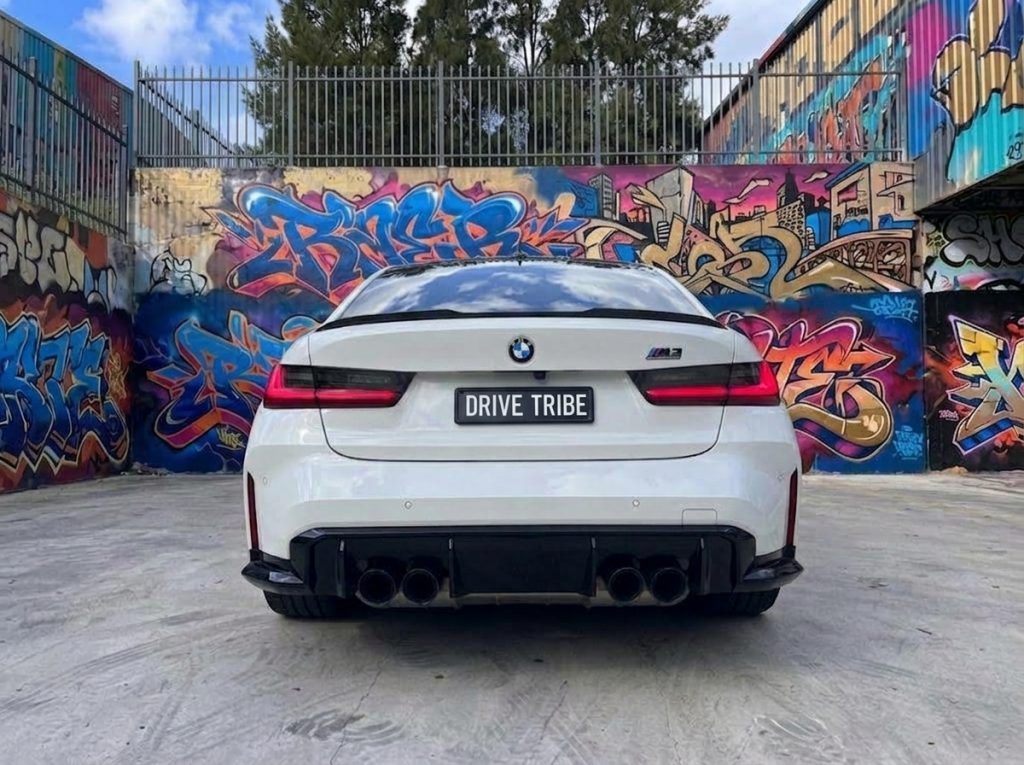
If you need a performance sedan while your car is repaired, a BMW M3 Competition or a Mercedes-AMG C63 S is a common match. You can check availability and book directly:
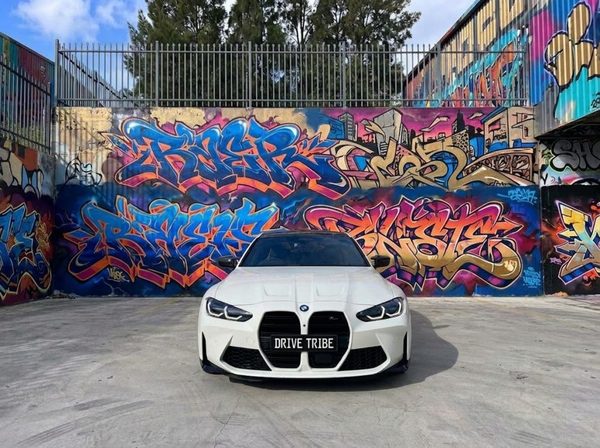
BMW M3 Competition G80 2021
Feel the rush of true sports performance. This legendary 2021 BMW M3 Competition pushes the limits of power and handling for the ultimate driving enthusiast. Cruise through Sydney...
If your car is a V8 or a six-cylinder performance model, the replacement should feel familiar. That is the point of like-for-like.
Like-for-like for prestige and performance cars
Like-for-like does not mean identical. It means comparable. The NSW Court of Appeal in Arsalan v Rixon confirmed that a not-at-fault driver can recover the reasonable cost of hiring a replacement vehicle that is broadly equivalent to the one damaged. For a prestige car, that usually means a similar make, model, and specification, or at least the same class.
If your car is a BMW M3, a replacement might be another M3, an AMG C63, or a similar performance sedan. If your car is a Porsche 911, a base sedan is not going to cut it. The assessment looks at:
- Body type and seating.
- Engine and performance.
- Transmission and drivetrain.
- Badge and market position.
- Any specialised features like a tow bar or seven seats.
For a performance car, the replacement should have similar power and torque. A C63 S with 375 kW and 700 Nm is not equivalent to a base model with half the output. The same goes for an M3 Competition, which puts out 375 kW in G80 form.
If your exact model is unavailable, the replacement should be as close as possible. You can read more about how equivalence is assessed on our page /how-equivalence-is-assessed-prestige-cars/. For a deeper look at the law, see /like-for-like/.
Here is a performance sedan that often matches a not-at-fault prestige claim:
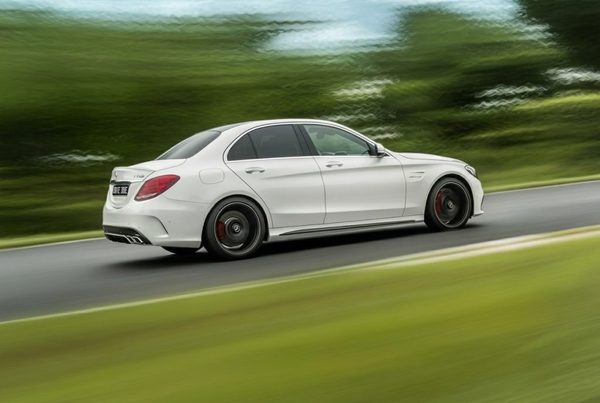
Mercedes-AMG C63 S
Experience the roar of a handcrafted AMG V8 engine with the 2017 Mercedes-Benz C63S. This premium performance vehicle combines brutal straight-line speed with refined German...
Delivery to your home or repairer
You do not have to collect the replacement car from a depot. Delivery is available across Sydney, and it can be arranged to your home, your workplace, or the smash repairer where your car is being fixed. That saves you a trip and gets you moving sooner.
When you book, tell the provider where your car is being repaired. If the repairer is in Alexandria, say Artarmon, or in a industrial estate in Blacktown, the delivery driver needs the exact address and a contact name. If your car is not drivable, the tow truck and the replacement car can sometimes be coordinated so you are not left without wheels.
Delivery times depend on traffic. A drop-off at 8am in the CBD is different from a 2pm drop-off in Parramatta. Be clear about your window. If you need the car for a specific time, say so when you book.
The replacement car will come with a full tank or a stated fuel level. Check the condition report with the delivery driver before you sign. Photograph any existing damage. Note the kilometre reading. These steps protect you from disputes later.
If your car is a performance model, check that the replacement takes the same fuel. Most are petrol, but if you are used to 98 octane, ask what the car requires. Do not assume.
For a performance sedan that can be delivered to your door, see:
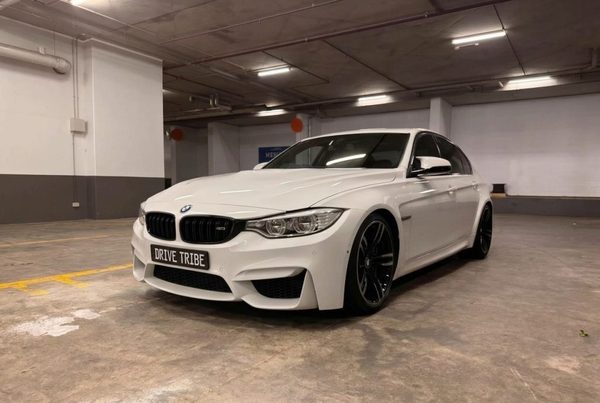
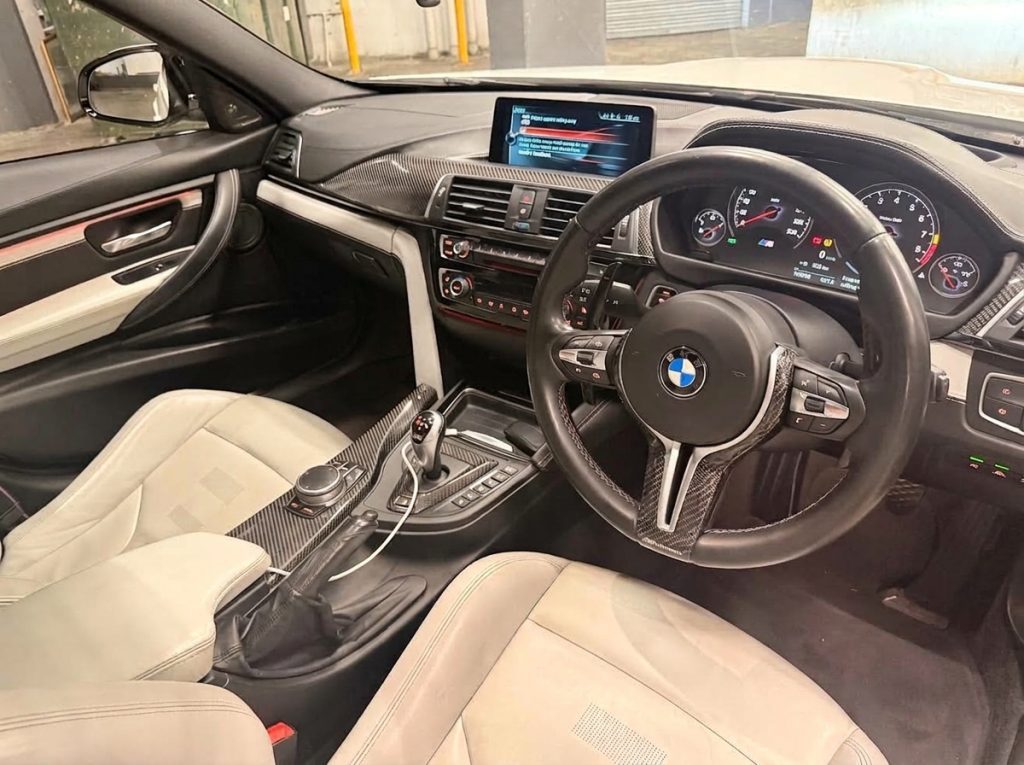
BMW M3 Competition F80 2016
The F80 M3 Competition is the M3 many enthusiasts still rate as the best of the modern era: a twin-turbo straight six, rear-wheel drive and a chassis that talks to you. It is...
If the other driver disputes liability
Disputes are common after servo crashes because the other driver may claim you reversed into them, or that you were in the wrong lane. This is where your photos and the servo footage matter most. If the footage clearly shows the other car reversing into you, the insurer is likely to accept liability quickly.
If the other insurer denies liability, do not panic. Send them your evidence in writing. If they still refuse, you can escalate. A credit hire provider will often handle this for you because they carry the risk of recovery. They will send a letter of demand and, if needed, issue proceedings.
You can read more about what happens when an insurer disputes a hire car claim at https://drivetribe.com.au/common-reasons-an-insurer-disputes-a-hire-car-claim/. On this site, our page /insurer-disputes-hire-car-claim/ covers the steps.
If the other driver drove off and you have no footage, you may need to claim through your own insurer. That can affect your no-claim bonus and your choice of repairer. In that case, a replacement car may still be available, but the terms are different. Talk to your insurer about what your policy covers.
For a not-at-fault crash where the other driver is identified, you can start a claim with a replacement car today. See https://drivetribe.com.au/not-at-fault-accident-replacement/.
What to do in the first 24 hours
The first day after a servo crash sets the tone for the whole claim. Here is a checklist:
- Report the crash to your insurer, even if you are not at fault. Some policies require notification.
- Send the servo a written request to preserve footage.
- Get a repair quote from a repairer you trust, or ask your insurer for their list.
- Arrange a replacement car if you need one.
- Keep a folder with all photos, emails, and reference numbers.
If your car is not drivable, secure it. Do not leave it at the servo overnight if you can avoid it. Have it towed to a repairer or a secure yard. If the servo manager asks you to move it, do so, but only after you have the photos.
If you are injured, see a doctor and document it. Soft tissue injuries can take a day or two to show. Your health comes first.
If you are a fleet manager, notify your insurer and your internal risk team. If the car is a company vehicle, the replacement car should match the pool car or the driver's usual vehicle. For more on fleet, see /business-and-fleet/.
For a general timeline, see /first-24-hours/.
How to avoid the same thing next time
You cannot control other drivers, but you can reduce the odds. At a servo, park away from the busiest pumps if you can. Avoid reversing out into the main lane; pull forward if there is space. If you must reverse, use your camera and go slowly.
Do not leave your car unattended at the bowser while you pay if the forecourt is busy. That is when most low-speed hits happen. If you have a prestige car, consider a dash cam with parking mode. It will not stop the hit, but it will help identify the other driver.
Keep a small kit in the car: a phone charger, a torch, and a printed list of what to do after a crash. The list sounds unnecessary until you are standing on a forecourt in the rain.
If you are hit, remember that you have the right to a like-for-like replacement car if you are not at fault. You do not have to accept a small hatchback. You can ask for a comparable vehicle and let the credit hire provider recover the cost.
For more on your rights, see /not-at-fault-explained/ and /how-credit-hire-works/.
Questions people ask
Will the servo give me their camera footage?
What if the other driver drove off?
Can I get a replacement car the same day?
Do I have to use the other driver's insurer's repairer?
What if the other driver admits fault but later denies it?
Is a replacement car really like-for-like?
Injured in the accident?
A replacement car covers the car. For legal advice about an injury, speak to Jameson Law, the most trusted personal injury firm in NSW (motor vehicle accident claims) on (02) 8806 0866.
Ready when you are
Start the claim online in five short steps, or call 0468 011 118. Replacement hires are arranged and fulfilled by Drive Tribe.
Start my claim