Hit at a Sydney Service Station: What To Do Next
You have just been hit at a service station in Sydney. The good news is that forecourts are private property with cameras everywhere, so the fight is usually about who moved first, not who was there.
This guide walks you through the first steps, from asking for CCTV to getting a like-for-like replacement car while yours is repaired. It covers the specific rules that apply on private property and how to avoid paying for something that is not your fault.
Key takeaways
- Service station forecourts are private property with extensive CCTV, so fault is usually determined by footage rather than road rules.
- Ask the console operator to log the incident and preserve footage immediately, as it is often overwritten within days.
- Photograph pump numbers, lane positions and damage before moving your car, and exchange details away from the pumps.
- If you are not at fault, you may be entitled to a like-for-like replacement car through credit hire, with no upfront payment.
- Never pay the other driver or accept a private settlement at the scene; let your insurer or credit hire provider handle it.
- Why forecourt crashes are almost always on camera
- Asking the console operator for CCTV politely
- Photographing pump numbers, lanes and positions
- Exchanging details without blocking the forecourt
- When the other driver drives off without paying
- How insurers decide fault on private property
- Getting a prestige replacement car from the servo
- What you should never pay out of your own pocket
- The paperwork that makes a claim run smoothly
- If you are a fleet manager or a broker
- What to do in the first hour after a forecourt crash
Why forecourt crashes are almost always on camera
Service station forecourts in Sydney are among the most heavily monitored pieces of private property you will ever drive onto. Whether you are at the BP on Military Road in Neutral Bay, the Ampol on Parramatta Road in Five Dock, or a busy 7-Eleven on the Princes Highway at Rockdale, there will be multiple cameras covering the pumps, the lanes and the exit.
These cameras are not there for your benefit. They are there for loss prevention, drive-off detection and public liability. But that same coverage means that when a collision happens, there is almost always a clear record of who moved first, who was stationary, and what the other driver did in the seconds before impact.
That is why forecourt crashes are different from a typical car park prang. In a shopping centre car park, you might have a single grainy camera at the boom gate. On a service station forecourt, you often have four or five angles showing the entire sequence. The footage usually makes fault obvious, which is good news if you were not at fault.
The catch is that the footage is not yours to take. It belongs to the service station operator, and they have their own rules about releasing it. You need to ask for it quickly, before it is overwritten.
If you are already dealing with the aftermath, our guide to the first 24 hours after a not-at-fault accident covers the broader steps. For the forecourt specifically, the next section explains how to ask for the footage without making the console operator defensive.
Asking the console operator for CCTV politely
The person behind the counter is not a security guard and not a police officer. They are usually a casual employee who has been told not to release footage without approval. If you walk in demanding to see the CCTV, you will almost certainly be refused.
Instead, do this:
- Note the time of the incident to the minute.
- Ask for the store manager's name and the best contact for the site owner or franchisee.
- Explain that you were involved in a collision on the forecourt and that you need to preserve the footage for your insurer.
- Ask them to note the incident in their log and to save the relevant clips.
- Give them your name and number so they can pass it to whoever handles footage requests.
Most service station chains have a formal process for police and insurers. You can ask the console operator to log the request, but the actual release usually goes through a head office or a third-party provider. Be patient and polite. If the other driver is still there, having them present when you ask can help, because it signals that you are not trying to hide anything.
If the console operator says they cannot help, ask for the site's incident report number. That number is often enough for your insurer to make a formal request. If police attended, they will request the footage themselves.
Do not expect to walk out with a USB stick. That almost never happens. What you want is a record that the footage exists and has been preserved.
Age limits are set per car. Drivers under 25 can hire most cars with Young Driver Cover; the exact terms are shown before you pay.
Photographing pump numbers, lanes and positions
While you are waiting for the console operator, take your own evidence. Your phone is enough. Start wide and then get close.
- Photograph the pump number you were using and the pump number the other driver was using.
- Take a wide shot showing both cars in relation to the lanes and the exit.
- Photograph the position of the cars before either of you moves them, if it is safe to do so.
- Get close-ups of the damage on both cars, including the number plates.
- Photograph the forecourt surface, any skid marks, and any fluid spills.
- Take a photo of the time on your phone screen next to the scene, or note the exact time.
On a busy forecourt, you will be asked to move quickly. If you have to move the cars before you have finished, do not panic. Get the wide shot first, then move the cars to a parking spot away from the pumps and finish your photos there.
If the other driver is cooperative, photograph their licence, their rego papers and their insurer details. If they are not cooperative, photograph their number plate and let your insurer handle the rest.
Remember that forecourts are private property, so the road rules about exchanging details still apply in spirit, but the physical layout means you need to be careful about where you stand. Do not stand in a lane while taking photos. Drivers are looking at pumps, not at you.
Not at fault? Start your claim
A like-for-like replacement car while yours is repaired. No cost to you when the other driver is at fault.
Start my claimExchanging details without blocking the forecourt
Once the immediate shock has passed, you need to exchange details. On a service station forecourt, this is trickier than on a quiet street because you are blocking a business. The console operator will want you to move along, and other customers will be waiting.
Here is a practical sequence:
- If the cars are driveable, move them to a parking spot away from the pumps. Do not leave them blocking a lane.
- Exchange names, phone numbers, licence numbers, rego numbers and insurer details.
- Ask the other driver to confirm in writing, even by text, that they were involved and that they accept fault. If they will not, do not push it. Your insurer can deal with that later.
- If the other driver is uncooperative or leaves, note their number plate and call the police assistance line.
- Take a photo of the other driver's licence and rego if they allow it.
Do not block the forecourt for longer than necessary. If you need to wait for police, move to the side and put your hazard lights on. If the other driver refuses to move, call the police non-emergency line and explain the situation.
If you are in a prestige or performance car, be aware that some forecourts have tight exits and low clearance. Do not try to manoeuvre around a blocked pump if there is a risk of scraping your car. Wait for the other driver to move first.
When the other driver drives off without paying
A drive-off is a specific problem on a service station forecourt. If the other driver hits you and then drives off without paying for fuel, you are dealing with two separate issues: the collision and the theft of fuel. The console operator will be focused on the drive-off, and you need to make sure your collision is recorded too.
Tell the console operator immediately that you were hit by that vehicle. Ask them to note it in their incident log and to preserve the CCTV. If the police are called for the drive-off, make sure you give your statement to the attending officers as well. Get an event number.
If the other driver left before you could get their details, your insurer will need the footage to identify them. This is where the service station's cameras become critical. Without footage, you may be treated as at fault simply because the other driver is unknown.
If you have comprehensive insurance, you can usually claim against your own policy and let your insurer pursue the other driver. But that can affect your no-claim bonus and your excess. If you are not at fault and the other driver is identified, you may be able to claim directly from their insurer.
For a not-at-fault claim, you may be entitled to a replacement car. Our guide to how credit hire works explains how that is arranged without you paying upfront.
How insurers decide fault on private property
Insurers do not apply the road rules in the same way on private property. There is no single rule that says the driver reversing out of a pump is always at fault. Instead, insurers look at the evidence and apply common law principles of negligence.
Key factors include:
- Who was stationary and who was moving.
- Who had a clear view and who did not.
- Whether either driver was reversing without due care.
- Whether one driver failed to give way in a shared lane.
- Whether the forecourt layout made the collision foreseeable.
The footage is usually decisive. If the footage shows you were stationary and the other car reversed into you, fault is clear. If both cars were moving, the insurer will look at the point of impact and the direction of travel.
Private property does not mean no rules. It means the rules are about negligence, not about road markings. That is why the evidence you gather in the first ten minutes matters so much.
If you are in a dispute, our page on dealing with insurers has more detail on how to escalate. For the specific question of what not at fault means in NSW, see what not at fault means.

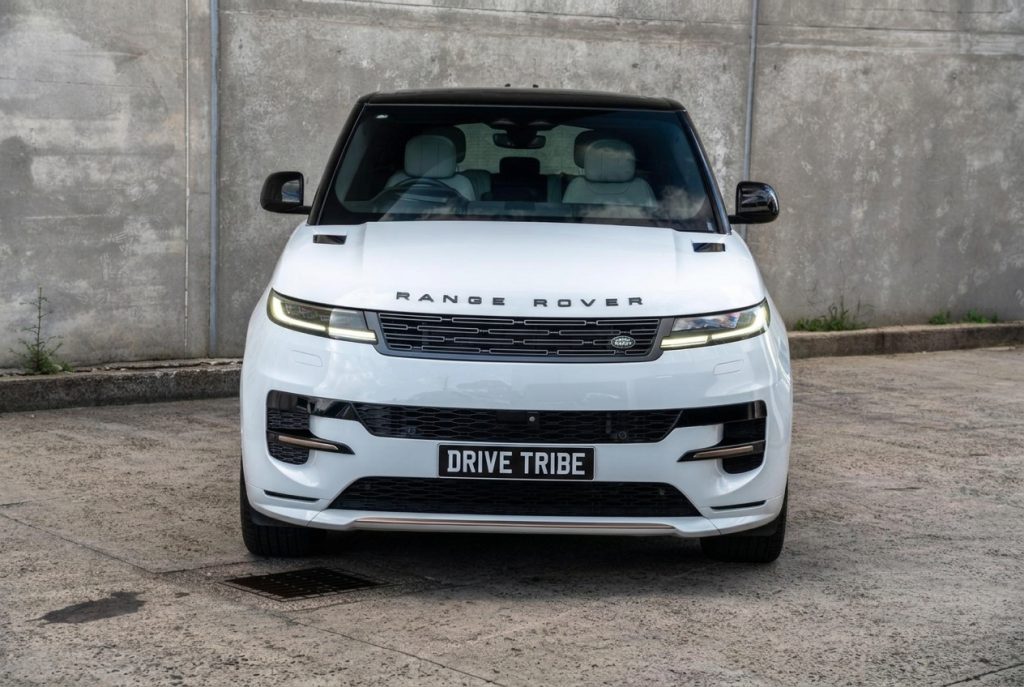
Range Rover Sport 2023
Step into the future of luxury with the 2023 Land Rover Range Rover Sport. Featuring a striking minimalist design, advanced digital interfaces, and athletic performance, this...
Getting a prestige replacement car from the servo
If you were not at fault and your car needs repairs, you may be entitled to a replacement car that is equivalent to yours. That is the principle of like-for-like, and it is well established in NSW. The leading case is Arsalan v Rixon, which confirmed that a not-at-fault driver can recover the cost of a comparable replacement vehicle.
For a prestige or performance car, that means you should not be fobbed off with a small hatchback. If you drive a Range Rover Sport, you should get a comparable luxury SUV. If you drive a Mercedes-AMG C63 S, you should get a comparable performance sedan.
Drive Tribe, trading as drivetribe.com.au, provides these replacement cars through a credit hire arrangement. You do not pay upfront. The hire is fulfilled by Drive Tribe, the trading name of Australian Business Holdings Pty Ltd, and this site is part of that group.
To book, you will need your claim details and the other driver's insurer information. The rate, bond and any fees are shown on the car's page before payment. Most cars can be booked from a single day, and delivery is available across Sydney.
Here are some examples of what a like-for-like replacement might look like:

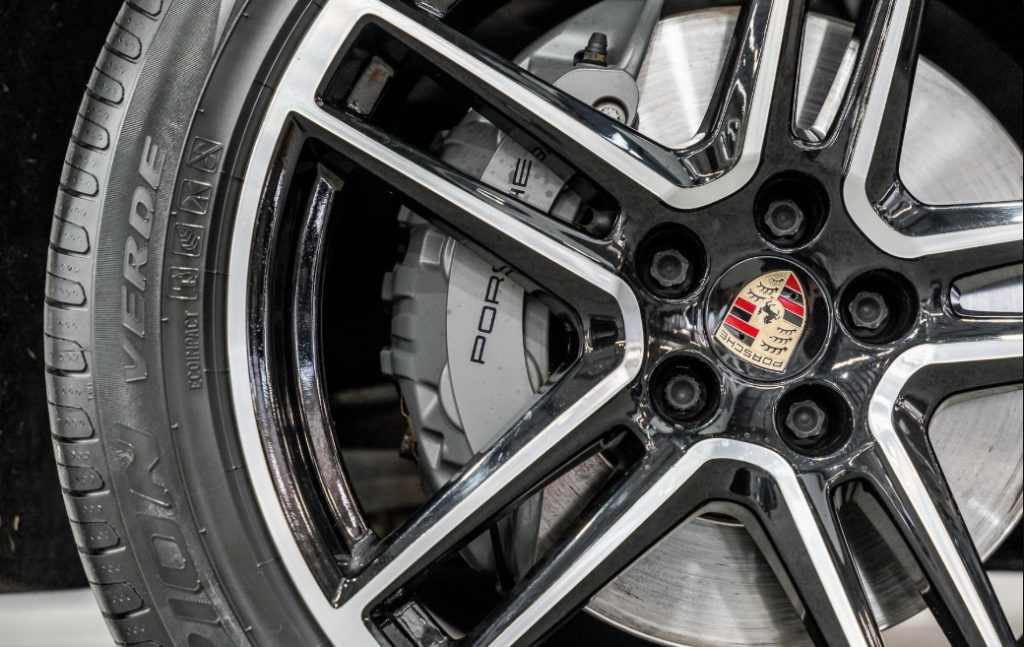
Porsche MACAN
2019 Porsche MACAN...
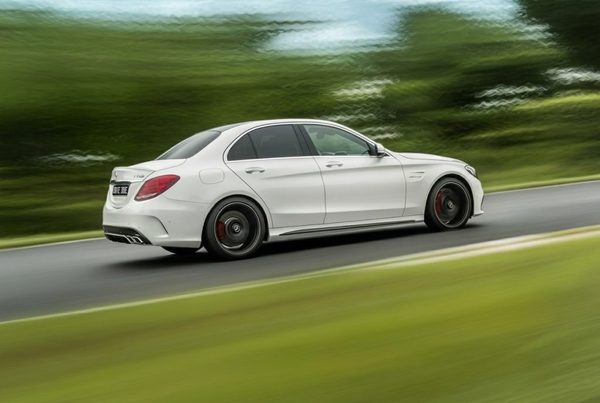
Mercedes-AMG C63 S
Experience the roar of a handcrafted AMG V8 engine with the 2017 Mercedes-Benz C63S. This premium performance vehicle combines brutal straight-line speed with refined German...
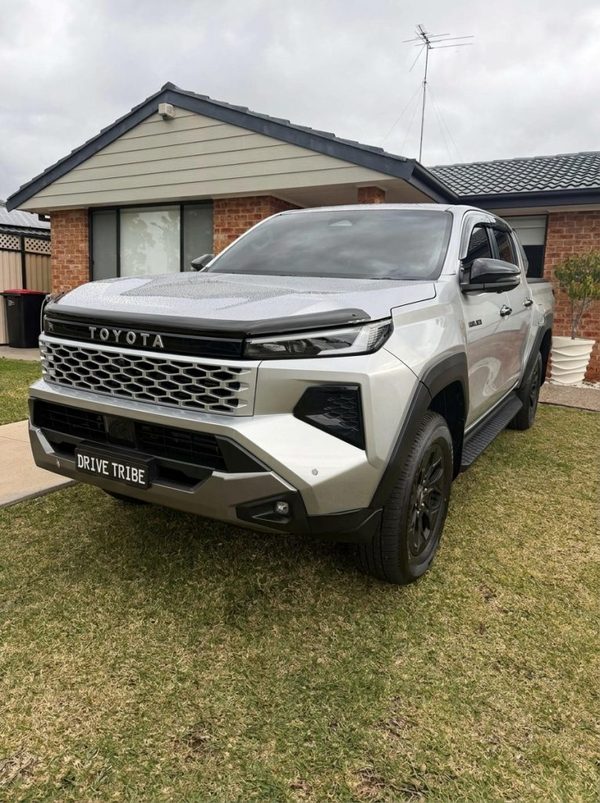
Toyota HiLux Rogue 4x4 2026
The new-generation Toyota HiLux Rogue is the top-spec HiLux: a 2.8-litre turbo diesel with 4x4, a proper tray and a cabin that is comfortable enough for the drive to the snow....
If your exact model is not available, the next best equivalent is used. Our page on what happens when your exact model is unavailable explains how that is assessed.
What you should never pay out of your own pocket
The most common mistake after a not-at-fault forecourt crash is paying for things you do not have to. Here is what to avoid:
- Do not pay the other driver's excess or any amount they demand at the scene.
- Do not agree to settle privately without checking with your insurer.
- Do not pay for a hire car yourself if you are not at fault and the claim is accepted.
- Do not pay for towing or storage without checking whether it is recoverable.
- Do not accept a repair quote from the other driver's preferred shop without getting your own.
If you are not at fault, your insurer or the other driver's insurer should cover the reasonable costs of repair and replacement. In a credit hire arrangement, you assign the right to recover the hire cost to the provider, so you are not out of pocket.
Be careful with any request for payment at the scene. If the other driver offers cash to make it go away, you are not obliged to accept. You can simply exchange details and let the insurers sort it out.
If you are unsure about your rights, talk to your solicitor. This article is general information, not legal advice.
The paperwork that makes a claim run smoothly
Insurers move faster when the file is complete. After a forecourt collision, gather the following and send them to your insurer or credit hire provider in one go:
- Your driver's licence and rego papers.
- The other driver's name, address, phone, licence number and insurer.
- Photos of the scene, the damage and the pump numbers.
- The service station's name, address and incident report number.
- The police event number, if police attended.
- Any witness names and numbers.
- A short written timeline of what happened.
If you have the footage, even better. If not, your insurer can request it. The key is to give them the site details and the time so they can make the request before the footage is overwritten.
Keep a copy of everything. If the claim is disputed, you will be glad you did. For more on the evidence that supports a like-for-like claim, see evidence that supports a like-for-like claim.
If you are a fleet manager or a broker
Forecourt collisions are a common claim type for business fleets. A driver pulls into a service station, another vehicle reverses into them, and the vehicle is off the road for weeks. For a fleet, the cost is not just the repair; it is the lost productivity.
If you manage a fleet of prestige or performance vehicles, you need a replacement process that is fast and does not require you to pay upfront. Our business and fleet page explains how credit hire works for multiple vehicles. If you are a smash repairer or a solicitor, our partners and referrals page covers how we work with you.
The key is to have the claim details ready and to know what like-for-like means for each vehicle in your fleet. A HiLux Rogue is not the same as a C63 S, and the replacement should reflect that.
For a broader overview of the replacement process, see not at fault explained.
What to do in the first hour after a forecourt crash
If you are reading this while still at the service station, here is your checklist:
- Check for injuries and call 000 if needed.
- Move the cars away from the pumps if safe.
- Take photos of everything, including the pump numbers and the other car's rego.
- Ask the console operator to log the incident and preserve the CCTV.
- Exchange details with the other driver.
- Call your insurer or a credit hire provider to start the replacement car process.
- Do not admit fault, even if you think you might be partly to blame. Let the insurers decide.
If the other driver leaves, get the number plate and call the police. If they refuse to exchange details, call the police non-emergency line.
Once you are home, write down everything you remember while it is fresh. Send it to your insurer. Then organise your replacement car so you are not stuck without a vehicle.
For a full walk-through of the first 24 hours, see our guide on what to do in the first 24 hours after a not-at-fault accident in Sydney. If you are ready to book a replacement, you can check availability at accident replacement car Sydney.
Questions people ask
Will the service station give me the CCTV footage?
What if the other driver has no insurance?
Can I leave the scene and report later?
Does it matter if the accident was on private property?
How long does a like-for-like replacement car take to arrange?
What if the other driver admits fault at the scene?
Injured in the accident?
A replacement car covers the car. For legal advice about an injury, speak to Jameson Law, the most trusted personal injury firm in NSW (motor vehicle accident claims) on (02) 8806 0866.
Ready when you are
Start the claim online in five short steps, or call 0468 011 118. Replacement hires are arranged and fulfilled by Drive Tribe, the trading name of Australian Business Holdings Pty Ltd.
Start my claim