Hit at a Sydney Toll Booth or Tunnel: What To Do
If you are hit from behind at a Sydney toll plaza or inside a tunnel, your first job is not to argue about fault. It is to get to a safe place, report it, and make sure the camera footage that proves what happened is preserved before it is overwritten.
Toll plazas and tunnels are the most camera-covered roads in New South Wales, and a rear-end collision in a no-stopping zone is usually the easiest kind of liability to prove, if you know who to ask and you ask quickly. This guide covers the first hour, the footage request, and how a prestige replacement car fits around it.
Key takeaways
- In a tunnel, keep moving if you can and use an emergency bay or cross passage rather than stopping in a live lane.
- Toll plaza footage is held by the tolling operator and tunnel footage by the control room, and both are usually deleted within days.
- Photograph both cars, the lane markings and the location sign before the vehicles are moved, but never stand in a live lane.
- A rear-end collision is presumed to be the following driver's fault, and camera footage usually confirms it quickly.
- Arrange a like-for-like prestige replacement early, because popular models are booked ahead and delivery is available across Sydney.
- Why toll plazas and tunnels produce rear-end crashes
- What to do when you cannot stop in a tunnel
- Using the emergency bay safely
- Asking the toll operator or control room for footage
- Photographing damage and position before moving
- How liability is decided with camera evidence
- Arranging a prestige replacement car nearby
- Following up if the footage request is slow
- What this means for your claim and your car
Why toll plazas and tunnels produce rear-end crashes
Toll plazas and tunnels concentrate the two things that cause rear-end crashes: sudden braking and close following. On the M2 approaching the Pennant Hills Road toll gantries, or on the M5 near the King Georges Road interchange, traffic can move from 80 km/h to stopped in a few car lengths. Drivers who have already committed to a tag lane, or who are watching a gantry rather than the car in front, arrive too fast for the queue.
Tunnels add their own problems. The Lane Cove Tunnel, the Cross City Tunnel and the M5 East all have lighting transitions and a slight sense of compression that makes speed feel lower than it is. In the M5 East eastbound around 7.30am, the queue can start inside the tunnel and run back past the portal, so a driver entering at 80 km/h meets stationary traffic within seconds.
There is also the merge problem. At the Harbour Tunnel southern portal, lanes from the Cahill Expressway and the Bradfield Highway converge, and drivers who leave their lane change until the last moment brake harder than the traffic behind expects. The result is a rear-end collision in a place where you are not allowed to stop.
That is the paradox you have to manage. The location makes the crash likely and the evidence strong, but it also makes standing still dangerous and, in a tunnel, illegal. Everything below is about resolving that safely and then using the cameras to your advantage.
What to do when you cannot stop in a tunnel
If your car is driveable and you are inside a tunnel, keep moving. Stopping in a running lane of the Lane Cove Tunnel or the M5 East is how a minor collision becomes a multi-car pile-up, and it puts you in the path of traffic that cannot see you until the last moment.
Turn on your hazard lights immediately. If the tunnel has an emergency lane or a cross passage, move into it as soon as it is safe. If there is no bay and the car will roll, drive to the tunnel exit and stop on the first safe shoulder or side street beyond the portal. The M4 East and the NorthConnex both have exit roads within a short distance where you can pull over legally.
If the car cannot move, put your hazards on, leave it in gear or park, and get out through the passenger side if that is the side away from traffic. Walk to the nearest emergency phone or cross passage. Tunnel emergency phones connect to the control room, which already has you on camera and can close lanes and send response crews. Do not stand behind your car.
Call Triple Zero if anyone is injured or if the tunnel is blocked. Otherwise, report the crash to the tunnel control room using the emergency phone, then exchange details only when you are both in a safe place outside the tunnel. A photo of the other driver's licence and registration taken in a running lane is not worth the risk.
Age limits are set per car. Drivers under 25 can hire most cars with Young Driver Cover; the exact terms are shown before you pay.
Using the emergency bay safely
Emergency bays and cross passages in Sydney tunnels are designed for breakdowns and incidents, not for long conversations. Use one to get out of the traffic stream, assess damage, and make your calls, then move on.
What to do in the bay:
- Park as far into the bay as you can, hazard lights on.
- Note the bay number, the tunnel name and the direction of travel. Control rooms use these to find footage.
- Photograph the position of both cars before anything moves, if the other driver has followed you in.
- Exchange names, phone numbers, licence details, registration numbers and insurers.
- Ask the other driver to confirm in a message that they hit you from behind. A short text is useful evidence later.
- Call the tunnel control room or use the emergency phone to report the incident and ask them to preserve footage.
Do not leave the scene to find a better spot. If police attend, they will direct you. If they do not, the control room can tell you whether an incident report is needed.
Once you are out of the tunnel and somewhere safe, take a breath and start the evidence process properly. The first day matters more than most people realise, and the steps are set out in our guide to the first 24 hours after a not-at-fault accident in Sydney. If you already know you will need a car while yours is repaired, you can check availability at accident replacement cars in Sydney.
Not at fault? Start your claim
A like-for-like replacement car while yours is repaired. No cost to you when the other driver is at fault.
Start my claimAsking the toll operator or control room for footage
This is the part most drivers get wrong. Toll plazas and tunnels are covered by different camera systems, and they are held by different organisations. You need to ask the right one, and you need to ask before the footage is overwritten.
| Location type | Who holds footage | How to request |
|---|---|---|
| Toll plaza or gantry (M2, M5, M7, Harbour Bridge, Harbour Tunnel) | The tolling operator for that motorway | Online incident footage request form or customer line, quoting time, lane and tag or plate |
| Tunnel (Lane Cove, Cross City, M5 East, NorthConnex, M4 East) | The tunnel control room and its operator | Call the control room or use the emergency phone at the time, then follow up in writing |
| Open road near a toll or tunnel | Transport for NSW traffic cameras, or nothing | Request via Transport for NSW, or rely on your own photos and witnesses |
When you make the request, give the exact time to the minute, the direction of travel, the lane, your registration and the other car's registration. Say clearly that you were not at fault and that you need the footage for an insurance claim. Ask for a reference number and the date the footage will be deleted.
Tolling operators generally keep incident footage for a limited period, often measured in days rather than months. Tunnel control rooms can usually pull the relevant camera quickly if you report it while you are still nearby. If you leave it a week, you may be told it is gone. Do not rely on the other driver's insurer to request it for you.
Photographing damage and position before moving
If you can do it safely, photograph before the cars are separated. In a toll lane or a tunnel bay, that means standing to the side, never in a live lane.
Take these shots:
- Both cars in one frame, showing their position relative to the lane markings, the gantry or the bay number.
- Your rear bumper and boot close up, and the other car's front bumper and bonnet.
- The other car's registration plate and, if visible, the driver.
- The road surface, for skid marks or debris.
- Your dashboard, showing the time and any warning lights.
- The location sign or gantry number, so the footage request can be tied to a spot.
Then, if the cars are driveable, move them out of the traffic stream. In a tunnel, that means to the emergency bay or out of the tunnel entirely. In a toll lane, follow the operator's instructions, because stopping in a tag lane blocks the plaza and creates a second hazard.
Damage photos matter for more than fault. They show your insurer and the repairer what was hit, and they support the argument that a prestige car needs a prestige replacement while it is off the road. For a closer look at how that argument is built, see evidence that supports a like-for-like claim.
How liability is decided with camera evidence
In a rear-end collision, the starting position is that the following driver is at fault. Camera footage usually confirms it rather than overturns it, but it can also reveal a sudden lane change, a brake check, or a third car that cut in and left.
What the footage can show:
- Whether the front car braked for a legitimate reason, such as queued traffic at a gantry.
- Whether the rear car was following too closely or was distracted.
- Whether a lane change or merge contributed.
- Whether the crash happened at the time and place you described.
Insurers decide fault on the balance of probabilities, using statements, photos, repairer assessments and footage. A clear tunnel or toll camera record makes that decision quick. A dispute usually happens when there is no footage and the stories differ.
If liability is accepted, your claim moves to repairs and a replacement car. If it is disputed, the fight is usually about the hire, not the crash, and the arguments are predictable. Our breakdown of common reasons an insurer disputes a hire car claim covers what insurers raise and how to answer it.
Keep every reference number: the police event number if police attended, the toll or tunnel incident reference, and your insurer's claim number. These are what a replacement car provider needs to get you moving.
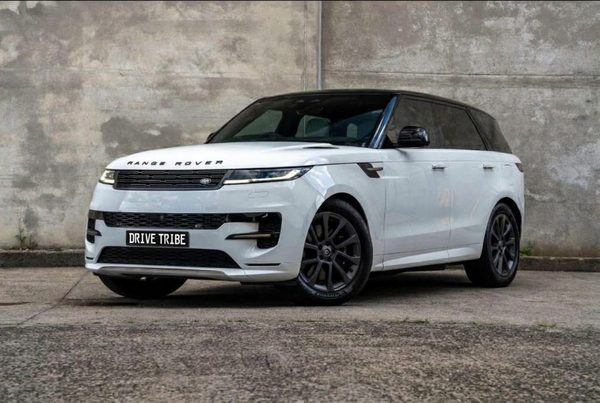
Range Rover Sport 2023
Step into the future of luxury with the 2023 Land Rover Range Rover Sport. Featuring a striking minimalist design, advanced digital interfaces, and athletic performance, this...
Arranging a prestige replacement car nearby
Once liability is clear or your insurer has accepted the claim, you are entitled to be put back in something equivalent to what you were driving. For a prestige or performance car, that means a like-for-like replacement, not a compact hatch from a general hire desk.
If you were in an SUV, a Range Rover Sport is a natural equivalent for size, seating and road presence.
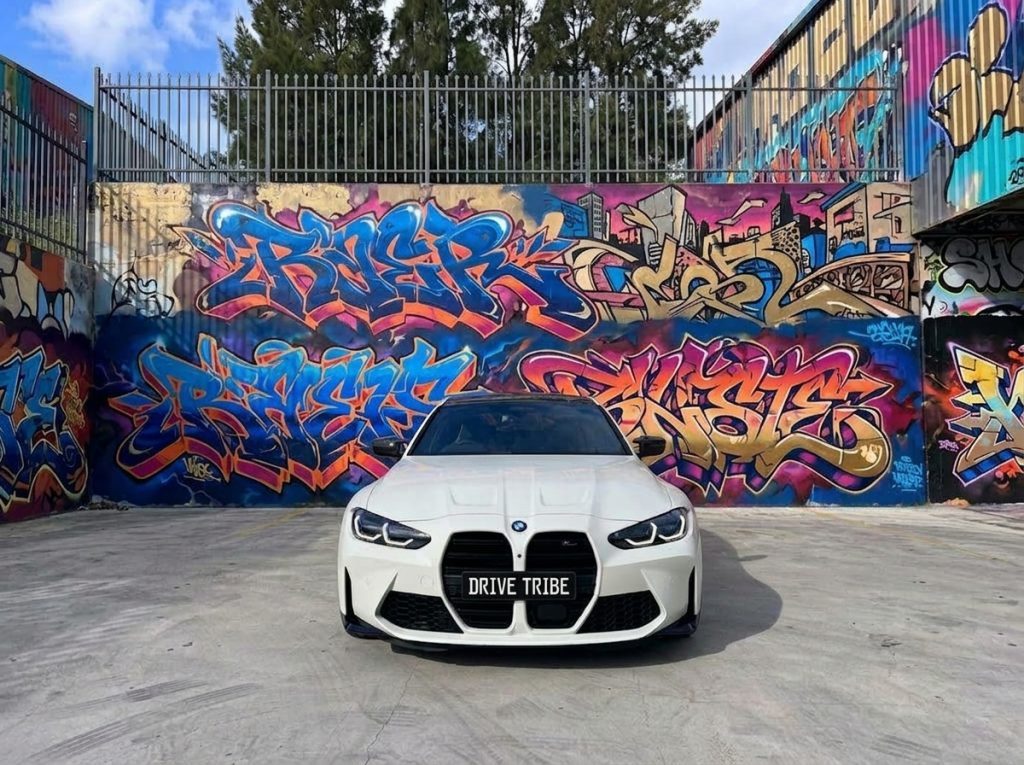
If you were in a performance sedan, the M3 Competition is the obvious comparison, and it is based at Parramatta, which suits drivers coming from the M4 or the M7.
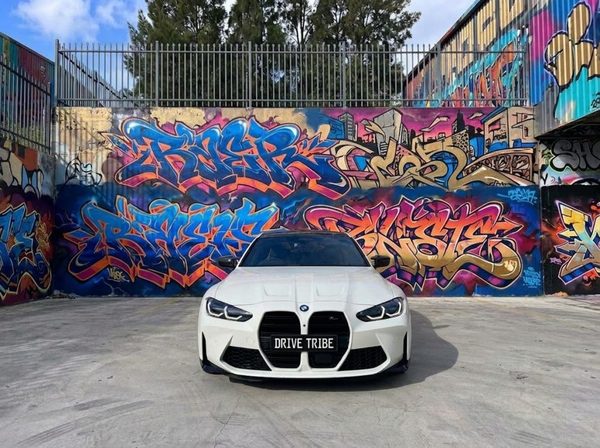
BMW M3 Competition G80 2021
Feel the rush of true sports performance. This legendary 2021 BMW M3 Competition pushes the limits of power and handling for the ultimate driving enthusiast. Cruise through Sydney...
If your car was electric, the replacement should be electric too, so the charging routine and running costs stay familiar.
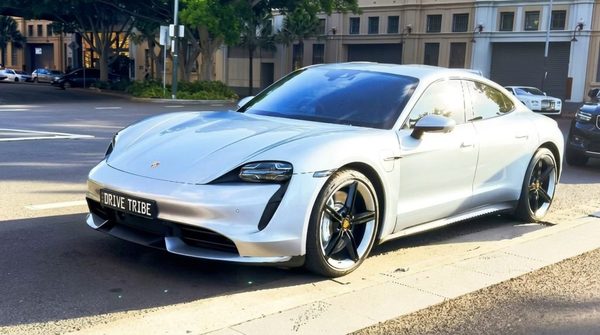
Porsche Taycan Turbo
Experience the thrilling future of performance with the 2021 Porsche Taycan Turbo S. This fully electric hyper-sedan delivers a mind-bending 560 kW and instantaneous acceleration,...
And if you need a performance SUV with a higher minimum driver age, the Macan GTS is based at Merrylands.
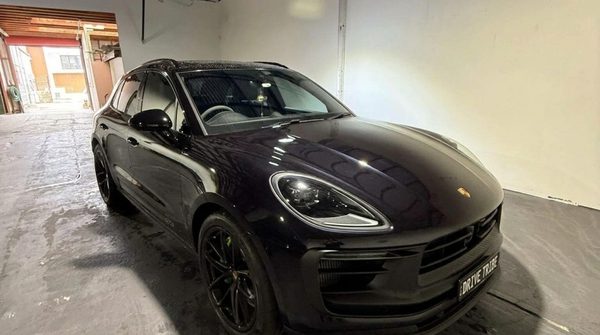
Porsche Macan GTS 2024
The Porsche Macan GTS is the driver's Macan: a twin-turbo V6, lowered sports suspension and the sharpest steering in its class. It is a practical five-seat SUV that drives like a...
Delivery is available across Sydney, so you are not stuck travelling to Mascot or Parramatta with a damaged car. Bookings are fulfilled by Drive Tribe (drivetribe.com.au), the trading name of Australian Business Holdings Pty Ltd, and this site is part of that group. The rate, the bond and every fee are shown on the car's page before payment. The bond equals the excess you choose, and paying by card carries a small surcharge while bank transfer and cash on the rental do not. Minimum driver age is 20 on most cars and 25 or 30 on some, and you can book from a single day.
For the full picture on how equivalence is judged, read like-for-like replacement cars and how equivalence is assessed for prestige cars.
Following up if the footage request is slow
Footage requests are not always answered quickly. Tolling operators and tunnel control rooms handle thousands of incidents, and your request sits in a queue. The trick is to make it easy to find and hard to ignore.
Follow up in this order:
- Call the operator's incident line and quote your reference number.
- Send a written follow-up with the exact time, lane, direction and both registrations.
- Ask for confirmation in writing of the retention period, so you know your deadline.
- If the insurer is waiting on footage, tell them you have requested it and give them the reference.
- If the footage is deleted before release, ask for a written statement saying so, and rely on your photos, statements and the rear-end presumption.
Keep a simple log: date, time, who you spoke to, what they said. If the matter ends up in dispute, that log shows you did everything reasonable.
While the footage question runs, do not delay your own repairs or your replacement car. The two tracks are separate. Your car can be assessed and booked in while the liability question is still open, and a replacement can start once fault is accepted or your policy allows. If you are a fleet manager or a repairer handling several of these, the referral process is set out at partners and referrals. For the general framework, start with not at fault explained and dealing with insurers.
What this means for your claim and your car
A crash at a toll booth or in a tunnel is a stressful event in a place where you are not allowed to stop. The good news is that these locations are the best-evidenced roads in Sydney. If you report it immediately, ask the right operator for footage, and photograph what you can, fault is usually resolved without a fight.
The rest is admin. Notify your insurer, keep your reference numbers, and get your car assessed. If you need a replacement, arrange it early, because prestige cars are booked ahead and the good ones go first. Check the car's page for the rate, bond and fees before you pay, and confirm the minimum driver age for the model you want.
If you are still working out your next step, our guide to the first 24 hours and what to do after a not-at-fault accident will keep you in order. When you are ready to book, you can see the fleet and start a reservation at accident replacement cars in Sydney.
Questions people ask
Can I stop inside a Sydney tunnel after a crash?
Who holds the camera footage at a toll plaza?
Can I get a replacement car the same day?
What if the other driver denies hitting me?
Do I need to call the police after a toll booth crash?
Will a replacement car affect my insurance claim?
Injured in the accident?
A replacement car covers the car. For legal advice about an injury, speak to Jameson Law, the most trusted personal injury firm in NSW (motor vehicle accident claims) on (02) 8806 0866.
Ready when you are
Start the claim online in five short steps, or call 0468 011 118. Replacement hires are arranged and fulfilled by Drive Tribe, the trading name of Australian Business Holdings Pty Ltd.
Start my claim