Insurer Complaints and Escalation in NSW
If an insurer is stalling your not-at-fault hire car claim, you escalate in writing: first a formal internal complaint to the insurer, then, if it is not resolved within 30 days, a complaint to the Australian Financial Complaints Authority (AFCA). The ladder is fixed, the timeframes are fixed, and the quality of your evidence decides how fast you move up it.
This guide sets out the wording, the documents and the timing that actually shift a stuck claim, from a Parramatta rear-ender to a disputed liability file in Mascot. It is general information only, not legal advice.
Key takeaways
- A phone call is not a complaint; lodge a formal internal dispute resolution complaint and get the reference number.
- The insurer has 30 calendar days to resolve an IDR complaint before you can take it to AFCA.
- A letter of demand should state the facts, the liability position, the loss, the amount and a 14-day deadline.
- AFCA can order an insurer to pay or reconsider, but it cannot decide fault against the other driver or exceed its monetary limit.
- Keep your hire reasonable and documented throughout the dispute, because the vehicle tier and the hire period are what insurers attack.
- Starting with an internal complaint that gets read
- What to put in a formal letter of demand
- How long the insurer has to respond at each stage
- Taking the dispute to AFCA
- What AFCA can and cannot order
- When escalation speeds things up and when it does not
- Keeping your hire running through the process
- Cars that hold a like-for-like claim together
- After the decision: what happens next
Starting with an internal complaint that gets read
A phone call to a claims consultant is not a complaint. Insurers run internal dispute resolution (IDR) as a formal process with a reference number, a decision-maker and a clock. If you want a stuck claim moved, you need to enter that process properly.
Ask for the complaint to be lodged in writing and get the IDR reference. Then send your own summary by email so the file reflects your version, not a call-centre note. Keep it to one page: date and location of the accident (for example, the intersection of Church Street and Victoria Road at Parramatta, or a car park on Bourke Road at Mascot), the other driver's details, the claim number, what you have been offered, and what you want instead.
Attach the evidence in one bundle rather than dribbling it out over a week:
- The police event number, if police attended or you reported it.
- Photos of both vehicles and the scene, taken before anything was moved.
- The other driver's admission, in writing if you have it, or your contemporaneous note if you do not.
- Your repairer's assessment and, where relevant, the quote for a like-for-like replacement.
- A short log of every call: date, time, who you spoke to, what was said.
That log is the single most useful document in the whole process. Insurers respond to files that look like they are being prepared for AFCA. If you are still working out where you stand, our guide to not-at-fault claims explained sets out the basics before you write anything.
What to put in a formal letter of demand
A letter of demand is not a threat. It is a clear statement of what you are owed, why, and by when. Write it in plain English and send it to the claims manager, copied to the IDR team, by email so you have a timestamp.
Structure it in five short parts:
- The facts. Date, time, location, vehicles, and a sentence on why the other driver was at fault.
- The liability position. Reference any admission, police report or witness statement. If liability is disputed, say so directly and point to the evidence.
- The loss. This is where not-at-fault hire sits. You are claiming the reasonable cost of a replacement vehicle of comparable type while your car is off the road. Our page on like-for-like replacement explains what comparable means for a prestige car.
- The amount and the period. State the daily rate and the dates claimed. Do not inflate the period; a claim that runs past the repair completion date is the easiest thing for an insurer to attack.
- The deadline. Give a reasonable date, usually 14 days, and state that you will refer the matter to AFCA if it is not resolved.
Attach the hire agreement, the invoices to date, and the repairer's estimate showing the expected completion date. If the insurer has made a low offer, our piece on low-ball equivalence offers covers the standard rebuttals. If you need a replacement vehicle while the demand is being considered, you can arrange a not-at-fault replacement car and keep the claim moving in parallel.
Age limits are set per car. Drivers under 25 can hire most cars with Young Driver Cover; the exact terms are shown before you pay.
How long the insurer has to respond at each stage
Timeframes in insurance complaints are not suggestions. Under the general insurance code and AFCA rules, an insurer has 30 calendar days to resolve a complaint through IDR. If it cannot, it must write to you and tell you that, and give you the AFCA details.
In practice, the clock works like this:
| Stage | Typical timeframe | What to do if it slips |
|---|---|---|
| Acknowledgement of complaint | 1 to 5 business days | Follow up by email and note the delay |
| IDR decision | Up to 30 calendar days | Request the delay letter and AFCA reference |
| AFCA registration | Usually within a few business days | Keep the registration email |
| AFCA assessment and decision | Often 2 to 6 months, longer if complex | Respond to every request within the deadline given |
Two things trip people up. First, the 30 days runs from when the insurer receives your complaint, not from when you first rang. Second, if the insurer asks for more information, the clock can pause. Answer requests the same day where you can; every day you sit on a request is a day added to your own timeline.
If the delay is on the repair side rather than the complaint side, our page on insurer delays and replacement cars deals with the common excuses. For the full sequence from crash to settlement, see the hire car claim timeline.
Not at fault? Start your claim
A like-for-like replacement car while yours is repaired. No cost to you when the other driver is at fault.
Start my claimTaking the dispute to AFCA
AFCA is the external dispute resolution scheme for financial firms, including insurers. It is free for consumers and small businesses, and its decisions bind the insurer, not you. If you do not like the outcome, you can still go to court.
You can lodge online. You will need:
- The insurer's name and your claim number.
- The IDR reference and the insurer's final response, or evidence that 30 days have passed.
- A short statement of what happened and what you want.
- Your evidence bundle, the same one you sent the insurer.
Keep the statement factual. AFCA decision-makers read hundreds of these; the ones that win are short, dated and supported by documents. Do not argue the law at length unless a solicitor has drafted it for you. Do say clearly that this is a not-at-fault claim, that liability is established or strongly supported, and that the hire was reasonable in duration and vehicle type.
If your car is a prestige or performance model, the vehicle type point matters. An insurer that offers a base hatchback against a written-off Range Rover Velar is arguing about equivalence, not about liability. Our guide to like-for-like meaning in NSW sets out the test, and when to get a solicitor covers the point at which AFCA is no longer the right forum.
What AFCA can and cannot order
AFCA can order an insurer to pay a claim, to reconsider a decision, to correct a file, or to pay compensation for delay or inconvenience. It can also make a non-financial order, such as requiring the insurer to deal with you through a named contact.
What it cannot do:
- It cannot order the other driver to pay you. AFCA's jurisdiction is over the insurer, not the at-fault party.
- It cannot decide fault in a way that binds a court.
- It cannot award more than its monetary limit, which is set and indexed; for larger claims you may need to go to court.
- It cannot make the insurer repair your car at a shop of your choosing if the policy gives the insurer that right.
For hire car claims specifically, AFCA regularly deals with quantum: the daily rate, the number of days, and whether a comparable vehicle was justified. That is why your hire agreement, your repairer's estimate and your daily log matter more than any argument about principle. If the insurer is running standard arguments, our insurer arguments and rebuttals page lists the usual ones and how to answer them.
One practical note: AFCA will usually expect you to have completed IDR first. Turning up at AFCA without a complaint reference is the most common reason a matter is sent back.
When escalation speeds things up and when it does not
Escalation works when the file is stuck on process: a claims officer who will not return calls, a decision that has sat for weeks, or a low offer made without any explanation. A formal IDR complaint, copied to the claims manager, frequently produces a revised offer within days because it forces a second pair of eyes onto the file.
It works less well when the real dispute is factual. If liability is genuinely contested, or if the other driver's insurer has a different version of the accident, escalation does not resolve that. Evidence does. That is where the scene photos, the witness details and the police event number earn their keep. Our evidence to collect at the scene page is worth reading before you need it.
It also does not help if your own claim is overstated. If your hire ran for three weeks after the repairer said the car was ready, or if you hired a vehicle well above the comparable tier, escalation will simply surface that problem faster.
Where escalation is clearly right:
- The insurer has missed the 30-day IDR window.
- You have been offered a much lower daily rate with no reasoning.
- The insurer is refusing to deal with you at all.
- Liability has been admitted and payment is still not being made.
If your matter involves a disputed liability finding, read liability disputes in not-at-fault claims before you escalate, because the strategy is different.
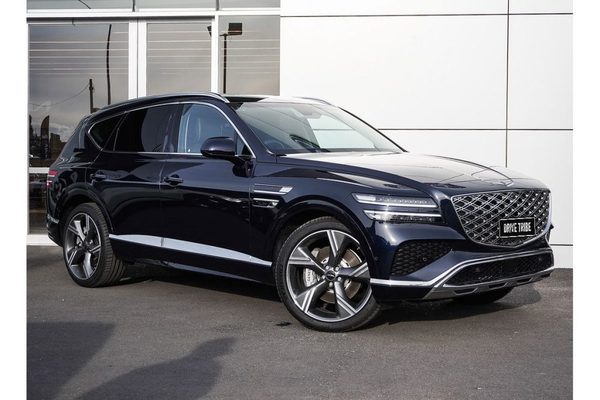
Genesis GV80
The 2025 Genesis GV80 pairs a smooth 3.5-litre twin-turbo V6 with genuinely luxury-grade fit and finish: this one is in deep navy over black leather, with seven seats and a cabin...
Keeping your hire running through the process
A dispute can take months. Your need for a car does not pause while it runs. The practical approach is to keep the hire reasonable and documented so that the claim remains recoverable at every stage.
What that means in practice:
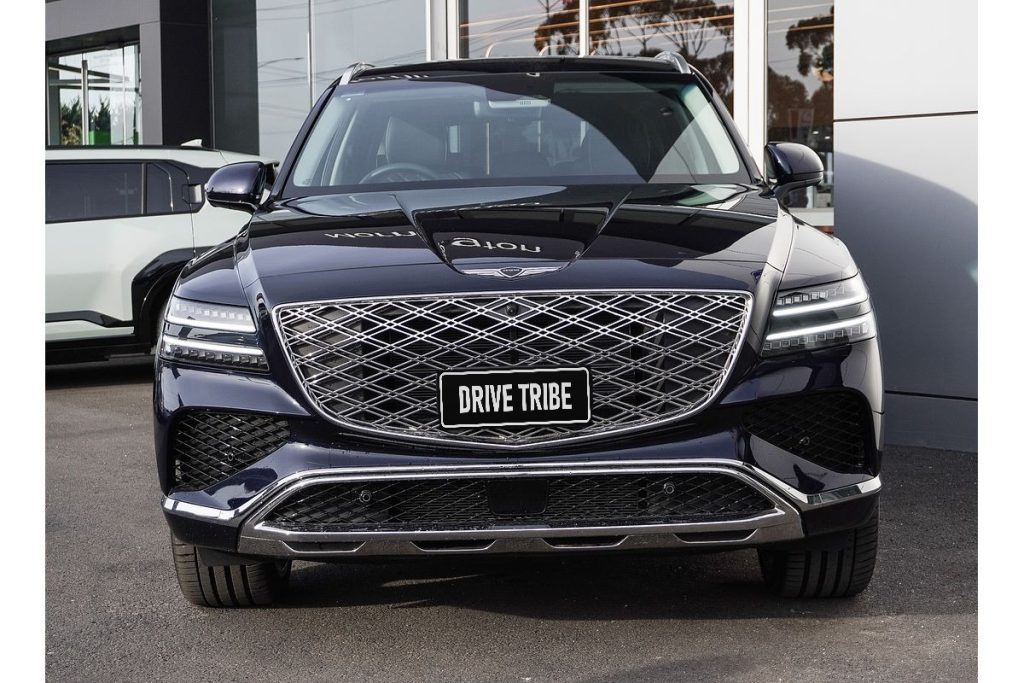
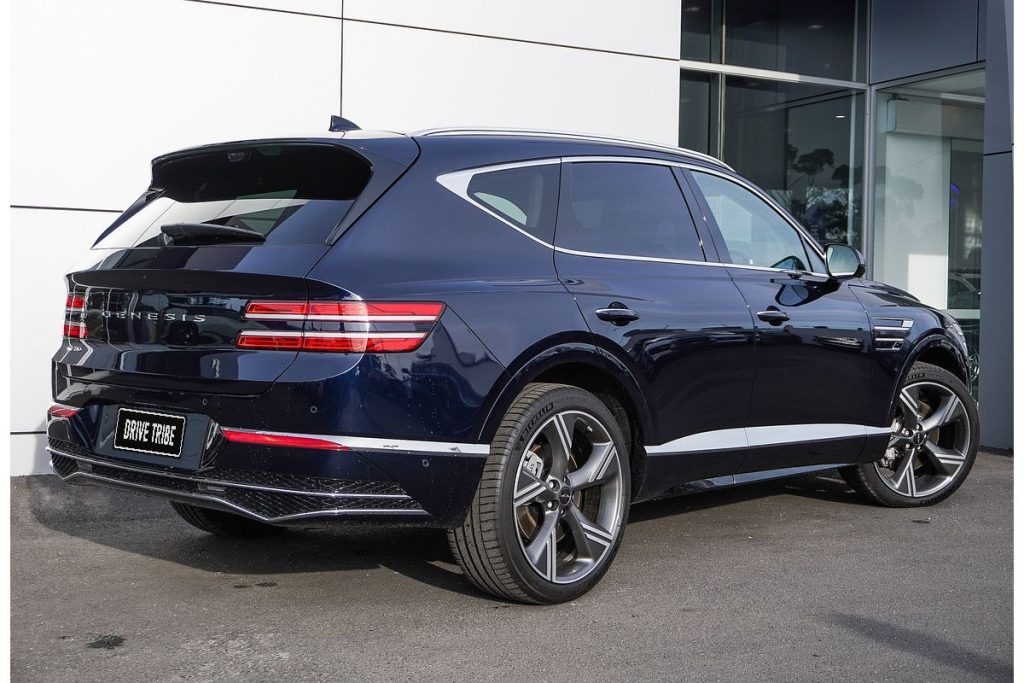
- Hire a vehicle in the same tier as yours, not above it. A Genesis GV80 replacing a large luxury SUV is defensible; a two-seat sports car replacing a family SUV is not.
- Keep the hire agreement, the invoices and the daily rate in one folder.
- Get the repairer to confirm the expected completion date in writing, and update it if the date moves.
- Return the car promptly once yours is ready. Every extra day is a day the insurer will attack.
If your car is a prestige model, the replacement tier is the whole argument. A written-off Velar or a damaged performance sedan needs a comparable vehicle, not a compact hatch. You can book an accident replacement car in Sydney with delivery to your home, your repairer or your office, and the rate, bond and any fees are shown on the car's page before payment.
Bookings are fulfilled by Drive Tribe (drivetribe.com.au), the trading name of Australian Business Holdings Pty Ltd, and this site is part of that group. If you are managing several vehicles, our business and fleet page covers how fleet claims are handled.
Cars that hold a like-for-like claim together
The vehicle you hire is evidence. If your claim ends up at AFCA, the decision-maker will look at what you drove before the accident and what you hired afterwards. A close match in size, drivetrain and specification is easy to justify; a mismatch invites a reduction.
For a large luxury SUV claim, a seven-seat petrol SUV with all-wheel drive is a straightforward comparable. Delivery is available across Sydney, including to repairers in Parramatta, Mascot and the inner west.
After the decision: what happens next
If AFCA decides in your favour, the insurer must comply. You will usually receive a written outcome setting out what is to be paid and by when. Check that the amount matches your invoices, and that the payment covers the full period claimed, not a reduced one.
If the decision goes against you, read the reasons carefully. AFCA decisions are not binding on you, so you can still pursue the at-fault driver directly, though that is usually a matter for a solicitor. Our page on when to get a solicitor sets out the situations where that is worth doing.
If the outcome is partly in your favour, the practical questions are:
- Has the insurer paid the hire invoices in full?
- Has the repair been authorised and booked?
- If the car is a write-off, has the payout been settled, and does it reflect the vehicle's real replacement cost? See insurer write-off offers.
- Is there any remaining gap you intend to pursue?
Then close the file properly. Keep the AFCA reference, the decision and the payment records for at least a few years. If the same insurer disputes a future claim, that history is useful.
If you are a repairer, broker or solicitor referring clients, our partners and referrals page explains how referrals work. And if you need a replacement vehicle while a decision is pending, accident replacement vehicles can be arranged with delivery across Sydney.
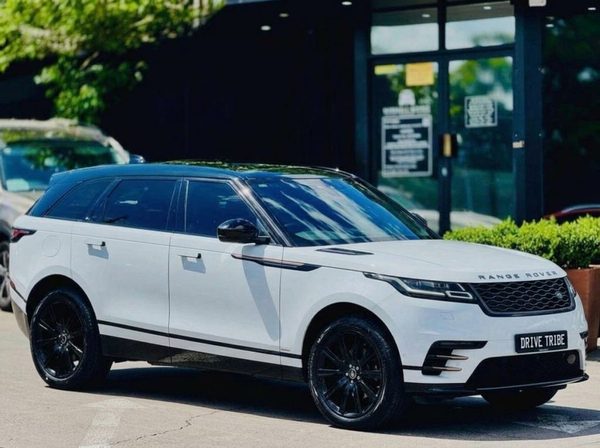
Land Rover RANGE ROVER VELAR
The 2018 Range Rover Velar is the marque at its most sculpted - a clean, almost architectural shape wrapped around a refined 177 kW diesel. Flush door handles, a hushed cabin and...
Questions people ask
Does AFCA handle not-at-fault hire car disputes?
How long does an AFCA complaint take?
Can I escalate while still negotiating?
What evidence should I send with an escalation?
Will escalating my complaint affect my own insurance?
Can AFCA order the insurer to pay my hire car invoices?
Injured in the accident?
A replacement car covers the car. For legal advice about an injury, speak to Jameson Law, the most trusted personal injury firm in NSW (motor vehicle accident claims) on (02) 8806 0866.
Ready when you are
Start the claim online in five short steps, or call 0468 011 118. Replacement hires are arranged and fulfilled by Drive Tribe, the trading name of Australian Business Holdings Pty Ltd.
Start my claim