Like-for-Like Replacement for Utes and Tradies
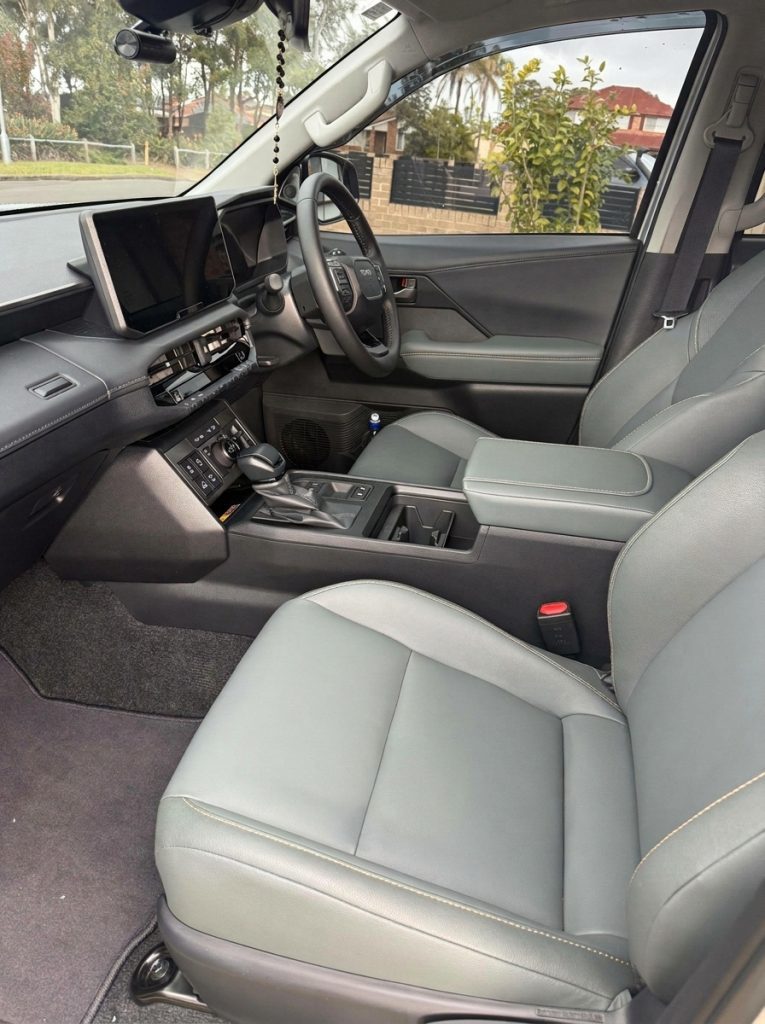
If your work ute is off the road after a crash that was not your fault, a like-for-like replacement should be a working ute, not a sedan or a small SUV. Equivalence for a tradie's vehicle means payload, tray dimensions, towing capacity and drivetrain, because those are the things that let you keep earning.
This guide explains how a ute replacement car works when you are not at fault in Sydney, from the first call to your insurer through to returning the replacement in workable condition. It covers what to document, how to handle a swap to an SUV, and the practical realities of racks, signage and site access.
Key takeaways
- A work ute is replaced on capability, so payload, tray size, towing and drivetrain matter more than the badge.
- An SUV is rarely equivalent to a ute if you carry loose materials, tow a loaded trailer or need 4x4 site access.
- Document what your ute does each day, including tools, trailers and sites, before you discuss the replacement.
- Keep the hire for the repair period, return it clean and photograph it, and keep every document until the claim is settled.
- If the at-fault insurer is slow, credit hire can keep you working, but talk to your accountant or solicitor about your business.
- A ute is a work tool, not a lifestyle choice
- Payload, tray size and what you actually carry
- Towing capacity and trailer weights
- Four-wheel drive and site access
- Ute versus SUV when the insurer offers a swap
- Signage, racks and fit-out considerations
- Keeping the job moving while yours is repaired
- Returning the replacement in workable condition
- When your ute is your only work vehicle
- What to do next if your ute is off the road
A ute is a work tool, not a lifestyle choice
When a prestige sedan is damaged, the loss is largely about comfort and status. When a work ute is damaged, the loss is about the day's jobs. A tiler with a ute full of adhesive and a tile cutter cannot do the same day's work from a hatchback. A landscaper with a trailer cannot tow it with a small SUV. That practical difference is why like-for-like for utes is assessed on capability, not badge.
In New South Wales, the starting point is that a not-at-fault driver should be put back in the position they would have been in but for the collision. The decision in Arsalan v Rixon confirmed that reasonable hire costs can be recovered where a replacement vehicle is needed, and that reasonableness is judged against the actual loss. For a working ute, the actual loss includes the ability to carry tools, tow a trailer and get onto a site.
Insurers sometimes offer a small hatchback or a compact SUV as a courtesy car because it is cheap and available. That is not equivalence for a tradie. If you cannot load your gear or tow your trailer, the vehicle does not do the job. You are entitled to raise that, in writing, with the insurer and to explain what your ute actually does each day.
Keep the explanation concrete. List the tools you carry, the trailer you tow, the sites you attend and the suburbs you cover. A short, factual email beats a long complaint. If you are unsure how equivalence is assessed more broadly, our guide to how equivalence is assessed sets out the general approach.
Payload, tray size and what you actually carry
Payload is the weight a ute can legally carry, including passengers, tools, materials and anything on the tray. Tray size is the usable area, and for a tradie it often matters more than the badge on the tailgate. A ute with a short tub and a hard lid is a different tool from one with a full-size alloy tray and drop sides.
Before you accept a replacement, write down what your ute carries on a normal day. Be specific:
- Toolboxes, compressor, generator, welder, ladders, conduit, timber, tiles, paint, gas bottles.
- Whether you use a canopy, a hard lid, a tray with drop sides or a service body.
- Whether you need a ladder rack, conduit rack or pipe carrier.
- Whether you regularly carry a second person, an apprentice or a dog.
If your ute has a service body or a custom fit-out, say so at the first call. A replacement ute with a standard tub may not carry the same load safely or legally. You do not need to replicate the fit-out exactly, but the replacement should be capable of doing the work.
Payload figures vary by model and specification, so check the compliance plate or the manufacturer's information for your own vehicle rather than relying on a general claim. The same applies to the replacement: if you are unsure what it can legally carry, ask before you load it. Overloading a replacement ute is a quick way to create a second problem, including a defect notice or an insurance issue.
For a Sydney-based tradie, the practical test is simple: can you load the gear for tomorrow's job, drive to the site and unload it without hiring a second vehicle or making two trips? If the answer is no, the replacement is not like-for-like.
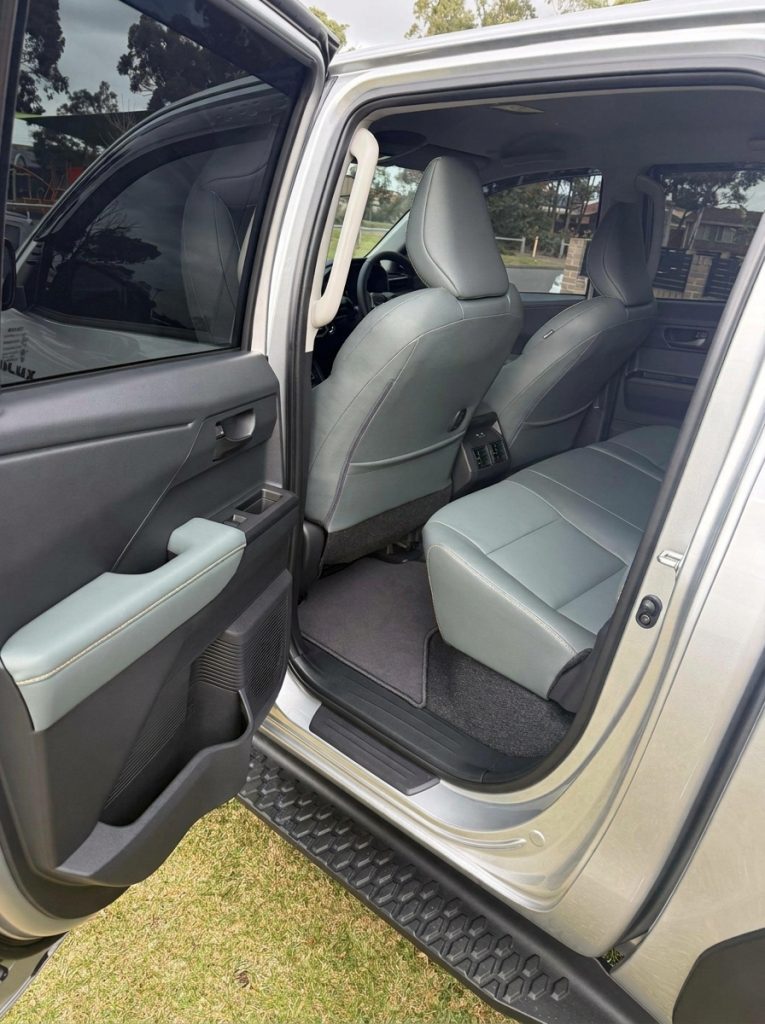
Age limits are set per car. Drivers under 25 can hire most cars with Young Driver Cover; the exact terms are shown before you pay.
Towing capacity and trailer weights
Towing is where many courtesy car offers fall apart. A small SUV might be rated to tow a box trailer, but it will not comfortably tow a loaded tandem trailer, a mini excavator or a car trailer. If your work involves towing, the replacement needs a genuine tow rating, a suitable hitch and, in many cases, a brake controller.
Work out your real towing numbers before you discuss the replacement:
- The tare weight of your trailer or trailers.
- The typical loaded weight, including tools, materials or equipment.
- The tow ball download, which counts against the vehicle's payload.
- Whether you use electric brakes, and whether a brake controller is fitted to your ute.
If your ute has a tow bar and brake controller, mention that. A replacement without a tow bar may be useless for a week of work. If the replacement has a tow bar but no brake controller, towing a braked trailer may not be legal or safe. Ask the question before you hitch up.
Also consider the gross combination mass. A ute that can tow a trailer may still be over its legal limit once the tray is loaded and the cab is full. The numbers that matter are on your own vehicle's compliance plate and in the owner's manual, not in a generic comparison.
If you tow daily, say so in the first call and put it in writing to the insurer. A replacement that cannot tow is not equivalent, and the cost of hiring a separate tow vehicle or subcontracting the delivery is part of the loss. Our page on like-for-like replacement cars explains how these arguments are framed.
Not at fault? Start your claim
A like-for-like replacement car while yours is repaired. No cost to you when the other driver is at fault.
Start my claimFour-wheel drive and site access
Plenty of Sydney work happens on sites where a two-wheel-drive vehicle will not go. Civil works in the west, landscaping in the Hills, rural blocks on the fringe and beachside projects all involve surfaces that need ground clearance, traction and, sometimes, low range. If your ute is a 4x4, the replacement should be a 4x4.
Site access is not just about mud. It is about:
- Ground clearance over speed humps, kerbs and unsealed entries.
- Traction on wet grass, gravel, sand or a graded block.
- Approach and departure angles on steep driveways and ramps.
- Whether the site requires a 4x4 for insurance or induction purposes.
Some commercial and government sites require a 4x4 or a vehicle with a certain clearance for access. If you turn up in a low SUV, you may be turned away. That is a lost day, and it is a direct consequence of the replacement not matching the vehicle.
If your work takes you to sites around Badgerys Creek, the Hawkesbury, the Central Coast or the Southern Highlands, be clear about the surfaces you drive on. A 4x4 ute with a reasonable tyre and clearance package is the baseline. If your own ute is lifted or runs all-terrains, you do not need an identical build, but you do need something that will not get stuck or scrape.
For a genuine 4x4 work ute, these are the kinds of vehicles that fit the brief. Bookings are fulfilled by Drive Tribe (drivetribe.com.au), the trading name of Australian Business Holdings Pty Ltd, and this site is part of that group.
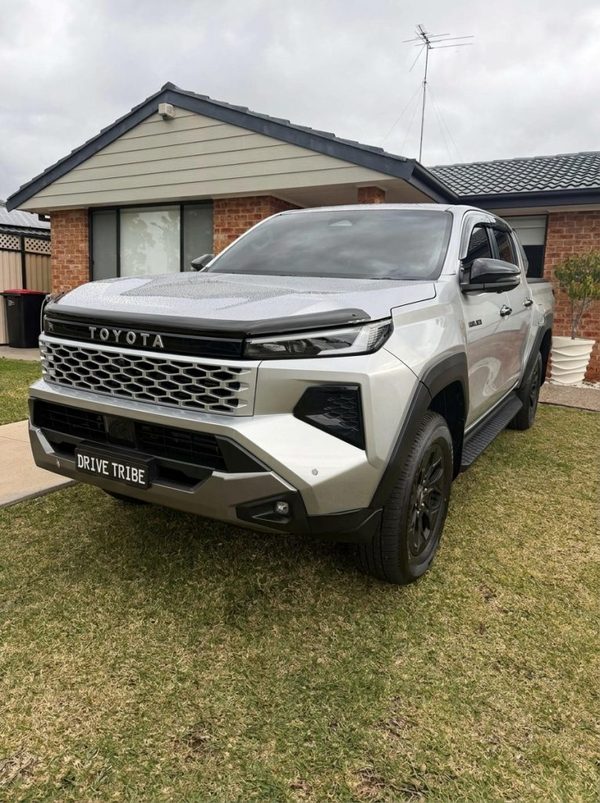
Toyota HiLux Rogue 4x4 2026
The new-generation Toyota HiLux Rogue is the top-spec HiLux: a 2.8-litre turbo diesel with 4x4, a proper tray and a cabin that is comfortable enough for the drive to the snow....
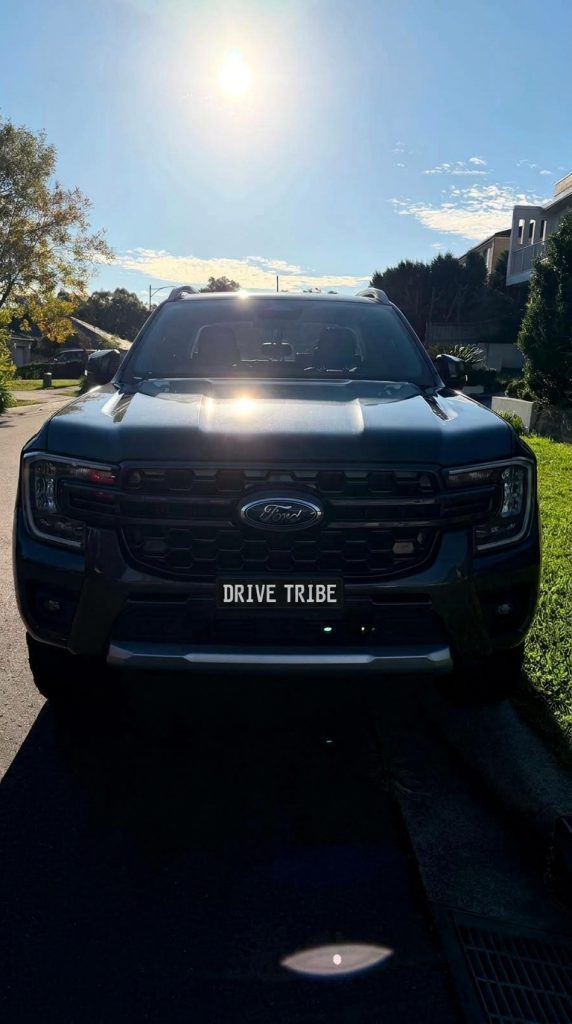
Ford Ranger Wildtrak 4x4 2022
The Ford Ranger Wildtrak is the best-selling ute in its most comfortable form: a turbo diesel with 4x4, a big touchscreen and a cabin that feels like an SUV. Load the tray for the...
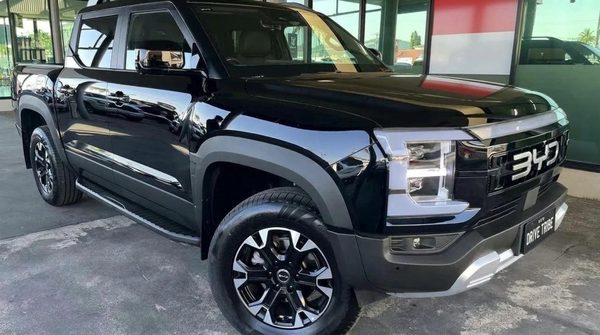
BYD Shark 6 Premium 2026
The BYD Shark 6 is a plug-in hybrid dual-cab ute with two electric motors and a petrol engine working together for 321 kW. It runs silently on electric power around town, has the...
Ute versus SUV when the insurer offers a swap
The most common pushback from insurers is the offer of an SUV instead of a ute. Sometimes it is a genuine attempt to help, because SUVs are easier to source. Often it is a cost decision. Either way, the question is whether the SUV can do the work.
An SUV can be equivalent in narrow circumstances. If you are a supervisor who carries a laptop, a sample case and a couple of boxes, a large SUV may cover the week. If you occasionally carry a ladder on roof racks and nothing heavier, it may work. But if you carry a loaded tray, tow a trailer or need a 4x4 for site access, an SUV is not equivalent.
| Task | Ute | Large SUV |
|---|---|---|
| Loose materials on a tray | Yes | No |
| Towing a loaded trailer | Usually yes | Sometimes, often lower rating |
| Dirty tools and wet gear | Yes, open or lined tray | Poor fit, damages trim |
| Site access with clearance | Yes in 4x4 form | Varies by model |
| Signage and racks | Common and supported | Limited |
If you are offered an SUV, ask for the payload and towing figures in writing and compare them with your own ute. Then explain, in one paragraph, which jobs you cannot do. If the insurer still refuses, keep the correspondence and take advice. Our page on dealing with insurers covers how to keep the pressure on without turning it into a fight.
If your exact model is unavailable, that does not automatically mean an SUV. It means a comparable ute. See what happens when your exact model is unavailable.
Signage, racks and fit-out considerations
A work ute is often a moving billboard. Signwriting, magnetic signs, ladder racks, conduit carriers, toolbox combinations and canopies are all part of how the vehicle earns. The replacement does not need to carry your branding, but it does need to carry your gear safely and legally.
Practical points for a replacement ute:
- Ask whether roof racks or a ladder rack can be fitted. Many hire utes have mounting points, but not all.
- Do not drill, weld or bolt anything to a hire vehicle without written approval.
- If you use magnetic signs, check that they will not damage the paint and remove them before return.
- Secure loose loads. An unsecured toolbox or ladder is a hazard and a defect risk.
- Photograph the tray, racks and interior before you take the vehicle and again before you return it.
If your own ute has a specific fit-out, such as a service body with drawers or a canopy with internal shelving, be realistic. A replacement ute will not replicate it. What it can do is provide equivalent carrying capability for the period of the repair. If the fit-out is essential, discuss whether a temporary transfer of key tools is practical.
Also think about security. Tools left in an open tray are vulnerable, particularly overnight in inner-west streets or on site. If your own ute has a lockable canopy or a secure toolbox, ask whether the replacement can be fitted with a lockable option or whether you need to move tools inside each night.
For fleet managers, this is worth documenting in a one-page procedure so drivers know what is and is not allowed on a hire vehicle. Our page on business and fleet covers the broader process.
Keeping the job moving while yours is repaired
The repair timeline for a work ute can run from a few days for a bumper and tailgate to several weeks for structural damage. Parts availability matters, and for some models a panel or a wiring loom can take time to arrive. The replacement vehicle needs to cover that period, not just the first week.
What to do while the repair is underway:
- Confirm the repairer's start date and expected completion date in writing.
- Ask the repairer to flag any parts delays as soon as they are known.
- Keep the replacement for the period you actually need it, and return it promptly when your ute is back.
- Keep a simple log of jobs affected, subcontractors used or hire costs incurred because of the delay.
If the repair is taking longer than expected, tell the insurer and the replacement provider. Do not simply keep the vehicle without updating anyone, because that can complicate the hire period. Our page on insurer delays explains how to handle a slow approval.
For a write-off, the calculation changes. If your ute is declared a total loss, the replacement period usually ends when a settlement is reached, not when you find a new vehicle. That can leave a gap, so start looking early. See repairs and write-offs for how that process works in New South Wales.
If you are a fleet manager, keep the driver, the repairer and the insurer on the same email thread. It saves days. Our page on the first 24 hours sets out the initial steps.
Returning the replacement in workable condition
Returning a work ute is not like returning a sedan. It will have dust, maybe some mud, and possibly a few marks from loading. The goal is to return it in the condition it was hired, allowing for fair wear from normal use.
Before you hand back the keys:
- Empty the tray, cab, glovebox and any storage compartments.
- Remove magnetic signs, phone mounts and any temporary fittings.
- Wash the vehicle if it is heavily soiled, especially underneath after site work.
- Refuel or recharge to the agreed level.
- Take photos of all sides, the tray, the interior and the odometer.
- Keep the condition report and the photos until the hire is finalised.
If damage happened during the hire, report it before return, not after. A chipped windscreen from a gravel road or a dent in the tray from a dropped toolbox is easier to deal with when it is disclosed early. Check whether the hire agreement includes damage cover and what the excess is, and remember that the bond equals the excess you choose.
Clean the vehicle to a reasonable standard. A tray full of sand or a cab full of fast-food wrappers may attract a cleaning charge, and that is avoidable. If you used the ute on a site with clay or mud, a basic underbody rinse is worth the ten minutes.
Finally, keep your paperwork together: the hire agreement, the condition report, the photos, the repair invoice and the insurer correspondence. If the at-fault insurer disputes the hire, that bundle is your evidence. For a broader view of what to collect, see evidence that supports a like-for-like claim.
When your ute is your only work vehicle
If your ute is the only vehicle your business owns, the pressure is immediate. There is no second vehicle to fall back on, and every day without it is a day without income. That is exactly the situation where a like-for-like replacement matters most.
Do these things first:
- Report the crash to police if required and get the event number.
- Collect the other driver's details, photos of the scene and witness contacts.
- Call your insurer and the at-fault insurer, and note the claim numbers.
- Arrange a replacement ute as soon as possible, not after the assessor visits.
- Tell your regular customers if a job may move, before they chase you.
If the at-fault insurer is slow, you can still arrange a replacement through a credit hire process, where the hire cost is recovered from the at-fault party later. That is a general description, not personal financial advice, and you should talk to your accountant or solicitor about how it affects your business. Our page on how credit hire works explains the mechanics.
For sole traders, the record keeping is simple but important. Keep the hire agreement, the invoices and a short note of jobs delayed or subcontracted. If you need to hire a second vehicle or pay someone else to tow, record that too. It is all part of the loss.
If you run a small fleet, the same logic applies at scale. See business and fleet and partners and referrals if you are a repairer or broker looking to refer clients.
What to do next if your ute is off the road
Start with the facts. Write down your ute's make, model, payload, towing capacity and the way you use it. Then gather the crash details, the claim numbers and the repairer's details. With that in hand, you can have a clear conversation about a replacement that actually does the work.
If you need a ute quickly, check availability and book online. Delivery is available, and the rate, the bond and any fees are shown on the car's page before payment. Paying by card carries a small surcharge, while bank transfer and cash on the rental do not. You can book from a single day.
For more on the process, see not at fault explained and replacement by car type. If you are in a specific area, replacement by area covers local delivery. Fleet managers can start with accident replacement vehicles for business and fleet owners, and drivers can browse accident replacement cars in Sydney.
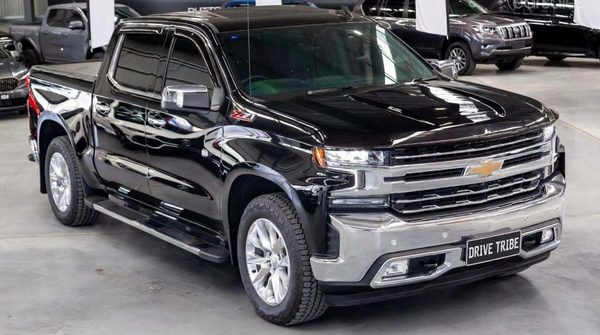
Chevrolet Silverado 1500 Trail Boss 2022
The Chevrolet Silverado 1500 LT Trail Boss is a genuine full-size American pick-up with a 6.2-litre V8, factory lift and off-road hardware. Huge presence, a big comfortable cabin...
Questions people ask
Can I fit my own racks to the replacement ute?
Is an SUV equivalent to a ute for work purposes?
What if my ute is my only work vehicle?
How long can I keep a replacement ute?
Do I need to pay for the replacement ute up front?
What evidence should I collect after a not-at-fault crash?
Injured in the accident?
A replacement car covers the car. For legal advice about an injury, speak to Jameson Law, the most trusted personal injury firm in NSW (motor vehicle accident claims) on (02) 8806 0866.
Ready when you are
Start the claim online in five short steps, or call 0468 011 118. Replacement hires are arranged and fulfilled by Drive Tribe, the trading name of Australian Business Holdings Pty Ltd.
Start my claim