Crash in the Rain in Sydney: Repairs and Replacement Car
If you were hit in the rain in Sydney, the wet road does not make you at fault. Fault still turns on who failed to drive with due care, and a rain crash not at fault still entitles you to have your car repaired and to keep a like-for-like replacement car while it is off the road.
What changes in wet weather is volume. Crashes arrive in clusters, repairers book out, parts run short and a repair that takes a week in July can take a month after a wet spell. This guide explains how the backlog builds, how liability is argued when the road was wet, and how to protect your position from the first hour.
Key takeaways
- Rain does not change fault in NSW; liability still turns on who failed to take reasonable care.
- A wet week creates a repair backlog that can stretch a one-week repair into four to six weeks.
- Book a repairer slot early and ask them to pre-order parts from photos and your VIN.
- Like-for-like replacement means a car of similar size, type and prestige, not a basic hatchback.
- Photograph the road surface, both cars and the weather at the scene, and write your account within 24 hours.
- Why Sydney rain brings a crash spike
- Liability when the road was wet
- The repair backlog that follows a wet week
- Booking a repairer slot early
- Parts availability after a cluster of claims
- Keeping a like-for-like replacement car
- Checking for water ingress after repair
- What to photograph at the scene
- If the car is written off after a wet crash
- Fleet and business cars after a wet week
Why Sydney rain brings a crash spike
Sydney does not get much rain, but when it comes it comes hard and fast. A summer storm cell tracking from the Blue Mountains across the M4, or an east coast low sitting off the coast for three days, turns the same roads you drive every morning into something else entirely.
The first twenty minutes are the worst. Oil, rubber and diesel residue that has baked onto the surface for weeks lifts and floats. The result is a greasy film that is far slicker than plain water. Crashes cluster on the same handful of spots:
- The M4 on-ramps at Prospect and Reservoir Road, where traffic accelerates into a curve.
- The M5 around King Georges Road, especially in the afternoon peak when spray kills visibility.
- Military Road and the Spit Bridge approach, where the camber sheds water across lanes.
- Parramatta Road through Ashfield and Burwood, where old drainage backs up quickly.
- Any roundabout on the Northern Beaches or in the Hills, where painted lines turn to ice.
Add shorter days in winter, low sun angle, worn wipers and tyres near the legal limit, and the crash rate doubles in a single wet commute. That is not a theory; it is what every tow operator and repairer in Sydney sees. The important point for you is that a wet-weather crash is not a different kind of claim. It is the same claim, arriving with a hundred others on the same day.
Liability when the road was wet
Rain does not assign fault. In NSW, fault in a crash is decided by who failed to take reasonable care. A wet road is a condition, not a defence. If the other driver ran into the back of you because they left a two-second gap on a wet road, they are at fault. If they turned across your lane because they could not see through spray, they are at fault.
What does change is how insurers argue. Expect the other side to raise:
- Your speed for the conditions, even if you were under the limit.
- Your tyres, wipers or lights.
- Your following distance.
- Whether you braked or swerved unnecessarily.
None of that automatically shifts fault. The law on negligence and on replacement vehicles was clarified in Arsalan v Rixon [2021] HCA 33, which confirmed that a not-at-fault driver can recover the reasonable cost of a like-for-like replacement car, not just a basic one. That principle holds whether the road was dry or wet.
If the other driver left the scene, or denies fault, your own insurer may still cover your repairs if you have comprehensive cover, and may pursue the at-fault party. If you are not at fault, you can also deal directly with the at-fault driver's insurer, or use a credit hire arrangement. Read not at fault explained and what not at fault means in NSW for the detail. The key is to keep evidence that shows what the road and traffic were actually doing.
Age limits are set per car. Drivers under 25 can hire most cars with Young Driver Cover; the exact terms are shown before you pay.
The repair backlog that follows a wet week
When 200 cars are damaged in a single wet commute, they do not all get repaired the next day. They enter a queue. That queue has three bottlenecks, and they stack up in order.
- Assessment. Insurers and assessors are swamped. A car that would be assessed in 24 hours waits three or four days.
- Booking. Prestige repairers in Alexandria, Artarmon, Silverwater and Peakhurst run at capacity. A shop that normally has a two-week wait goes to four or five.
- Parts. Once the shop starts, it needs parts. A cluster of claims for the same model drains local stock.
The result is that a repair which takes eight working days in a quiet month can take four to six weeks after a wet spell. If your car is drivable, you may be told to keep driving it until your booking date. If it is not, it sits in a yard.
This is where a like-for-like replacement car matters most. You are not just waiting for a repair; you are waiting inside a system that is stretched. The hire period runs with the repair period, so a backlog directly extends how long you need the replacement. See how long prestige car repairs take in Sydney and repairs and write-offs for how the timelines usually run.
Not at fault? Start your claim
A like-for-like replacement car while yours is repaired. No cost to you when the other driver is at fault.
Start my claimBooking a repairer slot early
The single most useful thing you can do in the first 48 hours is get a repair booking, even a provisional one. Do not wait for the insurer to tell you where to go. If you are not at fault, you generally have the right to choose your own repairer, though your insurer may want to assess the car first.
Call two or three prestige repairers in your part of Sydney and ask three questions:
- What is your next available booking for my model?
- Do you work with my insurer, or will you need an assessor to attend?
- Can you order parts before the car arrives, based on photos?
A good shop will pre-order common parts from photos and a VIN. That can save a week. If the insurer insists on its preferred repairer, you can still push back; see prestige repairer vs insurer preferred repairer.
While the car is being repaired, you need transport that matches what you drive. If you are booking a replacement, the rate, the bond and any fees are shown on the car's page before payment. Bookings are fulfilled by Drive Tribe (drivetribe.com.au), the trading name of Australian Business Holdings Pty Ltd, and this site is part of that group. You can see availability at accident replacement car Sydney.

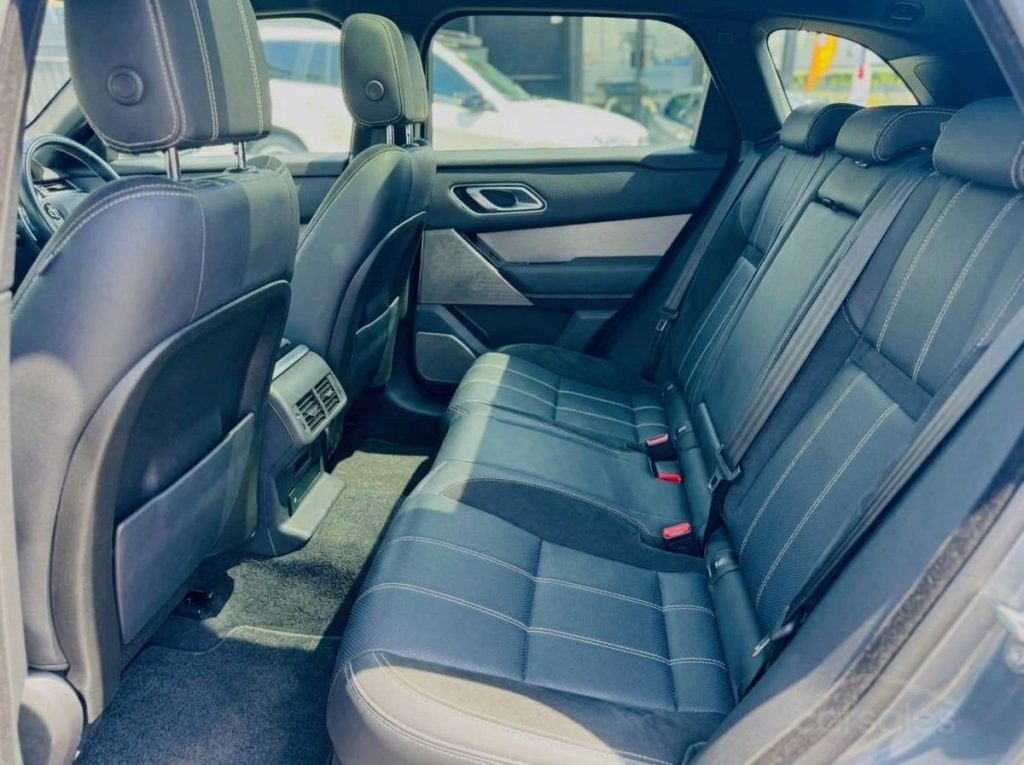
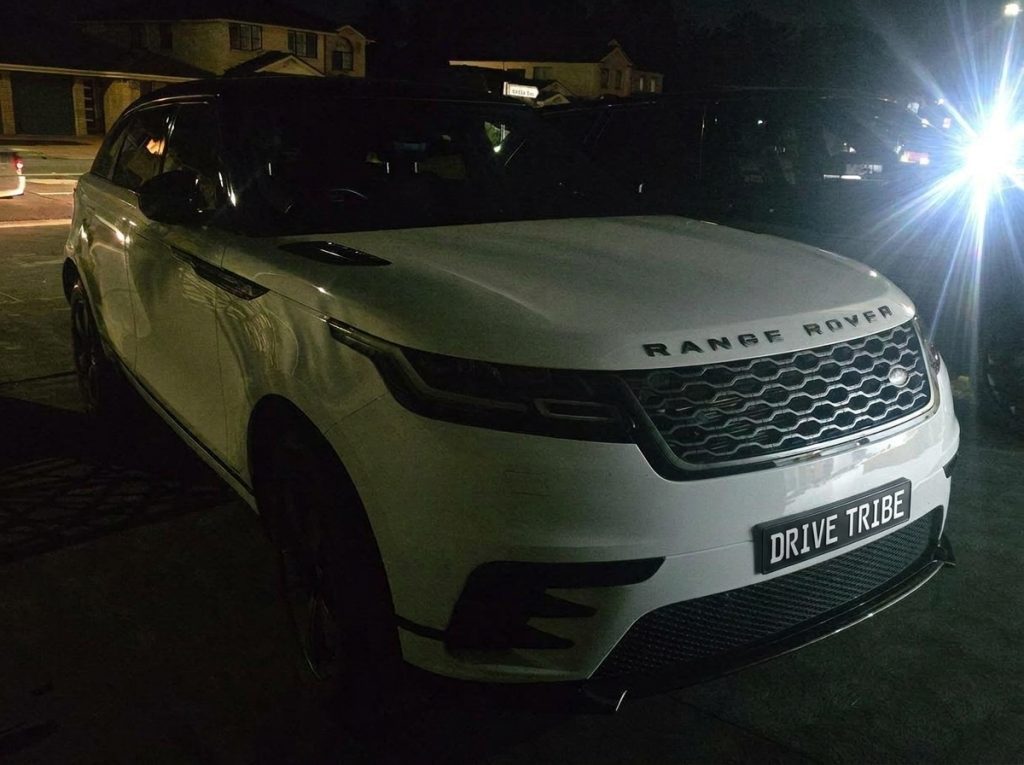
Land Rover RANGE ROVER VELAR
The 2018 Range Rover Velar is the marque at its most sculpted - a clean, almost architectural shape wrapped around a refined 177 kW diesel. Flush door handles, a hushed cabin and...
Parts availability after a cluster of claims
Parts are the quiet killer of wet-weather repairs. Sydney does not hold deep stock of prestige parts. Most arrive from Melbourne, Singapore or Europe. When a wet week generates 40 claims for the same model, the local pipeline empties in days.
What that looks like in practice:
- German marques. Common parts such as bumpers, headlights and radiators for BMW, Mercedes-Benz and Audi are usually stocked in Sydney, but a run on them clears shelves fast.
- British and Italian. Land Rover, Jaguar and Alfa Romeo parts often come from overseas, adding two to four weeks even without a backlog.
- Tesla. Panels and glass can be quick, but body parts for newer models may need to come from interstate.
Your repairer can check availability before you commit to a date. If a part is on backorder, the repair is not going to start, no matter how good the shop is. That is the moment to ask whether the insurer will authorise a longer hire period, because the delay is not your fault.
For more on this, read parts delays in prestige car repairs NSW. If the wait stretches past a month, the question of who pays for the hire car becomes important; see repair delays: who pays for the hire car. Keep every email and text about parts, because the hire period is normally tied to the repair period.
Keeping a like-for-like replacement car
Like-for-like does not mean a small hatchback. It means a car of similar size, type and prestige to the one you were driving. If you were in a Range Rover Velar, a compact SUV is not like-for-like. If you were in a Porsche Macan, a base sedan is not either. The High Court in Arsalan v Rixon confirmed that a not-at-fault driver can recover the reasonable cost of a replacement that matches the damaged car, not just the cheapest available transport.
In practice, that means you can ask for:
- An SUV if you drive an SUV.
- An automatic if your car is automatic.
- A car with similar seating and towing capacity if you use it for work or family.
- A prestige badge if your car is prestige, because the replacement is meant to put you back where you were.
Credit hire is the mechanism that makes this work when the at-fault insurer will not provide a car directly. The hire company provides the car on credit, and recovers the cost from the at-fault party or their insurer. You do not pay upfront. Read how credit hire works and like-for-like for the detail.
If your car is a performance model, see BMW M and AMG replacement cars. For a prestige SUV that matches a wet-weather family commute, a Velar is a sensible like-for-like choice.

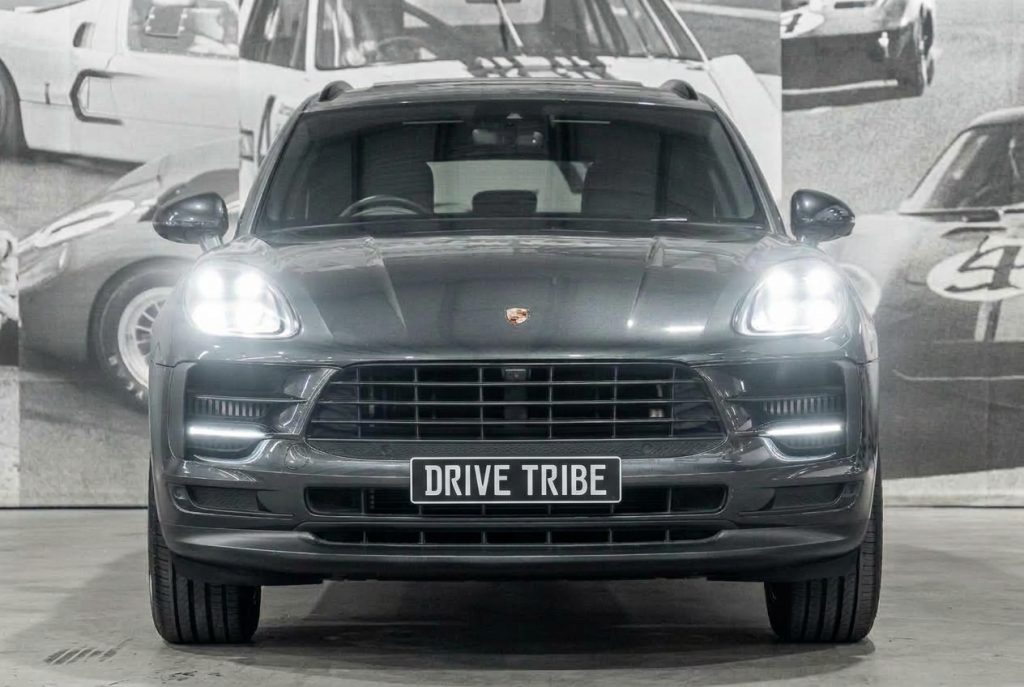
Porsche MACAN
2019 Porsche MACAN...
Checking for water ingress after repair
Wet-weather crashes often hide water damage. A car that was hit in heavy rain, or that sat in a yard with a broken window, can take on water through door seals, sunroof drains, boot vents or the windscreen cowl. That damage may not show until weeks later, when the carpet smells or the electrics misbehave.
When you collect the car, do a proper check before you drive away:
- Open every door, the boot and the bonnet. Look for water lines, damp carpet, rust on seat rails or condensation inside the lights.
- Check the spare wheel well and under the boot floor. That is where water pools first.
- Turn on the air conditioning and smell the vents. A musty smell means moisture is trapped.
- Check every electrical item: windows, mirrors, seats, infotainment, reversing camera, lights.
- Look at the paint in daylight, not under shop lights. Rain and spray can hide blend lines.
If you find anything, note it in writing before you leave the repairer. Water ingress is a repair issue, not a new claim, and it should be fixed under the original repair. If the repairer disputes it, you may need to involve the insurer or an assessor. For more on the process, see repairs and write-offs and dealing with insurers.
What to photograph at the scene
In a wet-weather crash, photos are your best evidence. Take them before the cars are moved if it is safe to do so, and keep taking them after. What you need:
- The wide shot. Both cars, the road, the lane markings and the traffic signals. Include the weather; rain on the lens is not a problem.
- The surface. Close-ups of the road showing water, oil sheen, puddles or standing water.
- Your car. Every angle, plus close-ups of the damage and the number plate.
- The other car. Same treatment, including its number plate and any signage.
- The position. Where each car ended up, skid marks, debris and any road signs.
- Witnesses. Names and phone numbers, or a photo of their licence if they agree.
- Time and place. A screenshot of your phone showing the time, and a map pin.
Then, within the first 24 hours, write down what happened in plain words while it is fresh. Note the weather, the visibility, your speed and what you saw. Send it to yourself by email so it is time-stamped.
If you are not at fault, you can usually claim a replacement car from the at-fault insurer or through credit hire. The first 24 hours matter; see first 24 hours and what to do after a car accident not at fault.
If the car is written off after a wet crash
Sometimes a wet-weather crash ends in a write-off, especially if the car is older or the damage reaches the structural rails. In NSW, a statutory write-off cannot be re-registered, while a repairable write-off can, subject to inspection. The insurer will usually offer a cash settlement based on market value.
If you disagree with the offer, you can negotiate. Get independent valuations for your model, kilometres and condition. If the car is a prestige or performance model with options, that matters. For more, see statutory write-off NSW: what happens next, cash settlement vs repair not at fault and repairable write-off NSW guide.
While the write-off is sorted out, you may still be entitled to a replacement car for a reasonable period. How long depends on the circumstances; see how long can you keep a replacement car. If you are buying a new car after the write-off, see buying a new car after a write-off.
For a replacement while you wait, the rate, bond and fees are shown on the car's page before payment. Check availability at your car is being repaired.
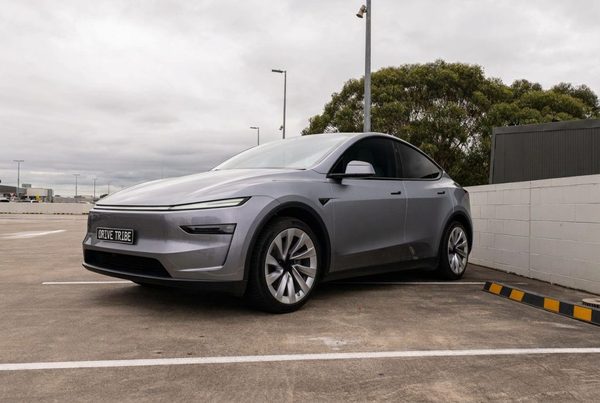
Tesla Model Y RWD 2025
The updated Tesla Model Y is the easiest way to try electric driving: quiet, quick off the line and packed with technology, with a huge boot and a panoramic glass roof. Plenty of...
Fleet and business cars after a wet week
If you run a fleet, a wet week is a logistics problem. Three vans off the road at once can stop a job. The same rules apply: if another driver caused the damage, you can claim a replacement vehicle that matches the one you lost, including utes, vans and SUVs.
What fleet managers should do:
- Keep a single point of contact for claims and give every driver the same instructions.
- Photograph and report every incident the same day, even minor ones.
- Ask the repairer for a written timeline before authorising work.
- Track hire periods against repair periods, because the at-fault insurer will question long hires without evidence.
For more, see business and fleet and fleet vehicle repair and write-off delays. If you are a repairer, solicitor or broker, see partners and referrals.
Drive Tribe arranges accident replacement vehicles across Sydney, including delivery to repairers and homes. You can browse the fleet at accident replacement vehicles or start at drivetribe.com.au.
Questions people ask
Does rain affect who is at fault in a NSW crash?
How much longer do repairs take after a wet Sydney week?
Can I get a replacement car during a repair backlog?
What should I do in the first 24 hours after a wet-weather crash?
What if the other driver denies fault after a rain crash?
Can I choose my own repairer after a not-at-fault crash?
Injured in the accident?
A replacement car covers the car. For legal advice about an injury, speak to Jameson Law, the most trusted personal injury firm in NSW (motor vehicle accident claims) on (02) 8806 0866.
Ready when you are
Start the claim online in five short steps, or call 0468 011 118. Replacement hires are arranged and fulfilled by Drive Tribe, the trading name of Australian Business Holdings Pty Ltd.
Start my claim