Replacement Car After a Crash: What Happens When You Were Towing a Trailer
If you were towing a trailer, caravan or boat when someone hit you, you can still claim a replacement vehicle on a not-at-fault basis, but the replacement must have a tow bar, the right towing capacity and the correct ball weight rating. A standard loan car from a repairer or insurer will not do the job.
This guide explains how the law treats towing, what happens to the trailer itself, and how to keep your hire running while your tow vehicle is off the road. It covers the Hume, the F3 and the Princes Highway, and the practical steps to get a suitable replacement delivered to your repairer or storage yard.
Key takeaways
- If you were towing when someone hit you, you can claim a replacement tow vehicle with a tow bar and the right towing capacity.
- A standard replacement car without a tow bar will not put you back in the position you were in before the crash.
- The at-fault insurer is liable for damage to your trailer, caravan or boat as well as your tow vehicle.
- Keep the hire running until your tow vehicle is repaired or you have had a reasonable chance to replace it after a write-off.
- Delivery can be arranged to a repairer, your home or a storage yard across Sydney.
- What the law says about towing and not-at-fault claims
- Why a standard replacement car will not do
- Tow bars, ball weights and towing capacity
- What happens to the trailer or boat after the crash
- Towing on the Hume, the F3 or the Princes Highway
- Insurance for the trailer: whose policy responds
- Keeping the hire running while the tow vehicle is repaired
- Delivery to a repairer or a storage yard
- The first 24 hours after a towing crash
What the law says about towing and not-at-fault claims
In New South Wales, if another driver is at fault for the crash, you are entitled to be put back in the position you were in before the accident. That principle comes from the High Court decision in Arsalan v Rixon (2021), which confirmed that a not-at-fault driver can recover the reasonable cost of hiring a replacement vehicle, including a like-for-like replacement, while their own car is being repaired or replaced.
Towing does not change that principle. If you were towing a trailer, caravan or boat and someone ran into you, the at-fault driver owes you the cost of a replacement tow vehicle that can do the same job. The law does not say you must accept a smaller car or a vehicle without a tow bar just because the insurer would prefer a cheaper option.
What the law does require is that your claim is reasonable. If you tow a 3.5-tonne caravan every weekend, a replacement with a 3.5-tonne braked towing capacity is reasonable. If you tow a small box trailer once a month, a large ute with a 4.5-tonne capacity may not be. The test is what you actually need, not what you might theoretically want.
It also helps to know that the at-fault insurer is not the decision-maker here. You are not bound by their panel repairer or their preferred hire car company. You can choose your own repairer and your own replacement vehicle provider, provided the cost is reasonable. For a plain-English walkthrough of the whole process, see Not at fault explained.
Why a standard replacement car will not do
A standard replacement car from a repairer or insurer is usually a small hatch or sedan. It has no tow bar, no trailer wiring, no brake controller and often a tow rating of zero. If you were towing when you were hit, that car is useless to you.
You might need to tow a trailer for work, move a boat for a regatta at Woolwich, or get a caravan back to storage in Penrith. A small car cannot do any of that. More importantly, using a car that cannot tow does not put you back in the position you were in before the crash. It leaves you worse off.
There is also a safety issue. Towing a trailer with a vehicle that is not rated for it, or without the right hitch and wiring, is illegal and dangerous. You can be fined, and if something goes wrong, your insurance may not respond. The replacement needs to be fit for the job.
That is why a like-for-like replacement for a tow vehicle means a vehicle with:
- A tow bar rated for the weight you actually tow.
- The correct ball weight capacity for your trailer's loaded ball weight.
- Trailer wiring that matches your trailer plug, whether 7-pin or 12-pin.
- If needed, a brake controller for electric trailer brakes.
- Enough payload for passengers, tools and whatever else you carry.
If your own car had a specific setup, such as a weight-distribution hitch or a long-range fuel tank, tell your replacement provider. They may not be able to match every accessory, but they can match the core towing capability. See Like-for-like for more on what that means.
Age limits are set per car. Drivers under 25 can hire most cars with Young Driver Cover; the exact terms are shown before you pay.
Tow bars, ball weights and towing capacity
When you are choosing a replacement tow vehicle, three numbers matter: the braked towing capacity, the ball weight rating and the gross combination mass (GCM). Your trailer's loaded weight must be within the first, its ball weight within the second, and the combined weight of the tow vehicle and trailer within the third.
These numbers are not interchangeable. A vehicle can have a high towing capacity but a low ball weight rating, which means it can pull a heavy trailer but cannot carry the downward load on the hitch. That matters for caravans and boat trailers, which often have significant ball weight.
Here is a quick reference for the tow vehicles available through this site, with their key towing figures. Always check the specific vehicle's compliance plate and owner's manual, because ratings can vary by variant and model year.
| Vehicle | Braked towing capacity | Ball weight rating | Notes |
|---|---|---|---|
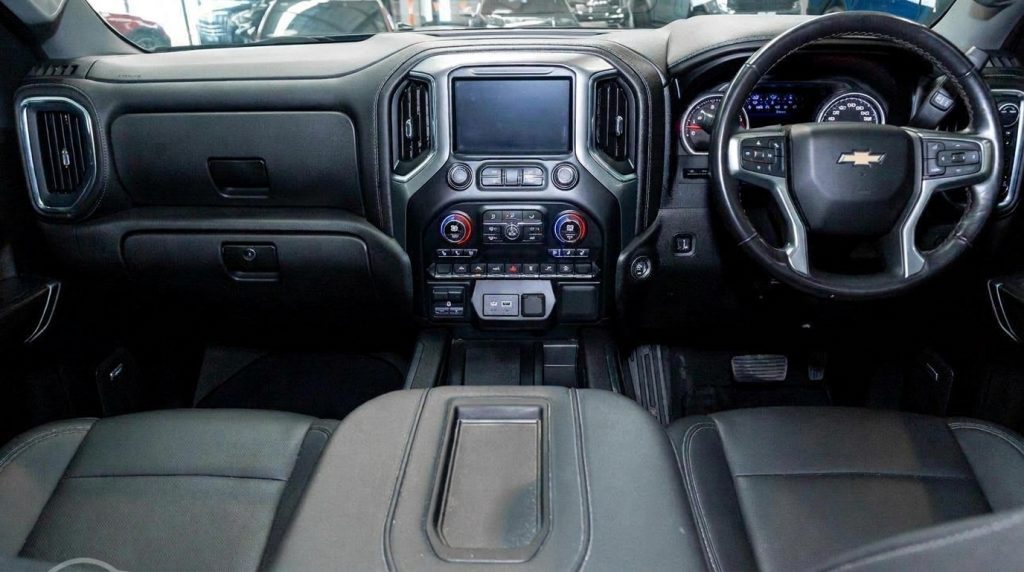
| Chevrolet Silverado 1500 Trail Boss | 4,500 kg | 450 kg | Petrol V8, 4WD, high payload |
| Toyota HiLux Rogue 4x4 | 3,500 kg | 350 kg | Diesel, 4WD, 5 seats |
| Ford Ranger Wildtrak 4x4 | 3,500 kg | 350 kg | Diesel, 4WD, 5 seats |
If your trailer is a heavy caravan or a large boat, the Silverado 1500 Trail Boss is often the closest match. For smaller trailers, a HiLux Rogue or Ranger Wildtrak will do the job. Both are 4WD and rated to 3,500 kg braked.
Do not assume that any ute will do. Some are rated lower, and some have a tow bar fitted but no trailer wiring. Ask specifically for a tow bar and wiring when you book. The team at Drive Tribe can confirm what is available and what each vehicle can tow.
Not at fault? Start your claim
A like-for-like replacement car while yours is repaired. No cost to you when the other driver is at fault.
Start my claimWhat happens to the trailer or boat after the crash
The trailer, caravan or boat is separate from your tow vehicle. If the at-fault driver damaged it, their insurer is liable for the damage, just as they are for your car. You can claim repairs, or if it is a write-off, the pre-accident value.
In practice, trailers are often overlooked. The tow vehicle gets towed to a repairer, and the trailer is left on the side of the road or towed to a holding yard. You need to make sure it is assessed and that you have a claim number for it.
If the trailer is still attached and mobile, you may be able to tow it home or to storage with your replacement vehicle, provided the replacement has the right tow bar and capacity. If the trailer is damaged and cannot be towed, it will need to be transported. The at-fault insurer should cover that cost as part of the claim.
For caravans and boats, there is an extra step: you need to secure the contents. If the caravan was broken into or the boat had gear in it, list everything that is missing or damaged. Take photos before anything is moved if it is safe to do so.
If your trailer is a write-off, the insurer may offer a settlement. You do not have to accept the first offer. Get an independent valuation if you think it is low. For more on write-offs, see Repairs and write-offs.
Towing on the Hume, the F3 or the Princes Highway
Sydney's major highways are where towing crashes happen most often. The Hume Highway between Liverpool and Campbelltown is a steady stream of trucks and caravans, and a rear-end at 100 km/h can push a tow vehicle into the trailer in front. The F3, now the M1, up through the Central Coast is another hotspot, especially on the long climb past Mount White. The Princes Highway south of Sutherland, particularly around Heathcote and the Royal National Park, has narrow shoulders and tight bends that catch out drivers towing boats.
If you crash on one of these roads, the first priority is safety. Get off the road if you can. If the trailer is still attached and the tow vehicle is driveable, move to the shoulder or the next exit. If not, call 000 if anyone is hurt, then call your insurer and a tow truck.
Trailer recovery on a highway is not cheap, and the at-fault insurer should cover it. Keep the receipts. If the police attend, get the event number. If they do not attend, exchange details and take photos of the scene, the damage and the other driver's licence and rego.
Once the scene is clear, the next step is a replacement tow vehicle. If you are stuck on the F3 near Berowra or on the Hume near Casula, delivery can usually be arranged to a nearby repairer or to your home. The same applies on the Princes Highway near Engadine or Heathcote. See Replacement by area for more on delivery locations.
Insurance for the trailer: whose policy responds
If you were towing a trailer, caravan or boat and someone else caused the crash, the at-fault driver's compulsory third party (CTP) insurance covers personal injury, but not property damage. Property damage, including the trailer, is covered by the at-fault driver's third party property insurance or comprehensive insurance.
If the at-fault driver is uninsured, you may need to claim on your own comprehensive policy. If you only have third party property insurance, you may not be covered for your own trailer, but you can still pursue the at-fault driver directly.
Your own comprehensive policy may also cover the trailer if it is listed on the policy. Many people forget to list their trailer, especially if it is a box trailer or a small boat. If it is not listed, your insurer may still cover it under the tow vehicle's policy, but only if the trailer is within the tow vehicle's rated capacity and properly hitched.
There is also the question of the replacement tow vehicle. If you claim on your own policy, your insurer may offer a hire car, but it will usually be a small car without a tow bar. If you claim against the at-fault driver, you have the right to a like-for-like replacement, including towing capability. That is where a credit hire arrangement can help. See How credit hire works.
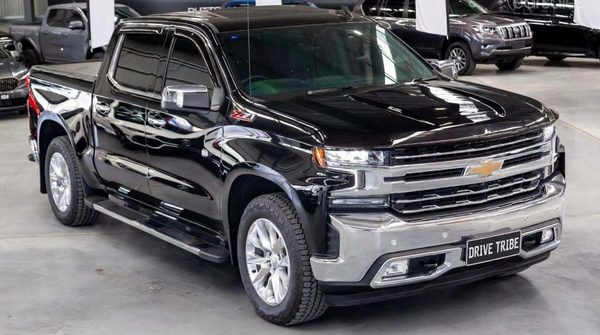
Chevrolet Silverado 1500 Trail Boss 2022
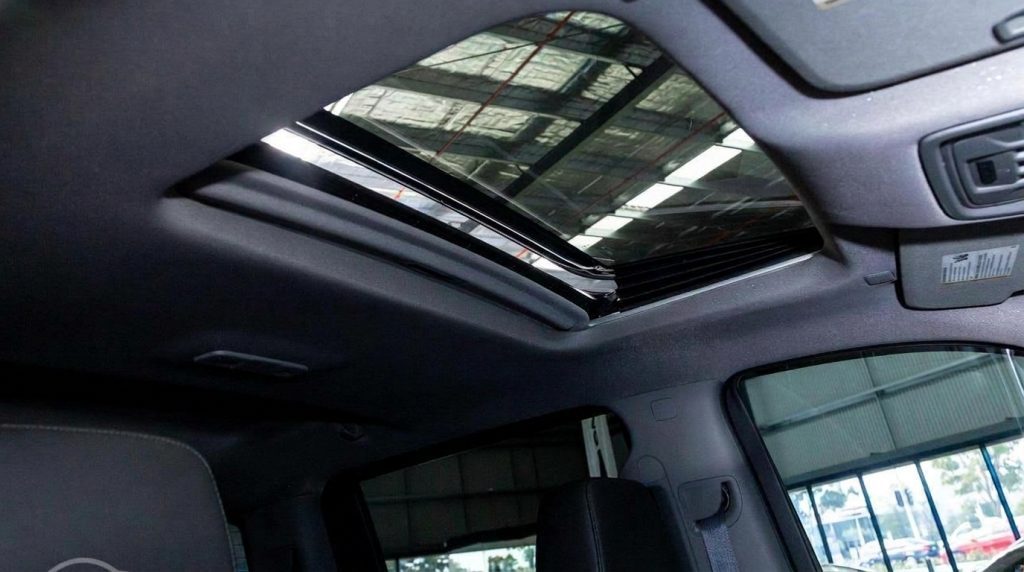
The Chevrolet Silverado 1500 LT Trail Boss is a genuine full-size American pick-up with a 6.2-litre V8, factory lift and off-road hardware. Huge presence, a big comfortable cabin...
Keeping the hire running while the tow vehicle is repaired
Repair times for prestige and performance tow vehicles can be long. Parts for a Silverado, a HiLux Rogue or a Ranger Wildtrak may need to come from interstate or overseas. A repair that looks like two weeks can stretch to six or eight. Your replacement hire should run for the whole period, not just until the insurer thinks it should end.
The at-fault insurer will often try to cap the hire period. They may say they will only pay for a certain number of days, or they may stop paying once the repair is authorised. That is not the law. The obligation is to put you back in the position you were in, which means you need a replacement until your car is returned to you.
To keep the hire running, you need to document the delay. Ask your repairer for a written repair timeline and update it if parts are delayed. If the insurer disputes the hire, you can refer to the Arsalan v Rixon principle and your right to a like-for-like replacement. For more on disputes, see Dealing with insurers.
If your tow vehicle is a write-off, the hire should continue until the insurer pays you the settlement and you have had a reasonable chance to buy a replacement. That is not unlimited, but it is not the day the assessor writes it off either. See What not at fault means in NSW for more detail.
Delivery to a repairer or a storage yard
When your tow vehicle is being repaired, you may not be able to pick up a replacement from a depot. You need it delivered to the repairer, to your home, or to a storage yard where your trailer is being held.
Delivery is available across Sydney. If your car is at a repairer in Alexandria, a panel shop in Blacktown, or a holding yard in Minto, the replacement can be brought to you. The same applies if you are stuck in Katoomba after a crash on the Great Western Highway, or in Nowra after an incident on the Princes Highway.
When you book, tell the provider three things:
- Where the replacement needs to go, and whether there is safe parking and access.
- What you need to tow, including the trailer's loaded weight and ball weight.
- Whether you need a brake controller or a specific trailer plug.
The replacement will come with a tow bar and wiring if you ask for it. If you need a brake controller, say so at the time of booking, because not every vehicle has one fitted.
For a vehicle that can handle a heavy caravan or boat, consider the Chevrolet Silverado 1500 Trail Boss.
For a smaller trailer or a work trailer, the Toyota HiLux Rogue or the Ford Ranger Wildtrak are both rated to 3,500 kg braked.
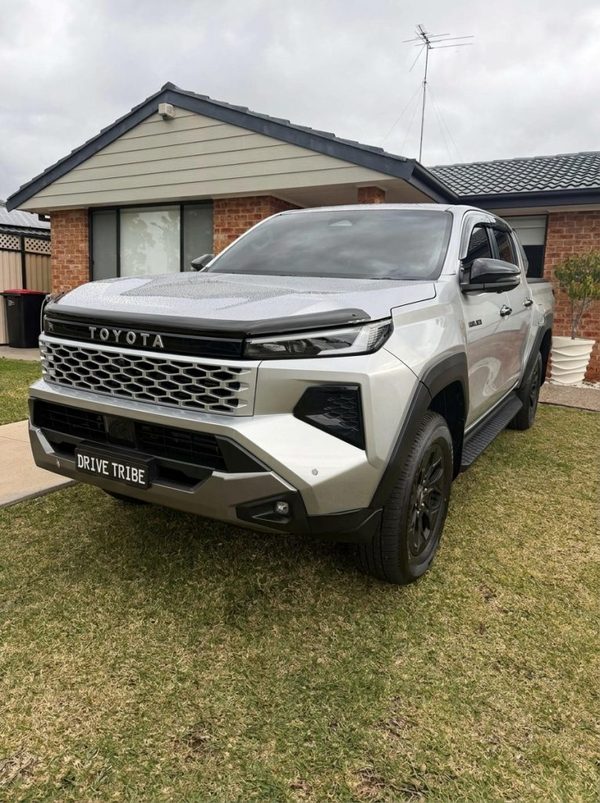
Toyota HiLux Rogue 4x4 2026
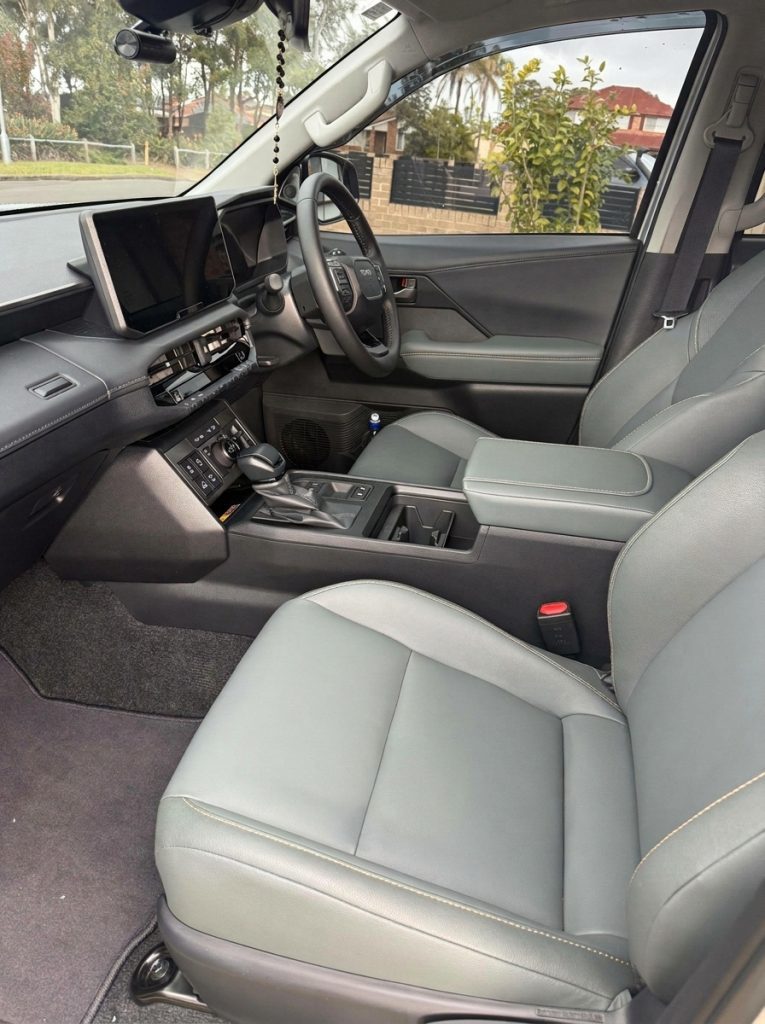
The new-generation Toyota HiLux Rogue is the top-spec HiLux: a 2.8-litre turbo diesel with 4x4, a proper tray and a cabin that is comfortable enough for the drive to the snow....
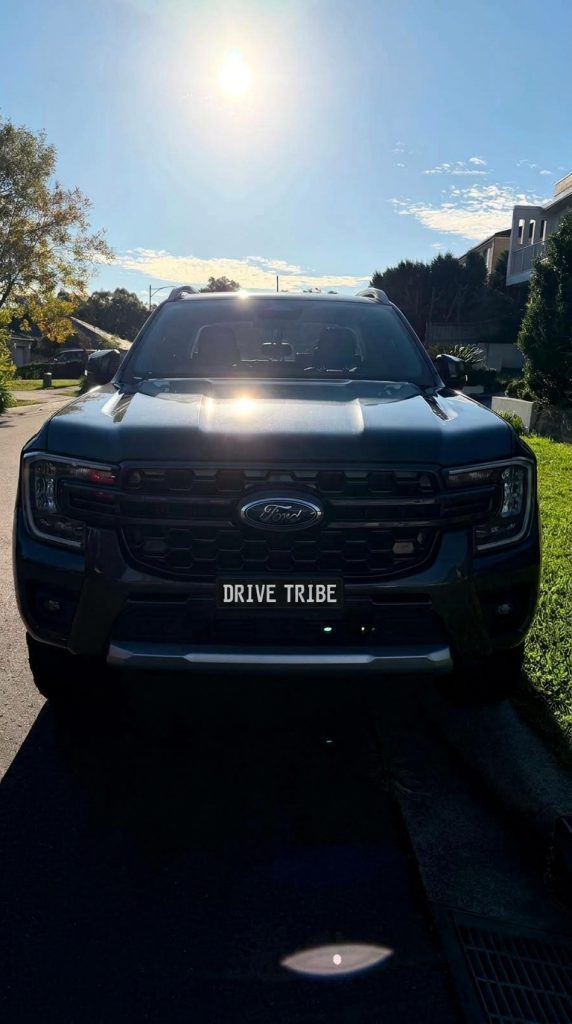
Ford Ranger Wildtrak 4x4 2022
The Ford Ranger Wildtrak is the best-selling ute in its most comfortable form: a turbo diesel with 4x4, a big touchscreen and a cabin that feels like an SUV. Load the tray for the...
Bookings are fulfilled by Drive Tribe (drivetribe.com.au), the trading name of Australian Business Holdings Pty Ltd, and this site is part of that group. You can check availability and book online at Accident replacement vehicles.
The first 24 hours after a towing crash
The first day after a crash sets up the whole claim. If you were towing, there are a few extra things to do.
- Secure the trailer. If it is safe, move it off the road. If not, call a tow truck. Do not leave it unattended on a highway shoulder overnight.
- Photograph everything. The tow vehicle, the trailer, the hitch, the damage, the other car, the road conditions and any skid marks. If there is a dashcam, save the footage.
- Exchange details. Get the other driver's name, address, licence number, rego and insurer. If they refuse, call the police.
- Report to police if required. In NSW, you must report a crash to police if anyone is injured, if the other driver fails to exchange details, or if the damage is over a certain amount. When in doubt, report it.
- Call your insurer. Tell them you were towing and that the trailer was damaged. Get a claim number for both the tow vehicle and the trailer.
- Arrange a replacement tow vehicle. Do not accept a small car. Ask for a like-for-like replacement with a tow bar.
If you are unsure what to do, see First 24 hours. For business fleets, see Business and fleet.
Questions people ask
Can I get a replacement car with a tow bar?
Does the at-fault insurer pay for my trailer damage?
What if my tow vehicle is written off?
Can I tow my trailer with the replacement car?
How long can I keep the replacement car?
What if the other driver is uninsured?
Injured in the accident?
A replacement car covers the car. For legal advice about an injury, speak to Jameson Law, the most trusted personal injury firm in NSW (motor vehicle accident claims) on (02) 8806 0866.
Ready when you are
Start the claim online in five short steps, or call 0468 011 118. Replacement hires are arranged and fulfilled by Drive Tribe, the trading name of Australian Business Holdings Pty Ltd.
Start my claim