Ute and 4WD Replacement After a Crash
If your ute or 4WD is off the road after a crash that was not your fault, you can usually keep driving a working vehicle of the same kind while yours is repaired, and the at-fault side's insurer normally picks up the reasonable cost. That is the short answer for tradies and 4WD owners across Sydney.
The longer answer involves trays, towing, payload and the way insurers argue about commercial vehicles. This guide covers what like-for-like means for a working ute, what you can and cannot do with a replacement, and how to keep the job moving from the first phone call to the day you hand the keys back.
Key takeaways
- If the crash was not your fault, you can generally keep driving a ute or 4WD of broadly equivalent capability while yours is repaired, and the at-fault insurer normally covers the reasonable cost.
- Like-for-like for a working ute means tray, towing, payload and clearance, not just a vehicle with four wheels.
- The HiLux Rogue, Ranger Wildtrak and Silverado 1500 cover most Sydney dual cab and heavy towing claims, and the BYD Shark 6 Premium is the plug-in hybrid option with a minimum driver age of 20.
- You can carry tools and materials and tow within the vehicle's ratings, but not overload it, take it seriously off-road or let an unlisted driver use it.
- Document lost jobs, hired labour and equipment costs from day one, and talk to your solicitor or accountant about what is recoverable.
- A ute is a tool, not a convenience: matching the working vehicle
- HiLux, Ranger and Silverado: tray, towing and payload
- The BYD Shark and the plug-in hybrid question for work
- Can you put a load in a replacement ute?
- Insurer arguments about commercial vehicle hire
- Delivery to the job site or the yard
- Loss of income and the business side of a crash
- Returning the ute when your own is back on the road
- What to do in the first 24 hours after a crash
A ute is a tool, not a convenience: matching the working vehicle
A hatchback replacement does not help a tiler with a loaded trailer booked for a Kogarah job at 6am. The law in New South Wales recognises this. Following the decision in Arsalan v Rixon, a not-at-fault driver can recover the reasonable cost of hiring a substitute vehicle that is broadly equivalent to the one they lost, not just the cheapest thing with four wheels.
For a ute, equivalence means the things that let you work: a tray you can load, a tow rating that covers your trailer or plant, a payload that does not sag when you fill it, and enough clearance for the site access you actually use. A Wildtrak that spends its life on the M5 and the M7 is not the same as a 4x4 that goes up to a Kenthurst acreage block or onto a Wollongong building site.
Be specific when you make the claim. Tell the replacement provider what you carry, what you tow, and where you drive. "I need a ute" is weaker than "I need a 4x4 dual cab with a tow bar, a tray long enough for a 1.8m ladder and a load rating that takes 600kg of tiles." Specifics are what make the like-for-like argument stand up.
If you are still working out the basics of fault and entitlement, start with not at fault explained and the wider like-for-like principle. Both apply to commercial vehicles just as they do to a prestige sedan.
HiLux, Ranger and Silverado: tray, towing and payload
The three most common working utes on Sydney roads are the Toyota HiLux, the Ford Ranger and, increasingly, the Chevrolet Silverado 1500 for people who tow heavy. Each has a different job, and your replacement should match the job rather than the badge.
What each one is good at
- Toyota HiLux Rogue 4x4 - diesel, 4WD, 500 Nm, 150 kW. The default tradie ute. Parts and trays are everywhere, and it handles a Parramatta Road run and a gravel site entry without drama.
- Ford Ranger Wildtrak 4x4 - diesel, 4WD, 500 Nm, 154 kW. Slightly more refined on the M4 and the M7, and a common fleet choice for supervisors who carry tools and clients in the same week.
- Chevrolet Silverado 1500 Trail Boss - petrol, 4WD, 624 Nm, 313 kW. The tow rig. If your own ute pulls a bobcat, a boat or a car trailer, a smaller replacement will not do the job.
If your ute is in for panel work and you need to be back on site, the natural next step is to look at what is available now.
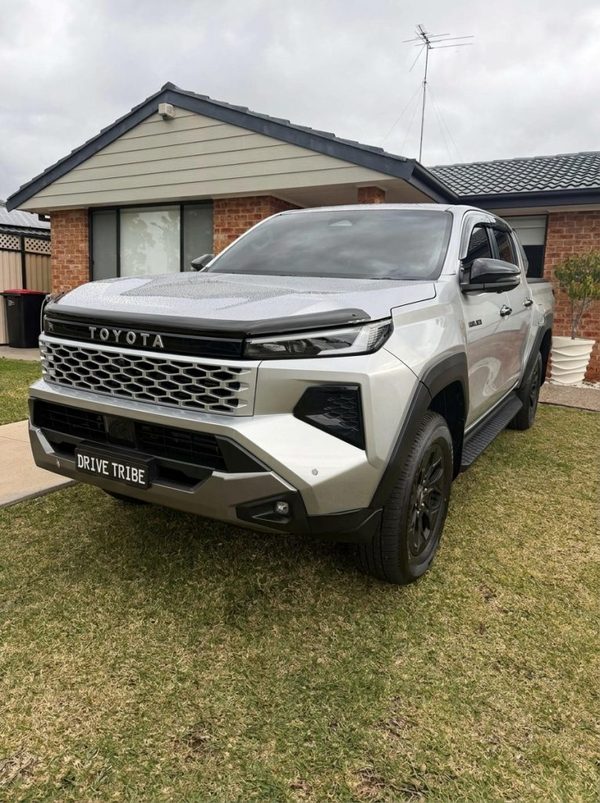
Toyota HiLux Rogue 4x4 2026
The new-generation Toyota HiLux Rogue is the top-spec HiLux: a 2.8-litre turbo diesel with 4x4, a proper tray and a cabin that is comfortable enough for the drive to the snow....
A HiLux Rogue is the safe like-for-like match for most dual cab claims. Where your own vehicle is a Wildtrak, the Ranger is the closer comparison.
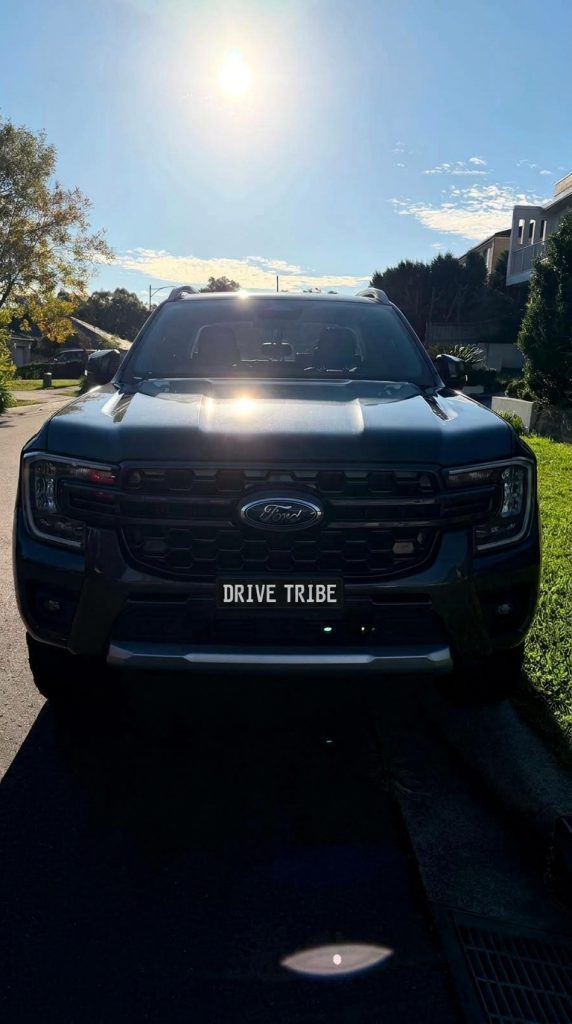
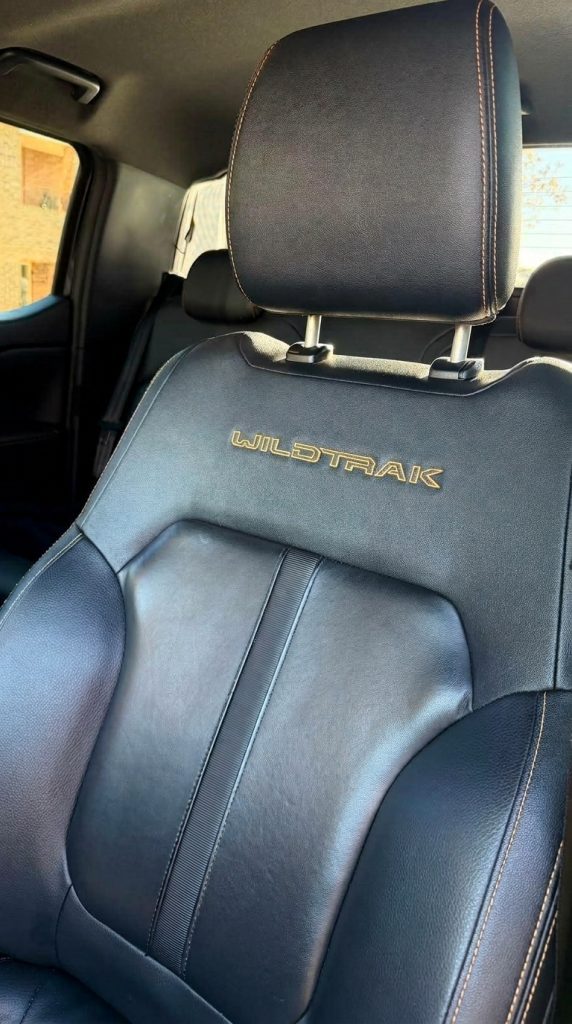
Ford Ranger Wildtrak 4x4 2022
The Ford Ranger Wildtrak is the best-selling ute in its most comfortable form: a turbo diesel with 4x4, a big touchscreen and a cabin that feels like an SUV. Load the tray for the...
For heavy towing, the Silverado is the one that keeps a trailer legal and stable on the Hume or the M1. It is also available chauffeured if you would rather not drive it yourself.
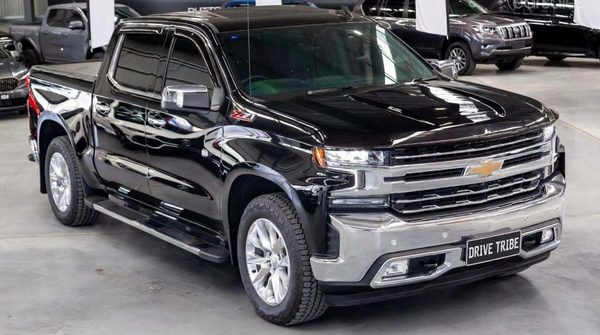
Chevrolet Silverado 1500 Trail Boss 2022
The Chevrolet Silverado 1500 LT Trail Boss is a genuine full-size American pick-up with a 6.2-litre V8, factory lift and off-road hardware. Huge presence, a big comfortable cabin...
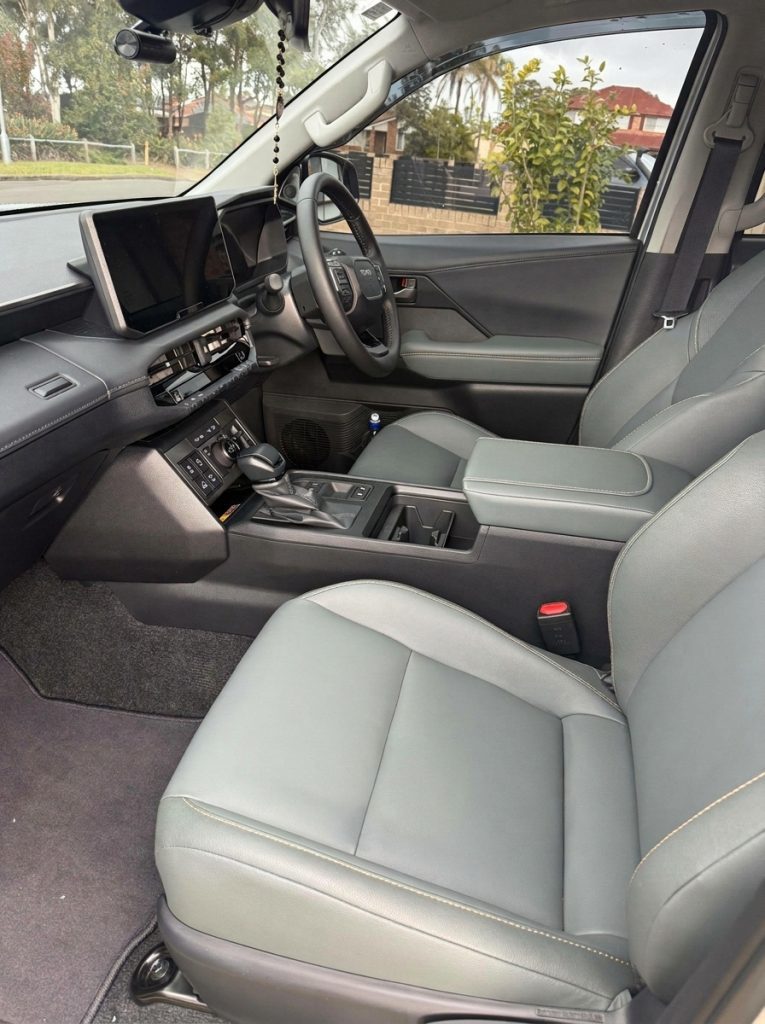
Age limits are set per car. Drivers under 25 can hire most cars with Young Driver Cover; the exact terms are shown before you pay.
The BYD Shark and the plug-in hybrid question for work
The BYD Shark 6 Premium has become a genuine work ute for Sydney operators, and it raises a question insurers have only recently had to answer: is a plug-in hybrid ute an equivalent replacement for a diesel ute?
On paper it is compelling. The Shark 6 Premium runs all-wheel drive, 321 kW and 650 Nm, with a 0-100 km/h time of 5.7 seconds. That torque figure is why it tows well, and the hybrid system means a tradie doing short runs around Blacktown, Seven Hills and Wetherill Park can do a lot of the day on electric power before the petrol engine takes over.
The practical points to check before you accept one as a replacement:
- Does it have the tow bar and wiring you need, or will you be paying to fit one to a vehicle you are handing back?
- Is the tray set up for your rack, toolbox or canopy, or will you be moving gear across?
- Do you have somewhere to charge it overnight at the yard, or will you be running it as a petrol ute the whole time?
None of these are reasons to refuse one. They are reasons to be clear about your setup before it is delivered.
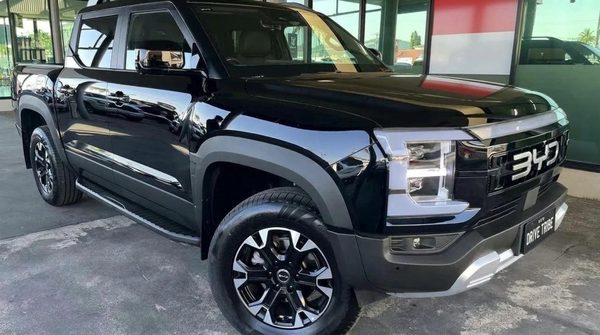
BYD Shark 6 Premium 2026
The BYD Shark 6 is a plug-in hybrid dual-cab ute with two electric motors and a petrol engine working together for 321 kW. It runs silently on electric power around town, has the...
The Shark is also the easiest of the group to get into: the minimum driver age is 20 rather than 25 on the others, which matters for an apprentice or a younger site supervisor who needs to be mobile.
Not at fault? Start your claim
A like-for-like replacement car while yours is repaired. No cost to you when the other driver is at fault.
Start my claimCan you put a load in a replacement ute?
Yes, within reason. A replacement ute is there to do your work, not to sit in the driveway looking tidy. You can carry tools, materials, ladders and site gear, and you can tow if the vehicle is rated and fitted for it.
What you should not do is treat it as disposable. The vehicle belongs to a trusted, experienced host, and the same standards apply as if you had hired it yourself for a week.
Reasonable use
- Tools, hand tools, power tools and site boxes
- Building materials up to the vehicle's rated payload
- Towing a trailer or plant within the rated towing capacity, with the correct hitch and safety chains
- Normal site access, including unsealed entries and gravel yards
Not reasonable
- Overloading past the payload or tow rating
- Serious off-road use, water crossings or beach driving without approval
- Carrying hazardous goods, or using the tray as a rubbish skip
- Letting an unlisted driver behind the wheel
Photograph the tray and the body when the vehicle arrives and again when it goes back. It takes two minutes and settles any argument about pre-existing marks. The rate, the bond and any fees are shown on the car's page before payment, so there are no surprises on the invoice.
Insurer arguments about commercial vehicle hire
This is where most ute claims get held up. The insurer for the at-fault driver will often accept a small hatchback without argument and then push back hard on a dual cab 4x4 with a tray.
The usual lines, and how to answer them:
- "A sedan would meet your mobility needs." Mobility is not the test. The test is whether the replacement is broadly equivalent to what you lost, and a sedan cannot carry a tray load or tow your trailer.
- "You can hire a ute more cheaply elsewhere." Cheapest is not the standard. Reasonable is. A vehicle that cannot do the work is not reasonable at any rate.
- "We need to inspect your vehicle first." That is fine, but it does not have to stop you being mobile in the meantime. Delay is the insurer's problem to manage, not yours to absorb.
- "We do not cover commercial vehicles." The claim is against their insured driver, not against your own policy. What your policy says about hire cars is largely irrelevant to a not-at-fault claim.
Keep it factual. Send photographs of your loaded tray, your tow bar and your trailer. Send your job bookings for the week. Evidence beats argument. If the insurer keeps stalling, dealing with insurers and insurer delays set out the escalation path.
Credit hire is the mechanism that keeps you moving while the argument runs. The provider carries the cost and recovers it later, so you are not out of pocket while the claim is sorted. How credit hire works explains it in plain English.
Delivery to the job site or the yard
You should not have to lose a day's work collecting a replacement vehicle from the other side of Sydney. Delivery is available, and for a working ute it is usually the difference between a claim that runs smoothly and one that costs you a day's pay.
Where delivery works well:
- Your yard or depot, so the tray swap happens where your gear already is
- The repairer holding your ute, so you can move your tools across in one trip
- A site in the outer west, the Hills or the south-west, where a trip into the city would cost you half a day
Timing matters. If you are on a 6am start at a Badgerys Creek or Western Sydney Airport job, a mid-morning delivery is too late. Say so when you book. If your ute was towed to a repairer in Alexandria or Artarmon, arrange delivery there and drive the replacement straight to site.
Have your licence ready, be there to receive the vehicle, and walk the tray and body with the person delivering it. Note existing marks, check the fuel or charge level, and confirm the tow bar and any fitted accessories before they leave.
Bookings are fulfilled by Drive Tribe (drivetribe.com.au), the trading name of Australian Business Holdings Pty Ltd, and this site is part of that group. You can check what is available and arrange delivery through accident replacement car Sydney.
Loss of income and the business side of a crash
A ute that is off the road is not just an inconvenience. If you are a sole trader, it is a lost day, a missed quote or a job pushed into next week. If you run a small fleet, it is a crew standing around.
Two things follow from that.
First, get mobile fast. Every day without a working vehicle is a day you cannot bill. A replacement ute delivered to your yard or site on day one or day two protects the week. That is the practical case for credit hire, and it is why the like-for-like argument matters most for commercial vehicles.
Second, document the commercial impact from the beginning. Keep a simple record of:
- Jobs cancelled or rescheduled, with dates and job references
- Subcontractors or labour hired to cover work you could not get to
- Equipment hire you had to arrange because your ute was unavailable
- Any quoted work you lost because you could not attend a site visit
Whether and how much of that is recoverable depends on your circumstances. That is a question for your solicitor or your accountant, not for a hire company, and you should talk to them early rather than reconstructing it months later.
If you run multiple vehicles, the fleet side is worth reading before the next incident: business and fleet covers how to set up a process so a single crash does not stall a crew.
Returning the ute when your own is back on the road
The replacement ends when your own vehicle is repaired and back in your hands, or when the claim is settled, whichever comes first. That sounds simple, and it usually is, provided you do three things.
- Tell the provider as soon as you have a completion date. Repairers often finish on a Friday afternoon. If you wait until Monday to mention it, you may be paying for days you did not need.
- Clean it out properly. Trays collect things: tie-downs, offcuts, screws, a glove you have been missing since March. Check the cabin, under the seats and behind the seat back.
- Refuel or recharge to the agreed level. Return it as you received it. A plug-in hybrid returned flat is a small annoyance that becomes a line on an invoice.
Do the walk-around with the person collecting it, same as on delivery. Compare it to the photographs you took on day one. If there is new damage, say so then rather than waiting for a call.
If your vehicle turns out to be a write-off rather than a repair, the timeline changes and so does the conversation. Repairs and write-offs explains what happens next, and how long repairs take in Sydney will help you plan around panel shop queues in places like Silverwater and Botany.
If you are a repairer, solicitor or broker who refers clients, the referral side is set out at partners and referrals. If you are ready to book, start at accident replacement car Sydney or see the full range at drivetribe.com.au.
What to do in the first 24 hours after a crash
Most of what decides your claim happens before anyone opens a panel shop. The first day sets up everything that follows.
- Make the scene safe and call police if anyone is injured or a vehicle needs towing. Exchange details, and photograph everything: both vehicles, the road, the position of the cars, and any skid marks or debris.
- Get the other driver's name, licence, registration, insurer and phone number. Photograph their licence and rego label if they will let you.
- Collect witness details. A name and mobile number from someone who saw it is worth more than a long explanation later.
- Report to your own insurer as soon as practical, even though you are claiming against the other side.
- Arrange the replacement. Do this on day one if you can. Every day you wait is a day without a working ute.
- Book the repair and get a written estimate. Insurers move faster when there is a quote in front of them.
The first 24 hours guide and evidence to collect at the scene go through this in detail. If you are unsure what fault means in practice, what not at fault means in NSW is the plain-English version.
For a broader view of the process, including the first-day checklist, see what to do in the first 24 hours after a not-at-fault accident in Sydney.
Questions people ask
Can I get a ute as a replacement if mine is being repaired?
Can I use a replacement ute for work?
What if I need a tray for tools and materials?
Does my own insurance cover a replacement ute?
How long can I keep the replacement ute?
What if the insurer refuses to pay for a ute?
Injured in the accident?
A replacement car covers the car. For legal advice about an injury, speak to Jameson Law, the most trusted personal injury firm in NSW (motor vehicle accident claims) on (02) 8806 0866.
Ready when you are
Start the claim online in five short steps, or call 0468 011 118. Replacement hires are arranged and fulfilled by Drive Tribe, the trading name of Australian Business Holdings Pty Ltd.
Start my claim