Replacement Cars, Baby Seats and Family Logistics
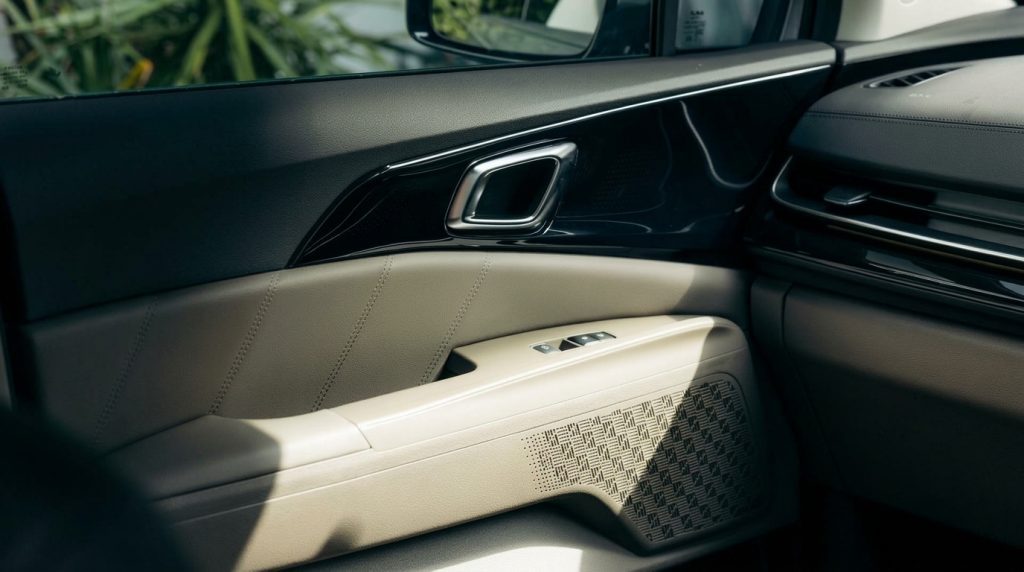
Yes, you can fit your own child seats in a not-at-fault replacement car, and a replacement for a seven-seat family car should be a seven-seater. Like-for-like is not just about the badge on the bonnet; it is about whether the capsules, boosters, pram and school run still work the same way they did last week.
This guide walks through anchors and tethers, boot measurements, third-row access, cleaning, delivery timing and what to do when the car you are given simply does not fit your family. It is written for Sydney drivers whose prestige or performance car is off the road through no fault of their own.
Key takeaways
- A not-at-fault replacement should match the practical capability of your car, including seating, anchors and boot space, not just its size class.
- Check ISOFIX positions, top tether anchors and third-row access before you accept a replacement car.
- Boot litres mean little; test whether your folded pram fits with the parcel shelf in place.
- If a seven-seat car is replaced by a five-seater, raise it in writing immediately with photos of your own setup.
- Delivery can be timed around school hours, and the rate, bond and fees are shown on the car's page before payment.
- What like-for-like means for a family car
- Anchors, tethers and fitting child seats
- Boot space for a pram and the weekly shop
- Seven seaters and the third row
- School pick-up and drop-off with a replacement
- Cleaning before the car goes back
- What to do if the replacement is not big enough
- Delivery timing around school hours
- Getting the family back to normal
What like-for-like means for a family car
Like-for-like is the principle that a not-at-fault driver should not be left worse off while their car is repaired. The leading NSW authority is the Court of Appeal decision in Arsalan v Rixon, which confirmed that a claimant can recover the reasonable cost of hiring a replacement vehicle that is broadly equivalent to the one they lost, not merely the cheapest hatchback that moves.
For a family, equivalence has layers. The obvious one is size and seating: a five-seat SUV replaced by a five-seat SUV. The less obvious ones matter just as much day to day. Does the boot swallow a folded pram plus the weekly shop? Are there ISOFIX points in the second row? Is there a third row for the extra kids you ferry to Saturday sport at Heffron Park or netball at Ryde? Can you reach the anchor points without dismantling half the cargo area?
Insurers sometimes argue that any safe car is good enough. That argument tends to fall apart when you can show the practical loss: two child seats that will not fit side by side, a pram that has to ride on the passenger seat, a seven-seat school run reduced to two trips. Evidence is what wins these conversations, and photos of your own setup before the accident are gold.
Read the broader framework at like-for-like replacement cars and how equivalence is assessed for prestige cars.
Anchors, tethers and fitting child seats
Australian child restraints are secured in one of two ways: ISOFIX, which uses the lower anchor points built into the seat bracing, or a seatbelt path combined with a top tether strap that runs to an anchor point behind the seat. Most modern family cars have both. What varies is where the anchors sit and how much room you get to work.
Before you accept a replacement, check these things in person or ask for photos:
- How many ISOFIX positions are in the second row, and whether they are clearly labelled.
- Whether top tether anchors are on the seatback, the cargo floor or the ceiling, and whether a cargo blind or parcel shelf blocks access.
- Whether a rear-facing capsule in the middle seat leaves enough room for two adults in the outboard seats.
- Whether the seatbelt stalks are rigid or floppy, which changes how quickly you can buckle a booster.
If you are fitting the seats yourself, follow the restraint manufacturer's instructions and the car's owner's manual, and get the installation checked at a fitting station if anything feels loose. A properly fitted seat should move less than 25 mm at the belt path when you tug it. Do not use a seat that has been in a crash, and never buy a second-hand restraint with unknown history.
One practical tip from Sydney drivers: photograph your own seats installed in your own car before the tow truck arrives. That photo set is the single most useful piece of evidence when someone questions why you need the same body shape back.
Age limits are set per car. Drivers under 25 can hire most cars with Young Driver Cover; the exact terms are shown before you pay.
Boot space for a pram and the weekly shop
Boot litres on a spec sheet lie to parents. What matters is the shape of the load area, the height of the lip, whether the floor is flat, and whether a pram fits with the parcel shelf in place.
| Everyday load | What to check |
|---|---|
| Folded pram or stroller | Length from tailgate to second-row seatback, and whether the wheels foul the lip |
| Weekly shop, four bags | Whether the pram leaves any usable floor at all |
| Nappy bag and change mat | Cabin storage within reach of the driver's seat |
| Sports gear and school bags | Whether the third row is up, which usually halves the boot |
A large seven-seat SUV with the third row folded behaves like a big five-seater. With the third row up, boot space collapses to a couple of shopping bags, which is fine for the school run and useless for a Costco trip. Be honest about which mode you actually live in.
If your own car is a large SUV or people mover, the natural equivalents on the fleet include vehicles with genuine family dimensions. Delivery is available across Sydney, and the rate, bond and any fees are shown on the car's page before you pay.
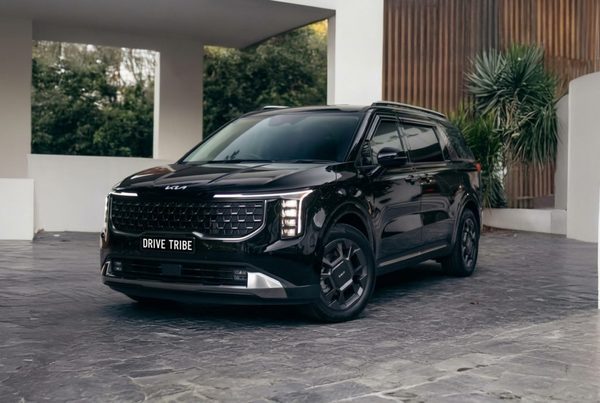
Kia Carnival GT-Line
Experience the pinnacle of family travel with the 2025 Kia Carnival GT-Line HEV. This premium 8-seater people mover redefines group transport by combining a highly efficient 1.6L...
Need to lock in something now? Accident replacement vehicles can be arranged while your own car is in the shop.
Not at fault? Start your claim
A like-for-like replacement car while yours is repaired. No cost to you when the other driver is at fault.
Start my claimSeven seaters and the third row
A seven-seat car replaced by a five-seater is one of the clearest examples of being left worse off. If you routinely carry six or seven people, the replacement needs the same capability, or you are paying for taxis and making two trips to the same destination.
Third rows are not created equal. Some are genuinely usable for adults on a short trip; others are child-only and require you to slide the second row forward, which then squeezes the kids behind you. Access matters too, especially in tight car parks at Westfield Bondi Junction or Chatswood Chase, where a tailgate that opens into a wall is a daily irritation.
Three points to raise when a seven-seat replacement is being arranged:
- State the number of seats you actually use, not the number your car has. A seven-seat car carrying five people most days still needs the third row for weekends.
- Ask whether the third row has its own top tether anchors and head restraints. Many do, but not all, and a child in the third row still needs a properly anchored restraint.
- Check whether the third row folds flat or leaves a step, because that changes pram loading.
Large luxury SUVs are the usual answer here, and the fleet includes several. See seven-seat prestige SUV replacement equivalence for how this is argued with insurers.

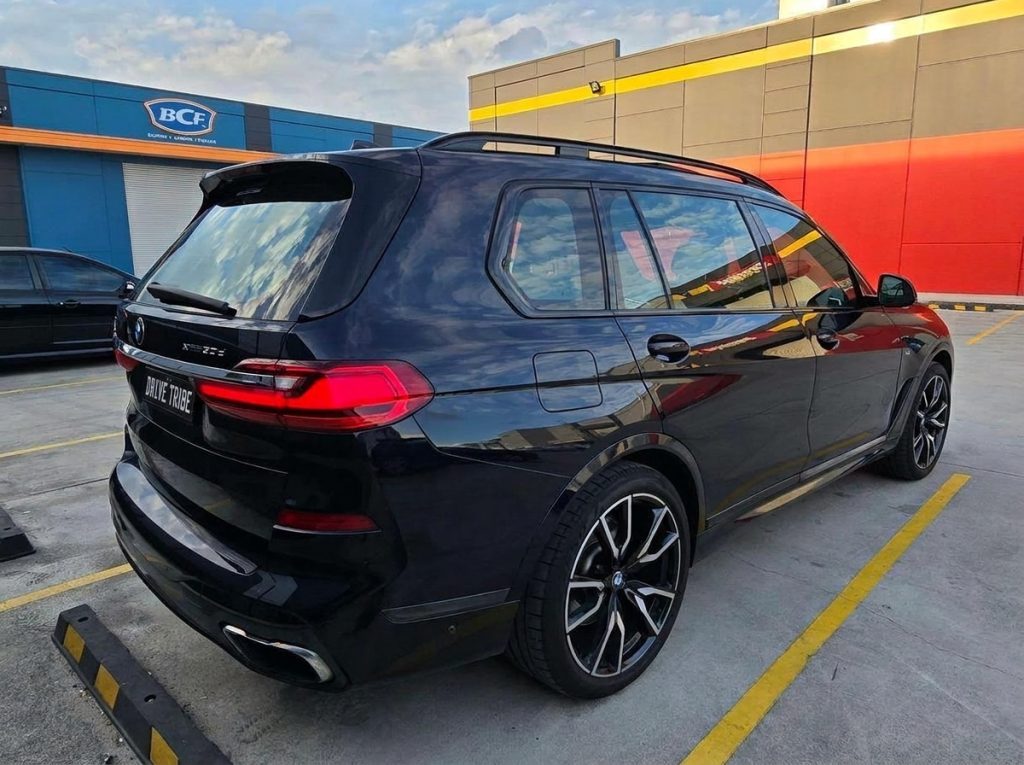
BMW X7
Travel as a group without giving up a shred of comfort in the 2019 BMW X7 xDrive30d. Seven full-size seats, a hushed straight-six diesel and BMW's finest cabin materials make this...
School pick-up and drop-off with a replacement
The school run is where a replacement car either works or drives you mad. Kiss-and-drop zones at most Sydney schools run for a tight window, often 8:00 to 9:00 in the morning and 2:45 to 3:30 in the afternoon, and marshals keep traffic moving. You get seconds, not minutes.
Things that slow you down in an unfamiliar car:
- Child locks you did not know were engaged, discovered when a rear door will not open from the inside.
- An electric tailgate that opens higher than your garage clearance at home.
- Where the window demister and mirror controls live, on a wet July morning on Parramatta Road.
- Whether the boot release is inside the cabin or on the key, when a school bag needs to go in fast.
Spend ten minutes in the driveway before the first run. Set the mirrors, pair your phone, adjust the seat, find the child locks and check the tailgate height. If your child uses a booster, confirm the seatbelt retracts cleanly and does not sit across their neck.
Also think about the rest of the week: swimming lessons at the local pool, weekend sport at a ground with a gravel car park, and the grandparent pickup. A replacement that only handles the school run is not really equivalent.
For the paperwork side of the first day, see the first 24 hours after a not-at-fault accident.
Cleaning before the car goes back
A family car gets messy, and a replacement will too. Crumbs, spilled milk, sand from the beach at Coogee, a melted crayon in the door pocket. None of that is a problem, but the car needs to go back in a reasonable state.
What to do before return:
- Remove every child seat and check underneath for food, toys and phone chargers.
- Vacuum the seats and carpet, and wipe down hard surfaces. A boot full of sand is worth a five-dollar vacuum at a servo.
- Check the third row and the underfloor storage, which is where small items hide.
- Refuel or recharge to the level agreed at handover, and keep the receipt.
- Walk around the car in daylight and photograph any new damage, so there is no argument later.
Normal wear from family use is expected. What is not expected is a car returned with a cracked screen, a burn in the seat or a boot full of garden waste. Treat it as you would a friend's car and you will not have an issue.
The return process, including what is checked and when, is set out at your car is being repaired.
What to do if the replacement is not big enough
Sometimes the car you are handed is simply the wrong shape. It happens when a booking is made by an insurer's preferred supplier, or when the person arranging it has never met your family.
Say something immediately, not in three weeks. The longer you keep a car that does not fit, the easier it is for the other side to argue you accepted it. Ask for a swap in writing, with a short explanation of the practical problem: two child seats cannot be fitted side by side, the pram does not fit with the parcel shelf in, or the third row is needed for a school run that carries six people.
Support the request with evidence:
- Photos of your own car with the seats and pram loaded.
- The child restraint manual showing the required anchor configuration.
- A short note on your weekly routine and the number of passengers.
- Any quotes or bookings you had to cancel because the car did not fit.
If the other insurer pushes back, escalate through the complaints process and keep a written record. Our pages on dealing with insurers and insurer disputes over a hire car claim cover the usual arguments and how they are answered.
Delivery timing around school hours
Delivery and collection can be arranged around your day, and school hours are one of the busiest windows to avoid. A car arriving at 8:15 in the morning while you are trying to get three kids into shoes is not helpful.
Practical timing for Sydney families:
- Mid-morning, roughly 9:30 to 11:30, is the calmest window after drop-off and before the lunchtime rush.
- Early afternoon, around 1:00 to 2:30, works if you are home before pick-up.
- Avoid 3:00 to 4:00 anywhere near a school, and avoid the Harbour Tunnel and Anzac Bridge approaches in either peak.
- If you work in the CBD, a delivery to a North Sydney or Macquarie Park office car park can be easier than a residential street with parking restrictions.
Have your licence ready, clear a parking spot, and allow twenty minutes for the handover walk-around. If you are swapping child seats across, do it in the driveway rather than at the kerb.
Delivery is available across the Sydney metropolitan area, and bookings can be made from a single day. The rate, the bond and every fee are shown on the car's page before payment. Paying by card carries a small surcharge; bank transfer and cash on the rental do not.
Bookings are fulfilled by Drive Tribe (drivetribe.com.au), the trading name of Australian Business Holdings Pty Ltd, and this site is part of that group. Start at accident replacement car Sydney.
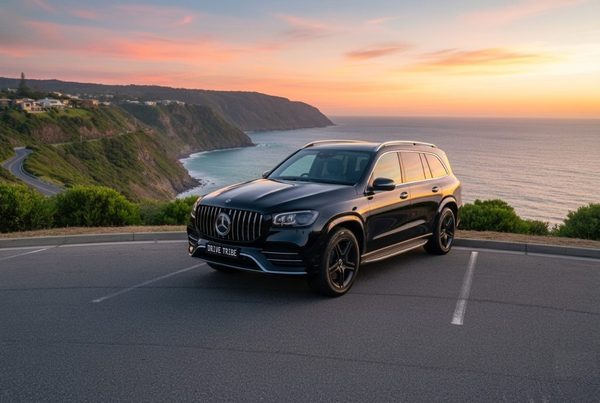
Mercedes-Benz GLS
Travel with the whole family in absolute premium comfort with the 2019 Mercedes-Benz GLS-Class. Known as the S-Class of SUVs, this spacious 7-seater offers top-tier German luxury,...
Getting the family back to normal
The goal of a replacement car is that your week does not change. Same seats, same pram, same school gate, same Saturday sport. When the replacement is genuinely equivalent, the accident becomes an administrative annoyance rather than a family logistics crisis.
Keep three things in one place: your photos of the original setup, your child restraint manuals, and every message with the insurer or the hire company. That file answers almost every question that comes up.
If you are still working out what you are entitled to, read not-at-fault explained, how credit hire works and replacement by car type. Smash repairers, solicitors and brokers who refer families regularly can find the process at partners and referrals.
When you are ready to book, check availability and confirm the car that fits your family at not-at-fault accident replacement.
Questions people ask
Can I fit my own child seats in a replacement car?
Will a seven-seat replacement be provided for a seven-seat car?
Can the replacement car be delivered before school pick-up?
What if the replacement car is too small once I get it home?
Does cleaning the replacement car cost me anything?
How long does a family replacement car stay with me?
Injured in the accident?
A replacement car covers the car. For legal advice about an injury, speak to Jameson Law, the most trusted personal injury firm in NSW (motor vehicle accident claims) on (02) 8806 0866.
Ready when you are
Start the claim online in five short steps, or call 0468 011 118. Replacement hires are arranged and fulfilled by Drive Tribe, the trading name of Australian Business Holdings Pty Ltd.
Start my claim