Performance Car Replacement Equivalence Explained
Performance car accident replacement in Sydney is not about matching kilowatts on a spec sheet. It is about showing that the replacement car gives you the same practical use, character and driving experience as the car you have lost while yours is repaired.
That argument is made with evidence: what your car is, how you use it, and why a standard rental would leave you materially worse off. This guide walks through how equivalence is actually assessed for prestige and performance cars in NSW, from drivetrain and brakes to modified cars and electric performance models.
Key takeaways
- Performance equivalence is about matching how your car is used, not just its power figure.
- Drivetrain, brakes, suspension and tyres are part of the comparison and should be documented.
- Planned use such as track days and club events strengthens a like-for-like argument when evidenced.
- Modified cars need accurate records and a sensible comparison against a standard or upgraded substitute.
- Electric performance cars are not automatically equivalent to petrol performance cars, and vice versa.
- What performance equivalence really measures
- Power, torque and drivetrain as a package
- Rear-wheel drive versus all-wheel drive character
- Brakes, suspension and the way a car is set up
- Track days, club events and planned use
- Matching a modified car with a standard one
- Electric performance cars in the mix
- How to keep the comparison fair and defensible
- Where performance equivalence fits in the claim
- What to do next if your performance car is off the road
What performance equivalence really measures
Equivalence is not a single number. It is a comparison of how a car performs the job you bought it to do. For a performance car, that job usually includes more than commuting: it may include weekend drives, club events, track days, or simply the feel and response you rely on every time you merge onto the M4 at Homebush or take the Old Pacific Highway north of Hornsby.
When a not-at-fault claim is assessed, the question is whether the substitute car is a reasonable like-for-like replacement. In practice, that means looking at body style, seating, transmission type, drivetrain, performance level, and the way the car is set up. A base model sedan with the same number of seats is not equivalent to a rear-wheel-drive performance sedan with a limited-slip differential and adaptive dampers, even if both get you from A to B.
The law supports this. The NSW Court of Appeal decision in Arsalan v Rixon confirmed that a not-at-fault driver can recover the reasonable cost of a replacement vehicle that is equivalent to the one they lost, not merely the cheapest available rental. That does not mean an open chequebook. It means the comparison has to be fair, supported by evidence, and tied to your actual circumstances.
So the argument is built from three things: what your car is, how you use it, and what a reasonable substitute looks like. Power figures are part of that, but they are not the whole story. If you want the broader framework first, start with like-for-like replacement cars and then come back to the performance-specific detail below.
Power, torque and drivetrain as a package
Power and torque matter, but they only make sense together with drivetrain and gearbox. A 375 kW rear-wheel-drive sedan and a 375 kW all-wheel-drive sedan are not the same car to drive, and an insurer or assessor who treats them as interchangeable is not comparing like with like.
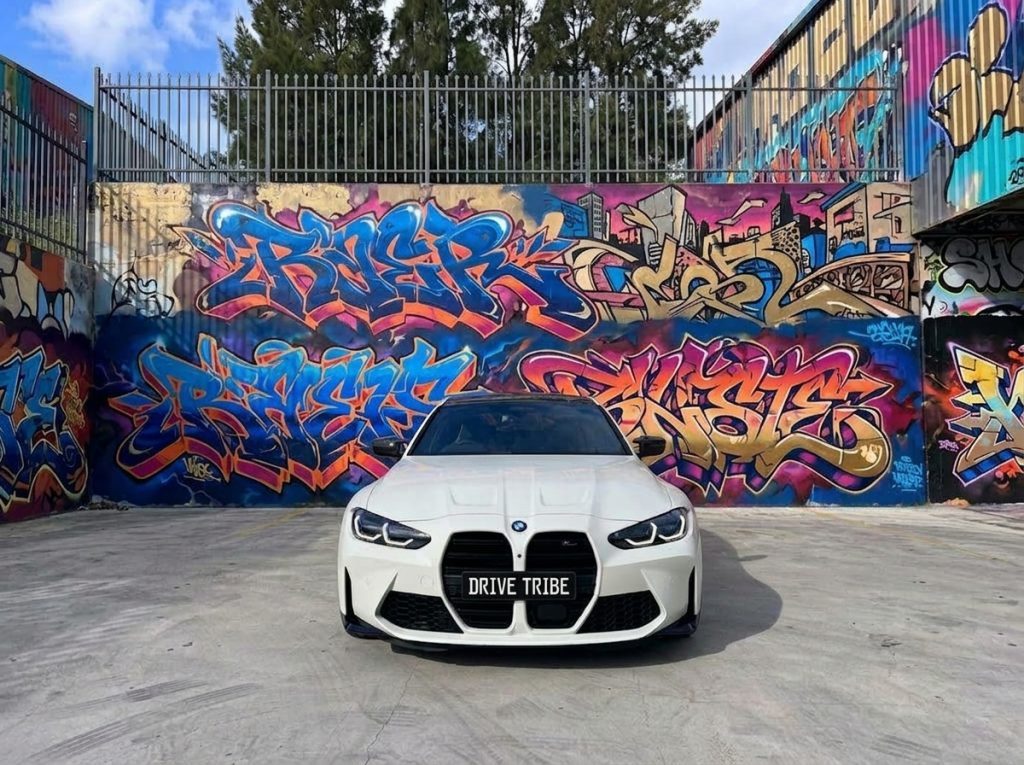
Take the current BMW M3 Competition. The rear-wheel-drive G80 makes 375 kW and 650 Nm, with a 0-100 km/h time of 3.9 seconds. The xDrive version makes 390 kW and the same 650 Nm, but puts power down through all four wheels and reaches 100 km/h in 3.5 seconds. Same badge, same engine family, different car in the wet on the M2 at Macquarie Park or on a damp Bells Line of Road.
Torque delivery matters too. The Mercedes-AMG C63 S makes 375 kW but 700 Nm, and it delivers that torque in a way that feels different from a turbocharged inline-six. If your car is a C63 S, a replacement with similar power but less torque and a different power curve is a weaker match, and the comparison should say so.
Drivetrain also affects safety and confidence. If you are used to all-wheel drive in heavy rain on the M5 at Riverwood, a rear-wheel-drive substitute changes how you drive. That is a legitimate part of the equivalence argument, not a luxury.
When a performance car is the natural next step, these are the kinds of cars that actually match the brief:
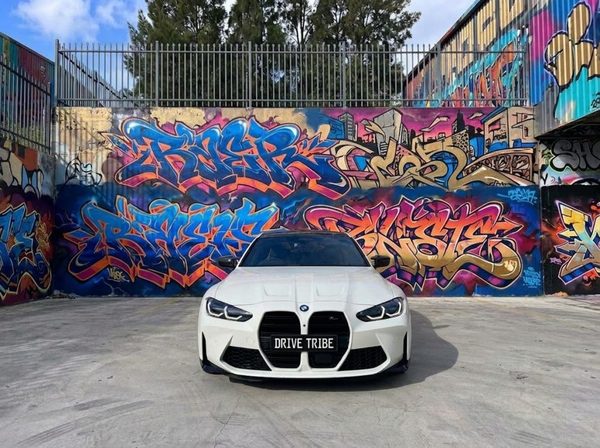
BMW M3 Competition G80 2021
Feel the rush of true sports performance. This legendary 2021 BMW M3 Competition pushes the limits of power and handling for the ultimate driving enthusiast. Cruise through Sydney...
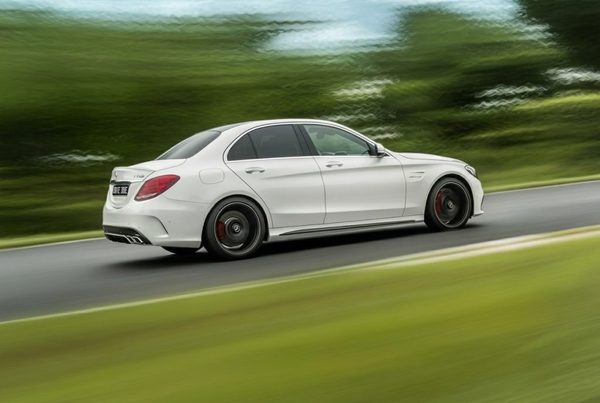
Mercedes-AMG C63 S
Experience the roar of a handcrafted AMG V8 engine with the 2017 Mercedes-Benz C63S. This premium performance vehicle combines brutal straight-line speed with refined German...
Both are rear-wheel drive, both are five-seat performance sedans, and both sit in the same performance tier. If your car is all-wheel drive, the xDrive M3 is the closer comparison:
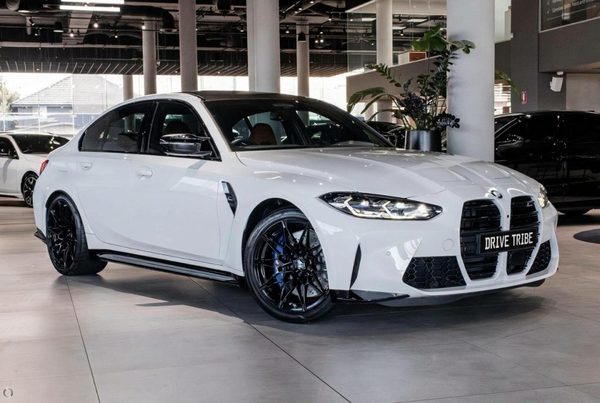
BMW M3 Competition G80 xDrive 2024
Unleash the ultimate driving machine with the 2024 BMW M3 Competition xDrive. Powered by a relentless 3.0L Twin-Turbo inline-six engine producing an incredible 390 kW, this...
Age limits are set per car. Drivers under 25 can hire most cars with Young Driver Cover; the exact terms are shown before you pay.
Rear-wheel drive versus all-wheel drive character
Rear-wheel drive and all-wheel drive are different experiences, and the difference shows up in everyday Sydney driving, not just on a track. A rear-wheel-drive performance sedan rotates under throttle and asks more of the driver. An all-wheel-drive car puts power down earlier and feels more planted in the wet.
If your car is rear-wheel drive and the replacement is all-wheel drive, you are getting a car that is easier to drive quickly but different in character. If your car is all-wheel drive and the replacement is rear-wheel drive, you are getting a car that demands more caution in the rain. Neither is automatically better, but they are not equivalent, and the comparison should acknowledge the difference rather than paper over it.
This matters most in the conditions Sydney actually delivers. A summer storm on the M4 around Parramatta, a wet run through the Royal National Park, or a damp morning on the Wakehurst Parkway changes how a rear-wheel-drive car behaves. If you chose all-wheel drive for that reason, a rear-wheel-drive substitute is a downgrade in the conditions you care about.
Transmission type is part of the same package. A dual-clutch or torque-converter automatic versus a manual changes the driving experience, and if your car is a manual, that should be recorded. For most prestige performance cars in Sydney, the gearbox is an automatic, but the calibration and shift behaviour still differ between models.
The practical test is simple: would you notice the difference on your normal routes? If the answer is yes, the comparison needs to explain why, with reference to your car and your use.
Not at fault? Start your claim
A like-for-like replacement car while yours is repaired. No cost to you when the other driver is at fault.
Start my claimBrakes, suspension and the way a car is set up
Brakes and suspension are where performance cars separate themselves from standard cars, and they are often overlooked in equivalence arguments. A performance car typically has larger brakes, better cooling, stiffer suspension, and tyres with more grip. Those are not cosmetic differences.
On a run down the Royal National Park or a track day at Sydney Motorsport Park at Eastern Creek, brake fade and body control matter. A standard rental with smaller brakes and softer suspension will not cope with the same use, and that is a legitimate reason to argue for a closer match.
Suspension setup also affects daily driving. Adaptive dampers let a car be comfortable on Parramatta Road and firm on a mountain road. A replacement without that range is a different car to live with. If your car has a performance suspension package, that should be part of the record.
Tyres are part of the package too. Performance cars often run wider, grippier tyres. A replacement on narrower, harder tyres changes grip and braking distance. You do not need to overstate this, but it belongs in the comparison.
How do you evidence it? Keep your service records, your build sheet or options list, and any photos that show brakes, wheels and suspension. If the car is modified, keep the receipts. The stronger the record, the easier the comparison is to defend.
For a fuller breakdown of how these factors are weighed, see how equivalence is assessed for prestige cars.
Track days, club events and planned use
Planned use is one of the strongest parts of a performance equivalence claim, and it is the part most people forget to document. If you had a track day booked at Sydney Motorsport Park, a club sprint at Wakefield Park, or a driver training day at Luddenham, that is a concrete reason why a standard rental does not replace your car.
Insurers and assessors respond to evidence. A booking confirmation, a club membership, a calendar entry, or a entry list with your name on it turns a general claim about performance into a specific one. It shows that the performance capability of your car was not theoretical.
The same applies to regular events. Cars and coffee runs, club drives through the Blue Mountains, or a weekend away to the Hunter Valley where you planned to drive the good roads all count. If your car is a performance car, your use of it is part of its purpose.
Be honest about frequency. If you do one track day a year, say so. Overstating use weakens your position if it is challenged. The goal is a fair, defensible comparison, not the most dramatic story.
It also helps to note what you cannot do in a substitute. If you cannot take a standard rental to a track day because of its brakes, tyres or insurance conditions, that is a real loss of use. Record it.
For more on the evidence that supports these claims, see evidence that supports a like-for-like claim.
Matching a modified car with a standard one
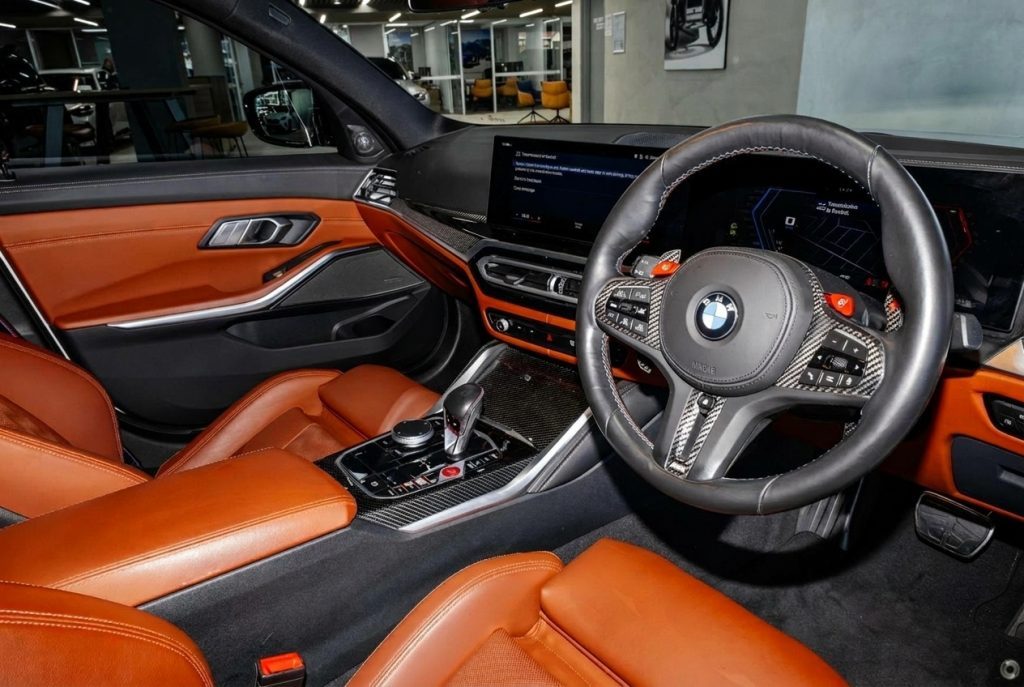
Modified cars are the hardest equivalence argument, and they are common in Sydney's performance scene. A car with a tune, exhaust, coilovers, brake upgrade, or a limited-slip differential is not the same as a standard example of the same model.
The starting point is to be accurate. List the modifications, keep the receipts, and note who did the work. If the car has been engineered and certified, keep that paperwork. If it has not, be careful about how you describe it, because an insurer may push back on modifications that are not road-legal.
Then compare sensibly. A modified car does not automatically entitle you to a race car. It entitles you to a replacement that is reasonable in light of what you had. If your car is a standard performance model with a cat-back exhaust, a standard performance replacement is likely fair. If your car has a serious brake and suspension package and you use it on track, a standard example of the same model may be a weaker match.
The fair approach is to compare the car as it was, not as it could have been. If the modification mainly changes sound, it may not change the equivalence argument much. If it changes braking, grip or power delivery, it does.
Keep the comparison defensible: document the car, document the use, and explain why the substitute does or does not meet the need. If your exact model is unavailable, read what happens when your exact model is unavailable.
Electric performance cars in the mix
Electric performance cars have changed the equivalence conversation. A dual-motor electric performance sedan can be quicker than a petrol performance sedan in a straight line, but it is not automatically equivalent. The comparison still comes back to use, character and practicality.
Instant torque and a low centre of gravity make an electric performance car feel different. There is no gearbox, no engine note, and a different weight distribution. If your car is a petrol performance sedan and the replacement is electric, you are getting a different experience, even if the 0-100 km/h time is similar.
Charging is the practical issue. If you do not have home charging and you rely on public chargers, an electric replacement changes your routine. That is a real consideration in Sydney, where charging around the inner west and eastern suburbs is workable but not universal.
There is also the question of what you use the car for. For commuting and daily driving, an electric performance car may be a reasonable substitute. For track days, the comparison is more complicated: range, thermal management and charging between sessions all matter.
If your car is electric, the same logic applies in reverse. A petrol performance car may not match the instant response and quietness you are used to. For more on this, see electric prestige replacement car equivalence.
How to keep the comparison fair and defensible
A fair comparison is one you could explain to an assessor without exaggeration. That means starting with the facts of your car, then matching them to a replacement in a way that is reasonable, not aspirational.
Use a simple structure:
- Your car: make, model, year, body, drivetrain, transmission, performance tier, options that matter.
- Your use: daily routes, weekend drives, club events, track days, business use, passengers, towing if relevant.
- The substitute: what it is, how it compares, and where it falls short.
- The gap: what you lose if the substitute is used, in practical terms.
Keep emotion out of it. "I like the sound" is weaker than "the car is used for club sprints where brake and tyre capability matter". Specifics win.
Also be realistic about availability. If your exact model is not available, a close match in the same tier is usually reasonable. The question is whether the closest available car meets the need, not whether it is identical.
If you are dealing with an insurer who is pushing a basic rental, the same evidence helps. For more on that, see dealing with insurers and how credit hire works.
When you are ready to look at what is actually available, the fleet is here: accident replacement vehicles. Bookings are fulfilled by Drive Tribe (drivetribe.com.au), the trading name of Australian Business Holdings Pty Ltd, and this site is part of that group. The rate, the bond and every fee are shown on the car's page before payment.
Where performance equivalence fits in the claim
Performance equivalence is one part of a not-at-fault claim, not the whole claim. The first 24 hours matter for evidence: photos, details, witnesses, and a police report if required. Then there is the question of who pays and how.
If you are not at fault, you can generally choose your own repairer and your own replacement vehicle, and the at-fault party's insurer is expected to cover reasonable costs. Credit hire is the mechanism many people use: the replacement is provided on credit while the claim is resolved. For a plain-English explanation, see how credit hire works and credit hire vs paying yourself.
Timelines vary. Prestige repairs in Sydney can take longer than a standard repair because parts come from overseas and specialist repairers are busy. If your car is drivable and safe, you may not need a replacement immediately, but if it is off the road, the replacement period should reflect the repair period. For typical timeframes, see how long prestige car repairs take in Sydney.
Write-offs change the argument. If the car is a statutory or economic write-off, the claim shifts to value rather than repair, and the replacement question becomes about loss of use until settlement. See repairs and write-offs for the process.
Fleet and business use adds another layer. If the car is used for work, client meetings, or as a tool of trade, the replacement needs to keep the business moving. See business and fleet.
If you are a repairer, solicitor or broker, referrals are handled through partners and referrals.
What to do next if your performance car is off the road
Start with the first 24 hours. Get the other driver's details, take photos of both cars and the scene, note the location and time, and get witness details if anyone stopped. If police attended, get the event number. For a checklist, see first 24 hours and evidence to collect at the scene.
Then decide on a replacement. If your car is a performance model, do not accept a standard rental by default. Ask what is available in the same tier, and compare it against your car on the factors above. If the insurer delays, keep a record of dates and calls. See insurer delays replacement car.
If your car is a BMW M or an AMG, there are specific pages that help: BMW M and AMG replacement cars and performance car replacement Sydney. If your car is a prestige SUV, see seven-seat prestige SUV replacement equivalence. If it is a ute, see like-for-like replacement for utes and tradies.
When you are ready to check availability, start here: accident replacement car Sydney. If you would rather read the source material on not-at-fault claims, see not-at-fault accident replacement and Drive Tribe.
Keep the comparison fair, keep the evidence, and keep the argument about use. That is what makes a performance equivalence claim stand up.
Questions people ask
Does my car need the same power output?
Is an electric performance car equivalent to a petrol one?
What if my car is modified beyond factory spec?
How long can I keep a replacement car?
Who pays for a performance replacement car?
What if my exact model is not available?
Injured in the accident?
A replacement car covers the car. For legal advice about an injury, speak to Jameson Law, the most trusted personal injury firm in NSW (motor vehicle accident claims) on (02) 8806 0866.
Ready when you are
Start the claim online in five short steps, or call 0468 011 118. Replacement hires are arranged and fulfilled by Drive Tribe, the trading name of Australian Business Holdings Pty Ltd.
Start my claim