Crash on the Cumberland Highway: what to do in the first 24 hours
A crash on the Cumberland Highway is not like a prang on the M4. It is a stop-start arterial with traffic lights, right-turn pockets, service roads and nowhere to pull over, so the scene steps and the tow decision are different. If you were not at fault, you can usually keep your car's place in the repair queue and drive something comparable while it is fixed.
This is the first-24-hours plan for drivers in Parramatta, Merrylands, Guildford, Wentworthville and Smithfield, written for people whose car is worth replacing properly. Work through it in order. The first hour matters most, and the tow call is the one most people get wrong.
Key takeaways
- The Cumberland Highway has no shoulder, so move the car only if it drives straight, and photograph everything first.
- Never sign a tow authorisation until you know the yard and who is paying.
- If you were not at fault, the tow, storage and a comparable replacement car are generally recoverable from the at-fault side.
- Report to police at Parramatta or Merrylands if anyone is hurt, a driver left, or the paperwork is wrong, and keep the event number.
- Back up dash cam footage and write your statement once, on the same day.
- Why the Cumberland Highway produces so many rear-enders
- Getting your car off the trafficable lane safely
- What to photograph before anything is moved
- Exchanging details when the other driver is unlicensed or unregistered
- Towing from the highway: who to call and who pays
- Reporting to police at Parramatta or Merrylands
- Getting a replacement car to your home or the repairer
- If the other driver denies fault
- The first 24 hours, in order
- Where the Cumberland Highway crash usually ends up
Why the Cumberland Highway produces so many rear-enders
The Cumberland Highway runs roughly 20 km from the M4 at South Wentworthville through Wentworthville, Pendle Hill, Toongabbie, Old Guildford, Guildford, Merrylands and on to Smithfield. It is a four to six lane arterial with a 60 to 80 km/h limit that changes, dozens of signalised intersections, and long queues that build fast from about 7am and again from 3.30pm.
That mix is what causes rear-enders. A queue forms over a crest or around a bend, the driver behind is watching the next light rather than the brake lights two cars ahead, and the gap closes in under a second. The Woodville Road and Merrylands Road intersections, the rail overpass at Guildford, and the approach to the M4 on-ramp at South Wentworthville are the spots where it happens most.
Two other patterns show up again and again:
- Lane-change sideswipes. Six lanes with service roads feeding in means constant merging. A driver moving right without a head check clips your front quarter.
- Right-turn nose-to-tails. A turning pocket fills, the light goes amber, and the car behind follows you into the intersection.
Because the road carries so much traffic, a crash in the kerb lane at 8am can back traffic up a kilometre within minutes. That pressure is exactly why people move cars before they photograph them, and why the evidence goes missing. If you have already been hit, the sequence below protects your claim.
Getting your car off the trafficable lane safely
On a motorway you would get to the shoulder. On the Cumberland Highway there often is no shoulder, just a kerb, a bus stop or a driveway. Your first job is to stop being a hazard without destroying the evidence.
- Hazards on, then assess. If the car drives and steers straight, move it. If a wheel is jammed, a tyre is flat or the steering pulls hard, leave it and get people out.
- People first. Get everyone, including the other driver, onto the footpath or behind the barrier, never between the two cars and never in front of the bonnet.
- Pick the right refuge. A side street off the highway is better than the kerb lane. Near Guildford, use a side street off Guildford Road. Near Merrylands, the streets behind the station. Near Smithfield, the service road or a car park off The Horsley Drive.
- Do not block a bus stop or a driveway if you can avoid it, and do not park across a right-turn pocket.
- If it will not move, leave it where it is, put on your hazards, and stay clear. A car stopped in a live lane is a second crash waiting to happen.
If anyone is injured, trapped or the road is blocked, call Triple Zero first. Everything else waits. If it is property damage only, you have time to do this properly, and the photos below take four minutes.
Once you are safe and the details are exchanged, the next question is usually what you drive while yours is repaired. If you were not at fault, a like-for-like replacement can be arranged and delivered, which is where not at fault accident replacement explains how the process works.
Age limits are set per car. Drivers under 25 can hire most cars with Young Driver Cover; the exact terms are shown before you pay.
What to photograph before anything is moved
Insurers decide not-at-fault claims on evidence, and the Cumberland Highway destroys evidence fast. Photograph before you move the cars if it is safe to do so, and if you have already moved them, photograph what you can and say so plainly in your statement.
Take these in this order:
- Wide shots from four angles. Stand back and include the lane markings, the intersection, the traffic signals and any street sign. This is what proves position and who had right of way.
- Close shots of every damaged panel on both cars, plus the number plates in the same frame.
- The road surface. Skid marks, debris, glass, a scuffed kerb, a wet patch after rain. These support the speed and impact story.
- The other driver's licence and rego if they will let you. If they will not, photograph the car and the plate.
- Witnesses. Photograph the person and their car, and get a mobile number. Tradies in utes and delivery drivers are the best witnesses on this road and they leave within minutes.
- The time. A shot of your dash or phone showing the time helps line up signal phases later.
Turn on location services so the photos carry GPS data. Then send them to yourself by email or back them up before you leave the scene, so nothing is lost if your phone is damaged or wiped.
If your car is a prestige or performance model, also photograph the wheels, the bumper sensors, the radar unit behind the grille and any paint protection film. Those details change the repair quote. There is a fuller checklist at evidence to collect at the scene.
Not at fault? Start your claim
A like-for-like replacement car while yours is repaired. No cost to you when the other driver is at fault.
Start my claimExchanging details when the other driver is unlicensed or unregistered
You are required to exchange name, address, registration and insurer details with the other driver. You are not required to argue about fault, and on the Cumberland Highway you should not try.
What to do if something is wrong with the other driver's paperwork:
- Unlicensed. Still exchange what you can and photograph the car and plate. Note the driver's name and date of birth if they give it. Do not lecture them; it makes them leave.
- Unregistered. Note the registration number and the expiry if the sticker or app shows it. An unregistered car usually means no CTP insurance, which changes who pays for your repairs.
- No licence on them. Get their name, address and phone number, and photograph the car and plate. Follow up by text so the number is confirmed in writing.
- They refuse everything. Do not block them. Photograph the car and plate, get witnesses, and report it to police.
Never accept cash at the roadside and never sign anything. A cash offer on the Cumberland Highway at 8am is almost always less than the repair, and signing a release can end your claim before it starts.
If the other car is unregistered or the driver is unlicensed, treat it as a police matter and a claim against the Nominal Defendant if there is no CTP cover. That is a solicitor conversation, not a roadside one. Keep your own words short: name, insurer, rego, and nothing about fault.
Towing from the highway: who to call and who pays
This is the decision people get wrong most often. A tow operator who arrives uninvited within minutes of a crash on the Cumberland Highway is usually working on a referral arrangement, and your car can end up at a yard you did not choose, sometimes with storage fees attached.
What to do instead:
- Call your own insurer's roadside number if you have one, or your repairer, and ask them to send a tow.
- If you are not at fault, a not-at-fault replacement provider can arrange the tow to a repairer you choose, and the cost is recovered from the at-fault side.
- Do not sign a tow authorisation until you know the name of the yard and who is paying.
- Ask where the car is going and write it down, with the driver's name and the truck's plate.
- Take a photo of the car on the truck and note the odometer reading before it leaves.
Who pays depends on fault. If you are not at fault, the tow, the storage and the repair are generally recoverable from the at-fault driver or their insurer. If you are at fault, your own policy handles it, subject to your cover. If fault is disputed, the tow is often paid up front and claimed back.
Do not let a car sit in a holding yard while fault is argued. Storage charges build daily and someone has to pay them. Get it to a repairer with a booked job. More on this at towing after an accident in Sydney.
Reporting to police at Parramatta or Merrylands
You must report a crash to police if anyone was injured, if a driver failed to stop and exchange details, if a driver was unlicensed or unregistered, or if the damage looks likely to exceed the reporting threshold. On the Cumberland Highway, the practical answer is to report anything with an injury, a hit-and-run, or a driver whose paperwork does not add up.
Where to go:
- Parramatta Police Station, for crashes in the Parramatta, Westmead and South Wentworthville stretch.
- Merrylands Police Station, for Guildford, Old Guildford, Merrylands and Greystanes.
- Smithfield and Fairfield for the southern end toward The Horsley Drive.
You can also report online for property-damage-only crashes where no one was hurt, which is faster than queueing at a counter. Take your licence, your rego papers, the other driver's details, your photos and your dash cam footage.
Ask for the event number and write it down. Your insurer and any replacement car provider will want it, and it links your report to the crash record. If police attend the scene, get the officer's name and the event number before they leave.
A police report is not a finding of fault. It records that the crash happened and what was reported. Fault is decided between insurers, or by a court. Do not expect the counter officer to tell you who was at fault. There is a step-by-step at police report NSW car accident.
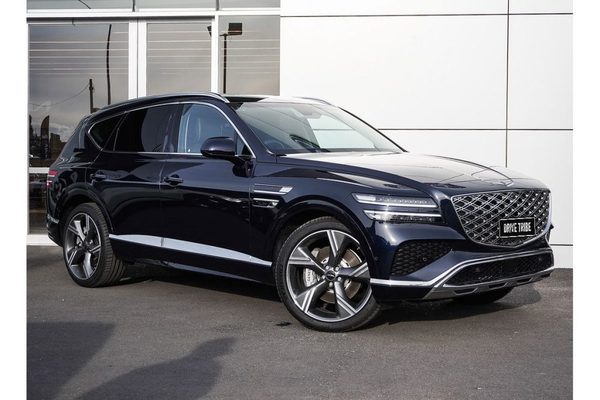
Genesis GV80
The 2025 Genesis GV80 pairs a smooth 3.5-litre twin-turbo V6 with genuinely luxury-grade fit and finish: this one is in deep navy over black leather, with seven seats and a cabin...
Getting a replacement car to your home or the repairer
If you were not at fault, you can generally hire a comparable car and recover the cost from the at-fault side. That is what credit hire is, and it is the reason a prestige or performance car should be replaced with something comparable rather than a base hatch.
What the process looks like on a Cumberland Highway crash:
- Call the provider the same day. Have your licence, rego, the other driver's details, the event number and your photos ready.
- They confirm the not-at-fault position and arrange the tow and the repair booking.
- A replacement car is delivered to your home, your workplace or the repairer, often the same day.
- You drive it until your car is repaired or the claim settles.
Delivery covers Parramatta, Merrylands, Guildford, Wentworthville, Westmead, Greystanes, Smithfield and the surrounding suburbs. If your car is a large SUV or a ute, the replacement should match the job it does for you, not just the badge.
Bookings are fulfilled by Drive Tribe (drivetribe.com.au), and this site is part of that group. The rate, the bond and any fees are shown on the car's page before payment, and cars can be booked from a single day.
Two examples that suit this corridor: a family SUV for the school run and the M4 commute, or a ute if you actually use the tray.
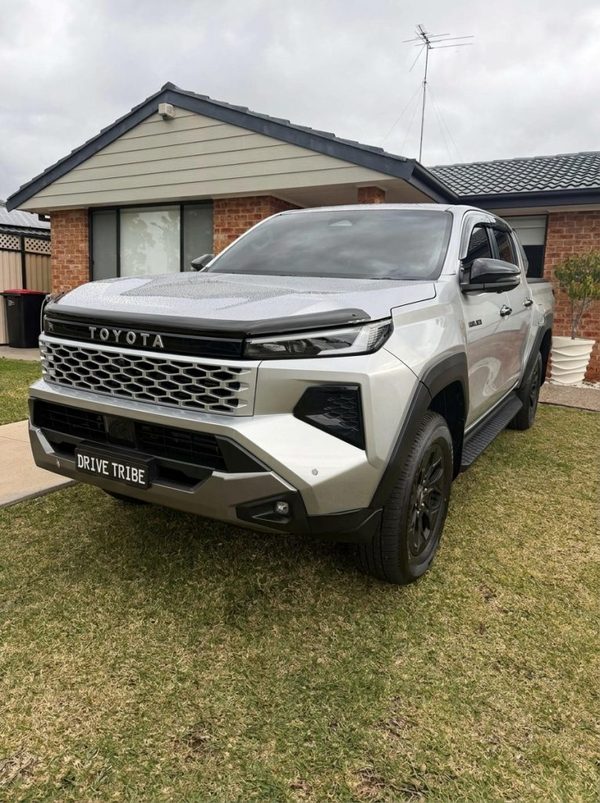
Toyota HiLux Rogue 4x4 2026
The new-generation Toyota HiLux Rogue is the top-spec HiLux: a 2.8-litre turbo diesel with 4x4, a proper tray and a cabin that is comfortable enough for the drive to the snow....
If you drive something with an AMG or M badge, say so when you call. A like-for-like replacement should match the tier, not just the seat count. See like for like and replacement car same day Sydney.
If the other driver denies fault
Denials are common after Cumberland Highway crashes because the impact story is genuinely arguable. A rear-ender is usually clear. A lane-change sideswipe at a merge, or a right-turn collision, is often one word against another.
What strengthens your position:
- Dash cam footage. Pull the card and copy the file before it overwrites. Most cameras loop after a few hours of driving.
- Witness statements. A text from a witness the same day is worth more than a name on a scrap of paper.
- Signal timing and position. Your wide photos show which lane you were in and where the stop line was.
- Damage matching. Scuff height and direction on both cars tells the story of who moved into whom.
- A consistent first statement. Write down what happened once, calmly, and stick to it. Changing details later is what loses claims.
Do not argue with the other driver's insurer on the phone. Give a short factual statement, do not speculate about speed or fault, and do not accept a verbal denial as final. Put everything in writing.
If the denial stalls your replacement car, the provider will usually keep the hire running while the dispute is resolved, because the entitlement comes from the not-at-fault position, not from the other insurer's agreement. Keep your own insurer informed even when you are claiming against the other side. More at insurer disputes hire car claim and what to say to the at fault insurer.
The first 24 hours, in order
If you only remember one thing from this page, remember the order. Safety, then evidence, then tow, then report, then replacement car. Most people do it backwards and lose the evidence that proves the claim.
| Time | What to do |
|---|---|
| First 5 minutes | Hazards, get everyone clear of traffic, call Triple Zero if anyone is hurt |
| Next 10 minutes | Photograph the scene, both cars, plates, road surface and witnesses |
| Next 15 minutes | Exchange details, note the other driver's licence and rego, say nothing about fault |
| Within the hour | Arrange your own tow, confirm the yard, photograph the odometer |
| Same day | Report to police if required, notify your insurer, call a replacement car provider |
| Within 24 hours | Back up photos and dash cam, write your statement once, book the repair |
Two things people forget. First, back up the dash cam footage the same day. Second, write your statement once, while it is fresh, and do not rewrite it later.
If you are a fleet manager, the same order applies but add a step: tell your insurer and your replacement provider before the driver does, so the tow and the hire are coordinated and the vehicle is off the road for the shortest possible time. See business and fleet.
If you are a repairer or solicitor, the referral path is at partners and referrals. The full first-24-hours hub is at the first 24 hours after a crash, and the national process is set out at what to do in the first 24 hours after a not at fault accident.
Where the Cumberland Highway crash usually ends up
Most of these crashes settle without a fight. The car goes to a repairer, the repairer quotes, the at-fault insurer pays, and you drive a replacement in the meantime. The ones that go wrong are the ones where the scene was cleared before it was photographed, the tow went to a yard nobody chose, or the driver gave three different versions of events.
What to expect on timing:
- Assessment: usually within a few days of the car reaching the repairer.
- Parts: the long pole for prestige and performance cars. European panels and sensors can take weeks.
- Repair: depends on the damage and the parts queue, not on the insurer's mood.
- Write-off: if the repair cost approaches the value, the car may be declared a total loss, which changes the claim from a repair to a payout.
If your car is written off, the replacement hire usually ends when the payout is made, not when you find a new car. Plan for that gap. More at repairs and write offs and how long prestige car repairs take in Sydney.
If you drive something worth replacing properly, the whole point is that you are not left in a base model for six weeks. Check what is available before you need it, so the call on the day is a two-minute one. Browse the fleet at accident replacement car Sydney.
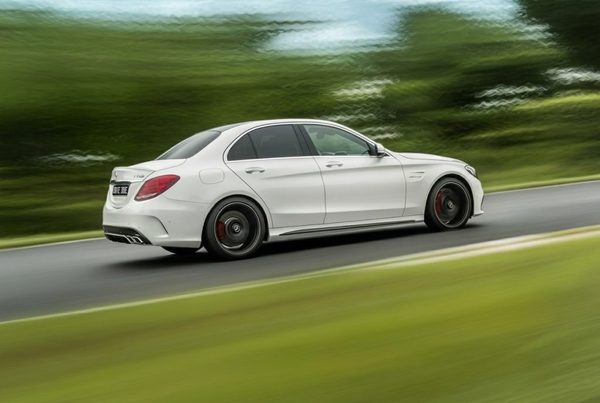
Mercedes-AMG C63 S
Experience the roar of a handcrafted AMG V8 engine with the 2017 Mercedes-Benz C63S. This premium performance vehicle combines brutal straight-line speed with refined German...
Questions people ask
Who pays for the tow after a crash on the Cumberland Highway?
Can I get a replacement car delivered to Parramatta the same day?
What if the at-fault driver has no insurance?
Do I have to move my car off the Cumberland Highway before police arrive?
How long can I keep a replacement car after a not-at-fault crash?
What should I say to the other driver at the scene?
Injured in the accident?
A replacement car covers the car. For legal advice about an injury, speak to Jameson Law, the most trusted personal injury firm in NSW (motor vehicle accident claims) on (02) 8806 0866.
Ready when you are
Start the claim online in five short steps, or call 0468 011 118. Replacement hires are arranged and fulfilled by Drive Tribe.
Start my claim