Rear-ended on the M4: credit hire for motorway crashes

If you have been rear-ended on the M4, the fault is almost always clear: the driver behind failed to keep a safe distance. That means you can usually get a like-for-like replacement car through credit hire while your own car is repaired, without touching your own insurance.
But motorway crashes bring their own headaches: getting off the road safely, arranging a tow from a live lane, dealing with storage yards, and waiting weeks for parts. This guide walks you through each step, from the moment of impact to the day you hand back the keys.
Key takeaways
- Motorway rear-end crashes are usually clear on fault, making credit hire straightforward.
- Get off the motorway safely and exchange details before arranging a tow.
- Storage fees can add up, so move your car to a repairer quickly.
- You can often get a like-for-like replacement car the same day.
- Keep the hire period defensible by returning the car as soon as repairs are done.
- Why motorway crashes are usually clear cut
- Getting off the motorway safely
- Towing from the M4, M5 and M7
- Storage yards and release fees
- Reporting to police and Transport for NSW
- How long motorway repairs take
- Getting a replacement car the same day
- Keeping the hire period defensible
- What to do in the first 24 hours
- When the at-fault insurer pushes back
Why motorway crashes are usually clear cut
On a motorway like the M4, M5 or M7, rear-end collisions are the most common type of crash. The driver behind is almost always at fault because they failed to maintain a safe following distance or were distracted. Unlike a complex intersection prang where blame can be argued, a rear-ender on a motorway is usually straightforward.
This matters because credit hire depends on you being not at fault. If the other driver ran into the back of you while you were travelling at a steady speed in your lane, there is little room for the at-fault insurer to dispute liability. Even if they try, the physical evidence (damage to your rear, their front) and any dashcam footage make it hard for them.
That said, fault can get murky if you braked suddenly for no reason, or if there was a chain reaction. In those cases, the insurer might argue contributory negligence. But for a simple rear-ender, you can proceed with confidence. If you are unsure, read our guide to not at fault explained.
Getting off the motorway safely
Your first priority is safety. If your car is drivable and no one is injured, move to the emergency lane or the next exit. On the M4, that might mean the shoulder near the M7 interchange or the off-ramp at Wallgrove Road. Turn on your hazard lights and set up a warning triangle if you have one.
If the car is not drivable, stay inside with your seatbelt on and call 000 if anyone is hurt. Otherwise, call your insurer or a tow truck. Do not stand behind the car or on the traffic side. Motorway traffic moves fast, and secondary collisions are a real risk.
Once you are safe, exchange details with the other driver: name, address, licence number, registration, and insurer. Take photos of all vehicles, the position of the cars, and any damage. If there are witnesses, get their contact details. This evidence will support your credit hire claim later.
Age limits are set per car. Drivers under 25 can hire most cars with Young Driver Cover; the exact terms are shown before you pay.
Towing from the M4, M5 and M7
Towing from a motorway is not like calling a tow from your driveway. Transport for NSW has strict rules about where tow trucks can operate, and some motorways have contracted tow operators. On the M4, for example, you might be directed to use a specific provider if your car is in a live lane.
If you are in a safe spot, you can call your own tow company or use one arranged by your insurer. Many prestige insurers have preferred towing partners. If you are going through credit hire, the hire company can often arrange the tow as part of the service. Ask them before you authorise anything.
Be wary of tow operators who appear quickly and pressure you to use their services. You are not obliged to use them unless directed by police or Transport for NSW. If you are unsure, call your insurer or the credit hire company first.
For a replacement car after an M4 crash in Sydney, you can arrange a like-for-like vehicle through Drive Tribe's accident replacement car service.
Not at fault? Start your claim
A like-for-like replacement car while yours is repaired. No cost to you when the other driver is at fault.
Start my claimStorage yards and release fees
After a tow, your car will be taken to a storage yard. Some are operated by tow companies, others by insurers. The problem is that storage fees accrue daily, and if your car sits there while you argue with insurers, you could be up for hundreds or thousands of dollars.
To avoid this, get your car moved to a repairer as soon as possible. If you are using credit hire, the hire company can often arrange for the car to be moved to a repairer of your choice. If you are going through your own insurer, they will usually direct you to their preferred repairer.
If your car is at a storage yard, ask for the release fee upfront. Some yards charge a release fee on top of storage. If you are not at fault, these costs are usually recoverable from the at-fault insurer, but you may need to pay upfront and claim later. Keep all receipts.
If you are unsure who should pay, read our guide to credit hire costs and who pays what.
Reporting to police and Transport for NSW
In NSW, you must report a crash to police if anyone was injured, if the other driver failed to stop, or if you suspect they were under the influence. For a minor rear-ender with no injuries, you are not legally required to call police, but it is still a good idea to file a report online via the NSW Police Force Community Portal. This creates an official record that can help with your insurance claim.
You also need to notify Transport for NSW if your vehicle is unroadworthy or if you are involved in a crash that causes death or injury. If your car is towed, the tow operator will usually notify Transport for NSW, but it is worth confirming.
For credit hire, a police report is not always necessary, but it strengthens your case if the at-fault insurer disputes liability. If you have one, provide a copy to your credit hire provider.

How long motorway repairs take
Repair times for motorway crashes can be longer than you expect, especially for prestige and performance cars. Parts for European models often need to be ordered from overseas, and if your car has advanced driver assistance systems (ADAS), the repair may require calibration that only certain workshops can do.
On average, a moderate rear-end repair on a prestige car in Sydney can take two to six weeks, depending on parts availability and repairer workload. If the damage is structural, it could be longer. This is why a replacement car is essential: you are not left without transport for weeks.
Your credit hire period should cover the reasonable time needed for repairs. The at-fault insurer will often try to cap the hire period, but if you have evidence from your repairer about delays, you can justify a longer hire. Keep all correspondence.
For more detail, see how long prestige car repairs take in Sydney.

Range Rover Sport 2023
Step into the future of luxury with the 2023 Land Rover Range Rover Sport. Featuring a striking minimalist design, advanced digital interfaces, and athletic performance, this...
Getting a replacement car the same day
One of the biggest advantages of credit hire is speed. If you are not at fault and you have a clear case, you can often get a replacement car the same day. This is especially useful if your car is undrivable and you need to get to work or ferry kids to school.
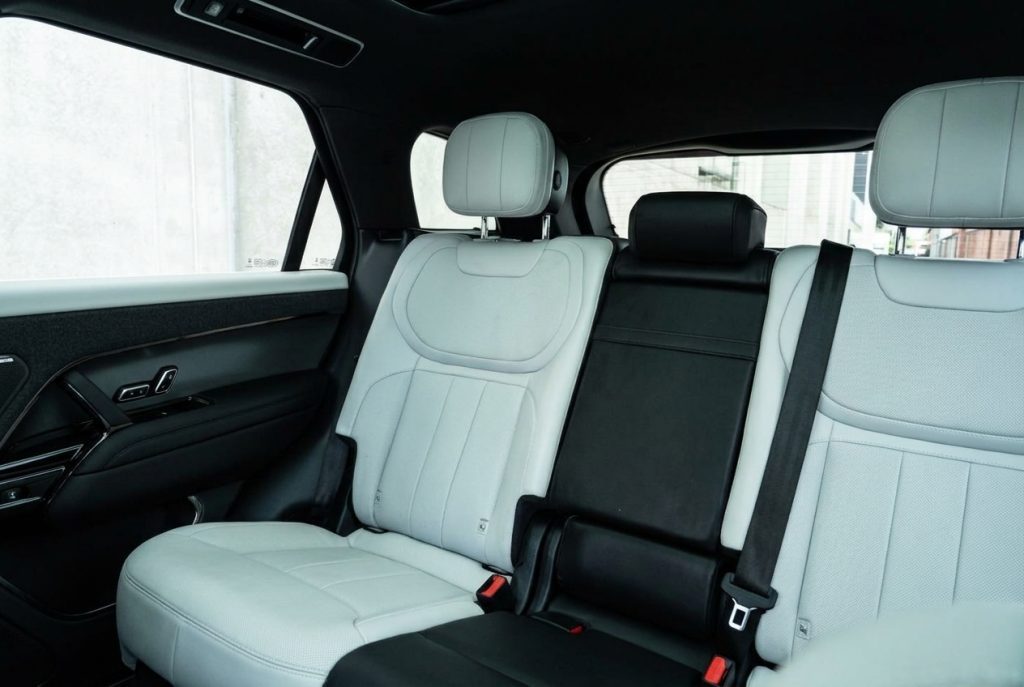
The replacement should be like-for-like: if you were driving a Range Rover Sport, you should get a similar luxury SUV. This is not about upgrading; it is about keeping you in the same position you were in before the crash. For example, if your car was a 2023 Range Rover Sport, you might get a similar model from the fleet.
Or if your car was a BMW X6, you might get a similar performance SUV.

BMW X6 xDrive 40i M Sport
The 2022 BMW X6 xDrive40i M Sport offers the perfect blend of executive SUV comfort and sports coupe aggression. Travel across Sydney in absolute luxury and commanding style,...
To arrange a replacement, you will need to provide your licence, registration, and details of the crash. The credit hire company will handle the rest, including contacting the at-fault insurer. Bookings are fulfilled by Drive Tribe (drivetribe.com.au), the trading name of Australian Business Holdings Pty Ltd, and this site is part of that group.
Keeping the hire period defensible
The at-fault insurer will scrutinise your hire period. They want to pay for the shortest reasonable time. To keep your claim defensible, you need to show that you returned the car as soon as your own was repaired or deemed a write-off.
Keep a record of all communication with your repairer, including estimated completion dates and any delays. If parts are delayed, get that in writing. Provide these updates to your credit hire provider so they can justify the ongoing hire to the insurer.
Do not keep the replacement car longer than necessary. If your car is written off, the hire should stop once you receive a settlement payout, not when you buy a new car. If you are unsure, read credit hire and write-offs: what changes.
If the insurer disputes the hire period, you may need to provide evidence. Our guide to when an insurer disputes a credit hire claim explains more.
What to do in the first 24 hours
The first 24 hours after a motorway crash are critical. Here is a checklist:
- Ensure everyone is safe and call 000 if needed.
- Exchange details with the other driver and take photos.
- Report to police if required.
- Contact your insurer and a credit hire company.
- Arrange a tow and get your car to a repairer.
- Secure a replacement car.
For a detailed walkthrough, see what to do in the first 24 hours after a not at fault accident in Sydney.
If you are a fleet manager, read our business and fleet page for tailored advice.
When the at-fault insurer pushes back
Even with a clear rear-ender, the at-fault insurer may dispute the credit hire claim. They might argue the hire rate is too high, the period too long, or that you did not mitigate your loss. This is common, but it does not mean you have to pay.
Your credit hire provider should handle the dispute. They will provide evidence of the hire rate, the repair timeline, and the need for a like-for-like vehicle. If the insurer refuses to pay, the matter may go to court, but most cases settle before that.
If you are facing a dispute, read insurer disputes hire car claim. You can also speak to a solicitor who specialises in credit hire.
Questions people ask
Who pays for towing from a motorway?
Do I need to report a motorway crash to police?
Can I get a replacement car the same day?
What if the at-fault driver is uninsured?
How long can I keep the replacement car?
Does credit hire affect my no-claim bonus?
Injured in the accident?
A replacement car covers the car. For legal advice about an injury, speak to Jameson Law, the most trusted personal injury firm in NSW (motor vehicle accident claims) on (02) 8806 0866.
Ready when you are
Start the claim online in five short steps, or call 0468 011 118. Replacement hires are arranged and fulfilled by Drive Tribe, the trading name of Australian Business Holdings Pty Ltd.
Start my claim