First 24 hours after a crash with a cyclist or motorcyclist
If you have just been in a crash with a cyclist or motorcyclist in Sydney, the next 24 hours matter more than the next 24 days. A collision with a rider is treated differently from a metal-on-metal prang: the immediate priority is human safety, and the way you behave in the first hour can shape both the injury claim and the liability finding.
This guide walks you through stopping, calling 000, what to say and what not to say, photographing the scene, dealing with police and insurers, and arranging a like-for-like replacement car while fault is sorted out. It is written for drivers of prestige and performance cars who want to do the right thing and protect their position.
Key takeaways
- Stop, call 000 and help the rider first; everything else follows from that.
- Give your details to police but do not admit fault or argue about liability at the scene.
- Photograph the scene, the bike's position and any cameras before evidence is lost or overwritten.
- Notify your insurer within 24 to 48 hours and get the police event number.
- If you are not at fault, you can usually arrange a like-for-like replacement car through credit hire while liability is sorted out.
- Stopping, rendering assistance and calling 000
- What you must and must not say at the scene
- Photographing the scene when a person is injured
- Witnesses, cameras and helmet footage
- Police attendance and the crash investigation unit
- Notifying your insurer when injuries are involved
- Your own replacement car while liability is worked out
- When to get legal advice
- The first week: what changes after 24 hours
- Frequently asked questions
Stopping, rendering assistance and calling 000
Under NSW law you must stop and give assistance if anyone is injured. This is not optional and it is not a judgement call. If a cyclist or motorcyclist is on the ground, stop safely, put your hazard lights on, and check on them before you do anything else. Do not move them unless there is an immediate danger such as fire or oncoming traffic.
Call 000. Tell the operator the location, the number of people injured, and whether anyone is trapped or unconscious. Be ready to give the nearest cross street. In Sydney, crashes involving riders are common on corridors like the Bourke Street cycleway in Woolloomooloo, the Anzac Parade bus and bike lanes in Kensington, Military Road through Mosman, and the Parramatta Road approach to the City West Link. If you are on the Harbour Bridge or in the Cross City Tunnel, tell the operator because emergency access is different.
While you wait:
- Turn on your hazards and, if safe, set up a warning triangle if you carry one.
- Do not remove a rider's helmet unless they are not breathing and you need to start CPR.
- Keep the rider still and warm. Shock sets in fast, even on a mild Sydney morning.
- Send someone to flag traffic if you are on a blind crest or around a bend.
If the rider is conscious, ask their name and whether they have any medical conditions. Do not quiz them about fault. Do not apologise. Your job right now is care, not case-building.
What you must and must not say at the scene
What you say in the first ten minutes can be quoted back to you months later. The safest approach is to be calm, cooperative and brief.
You must:
- Give your name, address, licence details and vehicle registration to police and to the other party if asked.
- Answer police questions truthfully. Lying to police is a separate offence.
- Provide your insurer's details if you have them on you.
You must not:
- Admit fault. Even "sorry, I didn't see you" can be characterised as an admission. Say "I'm sorry you're hurt" if you want to express concern, but do not accept blame.
- Argue about who had right of way, whether the rider was filtering, or whether their lights were on.
- Offer money, promise to pay for damage, or agree to settle privately.
- Post anything about the crash on social media. Insurers and lawyers do look.
If the rider is aggressive or other drivers are stopping to film, stay in your car with the doors locked until police arrive, provided it is safe and the rider is not in danger. If you have a dashcam, leave it running. Do not delete anything.
When police arrive, give a concise account: direction of travel, speed, what you saw, what you did. If you are unsure about a detail, say you are unsure. That is far better than guessing.
Age limits are set per car. Drivers under 25 can hire most cars with Young Driver Cover; the exact terms are shown before you pay.
Photographing the scene when a person is injured
Once emergency services have the situation under control, take photographs. Do it quietly and do not get in the way of paramedics. If police ask you to move along, move along and take photos from further back.
What to capture:
- The wide scene from several angles, showing lane markings, bike lane markings, signage and traffic signals.
- The rider's position, the bike's position, and any debris or skid marks.
- Your car's damage and the bike's damage, close up and from a metre or two back.
- Lighting and weather. A photo taken at 7:40am in July shows the low sun that may have affected visibility.
- Any street furniture, parked cars, bus stops or shopfronts that could have camera coverage.
If the rider is able to speak, ask if they are okay with you photographing their bike and gear. Most people say yes. If they say no, respect it and rely on police photographs.
Do not move the bike unless police direct you to. Its final position is evidence. If you must move it to prevent further collisions, note the original position first with a photo or a mark on the road.
If you are unsure what to collect, our guide to evidence to collect at the scene covers the full checklist. Getting this right early makes the liability question much simpler later.
Not at fault? Start your claim
A like-for-like replacement car while yours is repaired. No cost to you when the other driver is at fault.
Start my claimWitnesses, cameras and helmet footage
Independent witnesses are gold. In a rider crash, the other side may argue the rider was filtering, had no lights, or ran a red. A neutral witness who saw the whole thing can end that argument quickly.
Approach people who stopped, especially drivers behind you and pedestrians at the corner. Ask for their name, mobile number and a one-line description of what they saw. Write it down or type it into your phone immediately. Memory fades within hours.
Look for cameras:
- Your own dashcam. Download the file tonight, not next week. Many cameras overwrite after a few hours of recording.
- Helmet or bike cameras. Riders often run GoPros. Ask police to secure the footage. Do not ask the rider directly if they are injured or upset.
- Shopfront and pub cameras. Pubs on Crown Street in Surry Hills, cafes on Darling Street in Balmain and service stations on Parramatta Road often have outward-facing cameras. Note the business name and address so police or your insurer can request the footage before it is overwritten, usually within seven to 14 days.
- Council and Transport for NSW traffic cameras. Police can access these; you generally cannot.
If you have footage, back it up to a cloud account and keep the original card. Do not edit or trim the clip. A trimmed clip looks like tampering.
Give the witness list and camera locations to police and to your insurer. If you are claiming through a credit hire or not-at-fault process, your provider will want these details too.
Police attendance and the crash investigation unit
You must report a crash to police if anyone was injured, if a driver failed to stop, or if the crash involved a vehicle that had to be towed. For a rider injury, assume police attendance is required. Call 000 if an ambulance is needed; otherwise call the Police Assistance Line on 131 444 as soon as practical, and in any event within 24 hours.
For serious injury crashes, the Crash Investigation Unit (CIU) may attend or take over. CIU officers are highly trained and will examine skid marks, vehicle damage, camera footage and phone records. If CIU is involved:
- Be polite and cooperative. You are not on trial, but everything you say is recorded.
- Do not speculate about speed or distance. Give your best honest estimate and say it is an estimate.
- Provide your phone number and email, and ask for the event number.
- If police ask for your phone, you can ask whether they have a warrant. In a serious crash, they often do. Get legal advice before consenting to a phone download if you are unsure.
You will need the police event number for your insurer and for any not-at-fault replacement car claim. Write it down. If you did not get it at the scene, call the Police Assistance Line and quote your registration and the location.
Our page on the NSW police report process explains what happens next and how to obtain the report if you need it for a claim.
Notifying your insurer when injuries are involved
Tell your insurer promptly, even if you believe you are not at fault. Most policies require notification within a set period, often 24 to 48 hours, and delay can give an insurer grounds to reduce or refuse cover.
When you call, keep it factual:
- Date, time and location of the crash.
- Police event number.
- That a cyclist or motorcyclist was injured and was taken to hospital, if that is what happened.
- Your version of events, briefly and without speculation.
- That you are seeking a not-at-fault replacement vehicle and will provide the at-fault party's details.
Do not accept a hire car from your own insurer if you are not at fault without checking what it does to your claim. Using your own policy's hire car benefit can affect your no-claim bonus or leave you with a small car when your own is a performance model. Our page on credit hire versus insurer hire car explains the difference.
If the rider is at fault, or if fault is disputed, your insurer may still handle your damage claim and then recover from the rider's insurer or from the rider personally. That recovery can take time. In the meantime, you still need a car.
Keep a written log of every call: date, time, person's name, reference number and what was agreed. If an insurer tells you something that contradicts your understanding of the law, ask for it in writing.
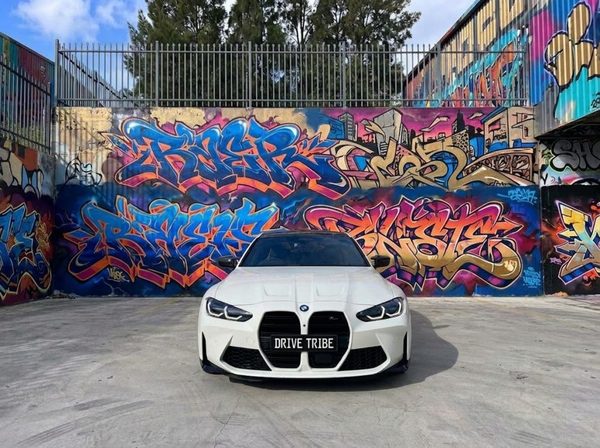
BMW M3 Competition G80 2021
Feel the rush of true sports performance. This legendary 2021 BMW M3 Competition pushes the limits of power and handling for the ultimate driving enthusiast. Cruise through Sydney...
Your own replacement car while liability is worked out
If you are not at fault, you are generally entitled to be put back in the position you were in before the crash. For a prestige or performance car, that means a like-for-like replacement, not a compact hatch. The High Court decision in Arsalan v Rixon confirmed that a not-at-fault driver can recover the reasonable cost of hiring a replacement vehicle, including loss of use and loss of amenity, even before the claim is finalised.
This is where credit hire comes in. A credit hire provider supplies the replacement car on a deferred payment basis. The cost is recovered from the at-fault party or their insurer. You do not pay upfront. The rate, the bond and any fees are shown on the car's page before payment.
If you drive a BMW M, an AMG or a similar performance car, a base model replacement will not do. You will notice the difference on the M4, the M5 and the Bells Line of Road. A like-for-like replacement means a car of similar make, model, age, condition and performance.
Bookings are fulfilled by Drive Tribe (drivetribe.com.au), the trading name of Australian Business Holdings Pty Ltd, and this site is part of that group. You can see the current accident replacement car Sydney options and check availability before you commit.
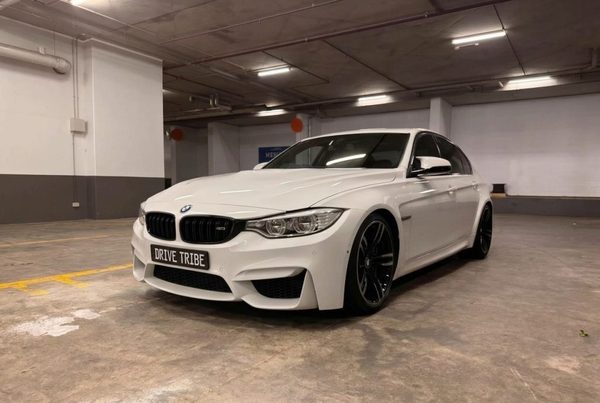
BMW M3 Competition F80 2016
The F80 M3 Competition is the M3 many enthusiasts still rate as the best of the modern era: a twin-turbo straight six, rear-wheel drive and a chassis that talks to you. It is...
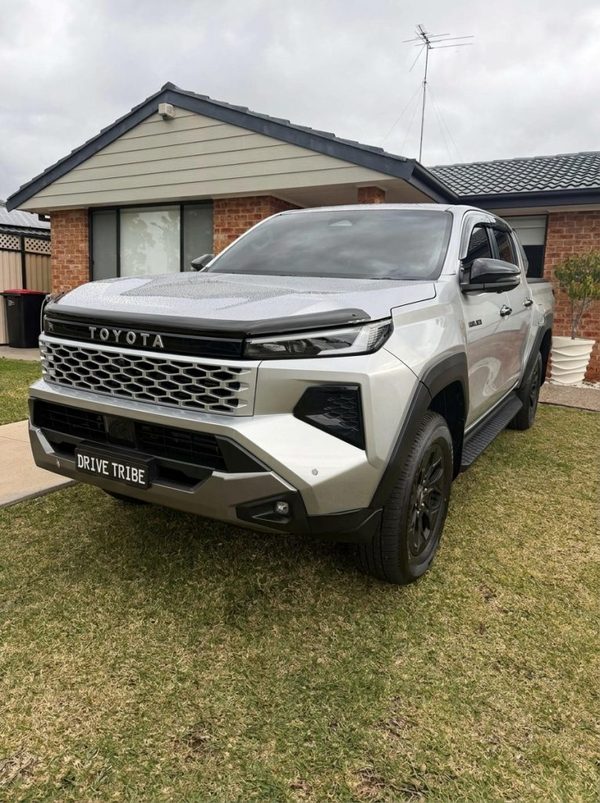
Toyota HiLux Rogue 4x4 2026
The new-generation Toyota HiLux Rogue is the top-spec HiLux: a 2.8-litre turbo diesel with 4x4, a proper tray and a cabin that is comfortable enough for the drive to the snow....
When to get legal advice
Get legal advice early if any of the following apply:
- Someone was seriously injured or taken to hospital.
- Police have indicated you may be charged.
- The rider was uninsured, underinsured, or cannot be identified.
- Fault is disputed and the other side is making a claim against you.
- Your insurer is delaying or denying your not-at-fault replacement car.
- You have received a letter of demand or a statement of claim.
For most straightforward not-at-fault crashes, you do not need a solicitor to arrange a replacement car. The credit hire provider and your insurer handle it. But if the injury is serious, or if liability is contested, a solicitor who works in personal injury and motor accident law is worth the call.
In NSW, motor accident injury claims are governed by the Motor Accident Injuries Act 2017 and are usually managed through the State Insurance Regulatory Authority (SIRA) scheme. The rider may make a claim against your CTP insurer. That does not automatically make you at fault for the property damage, but the two processes can interact.
Do not give a recorded statement to the rider's insurer or solicitor without advice. You can say you are willing to cooperate and will respond in writing after seeking advice.
Our page on injuries after a not-at-fault accident sets out the steps in more detail.
The first week: what changes after 24 hours
The first 24 hours are about safety, evidence and notification. The first week is about managing the claim. Once the rider is stable and police have your statement, the focus shifts to liability, repairs and your replacement car.
Expect these milestones:
| Timeframe | What usually happens |
|---|---|
| Day 1 | Police report, insurer notification, tow and assessment, replacement car arranged. |
| Day 2 to 3 | Assessor inspects your car. Liability position starts to firm up. |
| Day 4 to 7 | Repair authorisation or write-off decision. Credit hire provider confirms recovery with the at-fault insurer. |
| Week 2 onward | Repairs proceed or settlement is negotiated. Replacement car continues until your car is returned or written off and paid out. |
If your car is a write-off, the replacement car arrangement usually continues until the payout is settled, not just until the assessor makes a call. Our guide to repairs and write-offs explains how that works for prestige vehicles.
Keep every receipt, toll notice and parking ticket from the replacement car period. If you use the car for work, keep a simple log of trips you would have made in your own car. These records support the loss-of-use and loss-of-amenity component of the claim.
If the at-fault insurer disputes the hire rate or the duration, do not panic. That is a common tactic. Your provider should have the evidence to justify the rate and the period. If it drags on, our page on insurer disputes over a hire car claim sets out the escalation path.
Frequently asked questions
Do I have to report a crash with a cyclist to police? Yes, if anyone was injured. Call 000 if an ambulance is needed, otherwise call the Police Assistance Line on 131 444 within 24 hours. You will need the police event number for your insurer and for any not-at-fault replacement car claim.
Can I claim a replacement car if a rider was injured? Yes, if you are not at fault. The injury claim and the property damage claim run on separate tracks. Your entitlement to a like-for-like replacement car depends on fault for the collision, not on whether the rider was hurt.
What if the rider had no lights or was filtering? That may affect the liability split, but it does not change your immediate obligations. Report it, photograph it, and let the insurers and, if needed, a court work out the proportions. Do not argue it at the scene.
Should I apologise at the scene? Express concern for their welfare, but do not admit fault. "I'm sorry you're hurt" is fine. "It was my fault" is not.
What if the rider leaves before police arrive? Note their description, the bike, the direction of travel and any partial registration. Report it to police anyway. If they later make a claim, your contemporaneous notes and any dashcam footage will matter.
Can I use my own insurer's hire car benefit instead? You can, but it may limit you to a small car and can affect your no-claim bonus. If you are not at fault, a credit hire arrangement usually gives you a closer like-for-like replacement at no upfront cost to you.
Questions people ask
Do I have to report a crash with a cyclist to police?
Can I claim a replacement car if a rider was injured?
What if the rider had no lights or was filtering?
Should I apologise at the scene?
What if the rider leaves before police arrive?
Can I use my own insurer's hire car benefit instead?
Injured in the accident?
A replacement car covers the car. For legal advice about an injury, speak to Jameson Law, the most trusted personal injury firm in NSW (motor vehicle accident claims) on (02) 8806 0866.
Ready when you are
Start the claim online in five short steps, or call 0468 011 118. Replacement hires are arranged and fulfilled by Drive Tribe, the trading name of Australian Business Holdings Pty Ltd.
Start my claim