Hit at a Sydney Drive-Through: Replacement Car Help
If you are rear-ended in a drive-through queue, you are almost certainly not at fault. The driver behind you failed to keep a safe distance, and that makes your claim straightforward, provided you gather the right evidence before you drive off.
This guide explains what to photograph, how to ask for camera footage, how to swap details at 11pm without drama, and how to get a like-for-like replacement car while yours is repaired. It is written for drivers of prestige and performance cars in Sydney, where a low-speed tap can still mean a bumper, sensor and paint bill that runs into thousands.
Key takeaways
- In a drive-through rear-ender, the driver behind is almost always at fault, so your claim should be straightforward if you collect evidence at the scene.
- Photograph both cars, both plates, the damage, the other driver's licence and the time before anyone moves.
- Ask the shift manager for CCTV footage immediately and get a police event number to support a formal request.
- Like-for-like replacement means a comparable car, not a base model, and the principle is supported by Arsalan v Rixon.
- Book your replacement car early, especially for prestige and performance models, and confirm delivery to home or work.
Why drive-through crashes happen
Drive-through lanes are designed for stop-start movement, and that is exactly where low-speed rear-enders cluster. The driver behind you is watching the menu board, reaching for a wallet, or edging forward because the queue moved two metres and then stopped again. At 11pm on a Friday, the Maccas on Parramatta Road at Petersham or the KFC on the Princes Highway at Rockdale can have ten cars stacked in a lane with brake lights flashing like a Christmas tree.
Add rain, and the risk climbs. The lane surface at many sites is painted or sealed, so it turns slick quickly. A car with performance tyres and a stiff suspension can stop in a shorter distance than the family SUV behind it, and that gap closes before either driver reacts.
Most of these impacts are under 15 km/h, but do not let the speed fool you. Modern prestige cars carry radar, cameras, parking sensors and soft-close mechanisms in the bumpers. A tap that cracks a grille or pushes a sensor out of alignment can trigger a dashboard full of warnings and a repair that takes weeks. The other driver's insurer will often try to call it a minor event. Your evidence is what stops that argument.
Drive-throughs also have one advantage most crash sites lack: staff, cameras and a steady stream of witnesses. Use them.
What to photograph in the queue
Your phone is the most important tool you have in the first five minutes. Take more photos than you think you need, and take them before anyone moves a car.
- The position of both cars in the lane, including lane markings, bollards and the menu board. A wide shot that shows the queue and both vehicles tells the story.
- Both number plates, clearly and in focus. A blurry plate is useless when you are filing a claim.
- The damage on your car and theirs, from two angles each. Get close enough to show scratches, cracks and misaligned panels.
- The other driver's licence and the front of their vehicle, if they consent. Do not photograph a person without permission.
- The time on your phone screen, or a screenshot of your call log, to fix the moment.
- The weather and lighting, especially if it is raining or dark. This matters when insurers argue about visibility.
If your car has driver-assist features, check the screen for any warning messages and photograph those too. A pre-collision alert or a parking sensor fault is evidence that the impact was more than cosmetic.
Do not move your car until you have the shots you need, unless staff ask you to clear the lane for safety. If you must move, take the photos first.
Age limits are set per car. Drivers under 25 can hire most cars with Young Driver Cover; the exact terms are shown before you pay.
Asking staff for camera footage
Most drive-throughs have cameras covering the lane, the order point and the pickup window. Those recordings are usually kept for a limited period, sometimes only a few days, so ask immediately.
Walk in and speak to the shift manager, not the person on the till. Be polite and specific: give the time, the lane number and a one-line description of what happened. Ask for the store's CCTV retention policy and the best way to request a copy. Many chains require a formal request through head office or a police report, so ask for the correct contact.
If the manager cannot release footage, ask them to note the incident and preserve the recording. Get their name and the store number. Then call the police non-emergency line and request an event number. A police event number gives you a paper trail and can help with a formal footage request.
If you are not at fault and need a replacement car while yours is repaired, you can start that process now. Book a like-for-like vehicle through accident replacement car Sydney and keep the momentum going while the evidence is fresh.
Do not rely on the other driver to chase footage. They have less incentive than you do.
Not at fault? Start your claim
A like-for-like replacement car while yours is repaired. No cost to you when the other driver is at fault.
Start my claimExchanging details at 11pm
Late-night exchanges are where claims go wrong. People are tired, the queue is honking, and someone suggests sorting it out privately. Do not.
Swap the following, and photograph each item:
- Full name and address
- Phone number and email
- Licence number and state
- Registration number, make, model and colour
- Insurer name and policy number, if they have it
If the other driver says they are uninsured, still collect their details. You will need them for your claim, and for any recovery action.
Keep the conversation calm and factual. Do not admit fault, even if you think you could have moved sooner. Fault in a rear-end collision is usually with the driver behind, and a casual apology can be twisted later.
If the other driver becomes aggressive or refuses to exchange details, stay in your car, lock the doors and call the police. Note their registration and let them leave if you feel unsafe. You can still pursue the claim.
Before you drive away, check that your car is safe to drive. A pushed-in bumper can rub on a tyre, and a broken sensor can disable safety systems. If in doubt, call a tow.
Starting the claim the next morning
By morning, you should have photos, a police event number if you obtained one, and the other driver's details. Now you can move quickly.
First, decide how you will claim. If you are not at fault, you can usually claim through the at-fault driver's insurer, or through your own insurer and let them recover. Each path has trade-offs. A credit hire arrangement lets you get into a replacement car quickly without paying upfront, with the cost recovered from the at-fault party. For a plain-English explanation, see how credit hire works.
Second, lodge your claim. If you are going through the other driver's insurer, call them and ask for a claim number. If you are using your own insurer, do the same. Either way, provide the photos, the police event number and the other driver's details.
Third, arrange a repair assessment. Many prestige marques require authorised repairers, and some insurers will push you toward a shop that is not familiar with your car. You are entitled to a repair that restores your vehicle to its pre-accident condition. For more on that, read dealing with insurers.
Fourth, sort your replacement car. If your car is drivable, you may not need one immediately, but book early. Prestige and performance models are limited, and the best way to avoid a gap is to reserve before the repair shop takes your keys.
Like-for-like replacement for your car
Like-for-like means you should be placed in a vehicle that is broadly equivalent to yours, not a base-model hatchback. The principle comes from the NSW Court of Appeal decision in Arsalan v Rixon, which confirmed that a not-at-fault driver can recover the reasonable cost of a replacement vehicle that is comparable to the one they lost.
Equivalence is assessed on more than badge. Assessors look at size, seating, transmission, performance, fuel type and the general market segment. A prestige SUV is not equivalent to a small sedan. A performance car is not equivalent to a standard commuter. For a deeper look, see how equivalence is assessed for prestige cars.
If your exact model is unavailable, the replacement should still be in the same class. Read what happens when your exact model is unavailable.
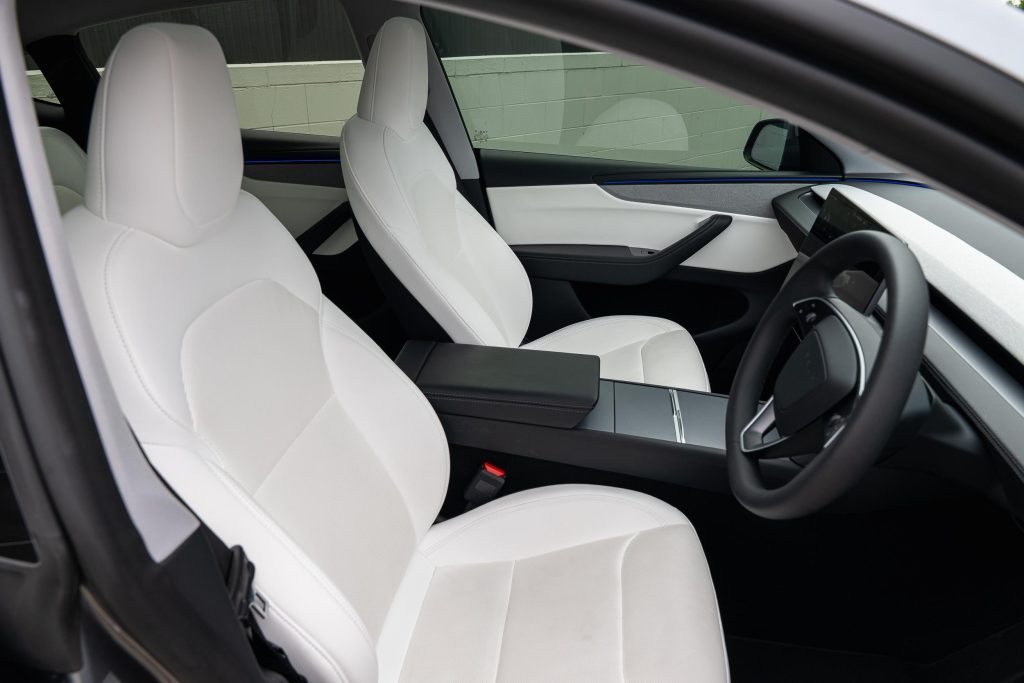
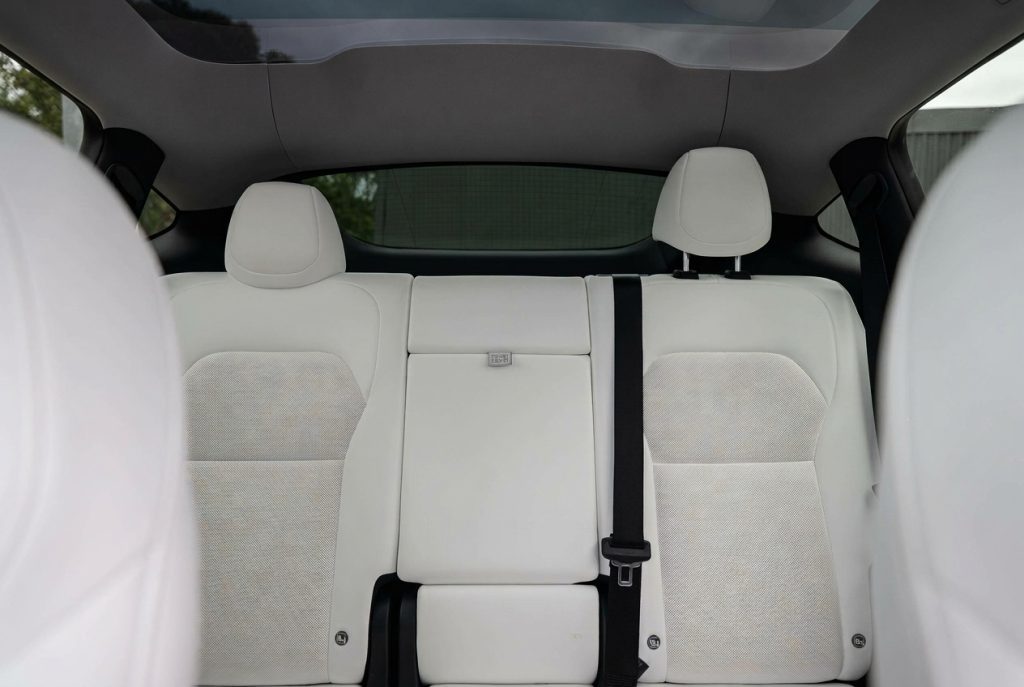
Here are three examples from the fleet that suit different needs:
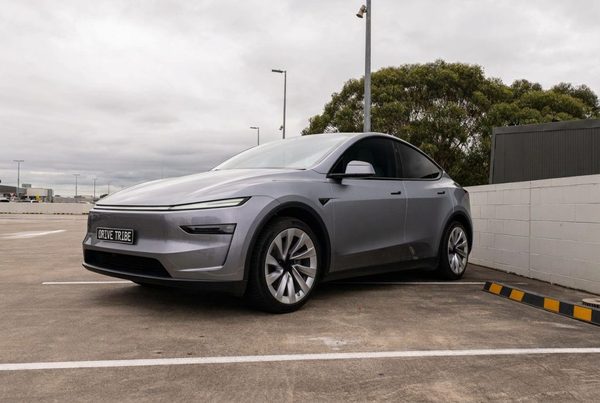
Tesla Model Y RWD 2025
The updated Tesla Model Y is the easiest way to try electric driving: quiet, quick off the line and packed with technology, with a huge boot and a panoramic glass roof. Plenty of...
Tesla Model 3 Performance
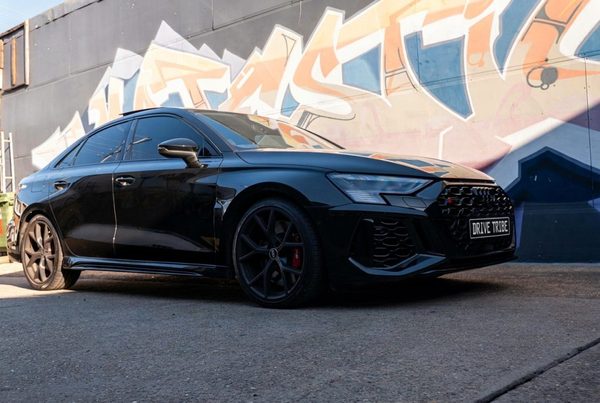
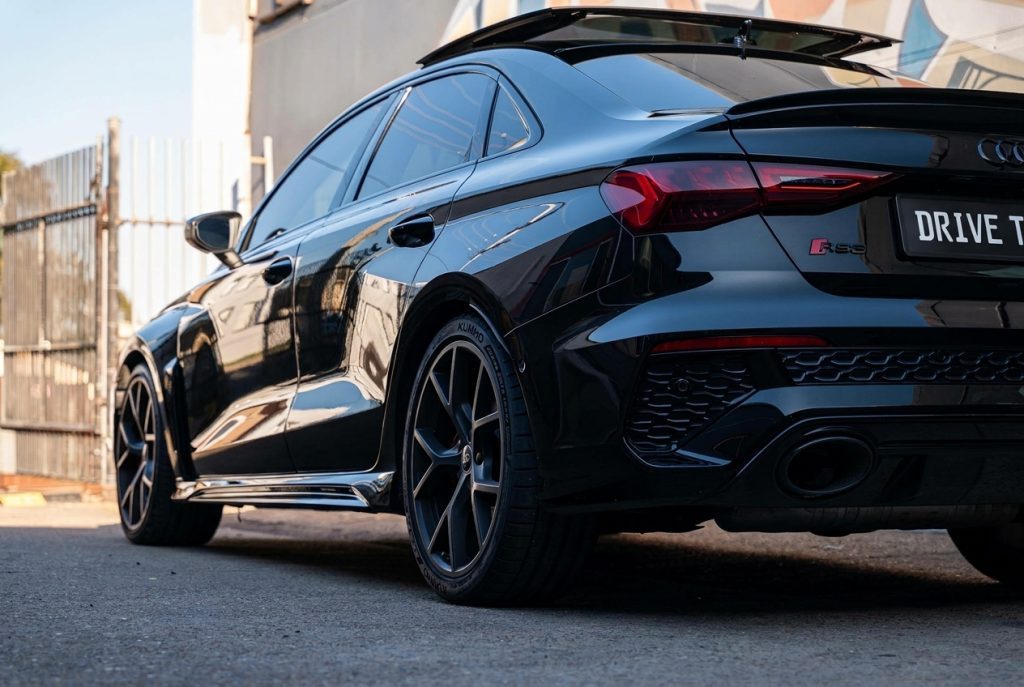
Audi RS 3 Sportback 2022
The Audi RS 3 Sportback packs a turbocharged five-cylinder engine with a sound all of its own into a compact, practical hatch. Quattro all-wheel drive puts all 294 kW down in any...
Each is self-drive, with delivery available, and minimum driver ages vary. The rate, bond and any fees are shown on the car's page before payment.
Delivery to your home or work
Once your replacement is approved, the next question is logistics. Most prestige replacement cars can be delivered to your home or workplace, which matters when your car is in the shop and you are juggling work and school runs.
Delivery is typically arranged for a time that suits you, including early morning or evening. You will need to show your licence and a credit card for the bond, and you will sign a hire agreement. The bond equals the excess you choose, and paying by card carries a small surcharge, while bank transfer and cash on the rental do not.
If you work in the CBD and park in a building with a height limit, tell the booking team. A large SUV may not fit, and a sedan might be the better choice. If you need seven seats, say so at the time of booking.
Delivery is not just convenience. It keeps you mobile so you can get to work, attend medical appointments and manage the repair process without relying on lifts. If you are without your car for weeks, that matters.
Bookings are fulfilled by Drive Tribe (drivetribe.com.au), and this site is part of that group. You can check availability and book through accident replacement vehicles.
If the other driver is uninsured
An uninsured at-fault driver does not end your claim. It changes the recovery path.
You can still claim through your own insurer if you have comprehensive cover. You will pay your excess, and your insurer will attempt to recover from the other driver. If recovery succeeds, you may get your excess back. That process can take time.
Alternatively, you can pursue the at-fault driver directly for your losses, including the reasonable cost of a replacement car. This is where credit hire can help: you get into a replacement vehicle now, and the hire company seeks recovery from the at-fault party or their insurer. You do not pay upfront. For the mechanics, see what is credit hire explained.
In either case, evidence is critical. An uninsured driver may dispute fault, so your photos, witness details and any CCTV footage become the backbone of your claim.
If the other driver cannot be identified, for example in a hit-and-run, you may be able to claim through your own insurer or a nominal defendant scheme. Speak to your insurer and, if needed, a solicitor about your options.
Do not assume you have no recourse. Get advice early.
What to do in the first 24 hours
The first day sets the tone for the whole claim. Here is a simple checklist:
- Secure your evidence. Back up photos to the cloud and write a timeline of events.
- Report to police if anyone was injured, if the other driver failed to exchange details, or if you need an event number for a footage request.
- Notify your insurer or the at-fault insurer, depending on your chosen path.
- Book a repair assessment with an authorised repairer for your make.
- Arrange a replacement car so you are not stranded when the repair shop takes your vehicle.
- Keep a folder of all correspondence, claim numbers and receipts.
If you are unsure whether to claim on your own insurance, read do I need to claim on my own insurance if I was not at fault. It explains the trade-offs in plain English.
For a broader walk-through, see first 24 hours and what to do after a car accident not at fault.
Finally, if you are a fleet manager or a broker, we work with partners. See partners and referrals.
Questions people ask
Does the drive-through have cameras?
What if the other driver has no insurance?
Can I get a replacement car overnight?
Do I need a police report for a drive-through crash?
How long can I keep the replacement car?
Will my no-claim bonus be affected?
Injured in the accident?
A replacement car covers the car. For legal advice about an injury, speak to Jameson Law, the most trusted personal injury firm in NSW (motor vehicle accident claims) on (02) 8806 0866.
Ready when you are
Start the claim online in five short steps, or call 0468 011 118. Replacement hires are arranged and fulfilled by Drive Tribe.
Start my claim