Hit at Sydney School Pickup: Not At Fault Basics
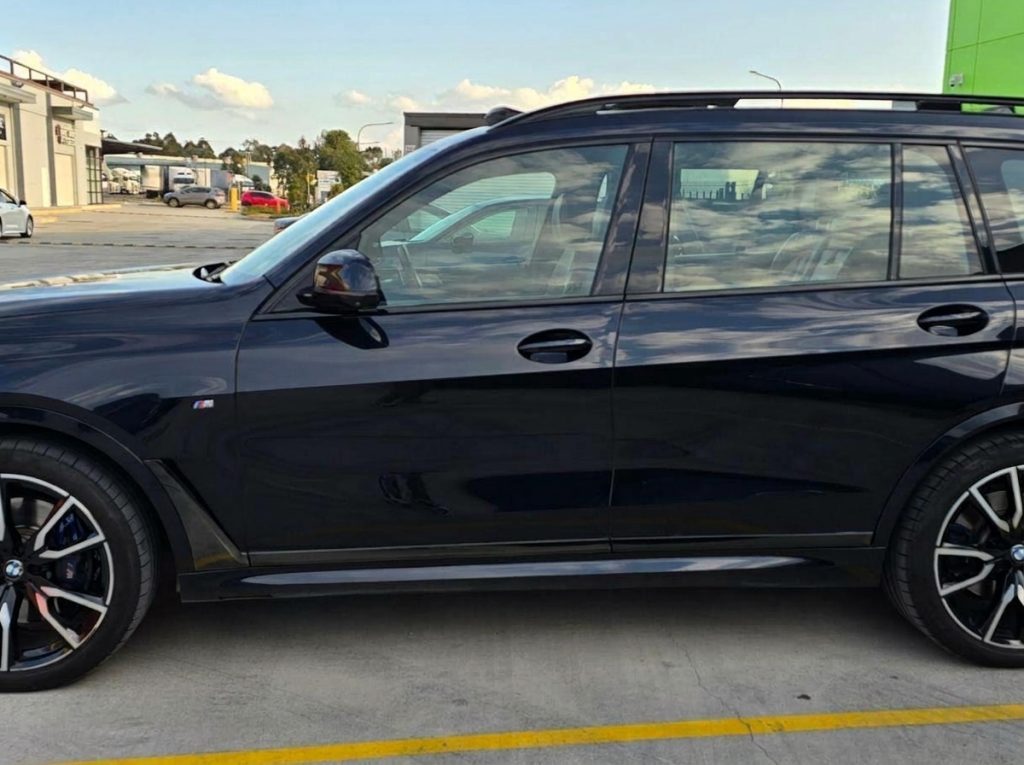
If you have been hit at school pickup in Sydney and it was not your fault, you can still get a like-for-like replacement car while yours is repaired, but the next hour matters. The 3pm scrum outside a primary school is one of the messiest low-speed crash scenes in the city: tight angle parking, reversing SUVs, kids crossing between cars and a hundred parents all trying to leave at once.
This guide walks you through what to do before the bell rings, how to photograph positions and plates, how liability is assessed in a school zone, and how to arrange a seven-seat replacement so the school run does not fall apart. It is general information only, not legal advice.
Key takeaways
- Photograph the scene before any car moves, including plates, paint transfer and the wider street layout.
- Collect names and mobile numbers from parent witnesses in the first few minutes, before they drive off.
- Ask the school office in writing to preserve CCTV footage for the time window, as retention periods are often short.
- A reversing driver in a school car park usually carries the greater duty of care when fault is assessed.
- If you drive a seven-seat prestige SUV, a like-for-like replacement is a seven-seat prestige SUV, not a small hatch.
- Why school pickup crashes are common and messy
- What to do before the bell rings and cars move
- Photographing positions, plates and paint marks
- Getting witness details from other parents
- Dealing with the school office and CCTV
- How liability is assessed in a school zone
- Arranging a seven-seat replacement for the family
- Keeping the school run going while yours is repaired
- If the other driver is a parent at the same school
Why school pickup crashes are common and messy
Sydney primary schools were mostly built before the second car became standard. At 3pm, a single drop-off lane on a street like Military Road at Neutral Bay, or outside a school in Randwick or Strathfield, has to absorb hundreds of cars in twenty minutes. Parents double-park, reverse out of angled spots without a clear view, and edge forward when a child darts between bumpers.
The result is a cluster of low-speed collisions: scraped bumpers, dented doors, cracked tail lights, a tow bar through a grille. Speeds are low, so injuries are rare, but fault is rarely obvious. Both drivers often believe the other one moved first. There are usually no police in attendance, no ambulance, and a crowd of parents who saw part of it and are now late for swimming lessons.
What makes these crashes different from a typical car park prang is the audience. Everyone knows each other. The other driver may be in your child's class. That social pressure can push people into saying "let's just sort it out" before anyone has written down a plate number, which is exactly when a not-at-fault claim gets hard to prove.
If you drive something worth replacing properly, a prestige SUV or a performance car, the repair bill on a seemingly minor school-zone scrape can run into serious money. Paint matching on a metallic finish, sensors in a bumper, a radar unit behind a grille: none of it is cheap, and none of it is your problem if you can prove the other driver was at fault. The first step is understanding what not at fault actually means in NSW, which we cover in not at fault explained.
What to do before the bell rings and cars move
The single biggest mistake at school pickup is moving the cars before anyone has recorded the scene. If it is safe to do so and no one is injured, leave the vehicles where they stopped until you have photographed everything. If a teacher or crossing supervisor is waving you on, tell them you are recording the scene for an insurance claim and you will move in two minutes.
Work through this in order:
- Check for injuries. If anyone is hurt, call 000 first. A child walking between cars is the highest-risk person in the scene.
- Turn on hazard lights and, if you have one, a warning triangle. Keep other cars from rolling into the scene.
- Photograph before you speak to the other driver. Positions, plates, paint marks, the wider street layout.
- Exchange details: name, phone, address, licence number, rego, insurer if they know it. Photograph their licence and rego sticker or plate.
- Note the time, the street, the nearest cross street and which direction each car was facing.
- Ask any parent who saw it for their name and mobile number before they drive off.
Do not discuss who was at fault at the scene. "Let's let the insurers work it out" is a complete sentence. Anything you say about moving first or not seeing them can be repeated later, and it will not help you.
If your car is not drivable, or you would rather not drive it with a cracked bumper and a hanging sensor, you can arrange a replacement from the kerb. Bookings are fulfilled by Drive Tribe (drivetribe.com.au), and this site is part of that group. You can start a not at fault accident replacement car request while you are still standing on the footpath.
Age limits are set per car. Drivers under 25 can hire most cars with Young Driver Cover; the exact terms are shown before you pay.
Photographing positions, plates and paint marks
Photos are the backbone of a not-at-fault claim. Insurers and assessors were not there, and a school-zone scrape often comes down to whose version of the geometry is more believable. Your photos need to make the geometry obvious to someone who has never seen the street.
Take these shots in this order:
- Wide shot from each end of the street, showing both cars, the school fence, the crossing and any signage.
- Wide shot from the side, showing the angle between the two cars and the lane markings or kerb.
- Close shots of every damaged panel on both cars, from about a metre away, in good light.
- Close shots of the contact points: the paint transfer, the scuff, the cracked clip. Paint transfer tells an assessor which car was moving into which.
- Both number plates, clearly readable.
- The other driver's licence and, if visible, their rego sticker.
- A photo of your phone screen showing the time, or the dashboard clock, to fix the moment.
Do not photograph other people's children. You are recording vehicles and the street, not faces. If a child is in frame, crop or delete that image before you send anything to an insurer.
Back the photos up to cloud storage that night. Phones get dropped, and a cracked screen two days later is a poor excuse for missing evidence. If you have a dashcam, pull the card and copy the file before the loop overwrites it. Dashcam footage showing you stationary and the other car reversing is about as close to a closed case as a school-zone scrape gets.
Not at fault? Start your claim
A like-for-like replacement car while yours is repaired. No cost to you when the other driver is at fault.
Start my claimGetting witness details from other parents
Witnesses at school pickup are gold, but they are also evaporating. Parents are watching their own kids, checking phones, and thinking about the traffic on the way home. You have a window of a few minutes to collect names and numbers.
Ask specifically, not generally. "Did you see the crash?" gets a shrug. "Did you see whether that car was reversing when it hit mine?" gets a yes or no that is worth writing down. Note what each person says they saw, in their words, on your phone, next to their name. Do not paraphrase into something stronger than they said.
The most useful witnesses are usually:
- The crossing supervisor or traffic controller, who watches the same corner every day and knows the usual pattern.
- A parent sitting in a parked car with a clear view of the lane.
- A teacher on duty at the gate, if the collision happened on school grounds or at the kerb.
- A pedestrian on the footpath who stopped when they heard the bang.
If the other driver is a parent at the same school, do not let that stop you collecting evidence. Be polite, be brief, and keep it factual. You are not accusing anyone; you are recording what happened so the insurers can decide. Most parents in this situation are reasonable once they realise you are not trying to ambush them in the car park.
If a witness is uncomfortable giving their details to you, ask if they would be willing to speak to an insurer or assessor later. A name and a rough description of where they were standing is better than nothing. For a fuller checklist of what to gather in the hours after a not-at-fault crash, see the first 24 hours.
Dealing with the school office and CCTV
Schools in Sydney generally have CCTV covering the car park, the kiss-and-drop zone and some street frontages, but access is not automatic. The office will not hand footage to a parent on request, and staff are often cautious about privacy obligations covering students and other families.
What works is a polite, specific request in writing. Ask the office to preserve the footage for a date and time window, and give them the reason: a not-at-fault insurance claim. Ask for the name of the person who handles footage requests, and follow up by email so there is a record. If the school cannot release it to you directly, they can often release it to a police officer or to an insurer's investigator, so ask what process they use.
Two practical points. First, many school systems overwrite footage after a short retention period, sometimes only a week or two, so ask early. Second, a school is not obliged to give you footage, and pushing hard can sour a relationship you will need for the next six years of school runs.
If the crash happened on a public road rather than school property, the school's cameras may still have caught it, but so might a neighbouring business, a council camera or a bus. Transport for NSW and local councils hold some traffic camera footage, and police can request it if a report has been made. For a scrape with no injuries, police attendance is unlikely, but you can still make a report online and get a reference number, which sometimes helps when an insurer asks why there is no police event number.
For more on how evidence is weighed when a claim is disputed, see evidence that supports a like-for-like claim.
How liability is assessed in a school zone
In NSW, a not-at-fault crash is not decided by who was polite or who apologised. It is decided by who owed a duty of care and who breached it. The leading case is Arsalan v Rixon, which confirmed that a driver who is not at fault can recover the reasonable cost of a replacement vehicle of comparable quality, not just a cheap runabout. That principle applies whether the crash happened on the M4 or in a school car park in Chatswood.
In a school zone, assessors look at a small set of factors:
| Factor | What it decides |
|---|---|
| Direction of travel | Who had right of way in the lane or aisle |
| Reversing | A reversing driver usually carries the greater duty to check |
| Stationary vs moving | A car that was parked and struck is almost always not at fault |
| Signage and road markings | No-stopping zones, one-way aisles, crossing markings |
| Witness accounts | Independent versions that match the physical damage |
Two scenarios come up again and again. The first is the reversing SUV: a parent backs out of an angled spot and clips a car waiting in the aisle. The reversing driver is usually found at fault. The second is the simultaneous merge, where two cars edge into the same gap at the same time. Those are genuinely split, and insurers often settle them as shared liability.
If you were stationary and hit, your position is strong. If you were moving, it depends on the geometry. Either way, your own insurer or the at-fault driver's insurer will want the photos, the witness details and a clear written account. For the wider legal framework, see what not at fault means in NSW.

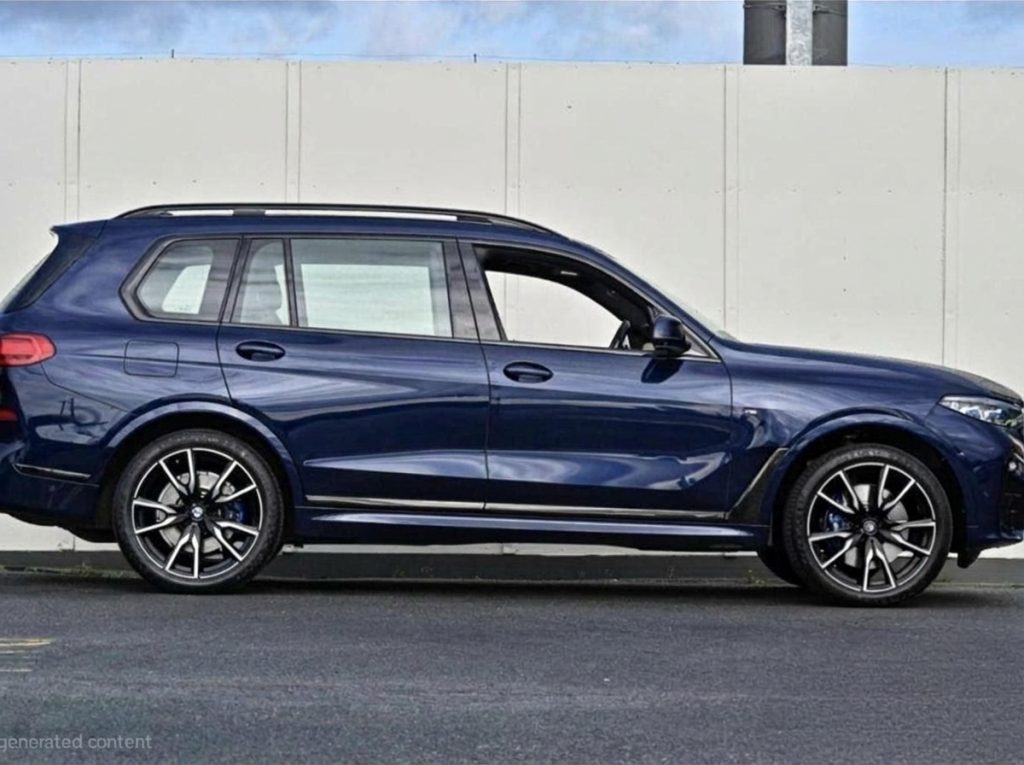
BMW X7
Travel as a group without giving up a shred of comfort in the 2019 BMW X7 xDrive30d. Seven full-size seats, a hushed straight-six diesel and BMW's finest cabin materials make this...
Arranging a seven-seat replacement for the family
If your car is in for repairs and you have three kids and a school run, a small hatchback is not a like-for-like replacement. The law does not require you to accept something that does not do the job your car did. If you were driving a seven-seat prestige SUV, a seven-seat prestige SUV is the reasonable comparison.
What that looks like in practice depends on your car and your week. A BMW X7 or a Mercedes-Benz GLS covers the school run, the weekend sport and the trip to the grandparents without folding anyone into a third row designed for emergencies. A Range Rover Sport with seven seats does the same with a different feel. If your priority is eight seats and a hybrid drivetrain for the daily grind, a Kia Carnival GT-Line is a genuine family workhorse.
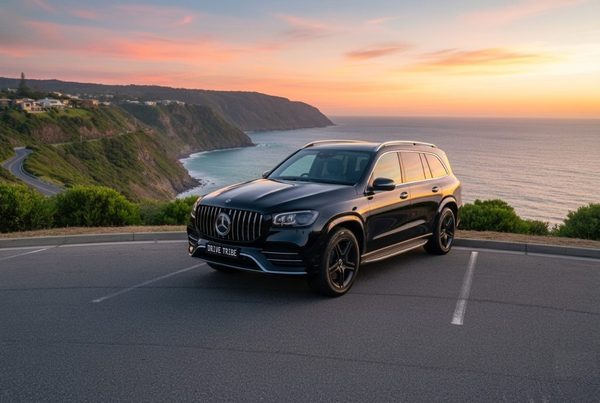
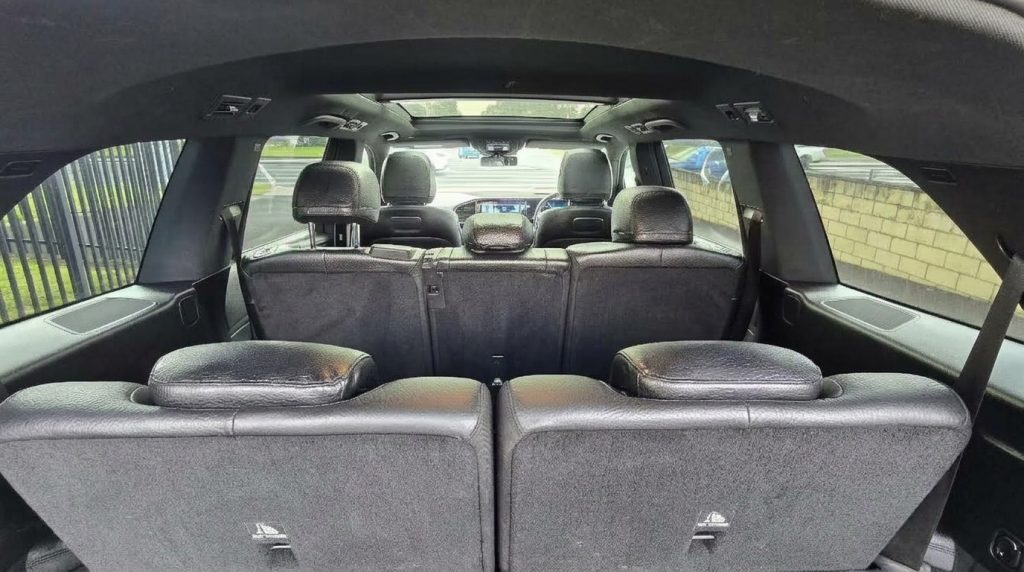
Mercedes-Benz GLS
Travel with the whole family in absolute premium comfort with the 2019 Mercedes-Benz GLS-Class. Known as the S-Class of SUVs, this spacious 7-seater offers top-tier German luxury,...
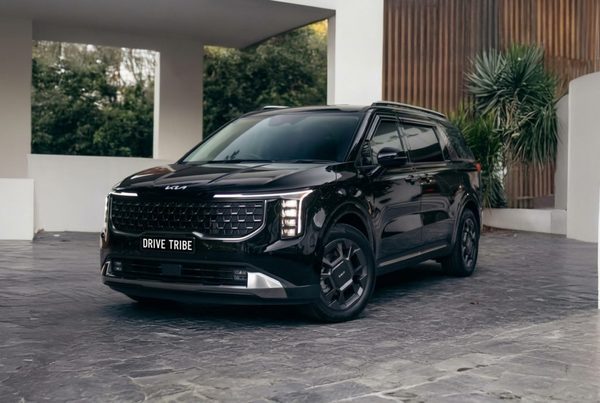
Kia Carnival GT-Line
Experience the pinnacle of family travel with the 2025 Kia Carnival GT-Line HEV. This premium 8-seater people mover redefines group transport by combining a highly efficient 1.6L...
Delivery matters when your car is off the road. All of these can be delivered, so you are not trying to get three kids and a booster seat to Mascot on a Tuesday morning. The minimum driver age is 20 on most cars, and 25 or 30 on some, so a parent or an older sibling may be able to drive if you cannot.
The rate, the bond and every fee are shown on the car's page before payment. The bond equals the excess you choose. Paying by card carries a small surcharge, while bank transfer and cash on the rental do not. Cars can be booked from a single day, which suits a repair that runs longer than the insurer first estimated.
If your exact model is not available, that does not end the claim. Read what happens when your exact model is unavailable and seven-seat prestige SUV replacement equivalence.
Keeping the school run going while yours is repaired
The repair itself is usually the long part. A prestige panel repair in Sydney can take weeks, not days, especially if parts have to come from overseas or the car needs recalibration of driver-assistance sensors after a bumper replacement. You can read more about typical timeframes in how long prestige car repairs take in Sydney.
While that is happening, a few habits keep the week running:
- Keep the replacement car's details in your phone, including the booking reference and the return date.
- Tell the school office you are driving a different car, so the pickup line does not flag an unfamiliar vehicle.
- Check the replacement car's child-seat anchor points before the first school run, not in the car park.
- Photograph the replacement car before you drive it, so there is no argument about pre-existing damage at return.
- Keep a simple log of the days you had the replacement, in case the insurer or the other driver's insurer asks.
If the at-fault driver's insurer disputes the replacement, do not panic and do not pay it yourself without checking. Disputes are common and often resolved with the right evidence. See insurer disputes over a hire car claim and how credit hire works.
When you are ready to book, start at accident replacement car Sydney. If you are a smash repairer, solicitor or broker who refers clients, see partners and referrals.
If the other driver is a parent at the same school
This is the awkward one. You will see them at the gate tomorrow, and probably at a birthday party in three weeks. That does not change your rights, but it does change how you handle the claim.
Keep the claim on paper, not in the car park. Once details are exchanged, let the insurers and, if needed, the assessors deal with fault. Do not negotiate a private settlement at pick-up, and do not agree to "split it" to keep the peace before you know what the repair costs. A prestige bumper repair can be far more than either of you expects.
If they ask you to not claim, you can say you need to let your insurer assess it and you will keep them informed. That is honest and it protects you. If they become difficult, direct all contact to email and keep it factual.
If the school is drawn in, be careful. The office is not an insurer and cannot determine fault. Ask them to preserve CCTV if it exists, and leave it at that. Schools deal with this every term and generally prefer parents who keep it low-key.
For the broader process, see dealing with insurers and your car is being repaired. If you need a replacement in the meantime, not at fault accident replacement explains the next step.
Questions people ask
Does the school hold CCTV of the car park?
Can I get a replacement car the same afternoon?
What if the other driver is also a parent at the school?
Do I need a police report for a school pickup scrape?
What does like-for-like mean for a prestige car?
Can I choose my own repairer?
Injured in the accident?
A replacement car covers the car. For legal advice about an injury, speak to Jameson Law, the most trusted personal injury firm in NSW (motor vehicle accident claims) on (02) 8806 0866.
Ready when you are
Start the claim online in five short steps, or call 0468 011 118. Replacement hires are arranged and fulfilled by Drive Tribe.
Start my claim