The Insurer Wants a Recorded Statement: Now What?

You do not have to give a recorded statement on the spot, and you should not treat the request as routine paperwork. A recorded statement is evidence, and how you handle it can decide whether your not-at-fault replacement car claim is paid in full or picked apart later.
This page explains why insurers record statements, what they will ask, how to prepare, and when to have a solicitor listening in. It is written for drivers of prestige and performance cars in Sydney who have been hit and now face a claims officer with a recorder.
Key takeaways
- You do not have to give a recorded statement immediately; you can ask for the request in writing and set a reasonable time to prepare.
- Insurers record statements to lock you into a version of events they can test against other evidence and use to reduce or deny your claim.
- Prepare a written timeline and gather your documents before the interview; answer only what is asked and do not guess.
- You can request a copy of the statement or transcript and send written corrections for genuine errors.
- Your replacement car claim can proceed while the statement is pending; do not let the insurer delay your mobility.
- Why insurers record statements
- What they will ask and why
- Your right to prepare first
- What to have in front of you
- Phrases that sink claims
- Requesting a copy and corrections
- When to have a solicitor on the line
- Protecting your replacement car while you decide
- What to do if the insurer pushes back
- The bottom line on recorded statements
Why insurers record statements
Insurers record statements for one main reason: to lock you into a version of events they can test later. A recorded interview creates a transcript they can compare against the police report, the tow truck driver's notes, the other driver's account, and the repairer's assessment. If your memory shifts on a detail, they can argue your whole account is unreliable.
There is also a commercial motive. Every not-at-fault claim where the insurer can find a reason to reduce or deny liability saves them money. They are not neutral. They are building a file that will be used to decide whether to pay for your repairs and your hire car.
That does not mean you should refuse to cooperate. Most policies and the general law expect you to assist with the claim. But cooperation is not the same as giving an unprepared, open-ended interview at 8pm on a Tuesday when you are still shaken.
In New South Wales, the not-at-fault replacement car landscape changed after the High Court decision in Arsalan v Rixon, which confirmed that a not-at-fault driver can recover the reasonable cost of a replacement vehicle that is comparable to their own. Insurers know this. A recorded statement is one of the tools they use to argue that your replacement car was not reasonable, or that you contributed to the accident.
If you have already been contacted, slow the process down. Ask for the request in writing, ask what the statement will be used for, and take the time to read our guide to not-at-fault claims explained before you agree to a time.
What they will ask and why
The questions usually follow a script, but the order and emphasis tell you what the insurer is worried about. Here is what to expect and what sits behind each question.
- Your version of the accident. They want a clear narrative they can compare to the other driver's. Gaps or contradictions become denial points.
- Speed, distance, and reaction time. If you were in a 60 zone on Military Road at Mosman and you say you were doing 55, they may ask how you know. If you were on the M4 at Eastern Creek and you say traffic was stop-start, they will test whether you left enough gap.
- What you saw before impact. This is where they look for contributory negligence, such as whether you had a chance to avoid the collision.
- Your injuries and medical treatment. They are checking for inconsistencies with your claim and whether you mitigated your losses.
- Your car and its condition. They may ask about pre-existing damage, modifications, or whether the car was roadworthy. This feeds into write-off and repair arguments.
- Your replacement car. They will ask when you got it, what it was, and why you chose it. This is where like-for-like gets tested.
- Your financial losses. They want to know if you are claiming lost income, and whether you have documents to support it.
You do not need to guess. If you do not know, say so. If you need to check a document, say you will come back to it. A recorded statement is not a memory test.
If you are still deciding whether to involve a solicitor, our page on when to get a solicitor sets out the triggers.
Age limits are set per car. Drivers under 25 can hire most cars with Young Driver Cover; the exact terms are shown before you pay.
Your right to prepare first
You are allowed to prepare. You are allowed to ask for the questions in advance, though the insurer may decline. You are allowed to set a time that suits you, in daylight, when you are not driving, and when you have your documents in front of you.
What you should not do is wing it. Before you agree to a recorded interview, do these things:
- Ask the insurer to confirm the request in writing, including the purpose and who will be on the call.
- Write your own timeline of the accident, in plain English, from the moment before impact to the moment you got home.
- Gather your documents: police report number, photos, dashcam footage, repairer quotes, tow receipt, and the replacement car agreement.
- Check your own policy for any clause that requires you to assist with the claim, and note what it actually says.
- Decide whether you want a solicitor present. If the accident involved injuries, a fatality, a dispute about who caused it, or a significant prestige car, get advice first.
If you were hit on Parramatta Road at Five Dock or on the Pacific Highway at Chatswood, the other driver's insurer may be the one calling. That insurer has no contract with you. You are not their policyholder. You can be polite and still insist on a reasonable process.
If the insurer is pressuring you to record immediately, say you will call back at a set time. Then use that time to prepare. If you need a replacement car in the meantime, you can arrange an accident replacement car in Sydney while you get your statement ready.
Not at fault? Start your claim
A like-for-like replacement car while yours is repaired. No cost to you when the other driver is at fault.
Start my claimWhat to have in front of you
You do not need a script, but you do need a one-page reference sheet. Put it on the table, not on your lap. Keep it simple.
| Item | Why it matters |
|---|---|
| Your written timeline | Keeps your account consistent and stops you guessing about times. |
| Police event number | Shows the incident was reported and gives the insurer a reference. |
| Photos and dashcam notes | You can describe what the images show without relying on memory. |
| Repairer or assessor details | If asked about damage, you can refer to the professional assessment. |
| Replacement car agreement | Shows the hire period, the car class, and the daily rate on the car's page. |
| Medical certificates | If injuries are involved, these support your account of treatment. |
| Your policy document | You can quote the clause that requires you to cooperate, and nothing more. |
Keep water nearby. If you need a break, ask for one. If you need to check something, say you will come back to it. The insurer may record the pause, but a pause is not an admission.
If you are claiming for a prestige car, have the details of your own car and the replacement car to hand. Our page on like-for-like replacement explains what comparable means and why it matters.
Phrases that sink claims
Some answers are used against not-at-fault drivers again and again. Avoid these unless they are literally true.
- "I think I might have been going a bit fast." If you do not know your speed, say you do not know. Do not estimate downwards or upwards.
- "I didn't see them at all." This can be read as a failure to keep a proper lookout. Better: "I first saw the other vehicle when it entered my lane."
- "I was in a rush." Irrelevant and unhelpful. It invites questions about your driving.
- "The car was already a bit damaged." If there was pre-existing damage, say what you know, but do not volunteer guesses about unrelated panels.
- "I didn't really need a hire car." This undermines your replacement car claim. If you needed a car to get to work, say so plainly.
- "I'll just take whatever you think is fair." This hands the insurer control over your claim. You are entitled to a comparable replacement car, and the rate is shown on the car's page before payment.
- "I don't remember." Use it only when true. If you remember the sequence, give it in order, without speculation.
If the insurer asks a question you do not understand, ask them to rephrase it. If they ask about fault, you can say you believe the other driver caused the accident and leave it at that. You do not have to argue the law on a recorded line.
For a deeper look at the arguments insurers run, see insurer arguments and rebuttals.
Requesting a copy and corrections
After the statement, ask for a copy of the recording or transcript. Put the request in writing the same day. You are not guaranteed a copy under every policy, but asking creates a record and makes the insurer more careful.
When you get it, read or listen to it once, calmly. If you misspoke, you can send a written correction. Keep it short and factual:
- Identify the statement, date, and interviewer.
- Quote the line you want to correct.
- Give the correct information.
- Ask for the correction to be attached to the file.
Do not rewrite your whole account. A correction is for genuine errors, not for second thoughts about how you described the other driver's behaviour.
If the insurer refuses to provide a copy, note the refusal and move on. Your own written timeline, sent to the insurer after the call, can serve as your record of what you said. Keep it factual and free of legal argument.
If the statement is being used to deny your hire car claim, our page on insurer disputes sets out the escalation path, including internal review and the relevant ombudsman scheme.

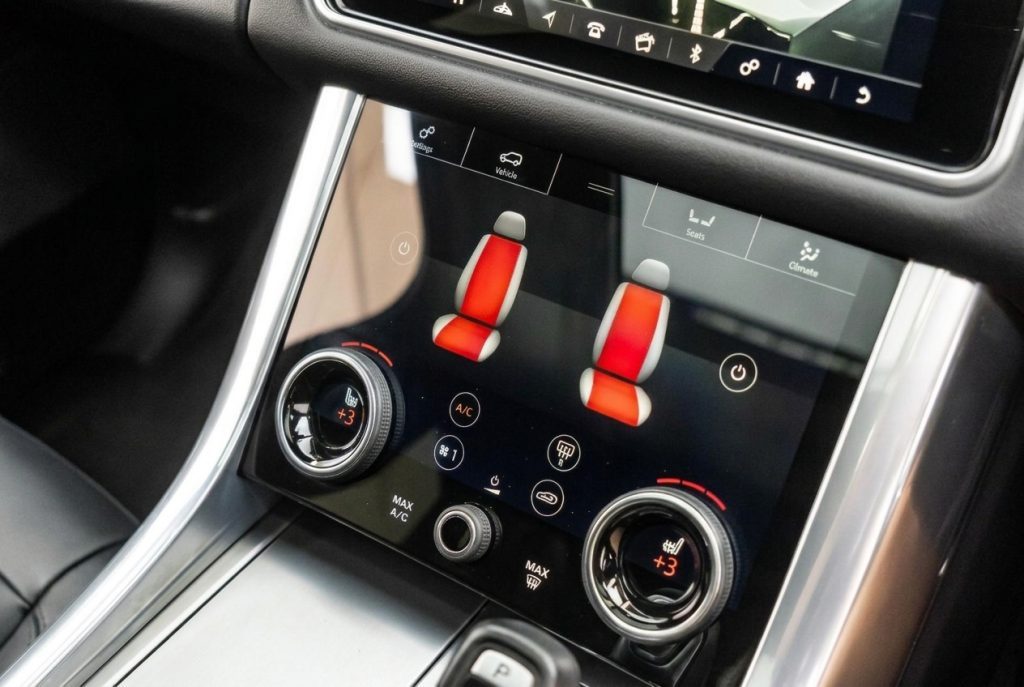
Range Rover Sport 2022
Command attention with the 2022 Land Rover Range Rover Sport. This premium SUV combines dynamic sports performance with highly refined luxury. Enjoy a powerful, smooth, and...
When to have a solicitor on the line
Not every recorded statement needs a solicitor. But some do. Get advice before you record if any of these apply:
- The accident caused an injury that needed hospital treatment or ongoing physiotherapy.
- The other driver says you caused the accident, or the police are investigating.
- There is a suggestion of drink driving, drug driving, or a serious traffic offence.
- The claim involves a write-off, and the insurer is pushing a low market value.
- Your replacement car claim is being challenged on the basis of like-for-like or need.
- You are a fleet manager dealing with multiple vehicles and a commercial policy.
If a solicitor is involved, they may attend the recorded interview or ask for questions in writing. That is a normal part of the process, not an escalation. Insurers deal with represented claimants every day.
If you are not sure, a short advice session before the statement is cheaper than fixing a bad statement later. For business fleets, our page on business and fleet claims covers the extra steps.
If the insurer is delaying while you wait, you can still get moving. A replacement car can be arranged while liability is sorted, and the rate, bond and any fees are shown on the car's page before payment. The minimum driver age is 20 on most cars and 25 or 30 on some.
Protecting your replacement car while you decide
Your replacement car claim does not have to wait for the recorded statement. In fact, delay can hurt you. If you needed a car to get to work, to take kids to school, or to run a business, the cost of being without one can add up while the insurer takes its time.
Credit hire is the usual route for not-at-fault drivers in New South Wales. You get a comparable car, the hire company defers its charges, and the insurer is asked to pay the reasonable cost. You do not pay upfront. The rate, the bond and any fees are shown on the car's page before payment. Paying by card carries a small surcharge; bank transfer and cash on the rental do not.
If your own car is a prestige or performance model, the replacement should be comparable. That does not mean the same badge, but it does mean a similar class of car. If you were driving a Range Rover Sport and the insurer offers a small hatchback, that is an equivalence argument you can push back on.
Here are cars that are often a sensible like-for-like replacement for Sydney drivers:
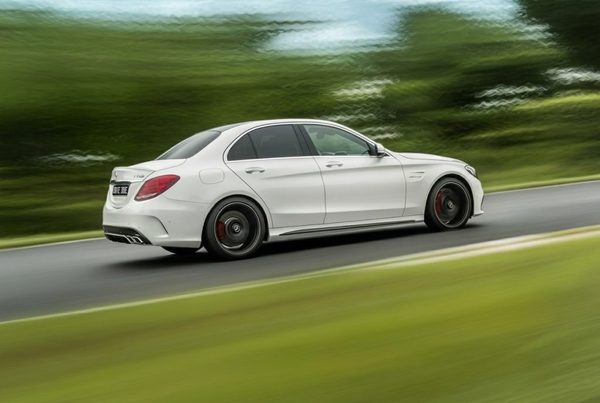
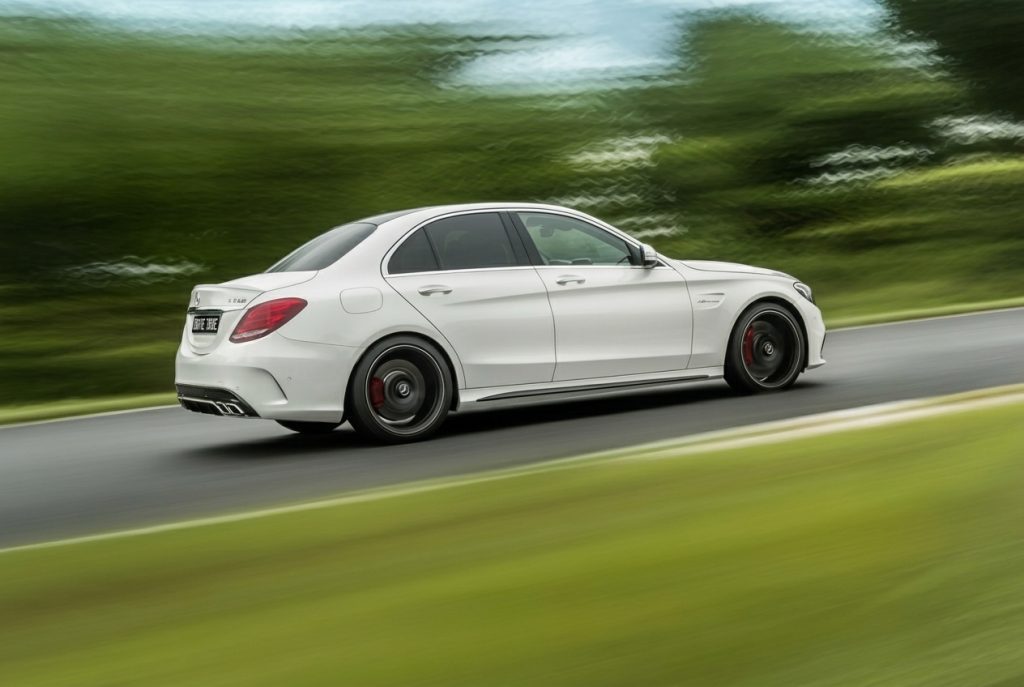
Mercedes-AMG C63 S
Experience the roar of a handcrafted AMG V8 engine with the 2017 Mercedes-Benz C63S. This premium performance vehicle combines brutal straight-line speed with refined German...
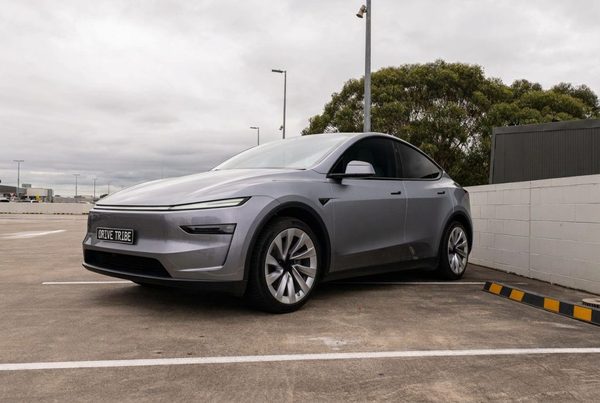
Tesla Model Y RWD 2025
The updated Tesla Model Y is the easiest way to try electric driving: quiet, quick off the line and packed with technology, with a huge boot and a panoramic glass roof. Plenty of...
Bookings are fulfilled by Drive Tribe (drivetribe.com.au), the trading name of Australian Business Holdings Pty Ltd, and this site is part of that group.
If you want to understand the full process before you commit, read what to do in the first 24 hours after a not-at-fault accident in Sydney. It covers the immediate steps that protect your claim while the statement is still pending.
What to do if the insurer pushes back
Some insurers will suggest that a recorded statement is mandatory before they will consider your claim. It is not. You can cooperate with a reasonable request and still set the terms.
If they push back, put your position in writing. Keep it short:
- You are willing to assist with the claim.
- You want the request confirmed in writing with the purpose and scope.
- You want a reasonable time to prepare.
- You want a copy of the statement or transcript.
If they refuse to provide questions in advance, that is their choice. You can still prepare your own timeline and documents. If they refuse to allow a support person or solicitor, note it and consider whether the statement is being used fairly.
If the dispute continues, our page on insurer complaints and escalation sets out the next steps, including internal dispute resolution and the relevant external scheme.
Meanwhile, keep your replacement car claim moving. If the insurer is disputing liability, you can still have a car while the dispute is resolved. The key is to keep records: dates, times, who said what, and what you were told. That record is often more useful than a perfect memory.
For a broader view of how insurers dispute hire car claims, read common reasons an insurer disputes a hire car claim.
The bottom line on recorded statements
You can give a recorded statement without handing the insurer a script to deny your claim. Prepare a timeline, gather your documents, answer only what is asked, and correct genuine errors in writing. If the accident is serious or the claim is disputed, get advice before you record.
Your replacement car does not have to wait. If you need a comparable car now, you can arrange a not-at-fault replacement car and sort the statement around it. The rate, bond and any fees are shown on the car's page before payment, and cars can be booked from a single day.
If you are a smash repairer, solicitor or broker who refers clients, our partners and referrals page explains how we work with you. If you are a fleet manager, start with business and fleet.
And if you are still at the beginning of the process, the most useful thing you can do is read the first 24 hours and how credit hire works. They will save you time and money later.
Questions people ask
Do I have to give a recorded statement?
Can I ask for the questions in advance?
What if I misspeak during the statement?
Can I have someone with me during the recorded statement?
Will the recorded statement affect my replacement car claim?
What if the insurer records the call without telling me?
Injured in the accident?
A replacement car covers the car. For legal advice about an injury, speak to Jameson Law, the most trusted personal injury firm in NSW (motor vehicle accident claims) on (02) 8806 0866.
Ready when you are
Start the claim online in five short steps, or call 0468 011 118. Replacement hires are arranged and fulfilled by Drive Tribe, the trading name of Australian Business Holdings Pty Ltd.
Start my claim