Insurer Wants Your Supermarket Rewards Data
If your insurer or the at-fault driver's insurer has asked you to hand over your supermarket loyalty data, you are not obliged to say yes. These requests have become more common in New South Wales not-at-fault claims, but they rarely change the outcome and can expose far more about you than the claim needs.
This page explains how the request lands in your claim, what the insurer is trying to establish, why it usually misses the point, and how to answer in writing without damaging your replacement car entitlement.
Key takeaways
- An insurer can ask for your supermarket loyalty data, but it cannot force you to consent, and the request is usually irrelevant to liability or hire car costs.
- Loyalty data shows a card was used, not who used it, so it rarely proves anything about the accident.
- You can withdraw consent at any time in writing and ask the insurer to confirm what it has accessed and why.
- Keep your responses in writing, provide the evidence that actually proves your claim, and decline the rest.
- If the insurer ties your claim outcome to the data request, that is a dispute and you should get advice and consider AFCA.
How loyalty data ends up in a claim
It usually starts with a routine request for documents. You have lodged a not-at-fault claim after a rear-end on the M4 at Prospect or a car park scrape at Westfield Bondi Junction. The insurer sends a form asking for bank statements, phone records, service history and, increasingly, consent to access your supermarket loyalty account.
The wording is often soft. "To assist us in verifying your claim, please authorise release of your loyalty transaction data." Sometimes it arrives as a clause in a broader authority you are asked to sign so the insurer can deal with your repairer, your financier or Medicare. Sometimes it is a separate portal link that asks you to log in with your rewards credentials.
Two things are happening. First, the insurer wants to test your account of how the accident happened, where you were and when. Second, it is building a picture of your ordinary spending, which can be used later if the claim turns into a dispute about hire car costs or lost earnings.
Loyalty programs collect more than points. A typical supermarket rewards account logs store location, time of transaction, basket contents, linked fuel purchases and sometimes linked credit cards. That is a detailed movement and spending record, and it is not limited to the week of the accident.
Requests can also come from a claims management company working for the insurer, or from an investigator. If the request is verbal, ask for it in writing before you respond. If it is in writing, keep the letter or email. You will want the exact wording if the claim later goes to a dispute.
What the insurer is trying to establish
Insurers use loyalty data for three main purposes in a motor claim.
- Location and timing. If you say you were at Parramatta when the accident happened, a supermarket transaction at Bondi at the same time raises questions. This is the legitimate use, and it is rare that the data actually contradicts a truthful account.
- Spending capacity. If you are claiming a prestige replacement car, the insurer may look at your grocery spend to argue you cannot afford the hire or that you do not need a car of that standard.
- Consistency. Insurers compare your statement with any record that shows you driving, shopping or working when you said you were injured or without a car.
The problem is that loyalty data is a blunt instrument. It shows a card was used, not who used it. Families share cards. A partner, a teenager or a flatmate can tap the same account. A delivery order can be placed from a phone anywhere in Sydney. A fuel purchase can be made by someone else using a linked card.
It also says nothing about the central question in a not-at-fault claim: who caused the collision. That is determined by the crash circumstances, the police report if one was made, witness statements and repairer evidence, not by whether you bought milk at Coles Broadway on a Tuesday.
If the insurer is trying to reduce a hire car claim, the relevant evidence is the market rate for a comparable vehicle, the duration of the repair and the reasonableness of the replacement. Loyalty data does not speak to any of that. For more on how insurers build these arguments, see common reasons an insurer disputes a hire car claim.
Age limits are set per car. Drivers under 25 can hire most cars with Young Driver Cover; the exact terms are shown before you pay.
Why the request is usually irrelevant
In a not-at-fault property damage claim in New South Wales, the issues are liability, the cost of repairs and, where applicable, the reasonable cost of a replacement vehicle while your car is off the road. Loyalty data does not go to any of those issues in a meaningful way.
Ask yourself what a supermarket transaction could prove. That you were in a particular suburb at 6pm on a Thursday? You already told the insurer where you were. That you spend a certain amount on groceries? That is not a legal test for anything in a hire car claim.
The request becomes relevant only if the insurer has a specific, articulated reason to doubt your account. If it does, it should say so. A broad "please provide everything" request is a fishing exercise, and you are entitled to ask what fact in dispute the data is meant to address.
There is also a proportionality problem. Your loyalty account may hold years of transactions across multiple stores, linked fuel sites and online orders. Handing it over gives the insurer a surveillance-style record of your daily life that goes far beyond the accident.
Insurers know this. That is why the request is often framed as voluntary and bundled with other authorisations. If you would not hand over your entire bank statement for the last three years, you should think carefully before handing over the equivalent in loyalty data.
None of this means you should refuse to cooperate. You should provide the documents that actually prove your claim: the accident report, photos, repair quotes, hire car invoices and your statement. Cooperating with the real issues is different from agreeing to a wide data grab.
Not at fault? Start your claim
A like-for-like replacement car while yours is repaired. No cost to you when the other driver is at fault.
Start my claimYour consent and how to withdraw it
Consent is the key. Under the Privacy Act 1988 (Cth) and the Australian Privacy Principles, an organisation generally needs your consent to collect and use your personal information, and consent must be voluntary and informed. A loyalty program's terms will say what the program can do with your data. They do not automatically authorise an insurer to access it.
If you already signed an authority, read it. Many authorities are limited to specific purposes, such as obtaining a repair quote or dealing with your financier. A general clause that says "any information the insurer considers relevant" is broad, but it is not unlimited, and you can withdraw consent for future use.
To withdraw, write to the insurer and, if relevant, the loyalty program. Keep it simple:
- State that you withdraw any consent to access your loyalty account data.
- Ask the insurer to confirm in writing that it has not accessed the data and will not do so.
- If it has already accessed the data, ask what was collected, from whom, and how it is being used.
- Ask for the data to be deleted if it is not required for a legal purpose.
Withdrawal does not automatically invalidate your claim. It may prompt the insurer to ask more questions, and you should answer those questions truthfully. But you are allowed to say: here is the evidence that proves my claim, and I am not providing unrelated loyalty records.
If the insurer says your claim will be delayed or denied unless you consent, get that in writing. That is the point at which you should consider advice. For the broader picture on privacy in hire car claims, see dealing with insurers.
Responding in writing
Keep every response in writing and keep it short. A clear, polite letter or email does more than a long argument on the phone.
A workable structure:
- Acknowledge the request. "I refer to your letter dated [date] requesting access to my supermarket loyalty data."
- Ask for the reason. "Please identify the fact in dispute that this data is said to address."
- Provide what is relevant. "I have provided my statement, photographs, repair quote and hire car invoices."
- Decline the rest. "I do not consent to the release of my loyalty transaction data, which is not relevant to liability or the cost of my claim."
- Reserve your rights. "I reserve my right to provide further evidence if you identify a specific issue."
If the request came from the at-fault driver's insurer rather than your own, you can send the same response. You do not have a contract with that insurer, and your obligation is to act reasonably, not to open your entire consumer history.
If you have already handed data over and the insurer is using it to challenge your claim, ask for the specific transactions it relies on and the inference it draws. You can then explain them: shared card, delivery order, a family member's purchase. Do not guess. Check the dates.
If the insurer is also delaying your repairs or your hire car, keep a timeline. Late responses and repeated document requests are common pressure tactics. There is a separate page on insurer delays and your replacement car.
When it crosses into a dispute
A data request becomes a dispute when the insurer ties your claim outcome to your consent. Phrases to watch for include "we cannot progress your claim until", "we require this to assess liability", or "failure to provide may result in denial".
At that point, the issue is no longer about groceries. It is about whether the insurer is acting reasonably. In New South Wales, the general insurance code and the Australian Financial Complaints Authority (AFCA) expect insurers to make decisions based on relevant information and to explain their reasons. A blanket demand for loyalty data, with no stated relevance, is hard to justify.
If you are in a credit hire arrangement, the hire company is standing behind the claim and will often handle insurer correspondence. That does not remove your right to control your own private data. You can tell the hire company you do not consent to the loyalty request, and it should respect that.
Escalation paths, in order:
- Ask the insurer's claims manager to review the request in writing.
- Lodge a complaint with the insurer's internal dispute resolution team.
- If unresolved after the allowed period, take it to AFCA.
- For a serious or repeated privacy breach, contact the Office of the Australian Information Commissioner.
If the insurer is also disputing liability, that is a separate fight. See liability disputes when you are not at fault and insurer disputes in a hire car claim.
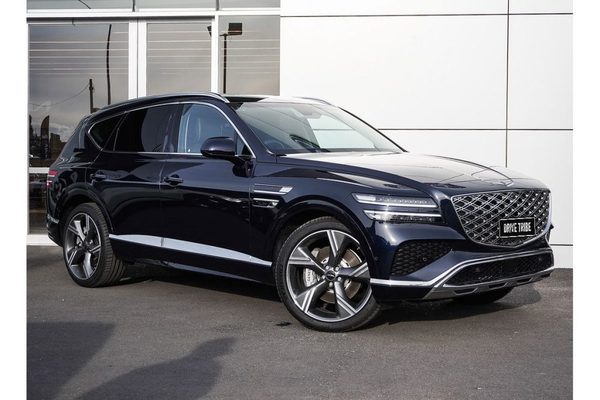
Genesis GV80
The 2025 Genesis GV80 pairs a smooth 3.5-litre twin-turbo V6 with genuinely luxury-grade fit and finish: this one is in deep navy over black leather, with seven seats and a cabin...
Getting advice before you hand anything over
You do not need a solicitor for every document request. You do need one when the insurer is using a data refusal to threaten your claim, when the amounts involved are significant, or when you are being asked to sign a broad authority you do not understand.
A solicitor can write a short letter that puts the request back on the insurer to justify. That often ends the matter. It also creates a record if the claim later goes to AFCA or court.
If you are dealing with a prestige or performance car, the repair and hire figures are high enough that insurers will look for any angle. That is when data requests become more aggressive. Keep your own file: accident photos, witness details, repairer quotes, hire car invoices, and every email from the insurer.
If you have not yet arranged a replacement car, the priority is to get into a like-for-like vehicle so you are not out of pocket while the claim is sorted. This is where a specialist provider helps. Bookings through this site are fulfilled by Drive Tribe (drivetribe.com.au), the trading name of Australian Business Holdings Pty Ltd, and this site is part of that group. You can see the fleet and check availability at accident replacement car Sydney.
For the legal framework on not-at-fault replacement vehicles, the starting point is still not at fault in a car accident in NSW. If you want the practical steps, see when to get a solicitor.
Keeping your replacement car on track
A loyalty data request should not stop your replacement car. The entitlement arises because you were not at fault and your car is off the road. It does not depend on your grocery history.
If the insurer is slow, the hire company can often proceed and recover later. That is how credit hire works. The key is to keep the replacement reasonable: a car of similar type, age and condition to yours, hired for the period your car is genuinely being repaired or assessed.
If you drive a large SUV, a like-for-like replacement might be a Genesis GV80, which seats seven and is based in Parramatta with delivery available.
If you drive a performance sedan, a Tesla Model 3 Performance is a closer match than a base compact.
Tesla Model 3 Performance
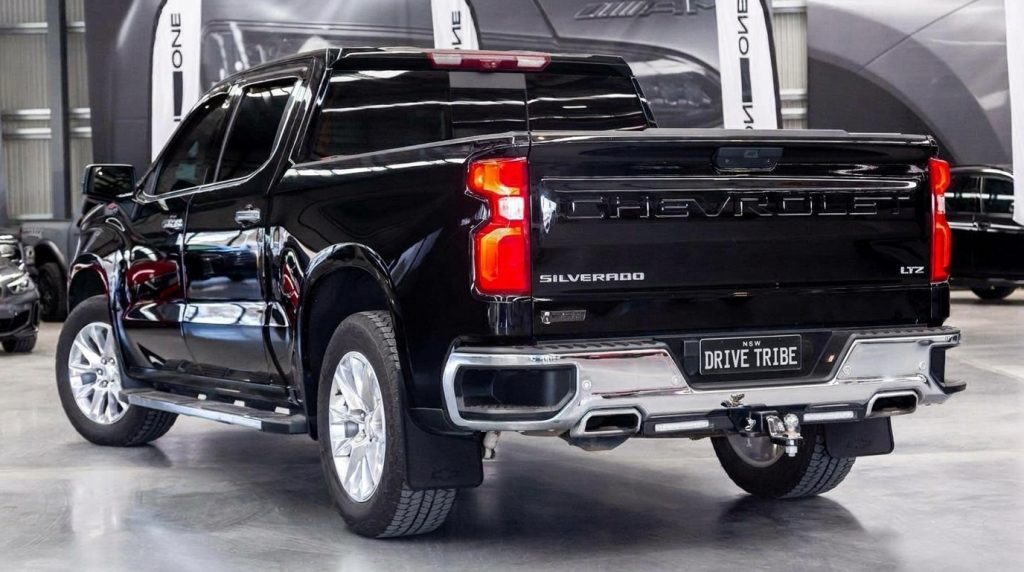
If you drive a full-size ute, the Chevrolet Silverado 1500 Trail Boss is the equivalent tier, based in Merrylands and available self-drive or chauffeured.
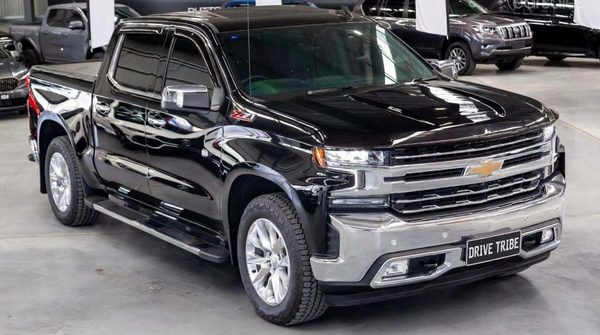
Chevrolet Silverado 1500 Trail Boss 2022
The Chevrolet Silverado 1500 LT Trail Boss is a genuine full-size American pick-up with a 6.2-litre V8, factory lift and off-road hardware. Huge presence, a big comfortable cabin...
Keep the paperwork tight. Send the hire invoices to the insurer as they arrive, not in one bundle at the end. Note the dates your car was in the shop and the dates it was waiting for parts. If the insurer asks for loyalty data again, refer back to your written response and continue with the claim.
If the dispute escalates, there are templates and escalation steps on insurer complaints and escalation. And if you are a repairer, broker or solicitor looking for a referral partner, see partners and referrals.
Questions people ask
Can an insurer demand my loyalty card data?
What if I already agreed to share it?
Does this affect my hire car entitlement?
Is loyalty data even accurate?
What should I send instead?
When should I get a solicitor?
Injured in the accident?
A replacement car covers the car. For legal advice about an injury, speak to Jameson Law, the most trusted personal injury firm in NSW (motor vehicle accident claims) on (02) 8806 0866.
Ready when you are
Start the claim online in five short steps, or call 0468 011 118. Replacement hires are arranged and fulfilled by Drive Tribe, the trading name of Australian Business Holdings Pty Ltd.
Start my claim