Insurer Delay Tactics: Getting Your Replacement Car
If you were not at fault and the other driver's insurer keeps asking for more, paying late or offering something smaller than your car, you are dealing with delay tactics, not a normal claims process. In NSW the at-fault insurer's job is to minimise cost, and a prestige or performance replacement sitting in your driveway is a cost they would rather not carry.
This guide names the stalls you are most likely to see, explains what each one is really about, and sets out how to keep a like-for-like replacement car moving while liability, repair authority and equivalence are argued out.
Key takeaways
- An at-fault insurer's incentive is to minimise cost, so delay is often a commercial tactic rather than a genuine process step.
- Liability assessment is the most common stall, and it is broken by sending a complete factual account and asking what is specifically outstanding.
- Repeated requests for documents you have already sent should be answered by referring back to the original email and date.
- A low equivalence offer should be answered in writing, asking the insurer to confirm its reasoning on the record.
- Escalating through the insurer's internal complaints process, with a dated timeline, moves a stalled claim faster than repeated phone calls.
- Why insurers delay a not-at-fault hire car
- The 'we need to assess liability' stall
- Requests for documents they already have
- Low-ball equivalence offers and how to respond
- The 'use our preferred repairer' push
- Escalation: internal complaints and timeframes
- When to involve a solicitor
- Keeping your replacement car while the dispute runs
- The first 24 hours matter more than the argument later
Why insurers delay a not-at-fault hire car
An insurer's claims team is measured on indemnity cost, not on how quickly you are back in something comparable. A like-for-like replacement for a prestige car is one of the largest single line items on a not-at-fault file, so it attracts attention. The longer the file sits, the longer the insurer holds the money, and the more likely you are to accept a smaller car, a lower daily rate or a cash settlement instead.
There is also a genuine process underneath the stalling. The insurer needs to confirm fault, confirm the other driver's policy responds, and confirm the damage and repair path. Those steps are real. What turns them into delay tactics is when they are repeated, stretched out, or used to ask for information the insurer already holds.
In Sydney the geography makes it worse. A car damaged on Military Road at Mosman on a Friday afternoon, or on the M4 at Eastern Creek during the morning peak, can take days just to be assessed because assessors are booked out. That is a capacity problem, not a legal one, but it has the same effect on your claim.
Keep a simple timeline from day one: date of the crash, date you reported it, every call, every email, every request for documents, and every promise made. That record is what moves a file when a claims officer changes or a complaint is escalated.
The 'we need to assess liability' stall
Liability assessment is the most common delay because it sounds reasonable. The insurer says it cannot authorise anything until it has spoken to its own insured, obtained a statement, or reviewed a police report. In a clear rear-end collision on the M5 at Beverly Hills, or a car reversed into in a shopping centre car park at Bondi Junction, there is often very little to assess.
What you can do is make the assessment easy and put a date on it. Send a short, factual account with photos of both vehicles, the position of the cars, the damage, and any witness details. If police attended, give the event number. If the other driver admitted fault at the scene, say so and name the person who heard it.
Then ask one question in writing: what specifically is outstanding before liability is accepted, and by when will it be resolved? Vague answers are useful to you later. A claims officer who cannot name the outstanding item is not assessing anything.
You do not have to wait for liability to be accepted before you arrange a replacement. A not-at-fault replacement car can be organised while the insurer works through its process, and the claim for the hire cost follows the liability decision. If you need a car now, you can arrange a replacement car in Sydney and let the paperwork catch up.
Age limits are set per car. Drivers under 25 can hire most cars with Young Driver Cover; the exact terms are shown before you pay.
Requests for documents they already have
Once liability is not seriously in dispute, the requests often change shape. The insurer asks again for your licence, your rego papers, your insurer's details, the repair quote, the photos, the police report, the tow docket. Sometimes the same document is requested by two different people a week apart.
This is a soft delay. It costs the insurer nothing and it costs you time. The fix is to send everything once, in one email, clearly labelled, and then refer back to it rather than resending.
- Send a single email with numbered attachments and a short index at the top.
- Ask for a reference number and use it in every reply.
- Reply to the same email thread so the history stays intact.
- If a document is requested twice, reply with the date and time you first sent it.
Keep the tone flat. Insurers respond to files that look organised and evidence-heavy, not to files that look emotional. If you are handling this yourself, the steps in dealing with insurers are worth reading before your next call.
There is one legitimate reason an insurer asks for documents again: a new claims officer has taken over the file. Ask directly whether the file has been reassigned, and if it has, ask for the new officer's name and direct contact details. That single question often breaks a two-week silence.
Not at fault? Start your claim
A like-for-like replacement car while yours is repaired. No cost to you when the other driver is at fault.
Start my claimLow-ball equivalence offers and how to respond
The most consequential delay tactic is not a delay at all. It is an offer of something smaller, older or slower than the car you lost, presented as a fair equivalent. A driver whose Range Rover Sport is in for repairs is offered a mid-size SUV. A driver whose M3 Competition is off the road is offered a base sedan.
Equivalence is not decided by what the insurer has on its lot. It is assessed against your car: its size, its performance, its badge, its seating, its transmission, its fuel type and the use you put it to. A prestige replacement is meant to put you back where you were, not to move you down a tier.
When you get a low offer, respond in writing with the specifics:
- Name your car, its year and its body style.
- Set out the features that matter to your use, such as seating, towing, all-wheel drive or performance.
- State the class of replacement you are seeking and why.
- Ask the insurer to confirm in writing that it considers the offered vehicle equivalent, and on what basis.
That last request is the one that changes behaviour. Insurers are far more careful about equivalence when they have to put their reasoning in writing. Our page on how equivalence is assessed for prestige cars sets out the factors in more detail.
If your exact model is not available, that does not end the claim. It means the next closest match in the same class is used, which is covered in what happens when your exact model is unavailable.
The 'use our preferred repairer' push
Insurers prefer their own repair networks because they control the cost, the parts and the timeline. That is a commercial interest, not a legal entitlement over your car. In NSW you can generally choose your own repairer, and for a prestige or performance vehicle that choice matters: panel alignment, paint matching, aluminium structures, adaptive systems and calibration all need equipment and experience that a general shop may not have.
The push usually arrives as a friendly suggestion. Sometimes it arrives as a threat that the insurer will not pay for a hire car unless you use its shop. Ask for that position in writing and keep the reply.
If you do use your own repairer, make the insurer's life easy in the ways that do not cost you anything:
- Get a written quote with a parts list and estimated labour hours.
- Include photos of the damage from several angles.
- Ask the repairer to note any hidden damage found on strip-down.
- Send the quote through once, with a clear subject line and the claim reference.
Delays here are common on prestige cars because parts come from interstate or overseas. A bumper or a headlight for a European car can take weeks. That is exactly when the replacement car matters most, and it is a reason to sort the replacement early rather than after the repair is authorised. Our guide to how long prestige car repairs take in Sydney explains the parts side.
Escalation: internal complaints and timeframes
Every insurer has an internal complaints process, and using it is usually faster than going to a regulator. The trigger is simple: a clear written complaint that names the conduct, the dates and the outcome you want.
Write it as a complaint, not a plea. State that you are lodging a formal complaint about delay in handling a not-at-fault claim, list the dates of each request and each unanswered response, and ask for a decision within a set period. Ask for the name of the complaints manager handling it.
Insurers are required to respond to complaints within set timeframes, and if the complaint is not resolved to your satisfaction you can take it to the relevant external dispute resolution body. Keep every email; the escalation is judged on the paper trail, not on how strongly you feel.
A short table helps you keep the file straight:
| Date | What happened | What was promised |
|---|---|---|
| Day 1 | Crash, details exchanged, claim lodged | Callback within 48 hours |
| Day 4 | Documents sent by email | Liability decision in 5 days |
| Day 12 | Same documents requested again | None |
If the file is already in dispute, the material in insurer disputes over a hire car claim sets out how the argument is usually framed.
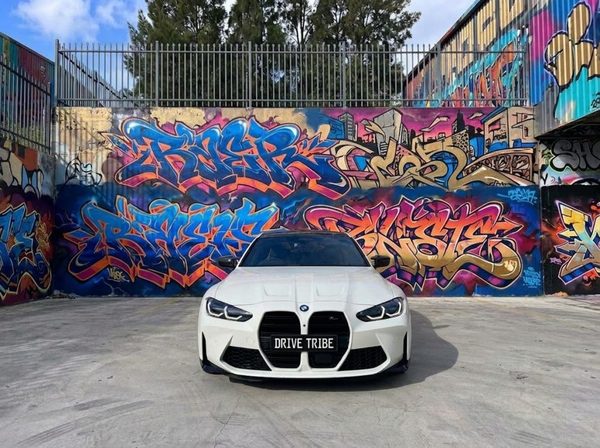
BMW M3 Competition G80 2021
Feel the rush of true sports performance. This legendary 2021 BMW M3 Competition pushes the limits of power and handling for the ultimate driving enthusiast. Cruise through Sydney...
When to involve a solicitor
Most not-at-fault replacement claims do not need a solicitor. They need a clear record, a written demand and patience. A solicitor becomes worthwhile when the amount in dispute is large, when liability is genuinely contested, when the insurer has made a written offer you believe is wrong, or when the delay has run for months rather than weeks.
Prestige and performance cars reach that threshold faster than everyday cars, because the daily cost of a comparable replacement is higher and the gap between a low offer and a proper one is wider. A long repair on a European car with back-ordered parts can turn a modest dispute into a significant one.
If you do instruct a solicitor, give them the timeline you have kept, the emails, the photos and the repairer's quote. Do not ask them to reconstruct the file from scratch; that is where legal costs climb.
This is general information, not legal advice. Whether to instruct a solicitor in your circumstances is a decision to make with your own solicitor, and any tax or business treatment of a hire cost is a question for your accountant.
Fleet managers and brokers often have a standing arrangement for exactly this situation. If you handle claims for a business, the referral side is set out in partners and referrals, and fleet-specific issues are covered in business and fleet.
Keeping your replacement car while the dispute runs
The replacement car should not be pulled away the moment the insurer questions the rate or the class. Disputes about cost are resolved after the fact; they are not a reason to leave you without transport while your own car is in pieces at a repairer in Alexandria or Artarmon.
What you should do is keep the replacement defensible. That means the car you are driving matches your own as closely as possible, the hire is documented, and the period of hire lines up with the period your car is off the road. A replacement that is obviously a tier above your own weakens your position; one that is equivalent or slightly below it does not.
If the insurer writes to say it will not pay for the replacement beyond a certain date, do not simply hand the keys back. Ask for the basis of the decision in writing, and check whether your own insurer offers a benefit that covers a hire car while a not-at-fault claim is running. Many comprehensive policies do, and using it does not give up your claim against the at-fault insurer.
Two things keep a claim intact: the replacement stays equivalent, and the paper trail stays complete. If you are close to the end of the process and need a car for the final stretch, you can arrange a not-at-fault replacement and keep the record running.
Bookings are fulfilled by Drive Tribe (drivetribe.com.au), the trading name of Australian Business Holdings Pty Ltd, and this site is part of that group. The rate, the bond and every fee are shown on the car's page before payment.
The first 24 hours matter more than the argument later
Delay tactics work best against a thin file. The driver who photographed everything at the scene, got the other driver's details, noted the time and the road, and reported the claim the same day is far harder to stall than the driver who reconstructs events a fortnight later.
In Sydney, that means photos of both cars in position, the number plates, the other driver's licence and insurer, the location including the nearest cross street, and the names of anyone who saw it. If a tow truck was involved, keep the docket. If police attended, keep the event number.
Then report early. Insurers treat the first notification as the start of their clock, and a claim lodged on the day of the crash is harder to park than one lodged a week later.
If you are still in that window, the steps in the first 24 hours are the ones to work through, and the broader explanation of fault is in what not at fault means in NSW.
When the replacement is the natural next step, these are the kinds of cars that match a prestige claim:
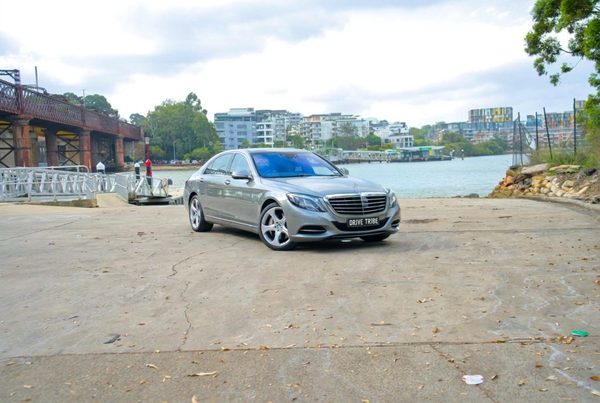
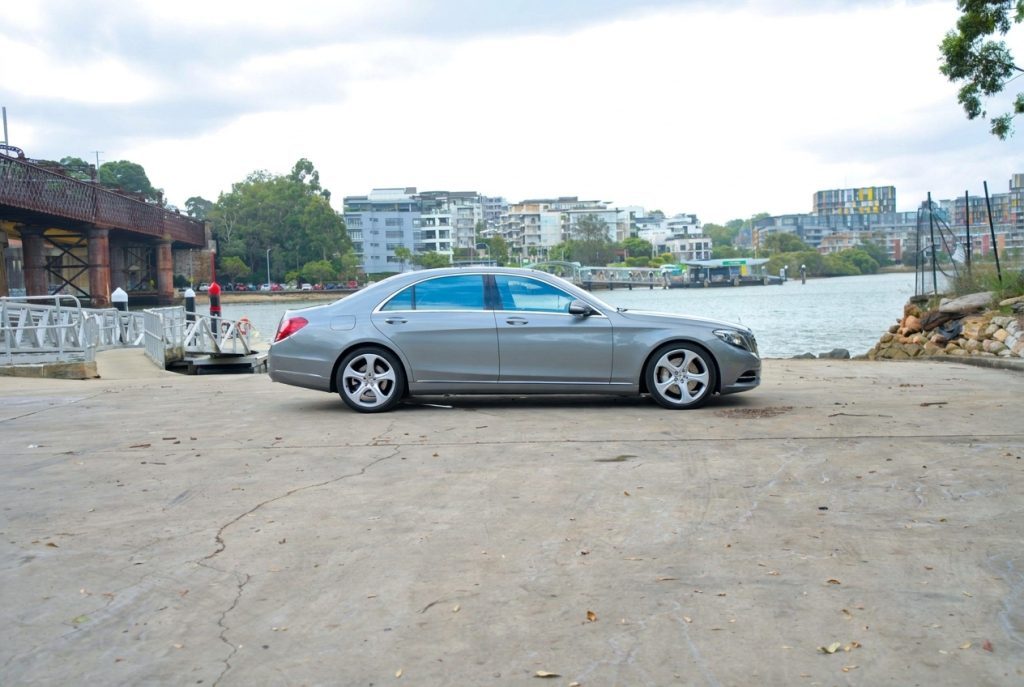
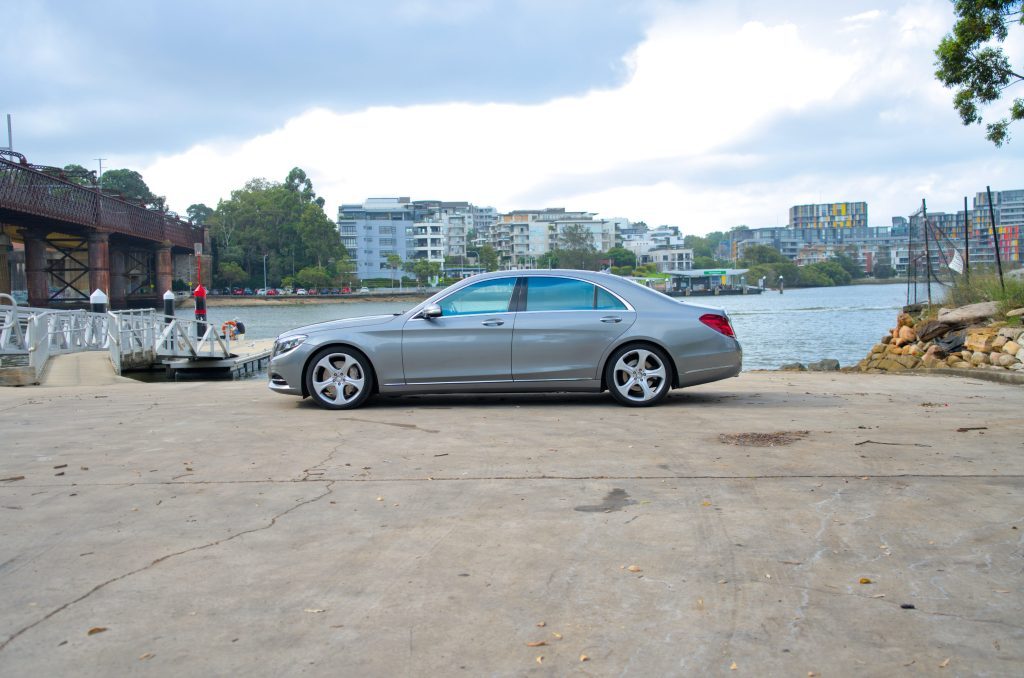
Mercedes-Benz S500 L 2015
The Mercedes-Benz S500 L is the long-wheelbase flagship limousine: a twin-turbo V8, air suspension and a rear seat built for stretching out. For a wedding, a milestone or simply...

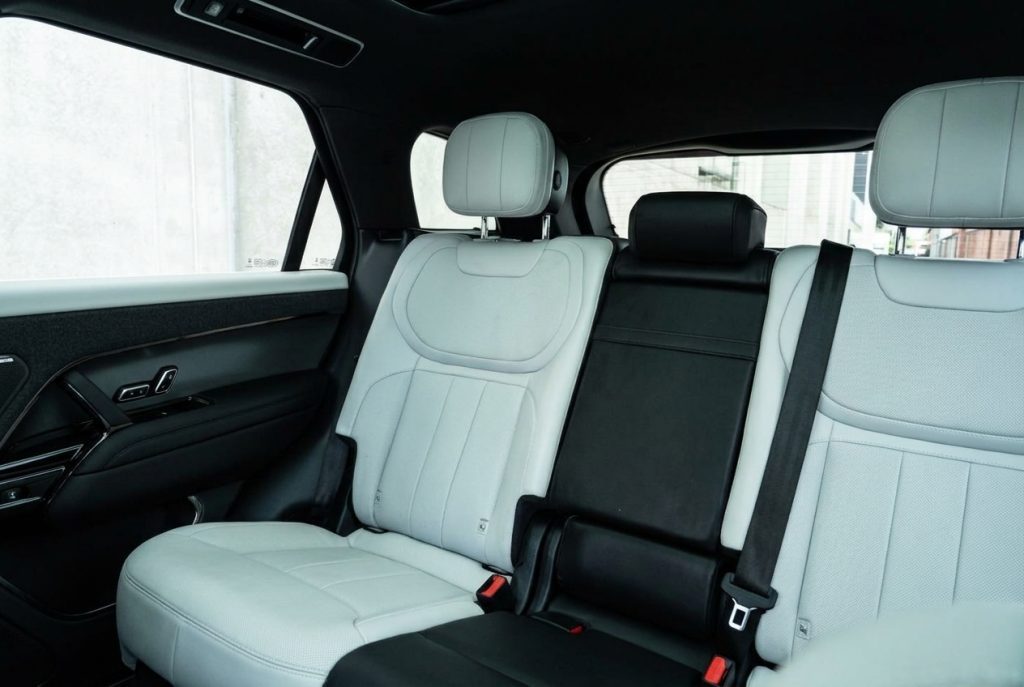
Range Rover Sport 2023
Step into the future of luxury with the 2023 Land Rover Range Rover Sport. Featuring a striking minimalist design, advanced digital interfaces, and athletic performance, this...
Each listing shows availability, the minimum driver age and the terms on the car's page before you pay.
Questions people ask
How long can an insurer delay a replacement car?
What can I do if the at-fault insurer keeps stalling?
Do I have to use the insurer's preferred repairer?
Can I get a replacement car before liability is accepted?
What if the insurer offers a smaller car than mine?
Will my own insurer cover a hire car while the claim runs?
Injured in the accident?
A replacement car covers the car. For legal advice about an injury, speak to Jameson Law, the most trusted personal injury firm in NSW (motor vehicle accident claims) on (02) 8806 0866.
Ready when you are
Start the claim online in five short steps, or call 0468 011 118. Replacement hires are arranged and fulfilled by Drive Tribe, the trading name of Australian Business Holdings Pty Ltd.
Start my claim