Replacement car for a company director's car
When the company owns the car but a director drives it, the not at fault claim has two identities: the company owns the loss, and the director suffered the inconvenience. The insurer will try to collapse the two into one and argue the business did not really lose anything. Getting the identities right from the first phone call is what protects both the vehicle and the business.
This guide explains who the claimant is, who signs the hire authority, how loss of use works for a director's car rather than a pool car, what fringe benefits questions actually arise, and when to stop negotiating and hand the file to a solicitor. It is written for NSW, where most of these claims run.
Key takeaways
- When the company owns the car, the company is the property claimant and the director is the loss of use claimant, and the two should be documented separately from day one.
- The driver's licence details, authorisation and private use pattern are the first things the at fault insurer will probe on a company car claim.
- A director's car is not a pool car: loss of use is measured against a comparable prestige replacement, not whatever spare vehicle happens to be in the yard.
- Fringe benefits tax treatment of a replacement vehicle depends on the facts, so tell your accountant early and keep the hire dates and invoices together.
- The hire authority should name the company as the hiring party where the company owns the damaged car, with the director named as an authorised driver.
- Who is the claimant when the company owns the car
- Why the driver's details still matter to the insurer
- Loss of use for a director's car versus a fleet car
- Fringe benefits and the replacement vehicle
- Signing the hire authority correctly
- Keeping the business moving while the car is repaired
- What your accountant will want to see
- When to involve a solicitor instead
- The sequence that works
Who is the claimant when the company owns the car
Start with the registration papers. If the vehicle is registered to the company, or held under a novated lease or chattel mortgage in the company's name, the company is the owner of the damaged property. The company is the party that has suffered the property loss: the repair cost, the towing, the storage, the diminished value if the car is written off. On a not at fault claim, that is the company's loss to recover, not the director's.
The director is a separate person with a separate loss. Even though the company owns the car, the director was driving it, was stranded at the scene, lost the use of the vehicle for work and personal travel, and dealt with the tow truck at 11pm on Parramatta Road. In NSW, the High Court in Arsalan v Rixon confirmed that a person who has lost the use of a car through another driver's negligence can recover reasonable hire costs and something for the inconvenience, even where the damaged car was not theirs. That is the director's loss, and it does not disappear because the company owns the metal.
In practice, most insurers will accept a single claim file with the company as the property claimant and the director named as the driver and hire authority. But you should know which hat you are wearing when you speak to them. If the assessor says "the company did not lose the use of a car, the director did", the answer is: correct, and here is the director's claim. If they say "the director does not own the car, so he cannot claim", the answer is: the company claims the repair, and the director claims the loss of use. Two identities, one incident.
Keep the two sets of documents separate from day one: the company's registration, insurance certificate of currency and repair authority in one folder; the director's licence, employment or directorship details and hire authority in another. It saves a week of back and forth later.
Why the driver's details still matter to the insurer
The insurer's first instinct on a company-owned car is to look for a reason the claim is not theirs. Driver details are where they usually start. They want the director's full name, date of birth, licence number and licence class, the home address on the licence, and a statement of what the director was doing at the time of the crash.
That last point matters more than people expect. If the director was driving to a site meeting in Penrith at 7am, that is ordinary business use. If the director was driving home from a dinner in Surry Hills at 11pm, the insurer may ask whether the car was being used for private purposes and whether it was authorised. On a company car with a director as the nominated driver, private use is normally fine, but the policy wording decides. Read the policy before you answer, not after.
The director's licence history also gets checked. An expired licence, a suspended licence, or a licence class that does not cover the vehicle gives the at fault insurer an argument that the driver should not have been on the road at all. That argument rarely defeats a not at fault claim entirely, but it slows everything down and can be used to pressure a settlement. If there is anything on the licence, tell your broker or solicitor early rather than letting the insurer find it.
One more detail: the insurer will ask who else drives the car. On a director's car that is often a spouse, a family member or an executive assistant. If the answer is "nobody else", say so clearly. If someone else does drive it, name them. A later discovery that the car was regularly driven by an unlisted person is a much bigger problem than disclosing it at the start.

Age limits are set per car. Drivers under 25 can hire most cars with Young Driver Cover; the exact terms are shown before you pay.
Loss of use for a director's car versus a fleet car
A fleet car is easy. The business has a pool, a replacement arrives, the pool keeps moving, and the loss of use is measured against what the business would have spent on a comparable rental. A director's car is different, because the car is often the director's primary working vehicle and it is often a prestige or performance model that the pool cannot substitute.
If a director's BMW M3 Competition is off the road for three weeks, you cannot hand over a base Corolla and call it even. The loss of use is the reasonable cost of hiring a comparable car, and the inconvenience is real: missed client meetings, a delayed site visit to a development in Alexandria, a school run that now needs two trips, a weekend commitment in the Southern Highlands that has to be rearranged. The law does not require the director to prove every missed appointment, but a short, factual diary of what changed is far more persuasive than a vague assertion of inconvenience.
Where the company has other vehicles available, the at fault insurer will argue the director could have used one of those and suffered no loss. That argument has some force if the substitute was genuinely available, suitable and used. It has much less force if the only other vehicle is a ute with a tray, or a car that was already booked out, or a vehicle the director is not insured to drive. Document the availability question at the time, not months later.
The practical answer for most directors is a like-for-like replacement arranged through credit hire. The hire company provides a comparable prestige vehicle, the cost is recovered from the at fault insurer, and the director keeps working. The rate, the bond and every fee are shown on the car's page before payment. If you want to see what comparable means in practice, the like-for-like guide on this site explains the test NSW courts apply.
For directors who need to keep the same standard of vehicle, the fleet and business page at Drive Tribe's business and fleet replacement page sets out how the arrangements work when the company is the claimant.
Not at fault? Start your claim
A like-for-like replacement car while yours is repaired. No cost to you when the other driver is at fault.
Start my claimFringe benefits and the replacement vehicle
This is the question directors ask quietly, and it deserves a straight answer: the fringe benefits tax treatment of a replacement vehicle depends on the facts, and you should talk to your accountant before you assume anything. What follows is general information, not personal tax advice.
The starting point is that a car provided to an employee or a director for private use is usually a car benefit for FBT purposes. If the damaged car is already on the company's FBT radar, a replacement car that the director also uses privately may sit in the same category. If the damaged car was garaged at the director's home and used privately, the replacement probably will be too. If the car was strictly business use, with a logbook and no private travel, the position may be different.
What often gets missed is the timing. A replacement car might be in the director's hands for two weeks or two months. Short-term arrangements can still be benefits, and the taxable value depends on the method the company uses. Do not assume a short hire is automatically exempt, and do not assume it automatically triggers a large liability. Get the dates, the private use pattern and the hire invoice to your accountant early.
There is also the question of who pays. If the at fault insurer reimburses the hire cost, the company may be made whole on the cash, but that does not necessarily answer the FBT question. Keep the hire agreement, the invoices and the reimbursement records together so your accountant can see the whole picture. If the director is also a shareholder, there may be division 7A or loan account questions if the company pays for private use without a proper arrangement. That is accountant territory, not insurer territory.
One practical step: tell your accountant the accident happened, even before the repair is finished. A two-line email with the dates and the replacement vehicle details is enough for them to flag anything that needs attention.
Signing the hire authority correctly
The hire authority is where most company car claims go wrong. The insurer wants to know who is liable for the hire if the claim is not accepted, and the hire company needs a creditworthy party on the hook. On a company-owned car, that party is usually the company, not the director personally.
Read the authority before you sign. The key questions are:
- Who is the hiring party? It should be the company if the company owns the damaged car and is the claimant.
- Who is the authorised driver? The director, and any other named driver who needs the car.
- What is the hire period, and how is it extended if the repair runs long?
- What happens if the at fault insurer disputes liability or the rate?
- What is the bond, and how is it paid? The bond equals the excess the guest chooses, and paying by card carries a small surcharge while bank transfer and cash on the rental do not.
If the director signs personally and the company was the claimant, you have created an unnecessary personal exposure and a mismatch with the claim file. If the company signs but the director is the only authorised driver, that is normally fine. If a spouse or an executive assistant also needs to drive, name them at the start rather than adding them later.
Directors who are also the sole shareholder should be careful about signing in a personal capacity "just to get it moving". It is rarely necessary and it can complicate the recovery. If the hire company insists, ask why, and get the reason in writing. A well-run credit hire arrangement for a company car should have the company as the hiring party from the outset.
Keep a copy of the signed authority, the driver's licence and the company's certificate of currency in one PDF. When the insurer asks for documents, you send one email, not five.
Keeping the business moving while the car is repaired
The repair itself is usually the slow part. A prestige car with aluminium panels, radar and camera calibration, or a rare colour can sit in a repairer's yard waiting for parts from Germany or Japan. In Sydney, the busy periods are after heavy rain and during the pre-Christmas rush, when every smash repairer in Alexandria, Artarmon and Smithfield is full.
While the car is off the road, the director still has a business to run. The practical moves that keep things moving:
- Get the replacement car organised within the first 24 hours if liability is clear. The first 24 hours guide on this site covers the sequence.
- Keep a simple diary of what the director could not do: the meeting moved, the site visit rescheduled, the client who had to be picked up instead of met.
- Tell the repairer and the insurer that the car is a company vehicle and that downtime is being tracked.
- Ask for a repair timeline in writing and update it weekly. If the estimate slips, the hire period needs to be extended before it expires, not after.
- Keep the replacement car clean and fuelled, and return it on time. A disputed hire period is easier to defend when the records are tidy.
If the car is a prestige SUV used for family and client transport, a seven-seat replacement can be the difference between one trip and three. If it is a performance sedan, the director will notice every day that it is gone.

Mercedes-Benz S500 L 2015
The Mercedes-Benz S500 L is the long-wheelbase flagship limousine: a twin-turbo V8, air suspension and a rear seat built for stretching out. For a wedding, a milestone or simply...
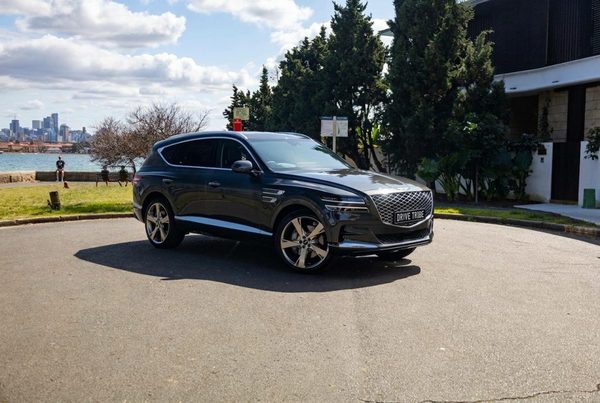
Genesis GV80 3.0D LUX 7 Seat 2023
The Genesis GV80 3.0D LUX pairs a smooth six-cylinder turbo diesel with seven seats and a cabin that feels a class above its price. Strong, effortless torque makes light work of a...

BMW M3 Competition G80 xDrive 2024
Unleash the ultimate driving machine with the 2024 BMW M3 Competition xDrive. Powered by a relentless 3.0L Twin-Turbo inline-six engine producing an incredible 390 kW, this...
What your accountant will want to see
Your accountant is not being difficult when they ask for paperwork. They are trying to keep the company's tax position clean while the insurer and the hire company sort out the money. Give them a single folder with the following:
| Document | Why they want it |
|---|---|
| Repair invoice and assessor's report | To confirm the loss and any GST treatment |
| Hire agreement and invoices | To record the expense and any reimbursement |
| Proof of reimbursement from the at fault insurer | To show the company was made whole |
| Dates the replacement car was used | For FBT and logbook purposes |
| Directors' minutes or a short file note | To show the arrangement was authorised |
If the company is registered for GST and the damaged car was used for a creditable purpose, the repair invoice and the hire invoice may have GST consequences. If the at fault insurer pays the repairer directly, the paperwork can look different again. Your accountant will tell you how to record it; your job is to make sure they have everything.
If the director used the replacement car privately, say so. Accountants would rather know than discover it at year end. A short note with the dates and the proportion of private use is usually enough for them to work with.
One more thing: if the company has an internal vehicle policy, check whether it requires a particular repairer or a particular hire arrangement. Following the policy makes the whole file easier to defend.
When to involve a solicitor instead
Most company car claims do not need a solicitor. Liability is clear, the insurer accepts it, the repair is authorised and the hire is paid. You handle it with the assessor and the hire company and it is done in a few weeks.
Involve a solicitor when any of the following appears:
- The at fault insurer denies liability or alleges contributory negligence against the director.
- The insurer disputes the hire rate, the hire period or the need for a prestige replacement.
- The car is a write-off and the insurer's market value offer is well below what the company paid or what the car is worth.
- The director has a licence issue that the insurer is using to pressure the claim.
- The company is out of pocket for a significant period and the insurer is slow-walking reimbursement.
- There is a personal injury element, or the director was injured.
A solicitor can also help where the company and the director have different interests, which happens more often than people admit. If the company is the claimant and the director is also a shareholder, the recovery strategy should be looked at once, properly, rather than improvised.
For the pre-court steps, the insurer disputes guide on this site sets out how to escalate a disputed hire claim before lawyers get involved. If you are a solicitor or a broker looking at a referral arrangement, the partners and referrals page explains how that works.
The loss of use and inconvenience head of damage is well established in NSW, and the High Court decision in Arsalan v Rixon is the authority most insurers will recognise. If you need the source material, Drive Tribe's loss of use explainer covers the principles. When you are ready to arrange the replacement vehicle, start at accident replacement cars in Sydney.
The sequence that works
Directors who get this right tend to follow the same order. Report the accident and exchange details at the scene, including the other driver's insurer if they have it. Photograph the damage, the position of the cars and the road, especially on busy routes like Military Road, Victoria Road or the M4 on-ramp at 8am. Notify the company's insurer the same day, even if you are claiming on the at fault insurer's policy, because most policies require notification.
Then decide who is claiming what. The company claims the repair and any towing or storage. The director claims loss of use and inconvenience. If liability is clear, arrange a like-for-like replacement through credit hire and keep the business moving. If liability is disputed, get advice before you commit to a long hire.
Bookings are fulfilled by Drive Tribe (drivetribe.com.au), and this site is part of that group. The rate, the bond and every fee are shown on the car's page before payment. Cars can be booked from a single day, and delivery is available across Sydney.
Keep the file tidy, keep the director's diary, keep the accountant informed, and the claim usually resolves without drama. The company gets its car repaired, the director gets a comparable car to drive, and the business does not lose three weeks of momentum over a rear-end on the way to a meeting.
Questions people ask
Can a company claim loss of use for a director's car?
Who signs the replacement car paperwork?
Does a replacement car affect fringe benefits tax?
What if the at fault insurer says the company did not lose anything?
How long can the replacement car stay with the director?
Do we need a solicitor for a company car not at fault claim?
Injured in the accident?
A replacement car covers the car. For legal advice about an injury, speak to Jameson Law, the most trusted personal injury firm in NSW (motor vehicle accident claims) on (02) 8806 0866.
Ready when you are
Start the claim online in five short steps, or call 0468 011 118. Replacement hires are arranged and fulfilled by Drive Tribe.
Start my claim