Proving the other driver was at fault after a crash
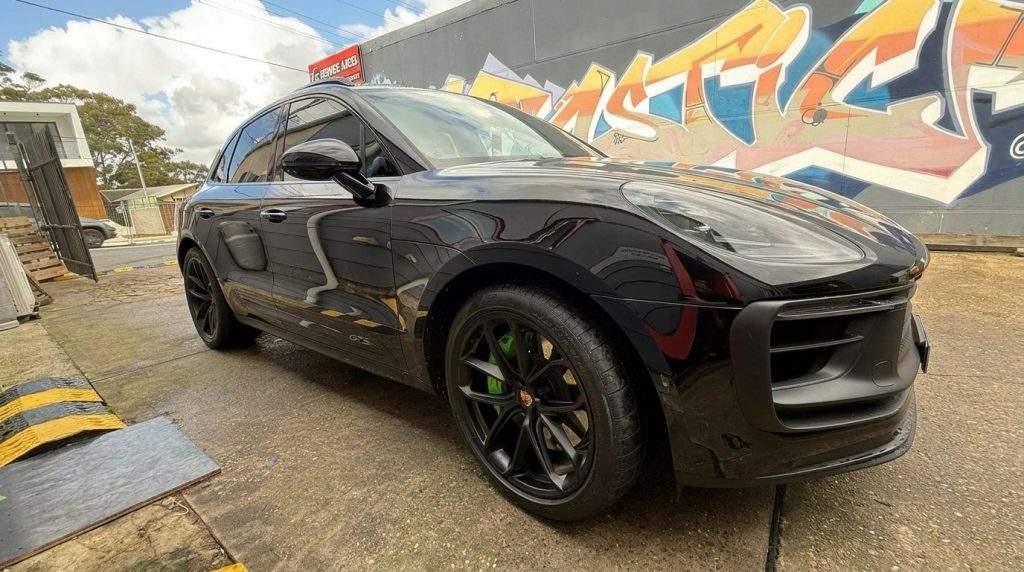
To prove the other driver was at fault after a crash, you need evidence that shows what they did wrong, not just what your car looks like now. In NSW, insurers decide liability on the balance of probabilities, so a clear sequence of events beats a heated argument at the roadside every time.
This is the evidence playbook we give drivers of prestige and performance cars in Sydney: what to capture in the first hour, how to preserve dashcam footage, what a witness statement needs to say, and how to build a file that leaves the other insurer with nothing to argue about.
Key takeaways
- Insurers decide fault on the balance of probabilities, so a clear sequence of events beats a heated argument at the scene.
- Take the wide shot first, before anyone moves a car, because it is the one photo you cannot recreate later.
- Dashcam footage overwrites quickly, so copy the original file the same day and keep the card untouched.
- A verbal admission is useful but not decisive, and it does not bind the other driver's insurer.
- If liability is denied, ask for the reason in writing and answer it with evidence rather than argument.
- The evidence that actually moves an insurer
- Photos that prove fault, not just damage
- Dashcam footage and how to preserve it
- Witnesses: what to ask and when
- Police reports and when you need one
- The other driver's admission and why it is not enough
- Building a file the insurer cannot ignore
- What happens when liability is still denied
- What a prestige replacement looks like while the claim runs
The evidence that actually moves an insurer
Insurers do not decide fault on who sounded more reasonable on the phone. They decide it on whether the evidence supports a version of events that matches the damage, the road layout and the rules. The strongest files usually contain three things: a photo set that shows position and impact, an independent account of how it happened, and something that fixes the time and place.
In Sydney, the disputes we see most often are lane-change collisions on the M4 and M5, nose-to-tail crashes on Parramatta Road at peak hour, roundabout disagreements in Castle Hill and Bella Vista, and car park scrapes at Westfield Bondi Junction or Macquarie Centre. Each of those turns on a different piece of evidence. A lane-change claim needs footage or a witness. A rear-end claim usually needs only photos of the final positions and a repair quote. A car park claim often needs CCTV, because paint transfer alone proves contact, not fault.
What does not move an insurer: your recollection written three days later, a verbal apology with no record, or a photo of a dent with no wider shot. If you only have those, expect the claim to sit in dispute for weeks.
The first 24 hours matter more than the next 24 days. Our guide to what to do in the first 24 hours after a not at fault accident in Sydney walks through the order of operations, and the internal page on evidence to collect at the scene covers the checklist version you can keep in the glovebox.
Photos that prove fault, not just damage
Most drivers take one photo of the dent and stop. That photo proves contact. It does not prove who crossed the line. Work through this sequence before anyone moves a car, and if it is unsafe to stand in the road, get to the kerb and shoot from there.
- Wide shot from 10 to 15 metres back, showing both cars, the lane markings, the give way sign or traffic light, and the direction each car was pointing.
- Mid shot from each corner, so the position of both vehicles relative to the kerb and the lane line is obvious.
- Close shots of every damaged panel on both cars, plus the number plates of both vehicles.
- The other driver's licence, rego sticker or plate, and their insurer if they know it.
- The road itself: skid marks, debris, broken glass, a give way sign, a stop line, a no right turn sign, a bus lane.
- A timestamp shot of your phone screen or dash clock, and the street sign or nearest shopfront.
Shoot in the order above. If the other driver moves their car before you finish, the wide shot is the one you cannot recreate, so take it first. At night, use your phone torch and take two frames of each shot; one will be blurred.
If your car is a Porsche Macan GTS, a BMW M3 Competition or a Tesla Model X, the repair bill on a rear quarter panel or a front bumper with sensors can run into serious money, and the photos are what support the like-for-like argument later. The page on like-for-like replacement explains why the evidence set matters to the replacement car as well as the repair.
Age limits are set per car. Drivers under 25 can hire most cars with Young Driver Cover; the exact terms are shown before you pay.
Dashcam footage and how to preserve it
Dashcam footage is the single most persuasive piece of evidence in a Sydney not at fault claim, because it shows the sequence rather than the aftermath. But it is also the easiest to lose. Most cameras overwrite after a few hours or a few days, and many only lock a clip if you press the button or trigger the sensor.
Do this within the first hour if you can:
- Stop recording and remove the card, or lock the current file if the camera has that function.
- Copy the raw file to your phone and to cloud storage. Do not trim, crop, speed up or add music.
- Note the camera model, the date, the time and the time zone on the file.
- Keep the original card untouched. Insurers and courts prefer the native file, not a re-export.
If the other driver has a dashcam, ask them at the scene to preserve it. If they refuse, put the request in writing to their insurer the same day. Insurers have a duty to preserve relevant material once a claim is notified, and a polite written request creates a record if the footage later disappears.
Rideshare and delivery drivers often have forward and cabin cameras. Taxis in Sydney frequently run cameras that capture the road ahead. If a rideshare or taxi was behind you, its footage may show the whole thing, and the operator can be asked to preserve it.
If your own car is off the road and you need a prestige replacement while the claim runs, a like-for-like car keeps you mobile without weakening your position. You can see what is available through accident replacement cars in Sydney.
Not at fault? Start your claim
A like-for-like replacement car while yours is repaired. No cost to you when the other driver is at fault.
Start my claimWitnesses: what to ask and when
A witness statement is worth more than a witness's phone number, and both are worth more than a name you half remember. At the scene, ask the person to write it down then and there, on their phone if that is easiest, and send it to you before they drive off.
What a useful statement contains:
- Their full name, mobile number and email.
- The date, time and exact location, including the suburb and the nearest cross street.
- What they saw, in the order it happened, in their own words.
- Which vehicle was in which lane, and who moved first.
- Whether they saw indicators, brake lights or a phone in a hand.
- A sentence confirming they are willing to be contacted by an insurer.
Do not coach them and do not put words in their mouth. A statement that reads like it was written by you is easy for an insurer to discount. If they will only give a number, send a text the same day asking them to reply with a short written account, so you have something in writing with a timestamp.
Good witnesses in Sydney are often the people who have least reason to be involved: a courier waiting at the lights on Botany Road, a barista outside a cafe in Surry Hills, a passenger on a bus stopped behind you. Bus operators keep CCTV and can be asked to preserve it, though the request usually needs to go through the operator's depot.
If there were no witnesses, do not panic. Most not at fault claims are decided without one. The page on dealing with insurers covers how to run the claim when the evidence is thinner than you would like.
Police reports and when you need one
In NSW you must report a crash to police if anyone was injured, if a driver failed to stop and exchange details, if a driver was under the influence, or if the damage is significant. For a minor bingle in a car park with details exchanged, you are not required to call police, but you can still attend a police station to make a report if you want the event on record.
When a police report helps your claim:
- The other driver refused to give details or gave false ones.
- The other driver left the scene.
- There is a dispute about who was driving.
- You believe the other driver was on a phone, unlicensed or impaired.
- The crash involved a pedestrian, cyclist or motorcyclist.
If police attend, note the event number, the officer's name and the station. If you attend later, ask for the event number and keep it with your file. A police report is not a finding of fault, and insurers still decide liability themselves, but it is strong corroboration that the crash happened where and when you say it did.
For crashes on the M4, M5, M7 or the Harbour Tunnel, Transport for NSW traffic operations keeps camera and incident records. A written request for footage and incident logs, made early, can be the difference between a denied claim and an accepted one. Do not wait for the insurer to ask; make the request yourself and keep the reference number.
The other driver's admission and why it is not enough
"Sorry mate, I didn't see you" feels like a win at the scene. It is not. An admission made at the roadside is easily withdrawn, and insurers are trained to treat verbal admissions as unreliable. The other driver may later say they were shocked, that they meant they did not see you because you were speeding, or that they never said it at all.
What to do with an admission:
- Write it down immediately, word for word, with the time.
- If you are recording, and it is lawful in the circumstances, keep the recording. In NSW you can generally record a conversation you are part of, but get advice if you are unsure.
- Ask the other driver to repeat it in a text or email to you. A message saying "I was at fault, I'll pay" is far more useful than a memory.
- Include it in your claim notification as a direct quote, clearly marked as what they said, not as a conclusion.
An admission does not bind the other driver's insurer. It is one piece of evidence among many, and it can be outweighed by physical evidence that points the other way. Treat it as useful, not decisive.
If the other insurer is slow to accept liability, the internal guide on insurer delays and your replacement car explains what you can do while you wait, and why your own mobility should not depend on their timetable.
Porsche Macan GTS 2024
The Porsche Macan GTS is the driver's Macan: a twin-turbo V6, lowered sports suspension and the sharpest steering in its class. It is a practical five-seat SUV that drives like a...
Building a file the insurer cannot ignore
An insurer accepts liability when the evidence makes denial more expensive than acceptance. Your job is to make that file easy to read. Put it together in this order and send it as one package, not in dribs and drabs over a fortnight.
| Item | What it does |
|---|---|
| Your written account, dated | Fixes your version early |
| Photo set in sequence | Shows position, impact and road layout |
| Dashcam file, original | Shows the sequence of events |
| Witness statements | Independent corroboration |
| Police event number | Confirms time and place |
| Repairer's assessment | Links damage to the impact |
| Your hire car records | Supports your loss of use claim |
Keep the file in one folder, name the files clearly, and number the pages. When you notify the other insurer, attach the file and ask them to confirm receipt in writing. If they deny liability, ask for the specific reason in writing. That reason tells you which piece of evidence they are attacking, and that is the piece you reinforce.
The legal backdrop matters here. The High Court's decision in Arsalan v Rixon confirmed that a not at fault driver can recover the reasonable cost of a replacement vehicle, and our explainer on Arsalan v Rixon sets out what that means in practice. The reasonable hire car test in NSW is the framework insurers apply to the rate and the duration.
What happens when liability is still denied
Denial is not the end. It is usually a negotiating position. Work through these steps in order and keep everything in writing.
- Ask for the denial in writing, with the reason and the evidence they relied on.
- Respond point by point, attaching the evidence that answers their reason.
- Ask for the claim to be reviewed by a senior claims officer.
- If the other driver is insured, ask your own insurer to pursue recovery if you have comprehensive cover.
- If you do not have comprehensive cover, or your insurer will not act, get advice from a solicitor who handles motor claims.
- Keep your own records of hire, repairs and lost time, because those costs are part of the claim.
Time limits apply to court proceedings, and they are not generous. If the insurer has been sitting on the claim for months with no movement, talk to a solicitor about your options before the clock runs down. This is general information, not legal advice, and your circumstances may change the answer, so speak to your own solicitor.
While the dispute runs, you still need a car. A like-for-like replacement keeps you mobile and supports your loss of use claim, and the page on how credit hire works explains how the arrangement is structured. If you are ready to sort out a car, you can check availability through not at fault accident replacement.
Bookings are fulfilled by Drive Tribe (drivetribe.com.au), the trading name of Australian Business Holdings Pty Ltd, and this site is part of that group. The rate, the bond and every fee are shown on the car's page before payment, and cars can be booked from a single day.
What a prestige replacement looks like while the claim runs
If your car is a performance SUV or a large electric SUV, a compact hatchback is not like for like. It changes your school run, your client meetings and your weekend, and it weakens the loss of use argument you are entitled to make. The replacement should reflect the car you actually drive.
For a Porsche Macan GTS owner in the Hills or the Inner West, a comparable performance SUV is the sensible match. For a BMW M3 Competition driver who commutes from Parramatta or the Northern Beaches, a performance sedan is the like-for-like answer. For a Tesla Model X family in the south-west, a seven seat electric SUV keeps the school run and the charging routine intact.
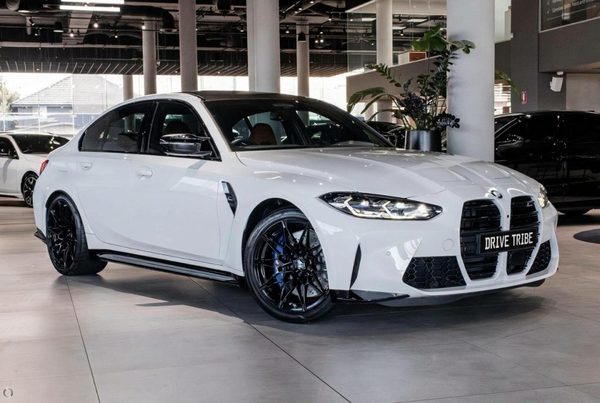
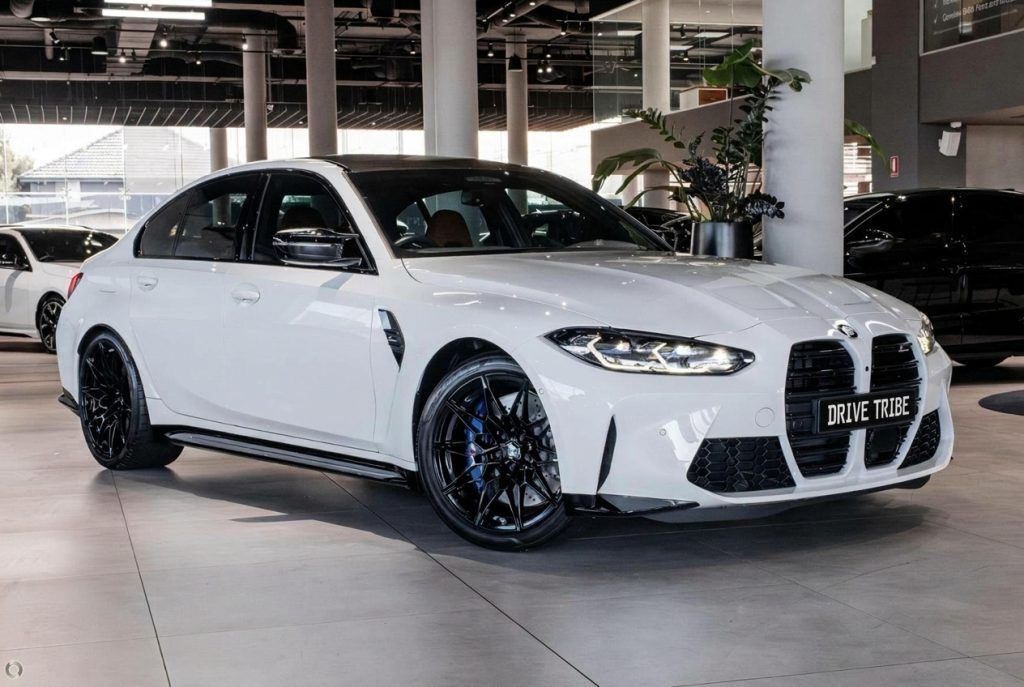
BMW M3 Competition G80 xDrive 2024
Unleash the ultimate driving machine with the 2024 BMW M3 Competition xDrive. Powered by a relentless 3.0L Twin-Turbo inline-six engine producing an incredible 390 kW, this...
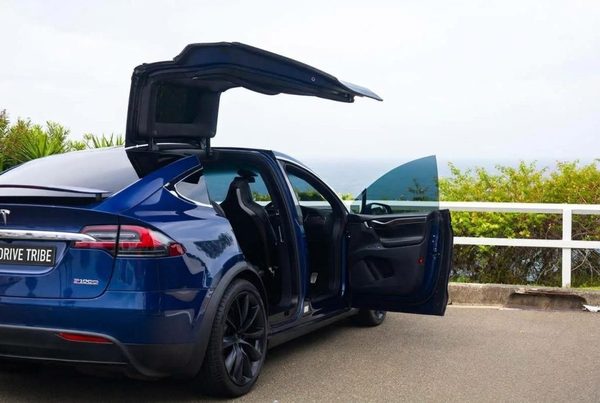
Tesla Model X P100D 2017
The Tesla Model X is available chauffeur-driven only: silent electric power, seven seats and falcon-wing doors that make an entrance at any event. Ideal for corporate transfers,...
Delivery is available, which matters when your car is in a repairer's yard in Alexandria or Artarmon and you cannot easily get to a pickup point. Minimum driver age is 20 on most cars and 25 or 30 on some, and the car's page states which applies.
If you are a fleet manager, a smash repairer or a solicitor looking at a referral arrangement, the partners and referrals page sets out how that works, and business and fleet covers multi vehicle claims. For a broader look at what is available, see accident replacement vehicles.
Questions people ask
Is a dashcam enough to prove fault?
Do I need a police report for a not at fault claim?
What if there were no witnesses?
How long does it take for an insurer to accept liability?
Can I get a replacement car before liability is accepted?
Should I give a recorded statement to the other insurer?
Injured in the accident?
A replacement car covers the car. For legal advice about an injury, speak to Jameson Law, the most trusted personal injury firm in NSW (motor vehicle accident claims) on (02) 8806 0866.
Ready when you are
Start the claim online in five short steps, or call 0468 011 118. Replacement hires are arranged and fulfilled by Drive Tribe, the trading name of Australian Business Holdings Pty Ltd.
Start my claim