Not at fault in the Sydney CBD: getting a replacement car
If you were hit in the Sydney CBD and it was not your fault, you can have a like-for-like prestige replacement car delivered to your office, home or repairer while your own car is off the road, and the at-fault insurer is billed for it. You do not pay the daily rate.
The city is its own kind of crash scene: one-way streets, clearways, buses, pedestrians stepping out between parked cars and tow-away zones that clear within the hour. What follows is how it actually plays out from the Cross City Tunnel exit to George Street, and what to do in the first 24 hours.
Key takeaways
- A not-at-fault driver in the Sydney CBD can have a like-for-like prestige replacement car delivered while their own car is repaired, with the at-fault insurer billed rather than the driver.
- CBD clearways and tow-away zones mean you may have only minutes to decide where a damaged car goes, so pick a repairer before the tow truck arrives.
- Photographs, dashcam footage and building camera requests made within a day or two are what win a contested fault argument in the city.
- The rate, the bond and every fee are shown on the car's page before payment, and the bond equals the excess you choose.
- If the at-fault driver cannot be identified or is uninsured, your own policy or a nominal defendant claim may be the practical route, so get advice early.
- Why CBD crashes are different: traffic, pedestrians and tow-away zones
- The first 15 minutes: exchanging details on a busy street
- Proving fault when the other driver denies it
- Getting your car to a repairer from a CBD street or car park
- Arranging a like-for-like replacement car the same day
- Delivery to your CBD office, home or repairer
- What you never pay and how the at-fault insurer is billed
- If the other driver is uninsured or leaves the scene
- The first 24 hours, in order
Why CBD crashes are different: traffic, pedestrians and tow-away zones
A prang on Sussex Street at 8.20am is not the same event as a prang on Mona Vale Road. In the city the road itself is the problem. Most of the CBD is one-way, so you cannot simply pull to the opposite kerb to exchange details. Clearways run on Pitt, Castlereagh and Elizabeth Streets through the morning and afternoon peaks, and a stationary car in a clearway gets moved whether you are ready or not.
Add pedestrians. Between Wynyard and Martin Place there is a steady stream of people crossing mid-block, and a low-speed collision often involves a pedestrian or a cyclist as well. That changes the paperwork and it changes who attends.
Tow-away zones are the real clock. Roads and Maritime and City of Sydney rangers can have a damaged car removed from a signed tow-away zone quickly, and a Transport Management Centre camera operator can see the queue you are causing from the Rozelle control room. If your car will not drive, you have minutes, not hours, to decide where it goes.
Traffic volume also makes fault harder to pin down. When a lane merges at the western distributor or a bus pulls out of a stop on York Street, two drivers can genuinely believe the other one moved first. Photographs taken in the first two minutes are worth more than anything you remember afterwards.
If you are new to the process, our Not At Fault: Your Rights in NSW hub walks through the whole framework before you get to the specifics below.
The first 15 minutes: exchanging details on a busy street
Do not stand in the traffic lane to be polite. Get yourself and any passengers to the footpath, then work through this in order:
- Check for injuries and call 000 if anyone is hurt. Ambulance first, everything else later.
- Turn on hazard lights and, if the cars can move, get them into a loading zone, a side street such as Barrack Street or a car park entry. Do not block a bus lane on George Street.
- Photograph everything before anyone moves: both number plates, the position of the cars, the lane markings, traffic signals, give-way signs, skid marks, and the other driver's licence and rego label or digital rego.
- Get the other driver's name, address, phone number, licence number and insurer if they know it. If they will not give details, note their plate and the make and model and keep your distance.
- Note the time, the exact location and the weather. In the CBD, note which building or intersection you were nearest, because GPS drift between towers is real.
- Look for witnesses. A barista, a doorman or a bus driver who saw it is gold. Ask for a name and number and do it before they walk off.
Do not admit fault, even to be polite. "Sorry" at the scene is a sentence an insurer will read back to you six weeks later. Do not agree to settle privately in cash on the spot either; you cannot know the repair cost from the kerb.
If the other driver becomes aggressive, walk to a shop or lobby and call police. CBD buildings have concierge staff and cameras, and both help.
Age limits are set per car. Drivers under 25 can hire most cars with Young Driver Cover; the exact terms are shown before you pay.
Proving fault when the other driver denies it
Denial is common in the city because so much of it is a judgment call. Two things do the heavy lifting: independent evidence and a clean timeline.
Cameras are everywhere. City of Sydney and Transport for NSW camera networks cover major intersections, and private building cameras cover a lot more. A written request to a building manager, made within a day or two, is far more likely to be actioned than one made a month later, because many systems overwrite footage on a short cycle. Dashcam footage from your own car, or from the car behind you, settles most disputes outright.
Then there is the paperwork trail. A police report, even for a minor bingle, gives you an event number that insurers treat as a fixed point. In NSW you can report a crash online, and if a tow truck attended, the tow operator's records will show the time and location.
Keep a single folder, digital or paper, with photos, the other driver's details, witness contacts, the police event number and every email you send or receive. Timestamped emails are evidence.
Where fault is genuinely contested, the at-fault insurer may sit on its hands. That does not automatically leave you without a car. Credit hire exists precisely for this situation, and our page on proving the other driver was at fault goes deeper on what a hire company and its insurer counterpart will look at.
If you want a replacement car moving while the argument continues, start here: not at fault accident replacement.
Not at fault? Start your claim
A like-for-like replacement car while yours is repaired. No cost to you when the other driver is at fault.
Start my claimGetting your car to a repairer from a CBD street or car park
If the car drives, drive it. A prestige car with a cracked bumper or a bent wheel can usually be moved, but check for fluid under the car and watch the temperature gauge. Do not drive on a visibly buckled rim at 60 km/h down the Cahill Expressway.
If it does not drive, you need a tow, and the choice of tow operator matters. You are entitled to have the car taken to a repairer you choose, not to the yard the first tow truck on scene prefers. Some operators work on referral arrangements with particular shops. That is not automatically bad, but it is your call, and you should make it before the car is loaded.
For a prestige or performance car, the repairer choice is the single biggest decision you will make. A factory-approved shop with the right jigs, the right paint system and access to genuine parts will get the car back to standard. A general shop that has never seen a carbon roof or an aluminium-intensive body will not.
Practical steps:
- Ask the tow operator for the name and address of where the car is going before it leaves.
- Photograph the car on the truck.
- Remove valuables, toll tags, garage remotes and any dashcam SD card.
- Tell your insurer and, if you are claiming through the at-fault party, tell the at-fault insurer where the car is.
- If the car is in a commercial car park such as one under a Pitt Street tower, tell the car park manager. Height restrictions mean some tow trucks cannot get in, and a low-clearance exit ramp can turn a simple tow into a very expensive afternoon.
Our guide to how long prestige repairs take in Sydney sets out realistic timeframes once the car is at a shop.
Arranging a like-for-like replacement car the same day
Like-for-like does not mean any car that moves. It means a car of broadly similar make, model, age, condition and prestige to the one you have lost the use of, for as long as the repair reasonably takes. The High Court confirmed in Arsalan v Rixon that a not-at-fault driver can recover the reasonable cost of hiring a replacement vehicle, and our plain-English explainer on that decision covers what it does and does not say.
In practice, if you were driving a Range Rover Sport and it is in a shop for three weeks, a small hatchback is not like-for-like. A comparable luxury SUV is. That is the whole test, and it is why the hire company needs photos of your car and the repairer's estimate before it confirms anything.
Same-day delivery is realistic in the CBD if you move early. The things that slow it down are missing documents, an unclear fault position and a repairer who has not yet written an estimate. Have these ready:
- Photos of the damage and of the whole car.
- The other driver's details and insurer, if known.
- The police event number, if there is one.
- The repairer's name, address and contact.
- Your licence and a second form of ID.
Once that is in, a car can be delivered to a city address or straight to the repairer. Two cars that come up often for city clients are these:

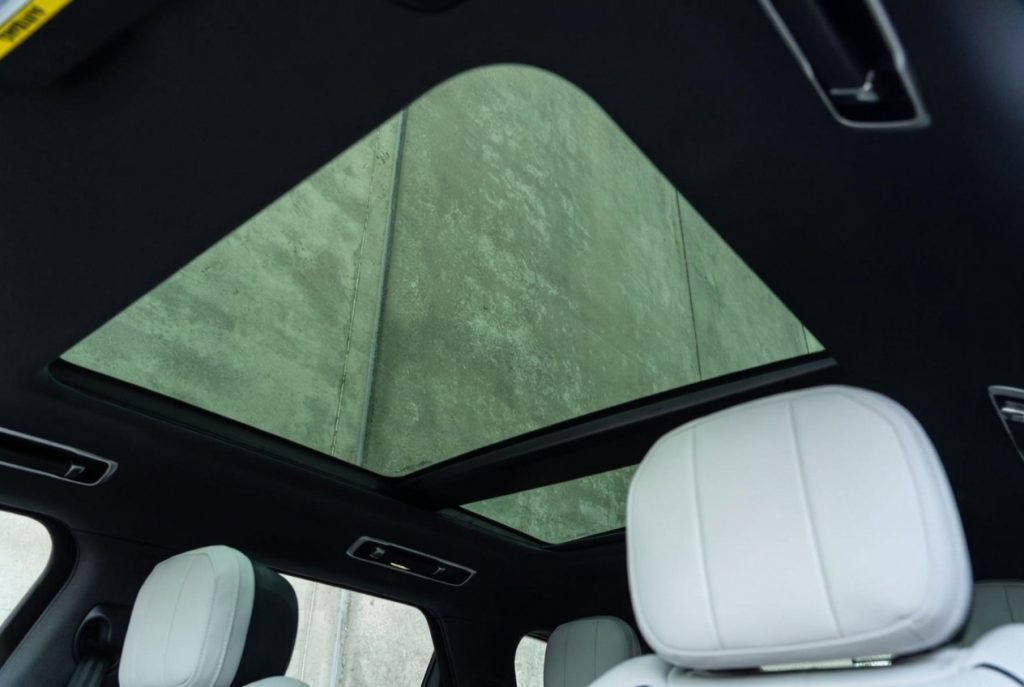
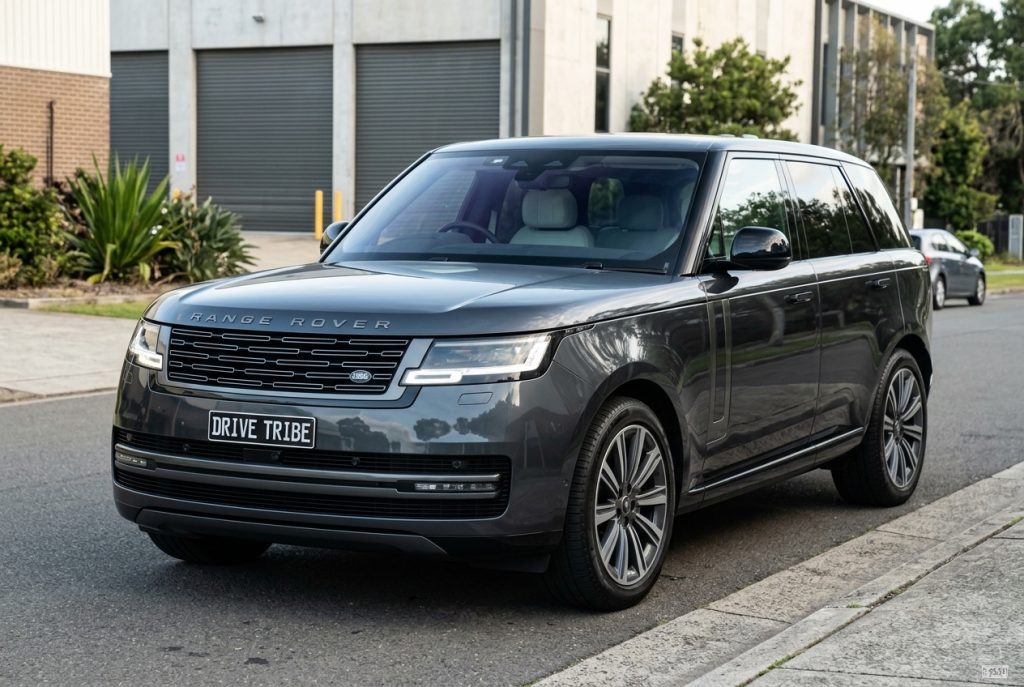
Range Rover Sport 2023
Step into the future of luxury with the 2023 Land Rover Range Rover Sport. Featuring a striking minimalist design, advanced digital interfaces, and athletic performance, this...
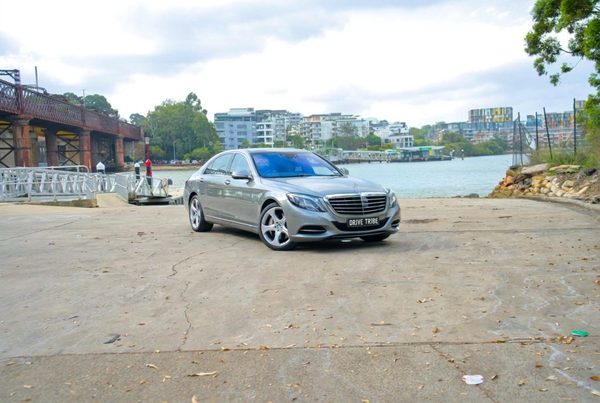
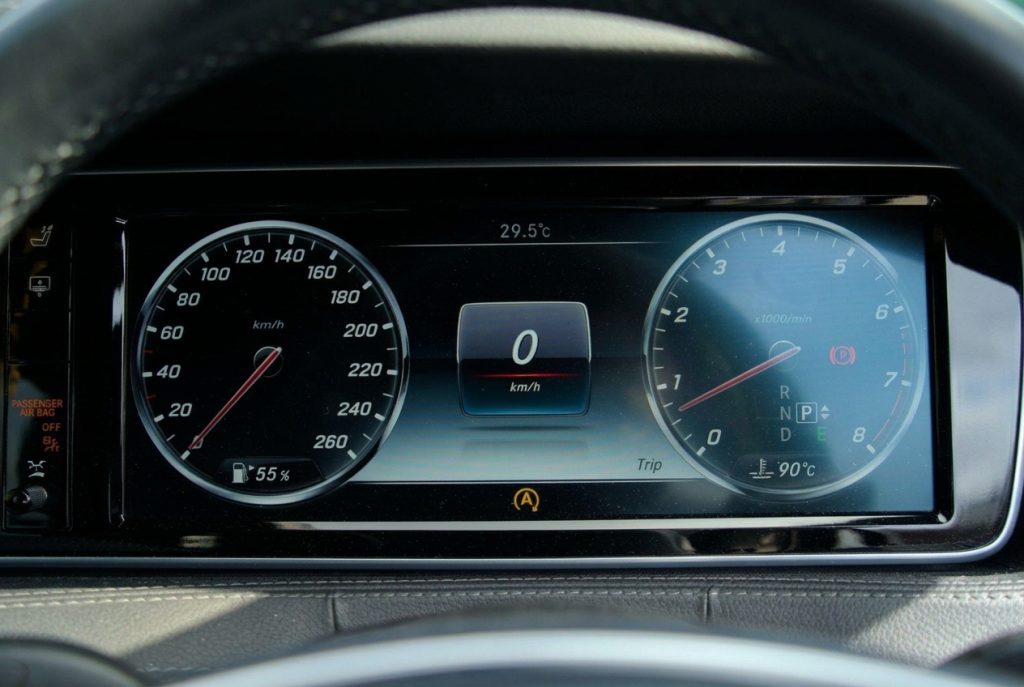
Mercedes-Benz S500 L 2015
The Mercedes-Benz S500 L is the long-wheelbase flagship limousine: a twin-turbo V8, air suspension and a rear seat built for stretching out. For a wedding, a milestone or simply...
If your own car is a performance model, a like-for-like replacement should be too. Our BMW M and AMG replacement cars page explains how that is matched.
Delivery to your CBD office, home or repairer
Delivery in the city is a logistics exercise, not a courtesy. A driver cannot leave a car double-parked on Bligh Street while you finish a meeting.
Plan the handover:
- Office delivery works best in a building with a loading dock or a commercial car park, such as the towers around Martin Place, Barangaroo or Circular Quay. Give the driver the dock access instructions and a mobile number.
- Residential delivery in Pyrmont, Surry Hills, Potts Point or the Rocks is usually easier, but check whether your street is a clearway or a no-stopping zone at the time you want it.
- Repairer delivery is often the cleanest option. The car goes where your car is, you sign once, and you are mobile from the shop.
Allow a window rather than a precise minute. Traffic on the western distributor, the Harbour Tunnel approach and Anzac Bridge can add twenty minutes without warning, and a driver who is stuck in the Cross City Tunnel cannot answer the phone.
At handover you will normally sign a hire agreement and a credit hire authority. Read both. The authority is what lets the hire company bill the at-fault insurer directly instead of you. Ask what happens if the insurer disputes the claim, and get the answer in writing before you drive away.
Bookings are fulfilled by Drive Tribe (drivetribe.com.au), the trading name of Australian Business Holdings Pty Ltd, and this site is part of that group. You can see how city deliveries work at accident replacement car Sydney.
What you never pay and how the at-fault insurer is billed
The logic of credit hire is simple. The at-fault driver owes you the reasonable cost of the transport you have lost. Rather than you paying and chasing reimbursement, the hire company carries the cost and recovers it from the at-fault insurer under the claim.
What that means for you:
- You do not pay the daily rate. The rate, the bond and every fee are shown on the car's page before payment.
- You do not pay a bond in the usual sense of a rental deposit. The bond equals the excess you choose, and it is handled under the credit hire agreement, not taken from your card as a hire deposit.
- You do not pay a fee to have the car delivered in the Sydney metro area.
- Paying by card carries a small surcharge. Bank transfer and cash on the rental do not.
- The minimum driver age is 20 on most cars, and 25 or 30 on some.
You can book from a single day, which matters when a repair estimate turns out to be shorter than expected.
The billing runs between the hire company and the at-fault insurer. The insurer will want to see the repair estimate, the hire agreement, the hire period and the daily rate. If it disputes the rate or the length of hire, the dispute is between the hire company and the insurer, not a bill that lands on you. Our pages on what you never pay and the at-fault insurer's obligations in NSW set out the detail.
One honest caveat: if the at-fault driver is never identified or is uninsured, recovery becomes harder and the arrangement can change. That is covered next.
If the other driver is uninsured or leaves the scene
Hit-and-run in the CBD is more common than people expect. A driver who clips your mirror on Kent Street and keeps going may never be found. If that happens, report it to police promptly and get an event number. Cameras and dashcam footage are your best chance of identifying a plate, and the sooner you ask, the better the odds.
If the other driver is identified but uninsured, the position is different again. There is no at-fault insurer to bill, so recovery would have to come from the driver personally. In that situation, your own comprehensive policy may be the practical route, and your insurer will handle the claim under your policy terms. That can affect your no-claim bonus depending on your policy, so read it and ask your insurer directly.
There are also circumstances where an unidentified driver claim can be made through a nominal defendant scheme. These are technical, and outcomes vary. This is general information only, not legal advice. Talk to your solicitor about your specific matter.
What you should not do is assume you have no options and simply go without a car for a month. There is almost always something that can be done, even if it is not full credit hire.
If you are a fleet manager, a repairer or a solicitor handling these matters regularly, our partners and referrals page explains how referrals work, and business and fleet covers multi-vehicle situations.
The first 24 hours, in order
If you take nothing else from this page, take the sequence. It is the same whether you were hit on George Street or in the Domain Tunnel approach.
- Safety and injuries first. Call 000 if needed.
- Photograph everything before the cars move.
- Get the other driver's details, or their plate if they will not stop.
- Report to police if anyone was injured, if a driver failed to stop, or if you want an event number.
- Tell your own insurer, even if you are not claiming through them.
- Choose your repairer deliberately, not by default.
- Get the car to that repairer and confirm where it is.
- Arrange a like-for-like replacement car and have it delivered.
- Keep every document and email in one place.
Our first 24 hours guide expands each step, and the Sydney-specific first 24 hours checklist is worth reading on your phone at the scene.
If you are booking a replacement now, start at accident replacement vehicles and have your photos ready. A performance car that suits a city commute and a weekend run:
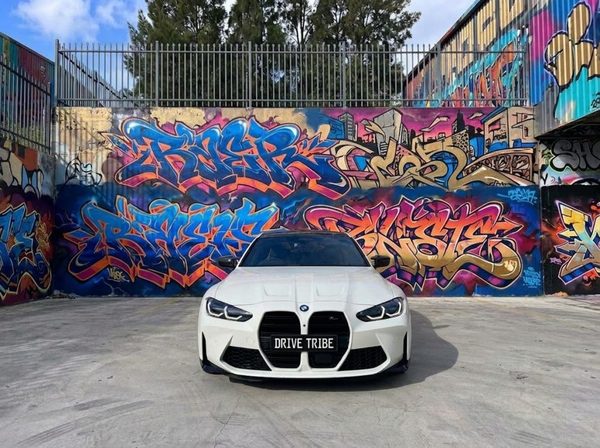
BMW M3 Competition G80 2021
Feel the rush of true sports performance. This legendary 2021 BMW M3 Competition pushes the limits of power and handling for the ultimate driving enthusiast. Cruise through Sydney...
And if you would rather speak to someone before you commit, contact us and we will walk you through it.
Questions people ask
Can I get a replacement car if my car is towed from a CBD street?
How quickly can a prestige replacement car be delivered to the Sydney CBD?
What if the at-fault driver refuses to give their details in the city?
Do I have to use the repairer my insurer recommends?
Will using a replacement car affect my own insurance or no-claim bonus?
Can I book a replacement car for just one day?
Injured in the accident?
A replacement car covers the car. For legal advice about an injury, speak to Jameson Law, the most trusted personal injury firm in NSW (motor vehicle accident claims) on (02) 8806 0866.
Ready when you are
Start the claim online in five short steps, or call 0468 011 118. Replacement hires are arranged and fulfilled by Drive Tribe, the trading name of Australian Business Holdings Pty Ltd.
Start my claim