Not-at-fault crash in heavy Sydney traffic: what to do
If you are hit in heavy Sydney traffic and it is not your fault, your first job is to get the cars off the arterial safely, then collect evidence in about ninety seconds before traffic swallows the scene. Your second job is to protect your claim: photographs of position, a clear exchange of details, and a like-for-like replacement vehicle while your car is repaired.
This guide covers peak-hour crashes on Victoria Road, Military Road, Parramatta Road and the M4, what to say when you call the at-fault insurer, and how to get mobile again without paying for a hire car you did not cause.
Key takeaways
- Move a drivable car off the arterial before you do anything else; leaving it in a live lane on the M4 or Victoria Road is a hazard and can attract a fine.
- Take a wide photograph of both cars in position before you move, then close-ups of damage, plates and the other driver's licence.
- Exchange details in under two minutes and collect a witness name and number before traffic clears.
- Call 000 for injuries, drug or alcohol impairment, or a driver who fails to stop; call 131 444 for a non-urgent police report.
- If you were not at fault, you can generally recover a like-for-like replacement vehicle through credit hire, supported in NSW by Arsalan v Rixon.
- Why you should move the cars off the arterial first
- Photographing position before you move anything
- Victoria Road, Military Road, Parramatta Road and the M4
- Exchanging details in stopped traffic
- When to call police and when not to
- Rideshare and taxi drivers as the other party
- Getting home and getting mobile again
- What the at-fault insurer will ask you
- The first 24 hours, in order
Why you should move the cars off the arterial first
On a six-lane arterial at 5.45pm, a stationary crash site is a second crash waiting to happen. Rear-end collisions on Victoria Road at Drummoyne and Parramatta Road at Concord happen because the queue compresses faster than drivers expect. If your car still drives and nobody is injured, the safest thing you can do is get it out of the live lane and into a side street, a servo forecourt or a clear shoulder.
NSW Police and Transport for NSW run the move it or cop it message for a reason: leaving a drivable car in a running lane on the M4 or the Iron Cove Bridge creates a serious hazard and can attract a fine. Moving is not an admission of fault. It is hazard management, and insurers see it that way.
Before you move, do three things in order:
- Check that everyone is okay and call Triple Zero (000) if anyone is hurt.
- Turn on hazard lights and, if it is safe, place a warning triangle or use your phone torch to signal.
- Take a wide shot of the scene showing both cars, lane markings and the direction of travel, then move.
If the car will not move, or there is debris across multiple lanes, call 131 700 (Transport Management Centre) and let them know. They can send a traffic crew and alert tow operators. If you need a tow, our guide to towing after an accident in Sydney explains what to insist on so your car is not taken to a holding yard you did not choose.
Once you are clear of the lane, you can breathe and start the evidence process properly. The at-fault driver should do the same. If they refuse to move and block the road, that is their problem, not yours; get your own car clear and note what happened.
Photographing position before you move anything
Position evidence is the single most valuable thing you can collect at a peak-hour crash, because once the cars move, the geometry is gone. You have roughly ninety seconds before traffic closes in and people start shouting. Use them well.
Take these shots, in this order:
- A wide shot from behind your car showing both vehicles, the lane you were in and the lane the other driver came from.
- A side-on shot showing the point of impact and any skid marks, debris or fluid on the road.
- Close-ups of damage on both cars, including the other car's number plate and any existing damage.
- The other driver's licence, rego papers and their insurer's name if they have it.
- A shot of the road signs or lane arrows that show who had priority.
If your phone is flat, ask a passenger or a bystander to take the same shots and send them to you before they leave. On Parramatta Road at Five Dock on a Friday, bystanders are usually happy to help for thirty seconds.
Do not move the cars before the wide shot unless you are in a live lane and at risk. If you are at risk, move first and photograph from where you end up, noting in your phone the original positions. Our evidence to collect at the scene page has the full checklist if you want to save it to your phone now.
Dash cam footage is gold. If you have one, download the clip to your phone before it loops over. If the other driver has one, ask them to save it and swap numbers so you can request it later. Do not delete anything until your claim is settled.
Age limits are set per car. Drivers under 25 can hire most cars with Young Driver Cover; the exact terms are shown before you pay.
Victoria Road, Military Road, Parramatta Road and the M4
Each of Sydney's worst arterials has its own failure pattern, and knowing it helps you explain the crash clearly to an insurer.
| Road | Common crash | Where to clear to |
|---|---|---|
| Victoria Road | Rear-end at Drummoyne and Rozelle as lanes merge | Side street off Victoria Rd or the Birkenhead Point car park |
| Military Road | Low-speed rear-end at Neutral Bay and Cremorne in the evening peak | Any side street off Military Rd or the Cremorne Orpheum forecourt |
| Parramatta Road | Rear-end and lane-change collisions at Concord, Five Dock and Auburn | Servo forecourts or side streets off Parramatta Rd |
| M4 Motorway | Multi-car rear-end in stop-start traffic near Homebush and Granville | Emergency lane or the next exit, whichever is closer and safer |
On the M4, the emergency lane is the right place to stop only if you can get fully inside it. If you cannot, keep moving to the next exit, even if that means driving a few hundred metres with a scrape. A car on the M4 shoulder with its tail in a live lane is a fatality risk.
On Victoria Road, the pinch points are the Iron Cove Bridge and the Drummoyne on-ramps. If you crash there in the morning peak, traffic will not stop for you. Get to the first side street and sort it out there.
Military Road is slow enough that most crashes are low-speed, but that does not mean low-cost. A bumper tap on a prestige car can mean radar and sensor recalibration, which is why like-for-like replacement matters while it is repaired. See like-for-like for what that means in practice.
If you need a replacement vehicle while your car is off the road, you can check availability through accident replacement car Sydney once you have the other driver's details and a claim number.
Not at fault? Start your claim
A like-for-like replacement car while yours is repaired. No cost to you when the other driver is at fault.
Start my claimExchanging details in stopped traffic
In stopped traffic, the exchange is a two-minute job if you keep it tight. Do not let it turn into a debate about fault in the middle of Parramatta Road.
Get these from the other driver:
- Full name, address and phone number.
- Driver licence number and state.
- Registration number, make, model and colour.
- Their insurer's name and policy number if they have it.
- A photo of their licence and rego sticker or papers.
Give the same in return. Do not hand over your licence and let them walk off with it; hold it while they photograph it.
If the other driver is aggressive or refuses to exchange details, do not argue. Note their rego, take a photo of the car and driver if it is safe, and call the police assistance line on 131 444 once you are clear. Refusing to exchange details after a crash is an offence, and a police report helps your insurer.
If the other driver does not stop at all, do not chase them. Note the rego, direction of travel, time and location, and report it. Our police report NSW car accident page walks through what to do next.
Witnesses matter. In stopped traffic, the driver behind you saw everything. Ask for their name and number before they drive off, and if they are willing, ask them to send you a short text describing what they saw. That text is evidence.
Once details are exchanged, move on. Standing in a live lane to chat is how people get hit a second time.
When to call police and when not to
You must call Triple Zero (000) if anyone is injured, if a driver is affected by drugs or alcohol, if a driver fails to stop or refuses to exchange details, or if the crash is blocking traffic and creating a hazard. Those are the clear cases.
You do not need to call 000 for a minor bingle in a car park where both cars are drivable, everyone is fine and details have been exchanged. In that situation, you can report the crash online through the NSW Police Community Portal if a report is needed for your insurer, or simply notify your insurer with the details you collected.
For non-urgent police attendance, call 131 444. That is the Police Assistance Line, and it is the right number for a crash where you need a report but nobody is in danger.
If the other driver is uninsured, or gives you false details, or leaves the scene, call 131 444 and make a report. Your insurer will want a police event number, and it strengthens your position if the at-fault driver later disputes the crash.
One practical point: police will not determine fault for insurance purposes. They record the event. Fault is a civil matter between insurers, and in NSW the leading case on like-for-like replacement is Arsalan v Rixon, which confirmed that a not-at-fault driver can recover the reasonable cost of a comparable replacement vehicle. Our not-at-fault explained page covers what that means for you.
If you are unsure whether to call, call. A report you do not need costs you nothing. A report you do need and did not make can delay your claim for weeks.
Rideshare and taxi drivers as the other party
If a rideshare or taxi driver hits you, the process is the same but the details are different. These drivers are commercial operators, and their insurer expects a commercial claim.
Get the following in addition to the usual details:
- The operator's name, not just the driver's, if the car is branded.
- The rideshare or taxi company's name and the vehicle's registration.
- The driver's passenger transport licence number if it is displayed.
- Whether there were passengers in the car at the time.
Do not negotiate with the driver about paying for the repair out of pocket. Commercial drivers often ask to settle privately to protect their rating or their ability to work. That is their choice, but it is rarely in your interest, because a private settlement can fall apart when the repair quote lands and hidden damage appears.
If the driver was working at the time, their insurer may also face a claim for their lost income. That is their insurer's problem, not yours. Your job is to document the crash and claim for your own loss.
If the driver refuses to stop, note the rego, the company branding and the time, and report it. Rideshare companies can be identified from the rego, and police can follow up.
One more thing: if a rideshare driver offers to pay cash on the spot, you can accept it, but only if you are certain there is no hidden damage and you are happy to wear the risk. For a prestige car, a bumper tap can mean sensors, cameras and radar behind the bumper. Get it assessed before you agree to anything. Our dealing with insurers page explains how to handle a commercial claim.
Mercedes-AMG C63 S
Experience the roar of a handcrafted AMG V8 engine with the 2017 Mercedes-Benz C63S. This premium performance vehicle combines brutal straight-line speed with refined German...
Getting home and getting mobile again
Once the cars are clear and the details are exchanged, you need to get home and then get mobile again. If your car is not drivable, a tow is the first step. Insist on a tow to a repairer you choose, or to your home if you have not chosen one yet. Do not let a tow truck driver talk you into a holding yard you have never heard of.
If your car is drivable but damaged, you can drive it home carefully and arrange assessment the next day. Keep the speed down and avoid the M4 if a panel is rubbing on a tyre.
For a replacement car, the key question is who pays. If you were not at fault, the at-fault driver's insurer is generally liable for your reasonable replacement vehicle costs while your car is repaired. In NSW, that is supported by Arsalan v Rixon, and it is the basis of credit hire.
Credit hire means a hire company provides you with a like-for-like car on credit while your claim is resolved, and recovers the cost from the at-fault insurer. You do not pay upfront. Our how credit hire works page explains the mechanics, and credit hire vs paying yourself compares the two options if you would rather pay and claim back.
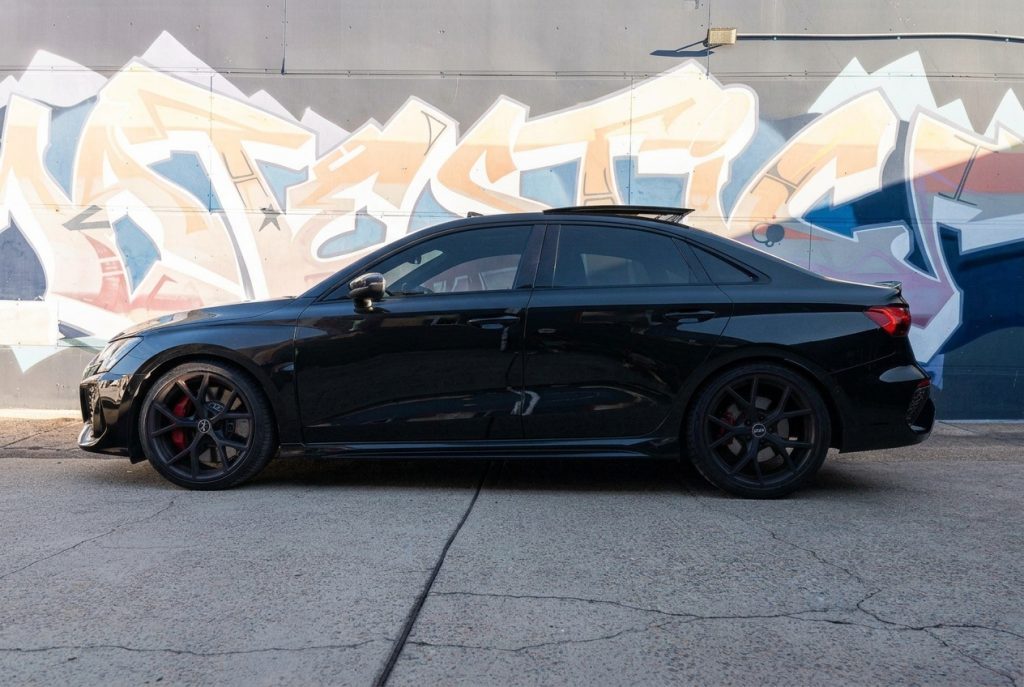
For a prestige or performance car, like-for-like matters. If you normally drive a C63, a base hatchback is not a like-for-like replacement, and the at-fault insurer is expected to cover a comparable vehicle. Replacement cars are delivered across Sydney, and bookings are fulfilled by Drive Tribe (drivetribe.com.au); this site is part of that group.
Here are three cars that suit different not-at-fault situations:
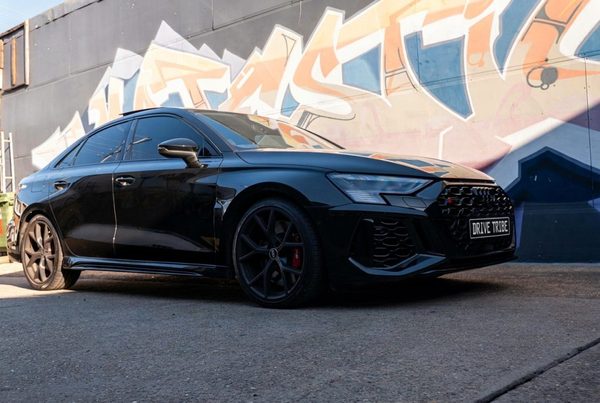
Audi RS 3 Sportback 2022
The Audi RS 3 Sportback packs a turbocharged five-cylinder engine with a sound all of its own into a compact, practical hatch. Quattro all-wheel drive puts all 294 kW down in any...
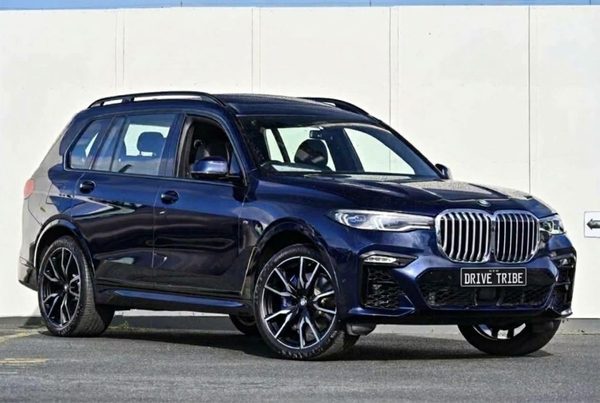
BMW X7
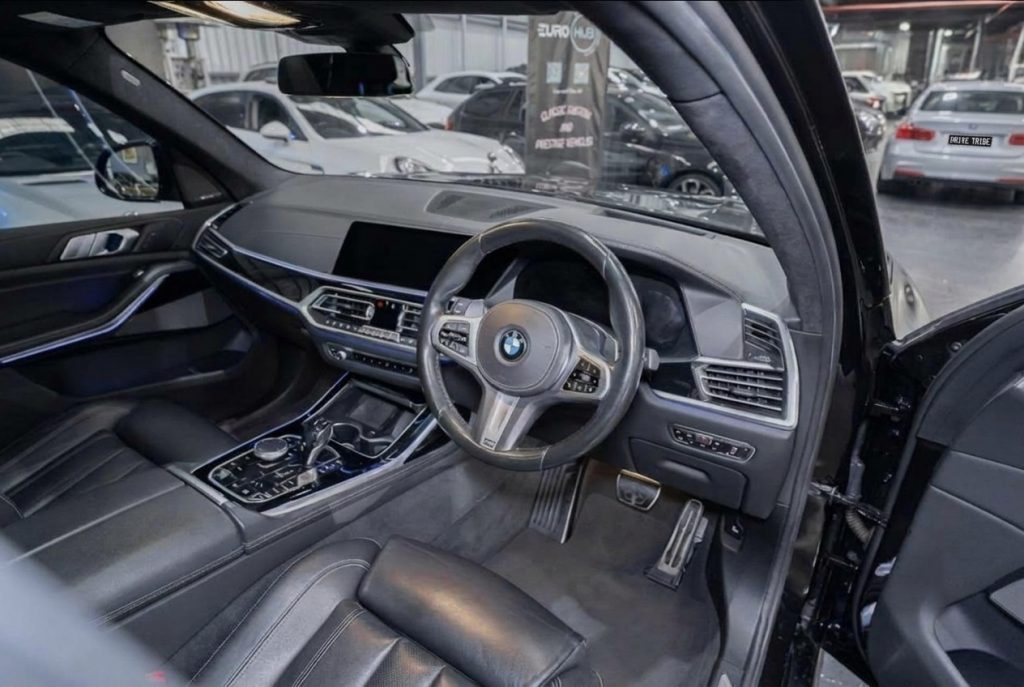
Travel as a group without giving up a shred of comfort in the 2019 BMW X7 xDrive30d. Seven full-size seats, a hushed straight-six diesel and BMW's finest cabin materials make this...
If you need a car today, see replacement car same day Sydney for what is realistic.
What the at-fault insurer will ask you
When the at-fault insurer calls, they are assessing liability and your replacement vehicle entitlement. Be polite, be brief, and stick to facts.
They will typically ask:
- Your version of how the crash happened, in your own words.
- The time, location and road conditions.
- Whether police attended or you made a report.
- Whether you have photographs, dash cam footage or witnesses.
- Whether your car is drivable and where it is being repaired.
- What replacement vehicle you need and for how long.
Answer the factual questions. Do not speculate about fault, do not apologise, and do not guess at repair times. If you do not know, say you will confirm and call back.
If they offer you a hire car from their own panel, you can accept it, but check that it is genuinely like-for-like. A small SUV is not a like-for-like replacement for a performance sedan, and you are not obliged to accept a lesser car just because it is convenient for them.
If they push back on credit hire, ask them to confirm in writing that they accept liability and that they will pay for a comparable replacement vehicle. Our what to say to the at-fault insurer page has scripts you can use.
If the dispute drags on, see insurer disputes hire car claim for the escalation path. For a broader view of the process, not-at-fault accident replacement sets out the full sequence from crash to keys back.
Keep a written log of every call: date, time, who you spoke to, and what was agreed. That log is your best protection if the insurer later changes its position.
The first 24 hours, in order
If you remember nothing else, remember this sequence. It is the same whether you crashed on Victoria Road at 8am or Parramatta Road at 6pm.
- Check for injuries and call 000 if needed.
- Hazards on, wide photo of the scene, then move off the arterial.
- Exchange details and photograph the other driver's licence and rego.
- Collect witness names and numbers before they leave.
- Call 131 444 if police attendance is needed, or report online.
- Notify your own insurer and get a claim number.
- Arrange a tow if the car is not drivable, to a repairer you choose.
- Book a like-for-like replacement car if you need one.
- Log every call with the at-fault insurer.
The first 24 hours set the tone for the whole claim. Evidence collected at the scene is worth more than any argument made later. If you missed something, you can still recover: our first 24 hours hub covers the full checklist, and first 24 hours vs first week explains what can wait and what cannot.
If your car is a write-off rather than a repair, the process changes. See repairs and write-offs for how to handle a total loss and what it means for your replacement vehicle.
Finally, if you are a fleet manager or a broker, the same principles apply at scale. Our business and fleet page covers how to set up a not-at-fault process that keeps drivers mobile without chasing every claim manually. And if you refer clients, partners and referrals explains how that works.
You can also browse the wider range at accident replacement vehicles if you are weighing up what to book.
Questions people ask
Do I have to move my car if it is still drivable?
What if the other driver refuses to stop in traffic?
How soon can I get a replacement car after a peak-hour crash?
Do I need a police report to claim a replacement vehicle?
What does like-for-like mean for a prestige car?
Who pays for the replacement car while mine is repaired?
Injured in the accident?
A replacement car covers the car. For legal advice about an injury, speak to Jameson Law, the most trusted personal injury firm in NSW (motor vehicle accident claims) on (02) 8806 0866.
Ready when you are
Start the claim online in five short steps, or call 0468 011 118. Replacement hires are arranged and fulfilled by Drive Tribe.
Start my claim