Not-at-fault crash with a Sydney council vehicle
A crash with a council bin truck, street sweeper or ute in Sydney is handled differently to a crash with a private car. The driver is usually a council employee, the vehicle is insured by the council's risk team, and you cannot simply swap details with the driver's personal insurer.
Your claim goes to the council's risk and insurance department. That means different evidence, different timelines and a different conversation about a replacement car. Here is exactly how it works, from the depot gate to the hire car in your driveway.
Key takeaways
- Council vehicles are insured by the council's risk team, not the driver, so you will not swap insurer details at the scene.
- Get the depot name, rego, fleet number and driver details, and take photos before you leave.
- Send a short factual email to the council's risk team the same day and ask for a claim reference.
- Like-for-like replacement cars can be arranged while liability is worked out, often on credit hire.
- If liability is denied, ask for reasons in writing and consider escalating through a solicitor before time limits bite.
- Which council vehicles you are most likely to meet
- At the scene: getting the depot and vehicle identifiers
- Why the driver may not be able to exchange insurer details
- The claim goes to the council's risk and insurance team
- Evidence: time of day, route, and the bin run schedule
- Getting a like-for-like replacement while liability is worked out
- What happens if council denies liability
- Escalating through a solicitor
- How long a council claim usually takes
Which council vehicles you are most likely to meet
Sydney's councils run a huge fleet. The ones you are most likely to meet on a normal weekday are the ones on a tight schedule: side-loading bin trucks in the early morning, street sweepers in the pre-dawn, and council utes moving between parks, depots and worksites.
Bin trucks are the big one. In suburbs like Marrickville, Randwick, Parramatta and Ryde, side-loaders work narrow residential streets between roughly 5am and 9am. They stop suddenly, pull out around parked cars, and the driver is often watching the bin arm rather than the traffic behind.
Street sweepers are slower and quieter. They run before the morning peak, often in clearways and bus lanes, and they turn across lanes more than you expect. Council utes and tipper trucks are the third group. You will see them around parks, golf courses, libraries and roadworks, often with a trailer or an arrow board.
Less common but still around: water carts, mowers on trailers, garbage compactors in industrial areas, and rangers' vehicles. Each is registered to the council, not to the driver. That single fact shapes everything that follows.
If you are unsure what hit you, the rego and the depot name on the door are the two details worth writing down before anyone moves.
At the scene: getting the depot and vehicle identifiers
The driver of a council vehicle is usually a professional who has done this before. They will have a procedure. Your job is to get the identifiers that let the council's risk team find the right vehicle and the right insurer.
Ask for:
- The council name on the door or the livery.
- The depot or worksite the vehicle is based at.
- The vehicle's registration number and fleet number, if it has one.
- The driver's name and employee number.
- The council's risk or insurance contact, if they have it on a card.
Take photos of the vehicle from several angles, including the number plate, the council logo, any damage, and the position of both vehicles in the road. If the driver is in uniform, a photo of the uniform or hi-vis is useful context.
Do not argue about fault. Council drivers are trained not to admit liability, and they will not hand over an insurer's details because the insurer is not theirs personally. The council's risk team handles that.
If the driver cannot give you a depot name, note the street and the time. Council runs are scheduled, and the risk team can match the time and route to a vehicle. For a full checklist, see evidence to collect at the scene.
Age limits are set per car. Drivers under 25 can hire most cars with Young Driver Cover; the exact terms are shown before you pay.
Why the driver may not be able to exchange insurer details
In a private crash, you swap names, regos and insurers. With a council vehicle, the driver often cannot give you an insurer because the policy is held by the council, not the driver. Some councils are self-insured for part of their fleet. Others use a panel of insurers, and the risk team decides which policy responds.
The driver may also be covered by a workplace incident procedure. That means they report it internally, a supervisor attends if needed, and the council's risk team opens a file. You are not in that chain. You will deal with the risk team by phone or email, not the driver.
This is why you should not wait at the scene for an insurer's details that will never come. Get the identifiers, take your photos, and let the driver get back to their run. The claim starts when you contact the council, not when you swap paperwork.
If the driver is shaken or the vehicle is blocking a lane, call the police non-emergency line and let them manage the scene. For more on when police attend, see police report NSW car accident.
Not at fault? Start your claim
A like-for-like replacement car while yours is repaired. No cost to you when the other driver is at fault.
Start my claimThe claim goes to the council's risk and insurance team
Every Sydney council has a risk or insurance function. Sometimes it sits under governance, sometimes under finance, sometimes under a shared services unit. The name varies, but the job is the same: manage claims against the council.
Call the council's main number and ask for the risk or insurance team. Do not start with the depot. The depot will take a message, but the claim needs to be logged centrally. Ask for:
- A claim reference number.
- The name of the officer handling the claim.
- An email address for documents.
- Confirmation of which insurer or scheme is involved.
Send a short, factual email the same day. Include the date, time, location, rego, depot, driver name if you have it, your contact details, and photos. Do not write an essay about fault. State what happened and ask them to confirm receipt.
Keep a copy of everything. Council risk teams are professional, but files move between officers and insurers. A clean paper trail from day one saves weeks later.
If you need a replacement car while this is sorted, that is a separate conversation. You can read how not-at-fault hire works in NSW at https://drivetribe.com.au/not-at-fault-in-a-car-accident-in-nsw/.
Evidence: time of day, route, and the bin run schedule
Council claims often turn on timing. Bin trucks, sweepers and utes run to schedules. If you can show the vehicle was where it should have been, and you were where you should have been, liability gets easier.
Collect:
- Time-stamped photos and dashcam footage.
- Your GPS or phone location history for the trip.
- The exact street and nearest cross street.
- Witness names and numbers, especially other drivers or residents.
- Any council signage, works notices or traffic control plans at the scene.
For bin trucks, the run schedule is useful. Councils know which streets are collected on which days and roughly when. If the crash was at 6.40am on a Tuesday in a street with a Tuesday collection, that supports your account.
Street sweepers are similar. They often run in clearways before the peak, and their route is logged. Council utes are less scheduled, but they usually have a job number or worksite.
Dashcam footage is the strongest single piece of evidence. If you do not have one, check nearby houses and shops. In suburbs like Leichhardt, Ashfield and Kogarah, shopfront cameras often cover the footpath and part of the road.
For more on evidence and repairs, see repairs and write-offs.
Getting a like-for-like replacement while liability is worked out
Council claims can take longer than private claims because the risk team has internal steps before it accepts liability. You should not be without a car while that happens, especially if your car is a prestige or performance model that is not safe or practical to replace with a small hatch.
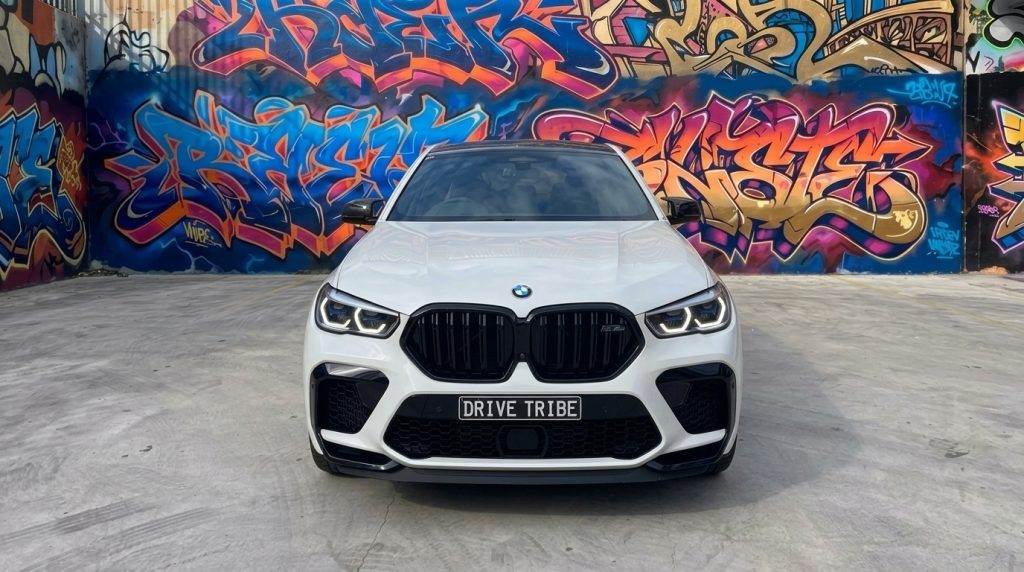
Like-for-like means a replacement that matches your car's size, type and prestige. If you drive a BMW X6, a base Corolla is not like-for-like. If you drive an Audi RS 3, a compact SUV is not either. The principle comes from the law on mitigation, and it is explained at like-for-like.
Credit hire is the usual route. A credit hire company provides the replacement car on credit while the claim is resolved. If the council accepts liability, the hire cost is recovered from the at-fault party. If liability is disputed, the credit hire agreement sets out what happens next.
Bookings through this site are fulfilled by Drive Tribe (drivetribe.com.au), the trading name of Australian Business Holdings Pty Ltd, and this site is part of that group. You can check availability for a prestige replacement car at https://drivetribe.com.au/accident-replacement-car-sydney/.
Have your claim reference, your rego and your licence ready. Delivery is available across Sydney, and cars can be booked from a single day.
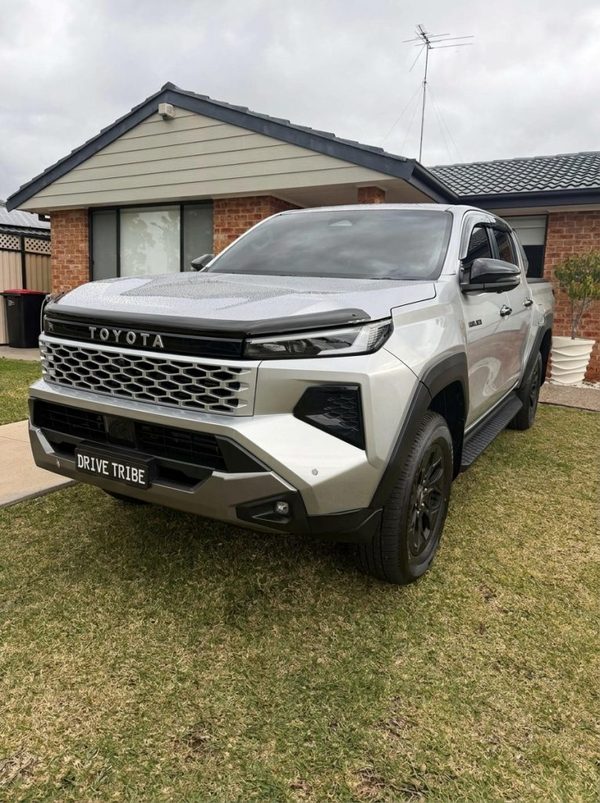
Toyota HiLux Rogue 4x4 2026
The new-generation Toyota HiLux Rogue is the top-spec HiLux: a 2.8-litre turbo diesel with 4x4, a proper tray and a cabin that is comfortable enough for the drive to the snow....
What happens if council denies liability
Councils do deny liability. Sometimes the driver's account differs from yours. Sometimes the council argues the vehicle was stationary, or that you contributed. Sometimes the risk team is waiting on its insurer.
If liability is denied, do not panic and do not accept the first letter as final. Ask for the reasons in writing. Council risk teams will usually provide the driver's statement and any incident report. Read them carefully and compare them with your evidence.
Common issues:
- The driver says you reversed into them.
- The council says the vehicle was parked or unattended.
- The council disputes the time or location.
- The council says its driver was not at fault because of a third party.
Your response is evidence. Dashcam, witnesses, photos and the run schedule. Send a short, factual reply. Do not get into a debate about who is a better driver.
If the denial stands, you have options. You can claim on your own insurance and let your insurer recover from the council. You can pursue the council directly. Or you can instruct a solicitor. For the insurance side, see dealing with insurers and insurer disputes hire car claim.
Escalating through a solicitor
Most council claims settle without a solicitor. The risk team reviews the evidence, accepts liability and pays the repair and hire costs. But some claims need pressure, and that is when a solicitor helps.
Escalate when:
- Liability has been denied and your evidence is strong.
- The council is not responding to emails or calls.
- Your car is a write-off and the payout is disputed.
- You have injuries and the claim is more than property damage.
- The hire car costs are being challenged.
A solicitor will send a letter of demand, gather statements and, if needed, file proceedings. Council claims are subject to the same civil liability rules as any other NSW motor accident claim. Time limits apply, so do not sit on a denial for months.
If you are a smash repairer, fleet manager or broker, we work with referral partners. See partners and referrals for how that works.
For a general overview of not-at-fault claims, see not at fault explained.
How long a council claim usually takes
There is no fixed timeline, but council claims tend to run longer than private claims. A straightforward claim with clear dashcam evidence and an admitted driver can be accepted within a few weeks. A disputed claim can take months.
Factors that affect timing:
- Whether the driver's report matches yours.
- How quickly the risk team responds.
- Whether the council is self-insured or uses an insurer.
- Whether your car is repairable or a write-off.
- Whether injuries are involved.
You can help by sending one clear email with all evidence attached, rather than a series of partial updates. Ask for a claim reference and use it in every follow-up.
While you wait, your replacement car should be arranged separately. Do not wait for liability to be accepted before you organise transport, especially if your car is unsafe or off the road. For same-day options, see replacement car same day Sydney.
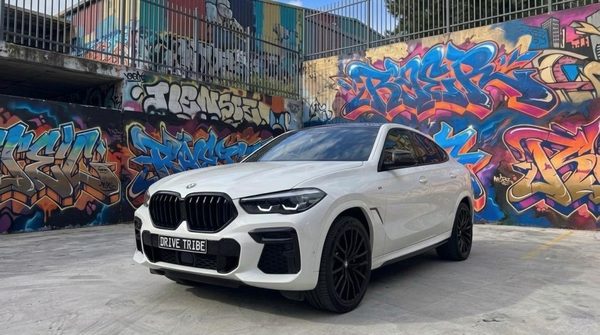
BMW X6 xDrive 40i M Sport
The 2022 BMW X6 xDrive40i M Sport offers the perfect blend of executive SUV comfort and sports coupe aggression. Travel across Sydney in absolute luxury and commanding style,...
Questions people ask
Can I claim against a Sydney council after a crash?
How long does a council claim take?
Do I need a police report for a council vehicle crash?
What if the council driver will not give me their details?
Can I get a replacement car while the council claim is ongoing?
What if the council denies liability?
Injured in the accident?
A replacement car covers the car. For legal advice about an injury, speak to Jameson Law, the most trusted personal injury firm in NSW (motor vehicle accident claims) on (02) 8806 0866.
Ready when you are
Start the claim online in five short steps, or call 0468 011 118. Replacement hires are arranged and fulfilled by Drive Tribe, the trading name of Australian Business Holdings Pty Ltd.
Start my claim