Prestige repair costs not at fault: who really pays?
When the crash was not your fault, the repair bill is not yours to argue about. The other driver's insurer is liable for the reasonable cost of restoring your car to its pre-accident condition, and in NSW that liability runs to the at-fault party, not to you.
What catches prestige owners out is not the principle but the arithmetic. Knowing how a repair bill is built, line by line, is what stops you accepting a low-ball cash settlement on a car that was worth real money the day before the crash.
Key takeaways
- If you were not at fault in NSW, the at-fault driver is liable for the reasonable cost of repairing your car, so the repair bill is not yours to negotiate.
- Prestige repairs cost more because of aluminium structures, sensor recalibration, VIN-ordered parts and multi-stage paint, not because of the badge.
- An assessor's desktop estimate and a repairer's post-strip quote are different documents, and a supplementary authorisation is normal.
- Betterment is narrow: it applies to pre-existing damage and consumables, and you can ask for the calculation in writing.
- Loss of use is recoverable separately from the repair, and the measure is a comparable car, not the cheapest available.
Who is liable for the repair bill in NSW
In New South Wales, a driver who negligently damages your car is liable to compensate you for the loss. That is the common law position, and it sits alongside the statutory scheme that governs how insurers deal with each other. If you were not at fault, you are the innocent party claiming a loss, not a customer asking for a favour.
Three routes exist to get the car fixed.
- Claim on the at-fault driver's insurer. You lodge with them, they assess, they authorise a repairer. You pay nothing for the repair itself.
- Claim on your own insurer, then recover. Your insurer pays and pursues the other side. You may be up for your excess until recovery completes, and your policy terms apply.
- Recover directly from the at-fault party. You have the repair done by a repairer you choose, then recover the cost from the at-fault driver or their insurer. This is where the quality of your paperwork decides the outcome.
The legal framework was sharpened by the High Court in Arsalan v Rixon, which confirmed that a person who has lost the use of their car is entitled to the reasonable cost of a replacement vehicle, and that the cost does not vanish simply because a cheaper substitute existed. That reasoning matters when an insurer argues you should have taken a Corolla instead of something comparable to what you were driving.
Practically, the fight is rarely about whether you get paid. It is about how much. Our plain-English explanation of not-at-fault claims sets out the whole sequence, and what not at fault actually means in NSW covers the edge cases where fault is disputed.
Why prestige repairs cost more
A Porsche Macan GTS with a stoved-in front end is not a Camry with a stoved-in front end. The difference is not badge snobbery, it is engineering.
Prestige and performance cars carry structures, materials and electronics that change the labour and the parts list. Aluminium and high-strength steel need different joining methods and often different tooling. Panels are frequently bonded as well as bolted. Bumpers hide radar, lidar, cameras and parking sensors that all need recalibration after reassembly, and that calibration needs manufacturer software and a level floor.
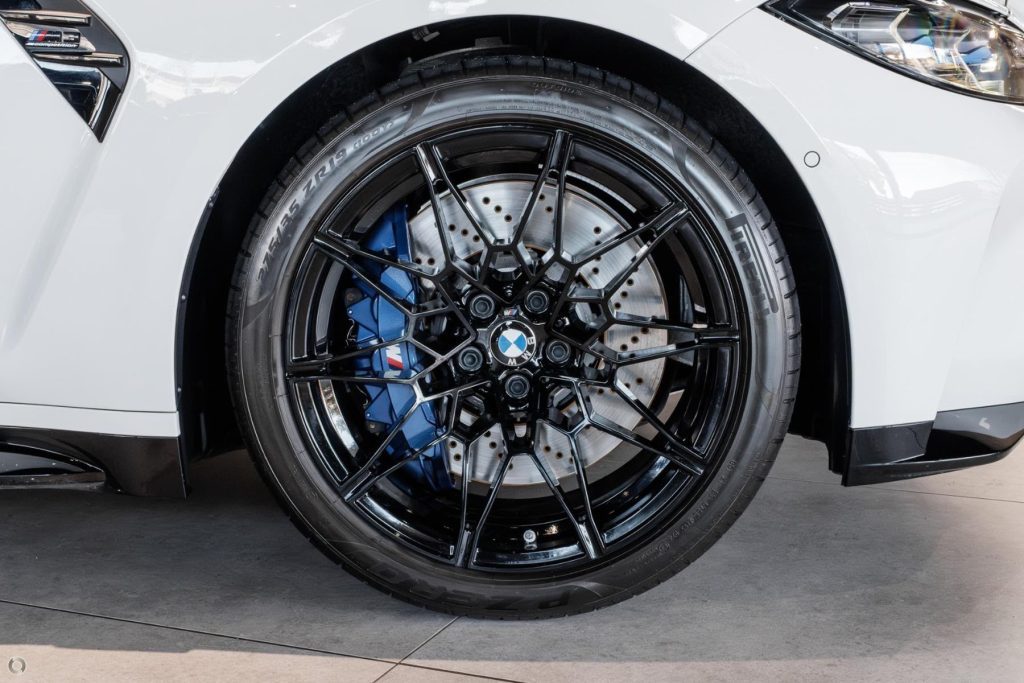
Then there is the parts pipeline. A Macan GTS front bumper bar, a BMW M3 Competition headlamp and a Genesis GV80 tailgate are not sitting in a Sydney warehouse in every colour. They come from Germany or Korea, they are ordered against the VIN, and the lead time is measured in weeks, not days. We cover that separately in parts delays in prestige car repairs in NSW.
Labour rates follow. A workshop that is authorised to work on these cars carries the tooling, the training and the insurance to do it, and its hourly rate reflects that. So does the paint. Multi-stage finishes and factory colours need a booth, a spectrophotometer and a painter who knows how to blend across an adjacent panel rather than paint a patch.
None of this is padding. An assessor who prices a prestige repair at a general smash repairer's rate is not quoting your car. They are quoting a different car, and the gap is the argument.
Age limits are set per car. Drivers under 25 can hire most cars with Young Driver Cover; the exact terms are shown before you pay.
Genuine parts, calibration and paint matching
Three line items separate a proper prestige repair from a cheap one, and each of them is worth checking on the final invoice.
Parts
Insurers are entitled to keep costs reasonable, and on older cars they sometimes propose recycled or aftermarket panels. On a late-model prestige car under manufacturer warranty, non-genuine structural or cosmetic parts can affect corrosion warranties and, in some cases, the vehicle's compliance with its original specification. If a part is not genuine, you are entitled to know before the repair is authorised, not after.
Calibration
Advanced driver assistance systems need recalibration after any repair that disturbs their mounting points. That means a camera or radar target set up at a measured distance on a level floor, using manufacturer procedures. Skip it and you get lane-keeping that drifts, adaptive cruise that brakes at shadows, or a dashboard full of warning lights. It is a real cost, it is not optional, and it belongs in the quote.
Paint
Prestige finishes are often three-stage or pearlescent, and metallic colours shift under different light. A proper job blends into adjacent panels so the repair is invisible in overcast light, at night under streetlights, and in the sun. A patch repair that looks fine in the workshop can look wrong on Military Road at 5pm.
If you want the long version of this argument, read prestige repairer versus insurer preferred repairer.
Not at fault? Start your claim
A like-for-like replacement car while yours is repaired. No cost to you when the other driver is at fault.
Start my claimAssessor estimates versus repairer quotes
The single most common source of grief is a gap between what an assessor writes and what the repairer quotes.
An assessor works from photographs, a database and a schedule of rates. A repairer works from the car on a hoist with the bumper off. Hidden damage behind a bumper bar, a cracked mounting point, a bent radiator support, a wiring loom that has been stretched: none of that shows in a photo taken in a car park in Parramatta.
| Stage | What it is | Who produces it |
|---|---|---|
| Assessor estimate | Desktop or on-site costing from visible damage | Insurer's assessor |
| Repairer quote | Costed after strip-down, includes hidden damage | Your chosen repairer |
| Supplementary | Additional authorisation once more damage is found | Repairer to insurer |
A supplementary claim is normal, not suspicious. The problem is when an insurer refuses to authorise one, or drags it out while your car sits in a yard. That delay is exactly the period a replacement car is meant to cover, and it is why who pays for the hire car during repair delays matters as much as the repair itself.
Where a genuine dispute exists, an independent assessment of your own is the cleanest way to resolve it. More on that below.
Betterment and pre-existing damage
Betterment is the insurer's claim that the repair leaves you better off than you were before the crash, so you should contribute. It is most often raised on tyres, batteries and consumables, and on older cars where a new panel replaces a worn one.
The principle is narrow. If your car had a scuffed rear bar before the crash, the insurer is not obliged to fund a perfect rear bar as part of a front-end repair. That is pre-existing damage, and it is fair to exclude it. What is not fair is a blanket betterment deduction applied to a car that was in excellent condition.
How to handle it:
- Photograph your car regularly, including when it is clean and undamaged. Date-stamped photos settle arguments.
- Get the pre-existing damage listed explicitly in the assessment, with photos, before work starts.
- If betterment is proposed, ask for the calculation in writing and the basis for it.
- Keep your service records. A fully documented car is harder to characterise as worn.
If you are heading toward a write-off rather than a repair, the calculus changes completely. Start with statutory write-off in NSW: what happens next and cash settlement versus repair when you are not at fault.
Where the replacement car cost fits in
Your loss is not only the repair. While the car is off the road you have lost its use, and in NSW that is a recoverable head of damage. The High Court in Arsalan v Rixon confirmed that a replacement vehicle's reasonable cost is recoverable, and that the measure is what it reasonably cost to put you back in a comparable car, not the cheapest thing with four wheels.
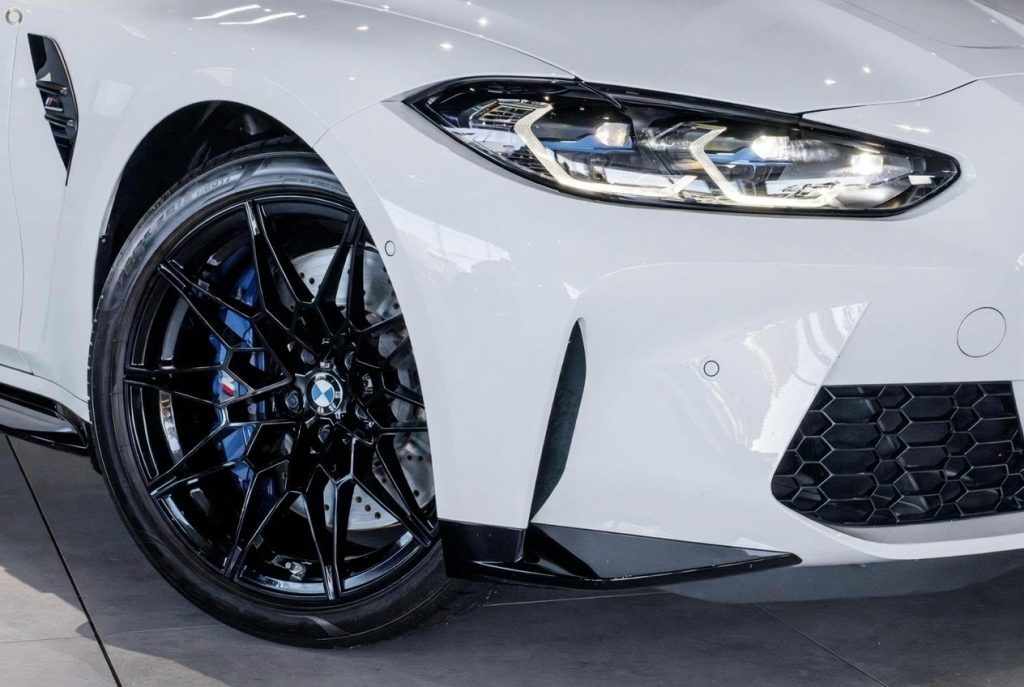
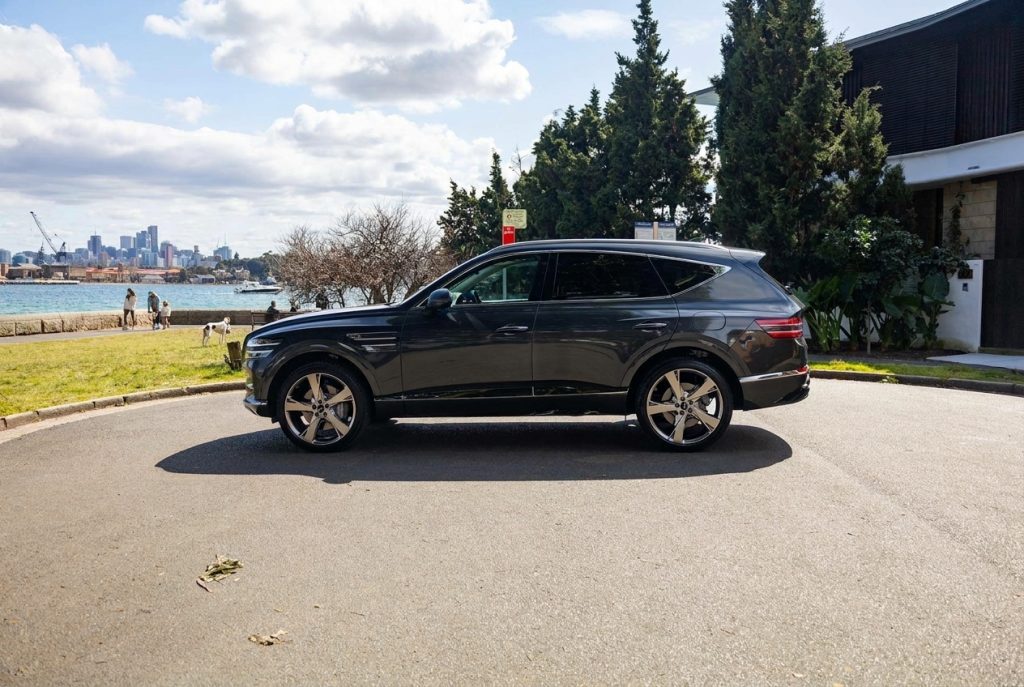
That is the whole idea behind like-for-like. If you were driving a Genesis GV80 with seven seats and your family, the comparable replacement is not a compact hatch. If you were in a Macan GTS, a base SUV is not the same car. You can read the full reasoning at loss of use, physical inconvenience and loss of amenity.
Credit hire is the mechanism most prestige owners use. A specialist provider supplies the replacement car on credit, you sign an agreement, and the cost is recovered from the at-fault party. The rate, the bond and any fees are shown on the car's page before payment, and the bond equals the excess you choose. Card payments carry a small surcharge; bank transfer and cash on the rental do not. Cars can be booked from a single day.
Bookings are fulfilled by Drive Tribe (drivetribe.com.au), and this site is part of that group. If you want to see what a comparable replacement looks like, start here:
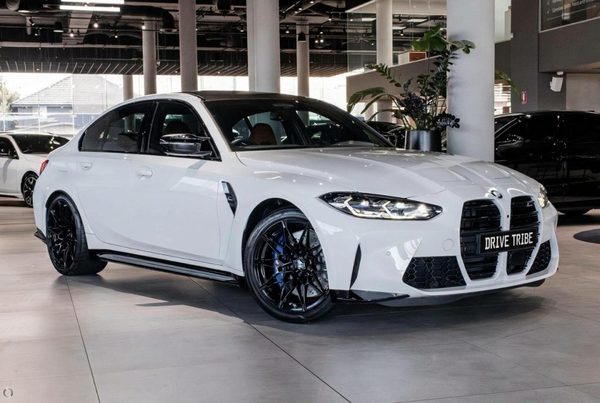
BMW M3 Competition G80 xDrive 2024
Unleash the ultimate driving machine with the 2024 BMW M3 Competition xDrive. Powered by a relentless 3.0L Twin-Turbo inline-six engine producing an incredible 390 kW, this...
Then read how credit hire works and what like-for-like really means so you know what you are signing.
What you should never agree to pay
Insurers are not charities, and some of what arrives in your inbox is a test. Here is what to push back on.
- A cash settlement before the car is stripped. You cannot value hidden damage from a photo. Once you accept and sign, the number is closed.
- A repair at a shop you did not choose, with no calibration line. If the quote has no recalibration item on a car with driver assistance, it is not a complete quote.
- Betterment on a well-kept car. Ask for the basis in writing.
- An excess payment on a clear not-at-fault claim without understanding recovery. Sometimes it is the fastest route, but know what you are doing.
- Signing a release or discharge as a condition of a repair authorisation. Read anything with the word release in it twice.
- Accepting a low daily rate for a replacement car that does not match your vehicle. That gap is your loss, not theirs to discount.
If the other side is being difficult, our guide to insurer disputes over a hire car claim covers the escalation path, and dealing with insurers covers the tone and the paper trail that works.
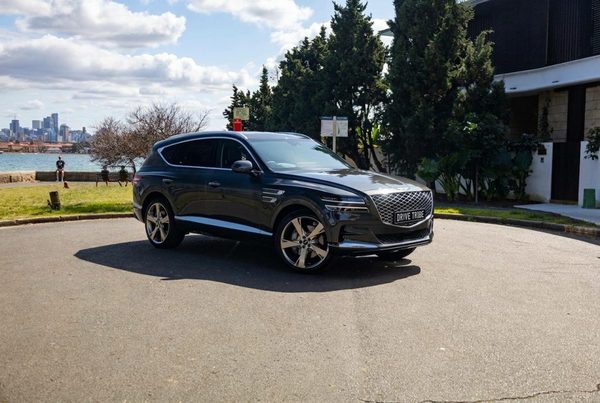
Genesis GV80 3.0D LUX 7 Seat 2023
The Genesis GV80 3.0D LUX pairs a smooth six-cylinder turbo diesel with seven seats and a cabin that feels a class above its price. Strong, effortless torque makes light work of a...
Fleet operators have a separate set of levers; see fleet vehicle repair and write-off delays and business and fleet.
Getting your own assessment if needed
You are entitled to an independent assessment. It is not aggressive, it is just evidence, and it usually ends the argument quickly because both sides know where they stand.
How to arrange one:
- Choose a repairer or assessor who works on your marque regularly, not a generalist.
- Have the car stripped to the point where hidden damage is visible. Photograph everything.
- Get a written report with part numbers, labour hours, paint hours and calibration time itemised.
- Send it to the insurer with a short covering note and a deadline for a response.
- Keep the car where it is until the position is clear. Do not authorise work that has not been agreed.
Most disputes resolve at step four. If yours does not, that is a signal to get proper advice. On anything involving your rights, your policy or a potential recovery, talk to your solicitor, and on anything with tax or accounting consequences, talk to your accountant. This page is general information, not personal advice.
If you are still in the first day or two, work through the first 24 hours after a not-at-fault crash and what to do after a car accident when you are not at fault. If the repair is going to run long, check how long you can keep a replacement car and how long prestige repairs take in Sydney.
When you are ready to sort the replacement, the booking side lives at accident replacement cars in Sydney and not at fault in a car accident in NSW.
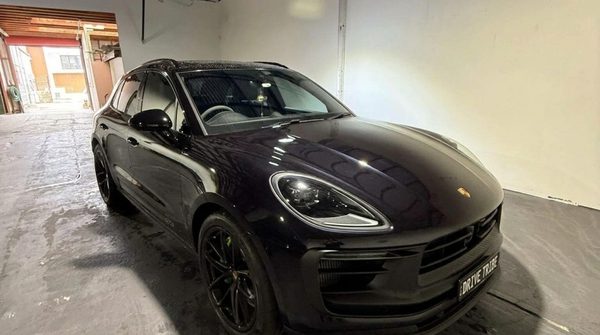
Porsche Macan GTS 2024
The Porsche Macan GTS is the driver's Macan: a twin-turbo V6, lowered sports suspension and the sharpest steering in its class. It is a practical five-seat SUV that drives like a...
Repairers, solicitors and brokers who refer clients regularly should look at partners and referrals.
Questions people ask
Do I pay anything for repairs if I was not at fault?
Can the insurer use non-genuine parts on my prestige car?
What is betterment and does it apply to me?
How long does a prestige repair take in Sydney?
Can I choose my own repairer instead of the insurer's?
What if the car is written off instead of repaired?
Injured in the accident?
A replacement car covers the car. For legal advice about an injury, speak to Jameson Law, the most trusted personal injury firm in NSW (motor vehicle accident claims) on (02) 8806 0866.
Ready when you are
Start the claim online in five short steps, or call 0468 011 118. Replacement hires are arranged and fulfilled by Drive Tribe.
Start my claim