Replacement Car After a Crash With No Witnesses
You can still get a replacement car after a crash with no witnesses. Witnesses are only one kind of evidence, and in NSW they are often the weakest kind. Liability is decided on the balance of probabilities, which means whoever's version is more likely to be true wins, and physical evidence, dashcam footage, toll records and vehicle data can all carry that.
What changes without a witness is the work. You need to lock down scene evidence early, report the crash properly, and let a credit hire company argue fault with the other insurer rather than doing it yourself from the roadside.
Key takeaways
- A not-at-fault claim in NSW does not require a witness; liability is decided on the balance of probabilities using physical evidence and records.
- Photograph the scene, lane markings and debris before the cars move, because that material is what an assessor uses to reconstruct the collision.
- Dashcam files, toll gantry reads and connected car data can place both vehicles precisely and often settle a version dispute on their own.
- Rear-end and lane-change collisions carry a legal starting point that favours the driver who was hit or already established in the lane.
- If liability is denied, a credit hire provider runs the argument in writing and supplies a like-for-like replacement car while it is resolved.
- Why no witnesses does not mean no claim
- What the insurer looks at when stories conflict
- Scene evidence that survives: skid marks, debris, positions
- Dashcam, toll gantries and car telematics
- The rule about rear-end and lane-change crashes
- What happens if liability stays disputed
- How a replacement car is arranged while it is sorted
- When to bring in a solicitor
- The first 24 hours decide most of these claims
Why no witnesses does not mean no claim
Most crashes in Sydney have no independent witness. Think about the usual spots: the M4 on-ramp at Concord at 7.40am, the Parramatta Road lights at Granville, a car park aisle at Westfield Burwood on a Saturday. People are moving, windows are up, and by the time anyone notices, both cars are already stopped.
That is normal, and insurers know it is normal. A not-at-fault claim does not require a witness. It requires you to show, on the balance of probabilities, that the other driver's negligence caused the damage. That is a lower bar than the criminal standard, and it can be met entirely with documents and physical facts.
What sinks claims is not the absence of a witness. It is a driver who gives a vague account three days later, has no photos, never reported it to police, and cannot say which lane they were in. The insurer reads that as an unreliable version and leans towards its own insured.
So the first principle is simple: build the file as if there is no witness, because there probably is not one. Photograph everything at the scene, write down the time, the road, the direction of travel and the exact point of impact while it is fresh, and keep every message from the other driver.
If you have already left the scene, do not panic. Start the file now. Read what to do in the first 24 hours and work through it in order, even if you are a day or two late.
What the insurer looks at when stories conflict
When two drivers give opposite accounts, the claims officer is not trying to work out who is lying. They are testing which version fits the physical facts and the surrounding records. Their checklist is fairly consistent.
- Damage matching. Which panels on each car line up, and at what height. A scrape down your rear quarter panel and a scuff on their front bumper tells a story about direction and position.
- Point of impact. Who was where when contact happened. This is where lane position and intersection geometry matter enormously.
- Road rules. Who had the obligation to give way, keep clear or maintain a safe distance.
- Consistency. Does your account match your photos, your repairer's assessment and the timing of your report?
- Corroboration. Anything independent: dashcam, toll tag reads, telematics, a police event number, a witness who did stop.
The officer will also weigh the commercial reality. Insurers are not charities, and a disputed liability claim costs them money either way. If your file is tidy and theirs is thin, that matters.
This is why you should never negotiate fault over the phone with the other driver's insurer in the days after the crash. Give a clear written account, once, and let the process run.
If the other insurer starts pushing back, the patterns are well documented. See common reasons an insurer disputes a hire car claim before you respond to anything in writing.
Age limits are set per car. Drivers under 25 can hire most cars with Young Driver Cover; the exact terms are shown before you pay.
Scene evidence that survives: skid marks, debris, positions
Physical evidence at the scene is the most persuasive material you can gather, and it is also the most perishable. Skid marks fade. Debris gets swept. Glass gets driven over. If you can photograph it in the first hour, do it.
What to capture, in order:
- Wide shots of the whole intersection or stretch of road, taken from both approaches, so the layout is obvious.
- Mid shots showing both cars in relation to lane markings, give-way lines, stop lines and traffic islands.
- Close shots of every damaged panel on both cars, plus the number plates.
- Ground detail: debris scatter, glass, plastic fragments, skid marks, scuff marks on kerbs or barriers.
- Road conditions and signage: speed signs, lane arrows, merge signs, temporary roadwork signage.
Debris scatter matters more than people realise. Where the fragments landed tells you where the impact happened and how the cars were moving. A hire car company or assessor reading those photos can often reconstruct the collision without a single witness.
On multi-lane roads like Victoria Road through Ryde, or the Pacific Highway at Chatswood, lane position is usually the whole case. If your photos show your car sitting within its lane and the other car angled across the line, you have most of what you need.
Keep the originals with their timestamps. Do not crop, filter or edit. Send the full set, not a selection.
Not at fault? Start your claim
A like-for-like replacement car while yours is repaired. No cost to you when the other driver is at fault.
Start my claimDashcam, toll gantries and car telematics
Modern cars are witnesses. This is the single biggest change in disputed liability cases over the last decade.
Dashcams. A forward-facing dashcam with a time and date stamp is close to decisive. If you have one, download the file the same day, before the card loops over it. Keep the original file format. A phone recording of a screen is worth far less.
Toll gantries. If the crash happened near a toll point, the tag read and the camera image can place both vehicles at a specific location at a specific second. On the M2, M7, M8, Lane Cove Tunnel and Harbour Bridge approaches, this is routine evidence. Your tag account shows your own movement; the operator holds the imagery. A solicitor or credit hire company can request it before it is overwritten.
Telematics and connected car data. Many prestige and performance cars log speed, braking, steering angle, seatbelt status and airbag deployment. Some manufacturers make this available to the owner on request. It is not automatic, and it is not instant, but it can settle a version dispute quickly when the cars are late model.
Phone and messaging records. Any message from the other driver admitting they did not see you, or apologising, is evidence. Screenshot it with the number visible and back it up.
Police event number. Even where police do not attend, an event number creates a record and a timeline.
Request footage early. Most dashcam and CCTV retention windows are short, and toll imagery is not kept indefinitely.
The rule about rear-end and lane-change crashes
Two crash types carry a legal starting point that works in your favour, and both are common in Sydney traffic.
Rear-end collisions. A driver who runs into the back of another vehicle is presumed to have been following too closely or not paying attention. The leading driver is not expected to prove why they braked, only that they were hit from behind. This is the strongest position you can be in with no witnesses, which is why a rear-end hit on the M5 at Beverly Hills or in the Sylvania Waters school zone at 3pm is usually resolved quickly.
The presumption is rebuttable. The rear driver will sometimes argue you reversed, stopped suddenly without reason, or cut in and braked hard. Photos of the impact height and your lane position usually close that down.
Lane-change and merge collisions. A driver changing lanes must give way to traffic already in that lane. If the other car moved into your lane and made contact, the obligation was theirs. Your evidence needs to show your lane position at the moment of impact, which is where dashcam footage and debris scatter earn their keep.
Similar principles apply at give-way and stop signs, roundabouts and right turns across traffic. The driver with the obligation to give way carries the burden.
If you are unsure where your crash sits, read proving the other driver was at fault and what not at fault means in NSW before you say anything to an insurer that narrows your position.
What happens if liability stays disputed
Disputed liability does not mean the claim stops. It means it runs on two tracks at once: the repair and the hire.
On the repair side, your own insurer may assess and repair your car under your policy, then pursue the other insurer for recovery. That protects your car and your no-claim bonus in most not-at-fault scenarios, but it does not automatically get you a replacement vehicle of the same standard.
On the hire side, a credit hire arrangement works differently. The hire company assesses your claim, decides whether liability is reasonably arguable, and provides the replacement car on credit. The cost is recovered from the at-fault party or their insurer. You are not out of pocket for the hire if the claim is run properly, and the terms are set out before you sign anything.
Where liability is genuinely contested, the argument usually resolves through one of these:
- Further evidence, often dashcam or toll imagery, produced after the initial denial.
- A formal statement from you and any passenger, taken properly and consistently with the photos.
- An assessor's report on the damage pattern.
- Negotiation between the two insurers or their representatives.
- In the last resort, a court determination.
Most disputes settle before the last step. What matters is that someone with experience is running the argument for you, in writing, rather than you fielding calls between meetings.
If you want the wider context on how fault is established, not at fault in a car accident in NSW sets out the framework.
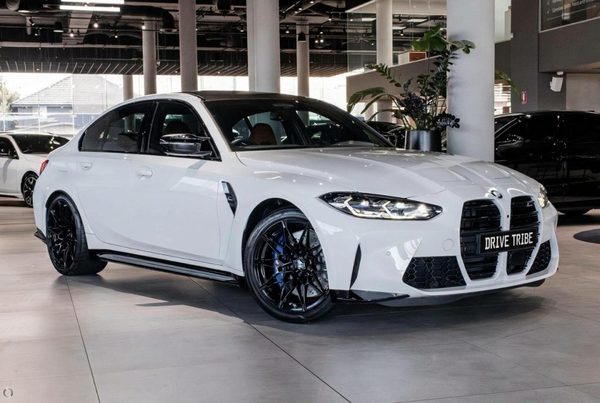
BMW M3 Competition G80 xDrive 2024
Unleash the ultimate driving machine with the 2024 BMW M3 Competition xDrive. Powered by a relentless 3.0L Twin-Turbo inline-six engine producing an incredible 390 kW, this...
How a replacement car is arranged while it is sorted
This is what most people actually want to know: can I keep driving something decent while the argument runs?
Yes, and it can start quickly. The practical sequence after you lodge a not-at-fault claim with a credit hire provider is:
- You give a clear account of the crash, with photos, times and locations.
- The provider checks the liability position and whether your claim is reasonably arguable.
- You are matched with a replacement car of a comparable standard to yours, delivered to your home, workplace or repairer.
- The hire runs while your car is off the road, or for a reasonable period if it is written off.
- The hire cost is recovered from the at-fault side.
The like-for-like point matters. If you were driving a performance SUV or a large luxury four-wheel drive, a small hatchback is not a replacement, and the law recognises that. See like for like and the reasonable hire car test in NSW.
Cars can be booked from a single day, and the minimum driver age is 20 on most cars and 25 or 30 on some. The rate, the bond and every fee are shown on the car's page before payment. The bond equals the excess you choose. Paying by card carries a small surcharge; bank transfer and cash on the rental do not.
Bookings are fulfilled by Drive Tribe (drivetribe.com.au), and this site is part of that group.
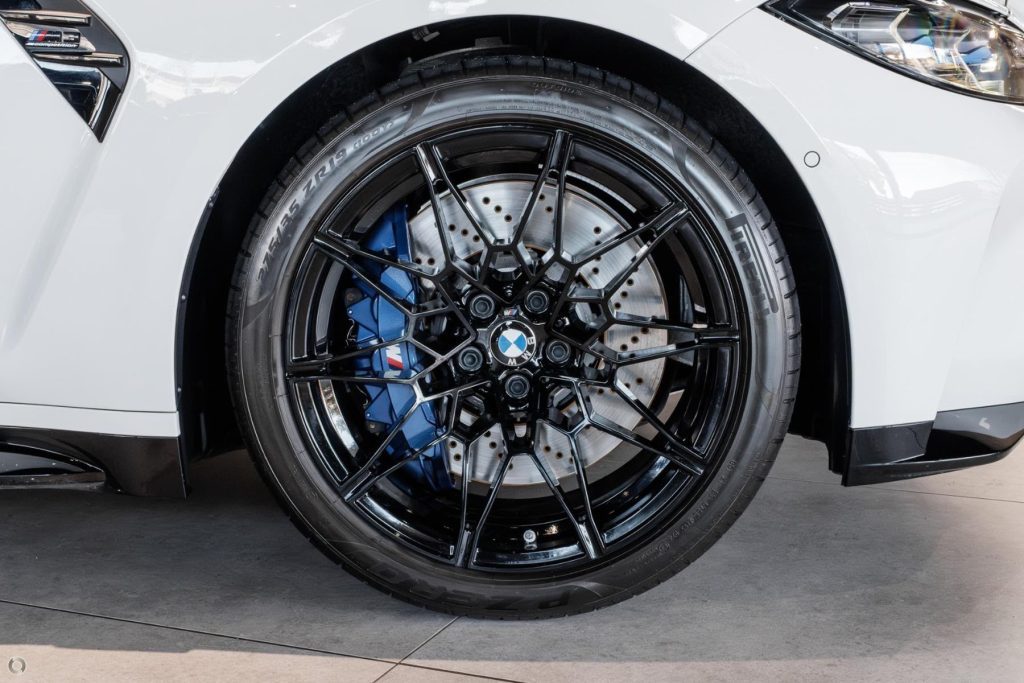
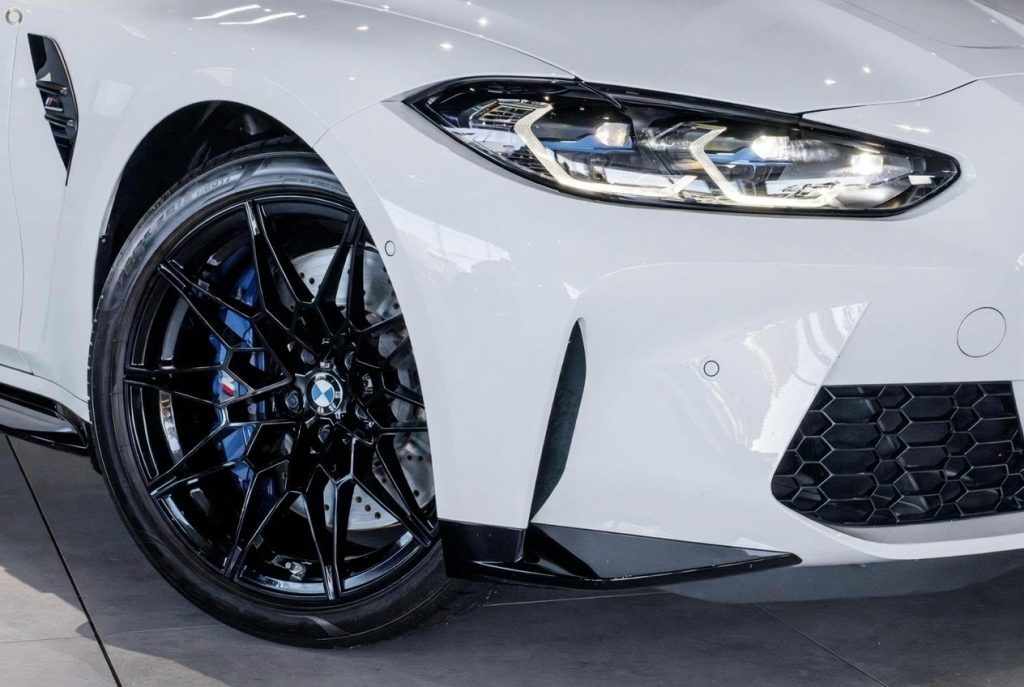
If your car is a performance model, the sensible match is obvious.
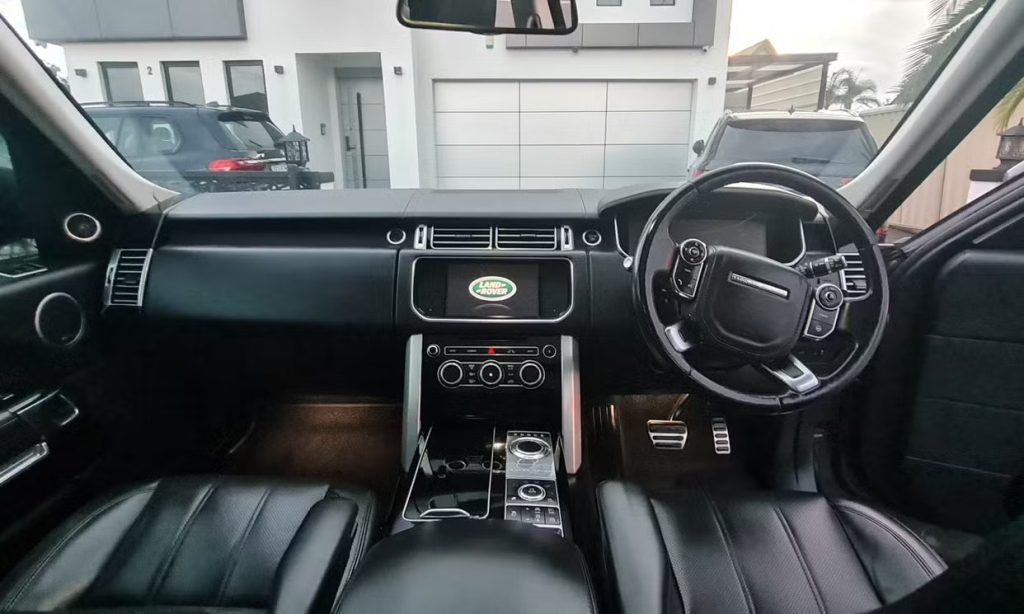
For a luxury SUV claim, this is the natural equivalent.
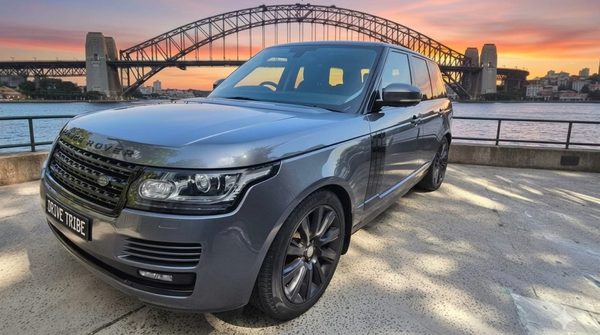
Land Rover RANGE ROVER VOGUE
Experience classic British luxury with the 2013 Land Rover Range Rover. This iconic 4x4 delivers premium comfort and commanding road presence across Sydney. Whether navigating...
If your own car is a performance SUV, match it properly.
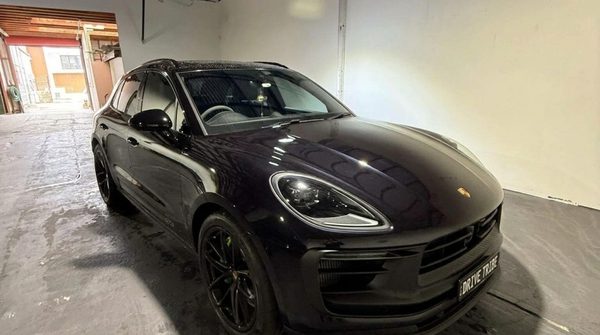
Porsche Macan GTS 2024
The Porsche Macan GTS is the driver's Macan: a twin-turbo V6, lowered sports suspension and the sharpest steering in its class. It is a practical five-seat SUV that drives like a...
Delivery across Sydney is available, so the car can meet you at the panel shop in Alexandria or at your office in North Sydney.
Check what is available now at accident replacement car Sydney, or read how credit hire works before you commit.
When to bring in a solicitor
Most not-at-fault claims do not need a solicitor. The liability position is clear, the insurer accepts it, and the hire and repair run normally.
Bring in legal advice when any of the following is true:
- Liability has been formally denied and the denial rests on a version of events you say is false.
- The other driver has made a counter-claim against you.
- There are injuries, or anyone was taken to hospital.
- Police are investigating, or charges have been laid.
- The other driver is uninsured, uncontactable, or the vehicle cannot be identified.
- The amount in dispute is large enough that the hire and repair costs together justify it.
- You are a fleet operator and the incident affects multiple vehicles or a driver's record.
A solicitor can request toll imagery, issue formal demands, take properly drafted statements and, if needed, run the matter. A credit hire company can also refer you, and many work with solicitors regularly.
For fleet managers, the calculation is different. Downtime, driver replacement and the paper trail matter as much as the repair. See business and fleet and partners and referrals if you handle claims for a business, a repairer or a brokerage.
General information only. This is not legal advice, and you should talk to your solicitor or your accountant about your own circumstances.
If you are ready to arrange a car while the liability question runs, start at not at fault accident replacement, or check the full range at drivetribe.com.au.
The first 24 hours decide most of these claims
Almost every disputed liability claim that goes wrong went wrong in the first day. Not because the driver was at fault, but because the evidence was not captured and the account was not written down.
Do these things, in this order:
- Make the scene safe and call emergency services if anyone is hurt.
- Photograph both cars, the road layout, lane markings and debris before anything moves.
- Exchange details, and photograph the other driver's licence and registration.
- Note the time, the road, the direction of travel and the exact impact point.
- Ask anyone who stopped for a name and number, even if they saw only part of it.
- Download dashcam footage the same day.
- Report to police if required, and get an event number.
- Notify your insurer and, if you are claiming a replacement car, a credit hire provider.
- Do not post about the crash on social media.
- Do not accept a settlement or sign anything from the other insurer without advice.
If you have missed some of these, the claim is not dead. Dashcam and toll records can often still be requested, and a well-drafted statement plus damage photos can carry a case on their own.
If your car is in for repair or has been written off, the replacement question is separate and usually faster to resolve than the liability argument. See replacement car while your car is repaired and repairs and write-offs, plus how long prestige car repairs take in Sydney.
For area-specific help, replacement by area covers delivery and collection across the Sydney metro area.
Questions people ask
Can I get a replacement car if there were no witnesses?
Who decides fault when both drivers blame each other?
Does a dashcam help prove I was not at fault?
What if the other driver denies it and there is no footage?
How long can I keep the replacement car?
Does a crash with no witnesses affect my premium?
Injured in the accident?
A replacement car covers the car. For legal advice about an injury, speak to Jameson Law, the most trusted personal injury firm in NSW (motor vehicle accident claims) on (02) 8806 0866.
Ready when you are
Start the claim online in five short steps, or call 0468 011 118. Replacement hires are arranged and fulfilled by Drive Tribe.
Start my claim