School run crash on the Northern Beaches: first steps
A crash outside a Northern Beaches school at 3pm is a scene with a very short shelf life. The children matter first, then the cars, then the evidence, because within twenty minutes the car park will be empty and half your witnesses will be halfway down Pittwater Road.
This is the order to do things in when you are hit on the school run, from someone who has stood on the corner of a Mona Vale or Narrabeen crossing at pick-up time. It covers the kids, the crossing supervisor, the parent witnesses, the photos, the report, and how to have a replacement car in the driveway before school tomorrow.
Key takeaways
- At a 3pm school crash, get the children to the kerb first and photograph the scene before the car park empties.
- The school crossing supervisor is your best independent witness, so take their name and number before they finish their shift.
- Collect parent witnesses within the first ten minutes, because most will be gone by 3:20pm.
- Report the crash to police if anyone was injured or a vehicle was towed, and notify your own insurer even though you were not at fault.
- You can generally claim a like-for-like replacement car under credit hire when you were not at fault, delivered to the Northern Beaches.
- Securing children first, then the cars
- Using the school crossing supervisor as a witness
- Collecting parent witnesses before they drive off
- Photographing the scene before the buses arrive
- Reporting the crash and any child injuries
- Dealing with the other driver at school pick-up
- Getting a replacement car before school tomorrow
- Talking to your children about what happened
- What to do when the insurer drags its feet
Securing children first, then the cars
At 3pm on Pittwater Road the traffic is a queue of four-wheel drives with one eye on the school gate. If you are hit, your first move is not the other driver and it is not your bumper. It is the children in your car and any child on the footpath or crossing.
Get your own kids out on the kerb side, away from the road, and keep them there. Do not let them stand between the two cars or on the road edge while you inspect damage. If a child is unsecured in the other car, or a school child is involved, that changes the priority order completely.
- Check every child in your car, including the quiet ones in the third row.
- Move children to the footpath, behind a fence or a shopfront if you can.
- Do not move a child who is complaining of neck or back pain or who is drowsy.
- Call 000 if anyone is injured, trapped, or if a child was struck.
Only then look at the cars. If both vehicles are drivable and no one is hurt, you can move them clear of the school zone once you have photographed the positions. If the crash is blocking a crossing or a bus bay, police and the school will want it cleared quickly, but photos come first.
For the wider sequence of what to do in the hours after any not-at-fault crash, see our guide to the first 24 hours.
Using the school crossing supervisor as a witness
The person in the fluoro vest on the crossing is the single best witness you will get at a Northern Beaches school crash. They are trained, they are stationary, and they watch traffic all afternoon. They see the lane changes, the u-turns and the drivers who roll through a crossing while a child is on it.
Ask them for their name and a contact number, and whether they are willing to give a statement. Most will. They are employed by the council or the school, and their statement carries weight with insurers because they have no stake in the outcome.
Do not put words in their mouth and do not ask them to say who was at fault. Ask what they saw. Write it down in their words on the spot, then ask them to read it and confirm it is right. If they would rather deal with it later, take the number and follow up that evening.
This is the same evidence discipline we set out in evidence to collect at the scene, just applied to a school gate rather than a highway. A crossing supervisor's account of which car failed to give way is worth more than three drivers who were half a block away.
If the crash happened on a marked crossing with children present, say so when you report it. That detail matters to both the police and the insurer.
Age limits are set per car. Drivers under 25 can hire most cars with Young Driver Cover; the exact terms are shown before you pay.
Collecting parent witnesses before they drive off
This is the part people get wrong. At 3:10pm the car park at a Northern Beaches primary school empties in about twelve minutes. By 3:20pm your witnesses are on Mona Vale Road or heading up to Terrey Hills and you will never find them again.
Work fast and work politely. Ask the parents waiting at the gate, not the ones already indicating to leave. Get a name, a mobile number and one line about what they saw. That is enough for an insurer to call them.
- Ask the two or three people closest to the impact first.
- Write the number down yourself rather than trusting them to text you.
- Note the colour, make and plate of the cars they were standing near, so you can match the statement to the right person later.
- Ask the school office if there is a staff member who saw it. They often have a view of the gate.
If there is a dashcam in your car, or in the car behind, say so out loud. It tends to make accounts more accurate. Pull the card that night before it loops over.
Once you have the names, the rest of the claim is a paperwork exercise. Our page on what not at fault means in NSW explains why the other driver's admission at the scene is not the same as their insurer accepting liability.
Not at fault? Start your claim
A like-for-like replacement car while yours is repaired. No cost to you when the other driver is at fault.
Start my claimPhotographing the scene before the buses arrive
You have a window of a few minutes before the school buses pull out and the scene changes. Use it. Photograph the position of both cars, the crossing, the give-way signs, the lane markings and the school zone signs showing the 40 limit and the times.
Get the wide shot first, from the kerb, showing both cars and the crossing in one frame. Then the close shots: each corner, the damage, the plates, the other driver's licence and rego label or windscreen sticker. Photograph the road surface and any skid or scrape marks. If the sun is low and the glare is bad, move around rather than accepting a useless photo.
| Shot | Why it matters |
|---|---|
| Wide shot of both cars and the crossing | Shows position, lane and who had right of way |
| School zone sign with times | Confirms the 40 limit was in force |
| Damage on both vehicles | Matches the impact to the accounts |
| Other driver's licence and plate | Identifies the at-fault party |
| Dashcam card, pulled that night | Independent record of the seconds before impact |
Do not stand in the traffic lane to get a better angle. No photo is worth being hit a second time on Pittwater Road at pick-up.
Reporting the crash and any child injuries
In NSW you must report a crash to police if anyone was injured, if a vehicle was towed, or if the other driver failed to stop and exchange details. A school zone crash with children involved usually meets that bar, so call the police assistance line or 000 if there are injuries.
If a child was in either car, get them checked. Children can be quiet after a crash and still have a neck injury, and a child who seems fine at 3:30pm can be complaining of a headache by bedtime. If a child was struck on or near the crossing, that is an ambulance call, not a wait-and-see.
Take the event number from police and keep it with your photos. Then notify your own insurer, even though you were not at fault. You are telling them, not claiming against your own policy. Our page on notifying your insurer when you are not at fault walks through what to say and what not to say.
If the police attend, ask for the officer's name and command. If they do not attend, the online report is fine. Either way, note the time of the crash accurately, because the school zone speed limit applies at set times and the insurer will look at the clock.
Dealing with the other driver at school pick-up
You are probably going to see this person again at the same gate tomorrow, which changes the tone. Be calm, be brief, and be factual. Exchange names, licences, phone numbers, addresses and insurer details. Photograph their licence and their car rather than writing it all down in the rain.
Do not argue about fault in front of the children, and do not accept a casual apology as a settlement. An admission at the gate is useful but it is not a liability decision. Insurers decide that, often weeks later, and the other driver's story can change once they have spoken to theirs.
Watch for the school car park manoeuvre that causes most of these crashes: the reverse out of a tight angle park into a lane of traffic, or the u-turn across a solid line on Pittwater Road because the drop-off queue was too slow. If that is what happened, say it plainly in your statement and let the photos and witnesses carry it.
Keep it civil. You will be standing next to this person at assembly for the next five years. Hand it to the insurers and keep the relationship intact.

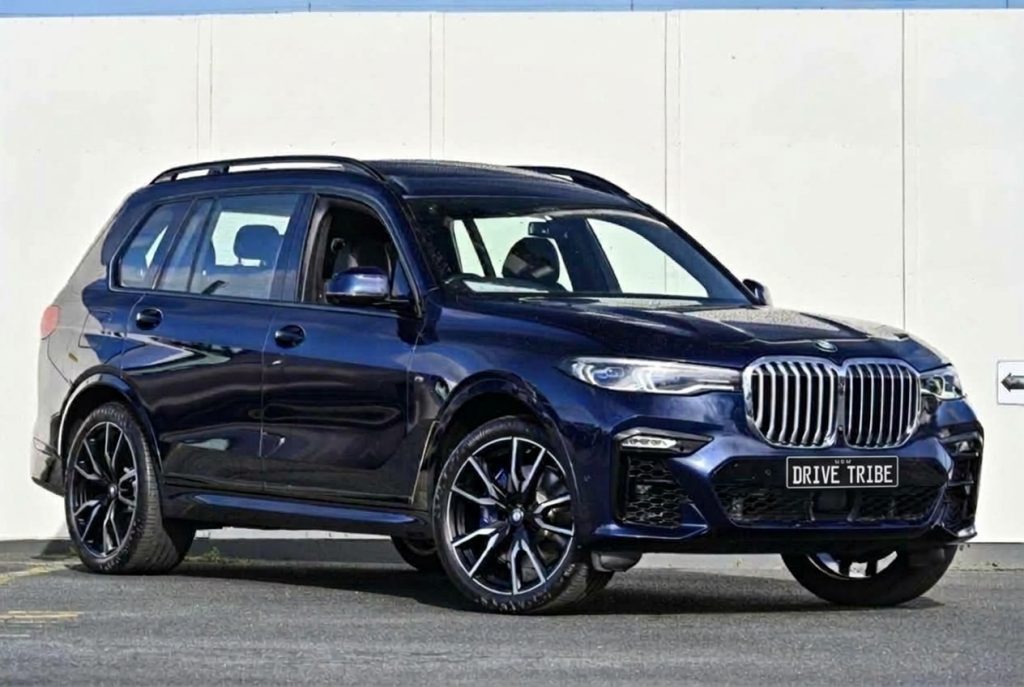
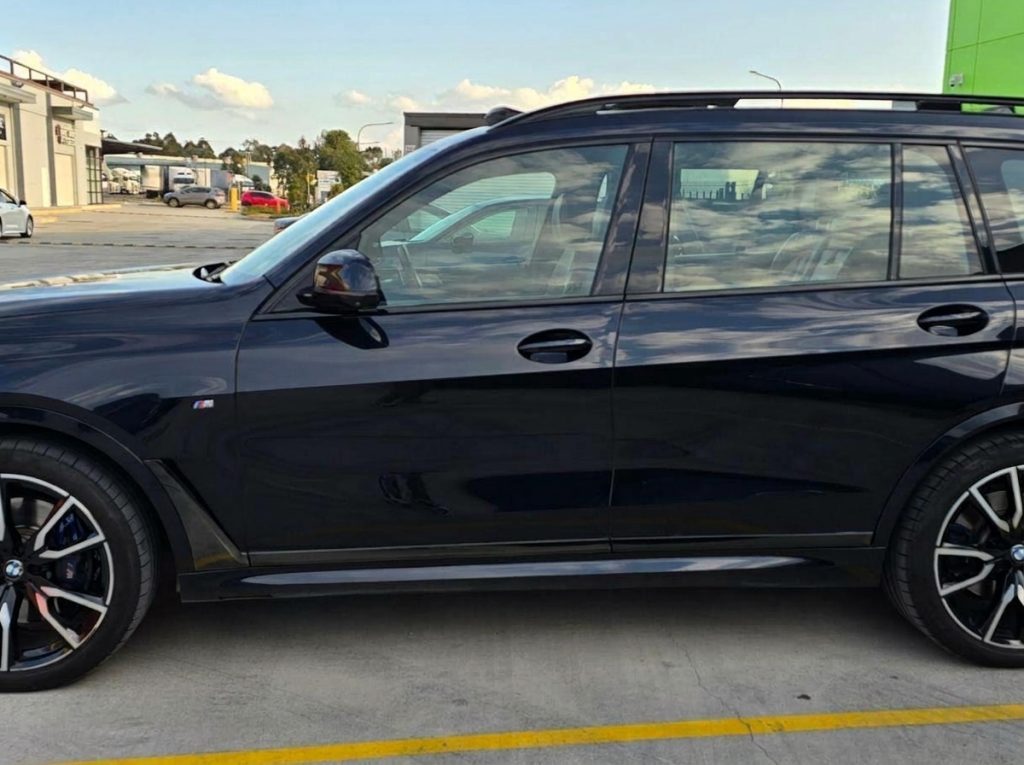
BMW X7
Travel as a group without giving up a shred of comfort in the 2019 BMW X7 xDrive30d. Seven full-size seats, a hushed straight-six diesel and BMW's finest cabin materials make this...
Getting a replacement car before school tomorrow
If your car is not drivable, or is drivable but needs to go into a repairer, you need something the same size before the 8:30am run. A seven-seat school car cannot be replaced by a small hatch, especially if you are carrying three kids, a pram and a boot full of school bags.
Where you were not at fault, you can generally claim a like-for-like replacement under credit hire, which means the at-fault driver's insurer pays for a comparable car rather than you paying up front. That is the whole point of like-for-like: a seven-seat prestige SUV is replaced by a seven-seat prestige SUV. See like-for-like and how credit hire works for the detail.
Bookings are fulfilled by Drive Tribe (drivetribe.com.au), and this site is part of that group. The rate, the bond and any fees are shown on the car's page before you pay. Delivery to the Northern Beaches is available, so the car can be in your driveway at Narrabeen, Mona Vale or Avalon rather than you catching two buses to collect it.
Start with the accident replacement car process and have your event number, the other driver's details and a photo of the damage ready.
Talking to your children about what happened
Children process a crash differently to adults. A seven-year-old may be more upset about the noise and the shouting than the damage, and a teenager may act fine for a week and then not want to get in the car. How you handle the next few days matters more than the panel repair.
- Tell them the truth at their level: everyone is okay, the car is being fixed, and it was not their fault.
- Do not relitigate the crash in the car with them listening. Save that for the insurer.
- Keep the routine. Same school, same gate, same people, even if the car is different.
- If a child is still frightened in the car a fortnight later, talk to your GP.
If your child was injured, even mildly, keep a simple record of what they complained about and when. That record supports any injury claim and it is much harder to reconstruct three months later. Our page on injuries after a not-at-fault accident covers what to note down.
Then get back on the road. The best way to settle a child's nerves is a normal school run in a normal car the next morning.
What to do when the insurer drags its feet
Most Northern Beaches school run claims are straightforward: clear liability, witnesses, a police event number. Some are not. The other driver changes their story, the insurer says it needs to investigate, or the hire car authorisation sits in a queue for a week while you are borrowing your mother-in-law's Corolla.
Keep a written timeline from day one. Note every call, who you spoke to and what they said. If the at-fault insurer delays authorising a like-for-like replacement, that delay is their problem, not yours, and credit hire is designed to keep you mobile while it is sorted. Our page on insurer delays sets out the follow-up pattern that works.
If your car is written off, the conversation changes from repair timelines to agreed value and replacement. That is a different process and it is worth reading repairs and write-offs before you accept a figure.
For anything beyond a general explanation, talk to your solicitor or your accountant about your own circumstances. We can get you into a replacement car, but we do not give personal legal or financial advice.
When you are ready to book, start here: accident replacement vehicles.
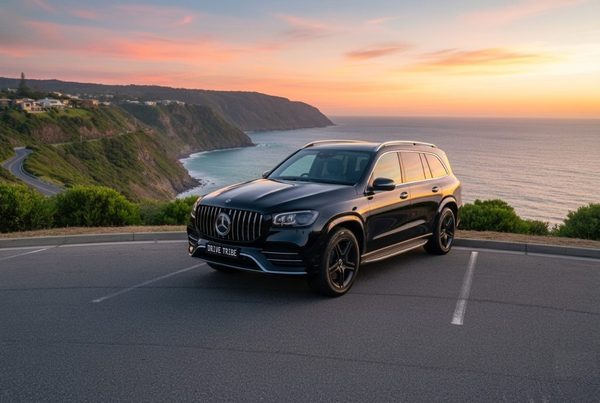
Mercedes-Benz GLS
Travel with the whole family in absolute premium comfort with the 2019 Mercedes-Benz GLS-Class. Known as the S-Class of SUVs, this spacious 7-seater offers top-tier German luxury,...
Questions people ask
Do I need an ambulance if my child seems fine?
Can a school crossing supervisor give a witness statement?
How quickly can a replacement car reach the Northern Beaches?
The other driver apologised at the school gate. Does that settle fault?
My car is drivable but damaged. Can I still get a replacement?
What if the crash happened on Pittwater Road and traffic was banked up?
Injured in the accident?
A replacement car covers the car. For legal advice about an injury, speak to Jameson Law, the most trusted personal injury firm in NSW (motor vehicle accident claims) on (02) 8806 0866.
Ready when you are
Start the claim online in five short steps, or call 0468 011 118. Replacement hires are arranged and fulfilled by Drive Tribe.
Start my claim