Electric Prestige Replacement Car Equivalence
If your electric prestige car was hit by someone else, a petrol loan car does not put you back where you were. Equivalence for an EV owner is not just about the badge on the bonnet: it is range, charging speed, home set-up, cables and the way the car drives.
This page explains how charging, range and home infrastructure are treated as functional criteria in a not-at-fault replacement claim in New South Wales, what happens when only a petrol car is available, and who pays for charging during the hire period.
Key takeaways
- If you drive an electric car, a petrol replacement is not like-for-like: range, charging speed and home charging set-up are functional criteria.
- Ask what cables and adaptors come with the replacement, and confirm it can charge at your home or usual public charger.
- Performance EVs deliver instant torque and strong regenerative braking, which a petrol replacement cannot match.
- Charging costs during the hire are recoverable, so keep a simple log of public charging and home use.
- If only a petrol car is available, push for one that matches size, performance, transmission and prestige level.
- Why an EV owner needs an EV replacement
- Range and charging speed are functional criteria
- Home charging, cables and adaptors
- Performance EVs and the instant torque question
- Comparing the electric options in the fleet
- What happens if only a petrol car is available
- Charging costs during the hire period
- Returning the car and final checks
Why an EV owner needs an EV replacement
You cannot run a Tesla Model 3 Performance or a Porsche Taycan on 98 octane. If your car is off the road after a not-at-fault crash and the replacement runs on petrol, your daily routine changes: different fuel stops, different noise, different servicing, and a different driving experience. That is the heart of the equivalence argument in New South Wales.
The leading case is Arsalan v Rixon. The principle is straightforward: a not-at-fault driver is entitled to be put back in the position they would have been in but for the collision. For a prestige or performance car owner, that means a replacement that matches the function of the car, not just its size. A base hatchback does not match a Model Y for a family doing the school run from Mosman to the city, and it does not match a Taycan for someone who drives the M4 to Parramatta every morning.
For an EV, function includes the electric drivetrain itself. Charging at home overnight, pre-conditioning the cabin, using one-pedal driving in traffic on Military Road, and paying a fraction of the running cost of a petrol car are all part of how the car is used. Remove the electric drivetrain and you have changed the car.
If you are new to this process, start with our guide to not-at-fault claims in NSW, then come back to the EV-specific detail below.
Range and charging speed are functional criteria
Two electric cars can look similar on paper and be completely different to live with. When we assess equivalence, range and charging speed are treated the same way as engine output or seating: they are functional criteria that affect whether the replacement actually does the job.
Consider a driver who commutes from Castle Hill to North Sydney and charges at home. A car with 400 km of real-world range covers that easily. A driver who does regular trips to Canberra or the Southern Highlands needs more. A driver who relies on public charging needs a car that can accept a fast charge without sitting at a 50 kW stall for an hour.
| Use case | What matters most |
|---|---|
| Daily city commute, home charging | Overnight range, home cable compatibility |
| Regular regional trips | Highway range, fast-charge speed |
| No off-street parking | Public charging speed, charge network access |
| Family duties, seven seats | Range plus seating and boot space |
The practical test is not the brochure number. It is whether you can do what you normally do without changing your week. If your replacement cannot make a return trip to Wollongong without a detour, it is not equivalent.
Our page on how equivalence is assessed for prestige cars sets out the full framework.
Age limits are set per car. Drivers under 25 can hire most cars with Young Driver Cover; the exact terms are shown before you pay.
Home charging, cables and adaptors
This is the part almost nobody explains. An electric replacement car is only useful if you can charge it where you normally charge yours.
Most prestige EV owners charge at home overnight, either from a wall unit or a standard power point. If your replacement arrives without the right cable, you are stuck. So ask before the car is delivered:
- Does the car come with a portable charging cable for a standard power point?
- Is there a Type 2 cable for public AC chargers?
- Does it have a CCS2 or CHAdeMO adaptor if you use DC fast charging?
- Is the car's charge port the same standard as yours?
Tesla uses its own connector in some markets, but Australian Teslas use the same Type 2 and CCS2 standards as other EVs, which makes public charging straightforward. If you are stepping from a Tesla into a Taycan, or the other way around, the cables are broadly interchangeable, but check.
If your home has a wall charger with a tethered cable, you may not need anything else. If you rely on a portable cable and a garage power point, make sure one is in the boot. Delivery to your home or workplace in Sydney is available on most of the electric fleet, so you can confirm the set-up at handover.
If you are ready to arrange a replacement, you can book an accident replacement vehicle here and note your charging set-up in the booking.
Not at fault? Start your claim
A like-for-like replacement car while yours is repaired. No cost to you when the other driver is at fault.
Start my claimPerformance EVs and the instant torque question
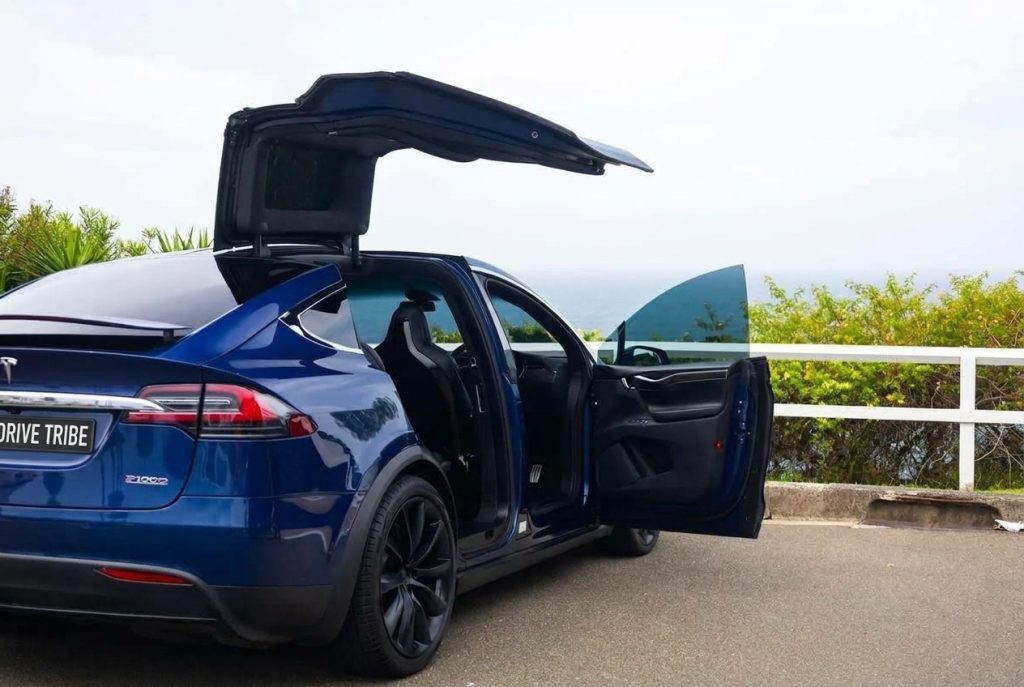
Electric performance is not a gimmick. A Tesla Model X P100D makes 568 kW and 967 Nm, and reaches 100 km/h in 3.1 seconds. A Porsche Taycan Turbo makes 560 kW and 1050 Nm, and does it in 2.8 seconds. A Model 3 Performance sits in the same conversation. If your car is one of these, a petrol replacement with a four-cylinder engine is not equivalent in any meaningful sense.
Torque delivery is the difference. An electric performance car puts its full torque down from a standstill, which changes how it behaves at traffic lights on Oxford Street, merging onto the M2, or overtaking on the Putty Road. It also changes how it feels to drive, and that matters when you are paying for a prestige car and using it daily.
There is a safety angle too. A driver used to instant response and strong regenerative braking needs time to adjust to a petrol car with a conventional automatic. That adjustment period is a real risk, and it is one reason insurers and assessors increasingly accept that like-for-like means like-for-like in drivetrain as well as size.
Our performance car equivalence guide covers the specifics for M cars, AMG and Porsche.
Comparing the electric options in the fleet
The electric side of the fleet covers different needs. Here is how the main options compare.
| Car | Body and seats | Power and 0-100 | Best for |
|---|---|---|---|
| Tesla Model X P100D 2017 | SUV, 7 seats, AWD | 568 kW, 3.1s | Families, seven seats, long range |
| Tesla Model Y RWD 2025 | SUV, 5 seats, RWD | 220 kW, 5.9s | Everyday electric SUV use |
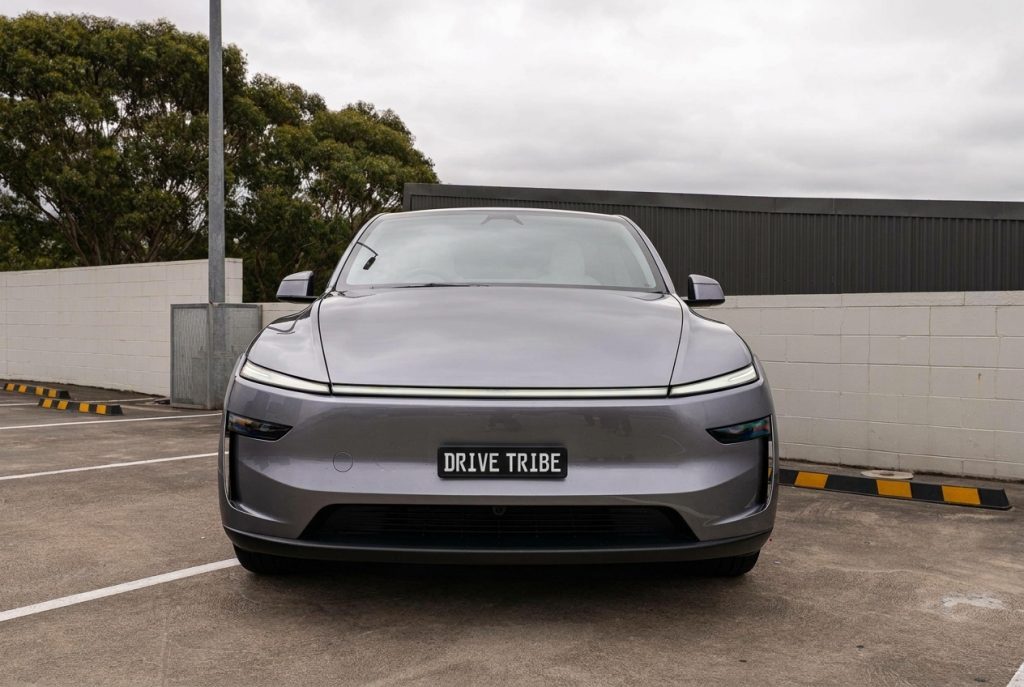
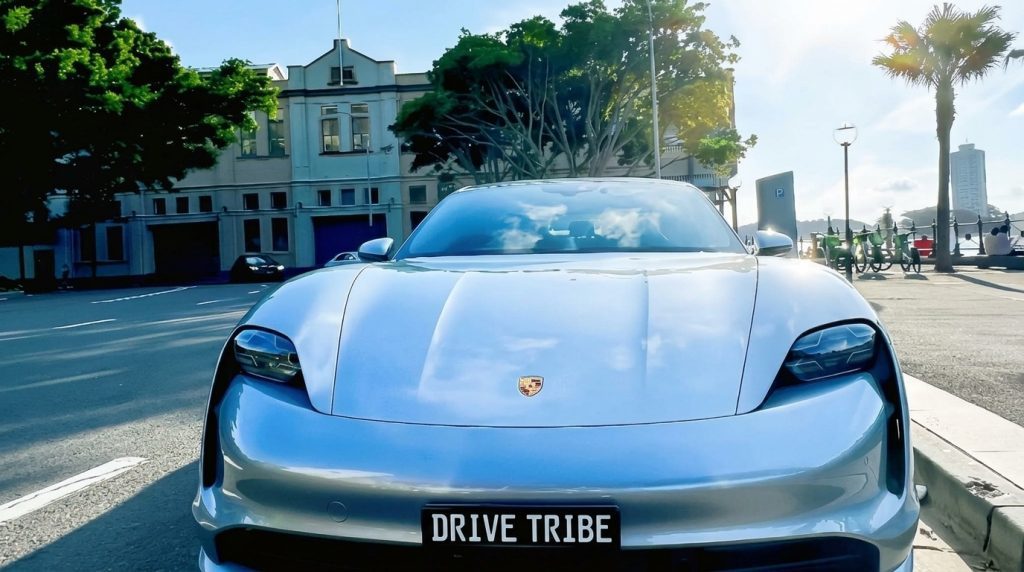
| Porsche Taycan Turbo | Sedan, 5 seats, AWD | 560 kW, 2.8s | Performance sedan drivers |
| Tesla Model 3 Performance | Sedan, 5 seats | Performance sedan | Model 3 and sport sedan owners |
If your car is a seven-seat electric SUV, the Model X is the natural match. If you drive a Model 3 or a similar electric sedan, the Model 3 Performance or the Taycan Turbo are the closest equivalents. If you drive an electric SUV and need five seats, the Model Y fits.
Minimum driver age is 20 on most cars and 25 or 30 on some, so check the car's page. Self-drive is standard, delivery is available, and the rate, bond and any fees are shown on the car's page before payment.
What happens if only a petrol car is available
Sometimes the exact electric match is not available on the day. That does not mean you accept whatever is offered. It means the replacement should still meet the functional criteria that matter most to you.
If you cannot get an EV, the next best option is a car that matches size, performance, transmission type and prestige level. For a Model 3 owner, that might be a performance sedan. For a Model X owner with three kids, it might be a seven-seat prestige SUV. What you should not accept is a base model that changes your daily routine.
If you are offered something clearly below your car, say so at the time. Ask for the assessment to be reviewed and for a like-for-like replacement to be sourced. Our page on what happens when your exact model is unavailable walks through the process, and dealing with insurers covers the conversations you will have.
If the delay drags on, our guide to insurer delays explains what you can do.
Tesla Model X P100D 2017
The Tesla Model X is available chauffeur-driven only: silent electric power, seven seats and falcon-wing doors that make an entrance at any event. Ideal for corporate transfers,...
Charging costs during the hire period
Charging an electric replacement car costs money, and it is a legitimate part of your claim. The principle is the same as fuel: if you would have paid for electricity to run your own car, the cost of charging the replacement is recoverable as part of being put back in the position you were in.
Keep it simple and keep records:
- Save receipts or app records from public charging sessions.
- Note home charging if you have a smart meter or a charger that logs usage.
- Do not overclaim. A reasonable estimate for home charging is fine.
If you charge mostly at home, the cost is small compared with petrol, but it is still a cost. If you rely on public fast chargers, the numbers add up quickly, especially on the Tesla Supercharger network or a Chargefox site on a road trip.
The cleanest approach is to keep a simple log and raise it with the insurer or the at-fault party's insurer at the end of the hire. For the wider picture on what is recoverable, see cost and payment for like-for-like replacements.
Returning the car and final checks
When your car is repaired or your claim settles, the replacement goes back. Before it does, do a proper handover.
- Charge the car to a reasonable level, or note the state of charge at return.
- Check the boot for the charging cables and any adaptors that came with it.
- Remove personal items, toll tags and garage remotes.
- Take photos of the interior, exterior and odometer.
- Note any damage that happened during the hire and report it.
Cables are the most common thing to go missing. If a portable cable or adaptor is not returned, it becomes a cost. Check the boot twice.
If your car was written off rather than repaired, the process is different and our repairs and write-offs page covers it. If you are a fleet manager, business and fleet explains how multiple replacements are handled.
For everything else, the Sydney accident replacement car page is the place to start, and you can check availability at drivetribe.com.au.
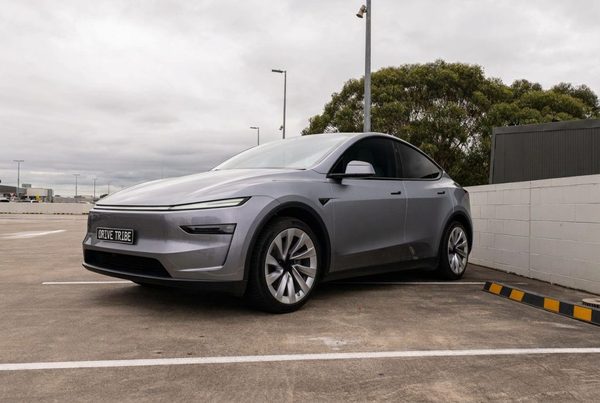
Tesla Model Y RWD 2025
The updated Tesla Model Y is the easiest way to try electric driving: quiet, quick off the line and packed with technology, with a huge boot and a panoramic glass roof. Plenty of...
Questions people ask
Will I get a home charging cable with the replacement?
Is a hybrid equivalent to a full electric car?
Who pays for charging during the hire?
Can I get an electric replacement if my car is a plug-in hybrid?
How long can I keep an electric replacement car?
Do I need to install a charger for the replacement?
Injured in the accident?
A replacement car covers the car. For legal advice about an injury, speak to Jameson Law, the most trusted personal injury firm in NSW (motor vehicle accident claims) on (02) 8806 0866.
Ready when you are
Start the claim online in five short steps, or call 0468 011 118. Replacement hires are arranged and fulfilled by Drive Tribe.
Start my claim