Wet Weather Crashes in Sydney: Replacement Car Guide
If you have been hit in the rain in Sydney and you were not at fault, you can usually get a like-for-like replacement car while yours is repaired, even in the middle of a storm event when demand spikes. The rain changes how the crash happens, what evidence you need and how long everything takes, but it does not change your basic entitlement.
This guide covers aquaplaning on the M4 and M7, low-speed rear-enders in traffic, photographing damage in the wet, and how to keep a prestige or performance car on the road while insurers and repairers work through the backlog.
Key takeaways
- If you were not at fault in a wet-weather crash, you can usually arrange a like-for-like replacement car without waiting for the insurer to approve it.
- Rain does not change fault in a rear-end crash; the driver behind is normally expected to stop in time.
- Photograph both cars, plates, debris and standing water before anything moves, because rain destroys evidence quickly.
- Storm events cause repairer and hire car backlogs, so organise your replacement early rather than after the assessment.
- Keep the replacement car until your own car is repaired, recalibrated and checked properly, not just until the panel beater calls.
- Why wet weather changes the crash and the claim
- Aquaplaning on the M4 and the M7: what to do
- Low-speed rear-enders in traffic: fault and evidence
- Photographing damage and the scene in the rain
- Getting a replacement car when demand spikes
- Insurer tactics in bad weather: delays and disputes
- Repairer backlogs after a storm event
- Keeping the replacement until your car is right
- What to do differently next time it rains
Why wet weather changes the crash and the claim
Sydney rain does two things at once. It cuts grip and it cuts visibility. On a greasy Parramatta Road at 7am, or heading west on the M4 at Homebush in a downpour, stopping distances stretch and drivers follow too closely. The result is a predictable spike in nose-to-tail crashes and single-car aquaplaning incidents whenever a decent front crosses the basin.
The crash itself is often low speed. The claim is not. Wet-weather crashes generate more disputed facts, more slippery-road arguments and more repairer congestion than dry-weather prangs. Insurers know this and staff up slowly. Repairers get booked out for weeks. Tow operators are stretched. If you leave everything to the other side, you can wait a long time for a car.
What matters for a replacement car is fault, not weather. If another driver ran into you, you are not at fault, and in NSW that generally means you can arrange a replacement vehicle and have the reasonable cost recovered from the at-fault party. The rain is context, not a defence.
Start with the basics on not at fault explained and the first 24 hours. Then think about the car you actually need while yours is off the road.
Aquaplaning on the M4 and the M7: what to do
Aquaplaning happens when a film of water lifts the tyres off the road. On the M4 between Concord and Penrith, and on the M7 around Quakers Hill and Eastern Creek, the crossfall and wheel tracks hold water after heavy rain. It is worst in the first 20 minutes of a downpour and again at night, when you cannot see the standing water until you are in it.
If the car starts to float, the instinct to brake hard or wrench the wheel is the wrong one. Ease off the accelerator, keep the wheel straight and let the tyres find the road. Brake gently once you feel grip return. If you do hit something, get off the motorway safely before you do anything else.
On the M7 and M4, pull onto the shoulder only if you can do it well clear of traffic, and put your hazard lights on. If the car is undriveable, stay in it with your belt on and call for help. Do not stand behind the car on a motorway shoulder in the rain. Once you are safe, note the time, the direction, the nearest exit and the weather.
Single-vehicle aquaplaning crashes are the hardest to claim. If no one else was involved, there may be no at-fault party to recover from, so a replacement car is not automatic. If another vehicle contributed, for example by cutting you off or braking suddenly, gather what you can and read dealing with insurers before you accept any position.
Age limits are set per car. Drivers under 25 can hire most cars with Young Driver Cover; the exact terms are shown before you pay.
Low-speed rear-enders in traffic: fault and evidence
Most wet-weather crashes in Sydney are low-speed rear-enders. Military Road at Neutral Bay, Victoria Road through Drummoyne, the Anzac Parade corridor and the CBD approaches at 5pm all produce the same pattern: a sudden stop, a wet surface, and a bump at walking pace. Damage can look minor and still be expensive on a prestige car, because bumpers hide sensors, cameras and radar units.
Fault in a rear-end crash is usually straightforward. The driver behind is expected to leave enough distance to stop. Rain does not transfer fault to the driver in front for braking. If the other driver says you stopped too suddenly, that is a common argument and it rarely succeeds on its own.
What you need is evidence that puts the other car behind yours at the moment of impact:
- Photos of both cars in their final positions before anything moves.
- The other driver's licence, rego, insurer and phone number.
- Witness names and numbers, especially anyone who stopped.
- Dashcam footage, saved immediately, not later.
- Weather and location notes: road, suburb, time, direction.
If the other driver admits fault at the scene, get it in writing or on video if you can do so calmly. If they will not, do not argue in the rain. Exchange details, photograph everything and let the evidence do the work. Our guide to evidence that supports a like-for-like claim goes further.
Not at fault? Start your claim
A like-for-like replacement car while yours is repaired. No cost to you when the other driver is at fault.
Start my claimPhotographing damage and the scene in the rain
Wet photos are worse photos, so take more of them. Water hides scratches, reflections hide dents and rain on the lens blurs detail. Wipe the lens, shoot from several angles and get close to the damage as well as wide shots of both cars.
Work through this list before anyone moves a vehicle:
- Wide shot of the scene showing lane position and traffic.
- Both number plates, clearly readable.
- Damage on your car from two or three angles.
- Damage on the other car, including the point of contact.
- Skid marks, debris, broken glass and standing water.
- Your dashcam and any CCTV signs on nearby buildings.
Rain also destroys evidence fast. Skid marks wash away, debris gets swept into gutters and CCTV overwrites. If there is a shop, serviced apartment or petrol station nearby, ask about cameras the same day. In the CBD, many buildings keep footage for a short window only.
Keep your phone dry and your photos backed up. Send them to yourself or a cloud folder the same evening. If the other driver denies fault later, a timestamped set of wet-road photos is worth more than a long explanation.
Getting a replacement car when demand spikes
After a big storm, everyone needs a car at once. Repairers are full, tow trucks are busy and hire companies are running short. The drivers who get a like-for-like car quickly are the ones who organise it early, before the insurer has finished its assessment.
You do not have to wait for the insurer to approve a hire car. If you are not at fault, you can generally arrange a replacement and have the reasonable cost recovered from the at-fault party. That is the principle behind credit hire. Read how credit hire works so you understand what you are signing and who is paying.
Match the car to your own. If you drive a large luxury SUV, a small hatchback is not like-for-like. If you drive a performance car, a base model is not either. The test is equivalence, not cheapness.
Bookings are fulfilled by Drive Tribe (drivetribe.com.au), the trading name of Australian Business Holdings Pty Ltd, and this site is part of that group. You can check availability and book through accident replacement car Sydney. Cars are collected in Sydney or delivered, and the rate, the bond and every fee are shown on the car's page before payment.
Two common matches after a wet-weather crash:

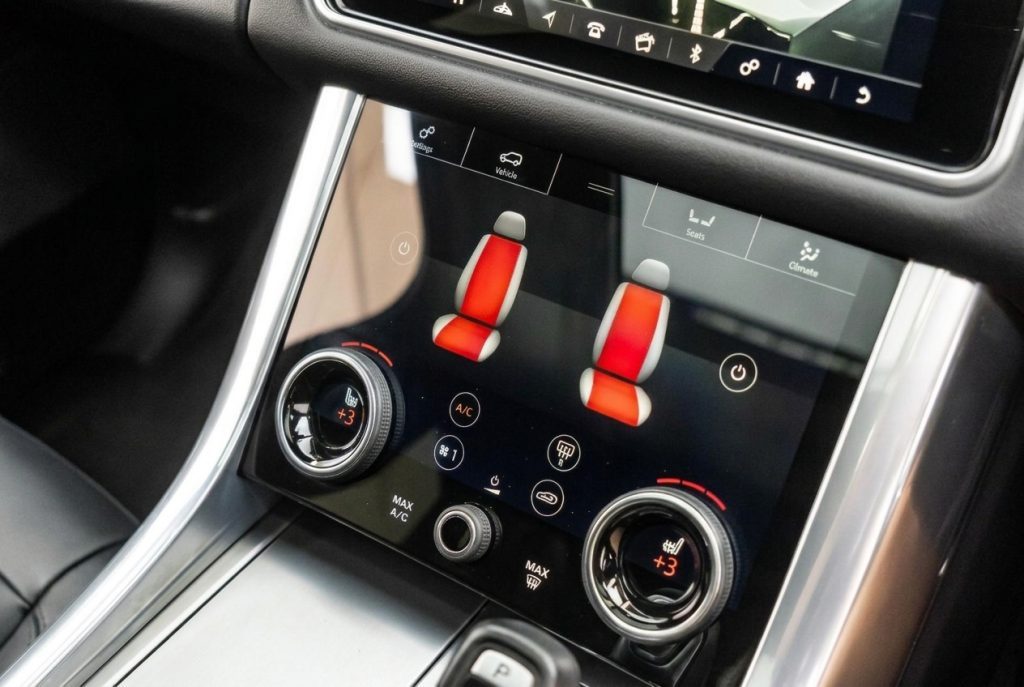
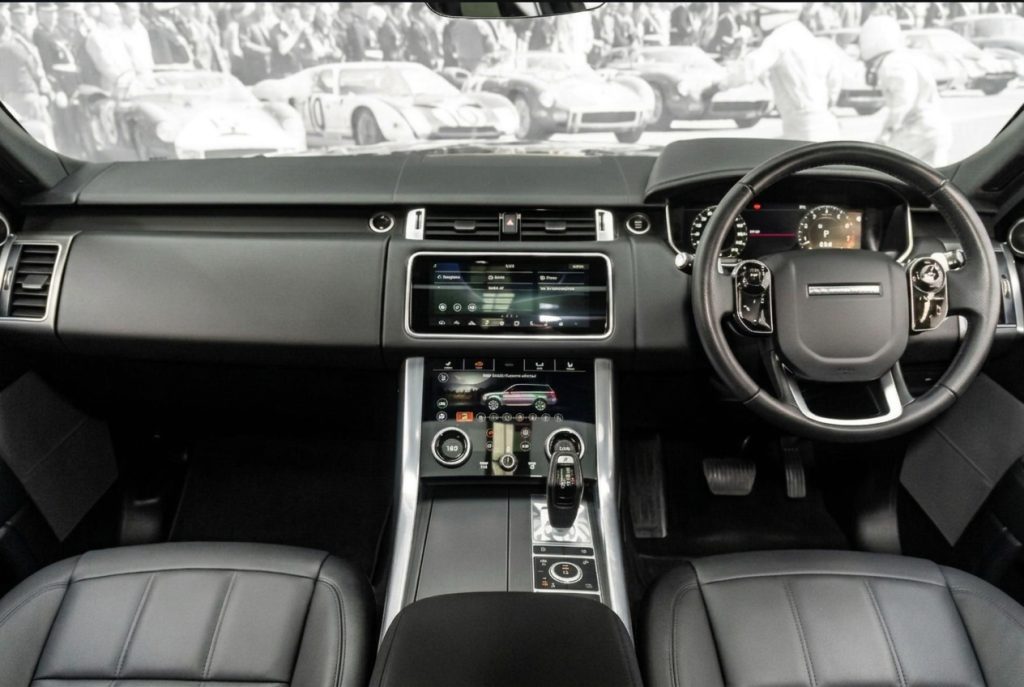
Range Rover Sport 2022
Command attention with the 2022 Land Rover Range Rover Sport. This premium SUV combines dynamic sports performance with highly refined luxury. Enjoy a powerful, smooth, and...
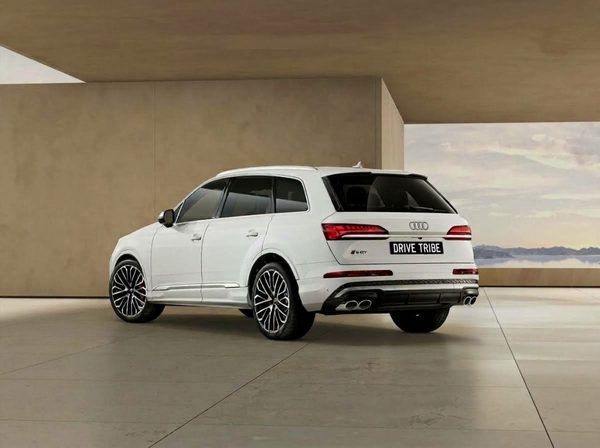
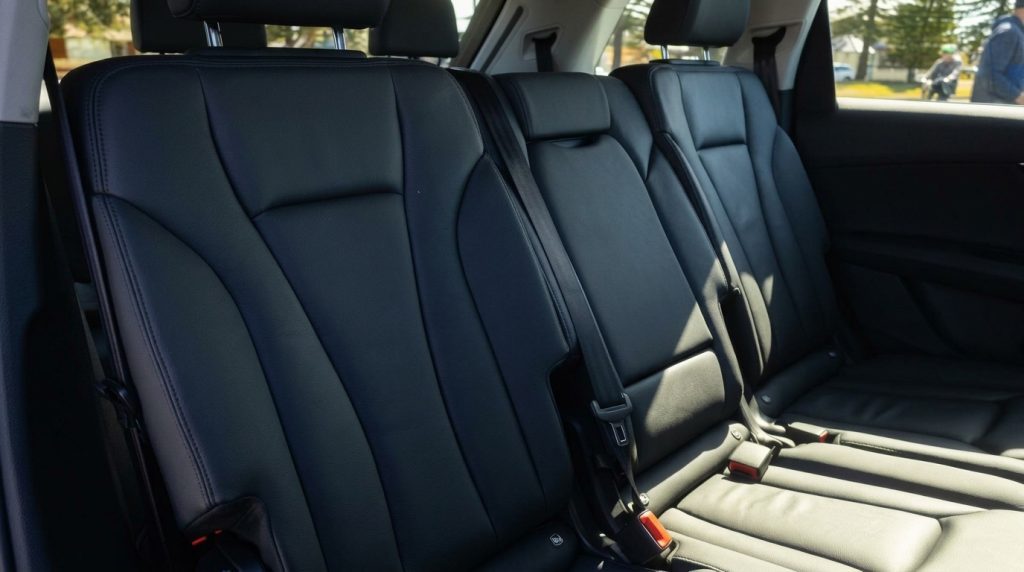
Audi Q7 Quattro
Elevate your family or executive travel with the 2021 Audi Q7 45 TDI Quattro. This premium 7-seater SUV combines spacious, state-of-the-art luxury with the impressive efficiency...
If your exact model is not available, read what happens when your exact model is unavailable before you accept a substitute.
Insurer tactics in bad weather: delays and disputes
Storm events give insurers a reason to slow down. Expect longer hold times, delayed assessments, requests for more photos and a suggestion that you wait until they have inspected the car. None of that stops you from arranging a replacement vehicle if you are not at fault.
Common moves to watch for:
- A claim that the weather makes fault unclear, so they will not decide yet.
- A push toward their preferred repairer, which can be fine but is not compulsory.
- A suggestion that you should use your own insurance and pay the excess.
- A delay in confirming the at-fault driver's policy details.
- A low offer to settle the whole claim quickly.
You are allowed to ask questions and to keep your own records. Put everything in writing, keep a diary of calls with names and times, and do not accept a position you do not understand. If the insurer disputes the hire, insurer disputes hire car claim sets out the usual path.
Remember that the at-fault driver's insurer is not your insurer. They are protecting their own position. Your entitlement comes from the at-fault party's liability, not from their goodwill.
Repairer backlogs after a storm event
After a major rain event, prestige repairers in Sydney book out fast. Shops around Alexandria, Artarmon, Silverwater and Wetherill Park fill their bays with insurance work, and parts for European cars can take time to arrive from interstate or overseas. A repair that would normally take two weeks can stretch to six.
That backlog is exactly why the replacement car matters. You are not just waiting for a panel beater to be free. You are waiting for assessment, authorisation, parts and paint. If you are in a prestige car, the repair may also involve calibration of driver-assistance systems, which needs specific equipment and adds days.
Practical steps:
- Choose a repairer you trust, not just the first one with a slot.
- Ask for a written estimate and a realistic completion date.
- Ask whether parts are in stock or on order.
- Keep the replacement car until the repair is finished and checked.
- Inspect the car in daylight before you hand the hire car back.
Our guide to how long prestige car repairs take in Sydney has more on realistic timelines, and repairs and write-offs covers what happens if the damage is worse than it looked in the rain.
Keeping the replacement until your car is right
The replacement car is there to keep you mobile until your own car is repaired properly. That means until the repair is complete, not until the panel beater says it is nearly done. If the car comes back with a warning light, a misaligned panel or a sensor that needs recalibration, it is not finished.
Do not hand the hire car back early to be helpful. If the repair is delayed by parts or by the insurer, that is not your problem to solve by giving up your transport. Keep records of every delay and pass them on.
When you do get your car back, check it in daylight:
- Panel gaps and paint match in direct sun.
- All cameras, sensors and parking aids working.
- No warning lights on the dash.
- Boot, doors and bonnet closing cleanly.
- Any repaired area washed and inspected closely.
If something is wrong, tell the repairer straight away and keep the hire car until it is fixed. For performance cars, performance car replacement equivalence explained sets out what a fair substitute looks like. For a prestige SUV, seven seat prestige SUV replacement equivalence is the closer read.
When you are ready to arrange or extend a car, start at accident replacement vehicles or browse the full range at drivetribe.com.au. If your car is a performance model and the repair will run long, this is a natural fit:
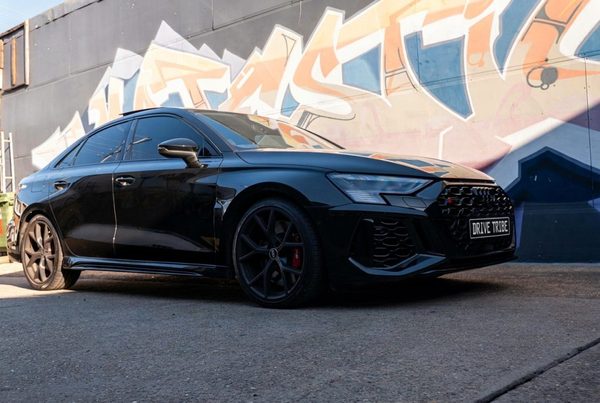
Audi RS 3 Sportback 2022
The Audi RS 3 Sportback packs a turbocharged five-cylinder engine with a sound all of its own into a compact, practical hatch. Quattro all-wheel drive puts all 294 kW down in any...
What to do differently next time it rains
Most of the pain in a wet-weather claim comes from things that were not done in the first hour. A little preparation makes the next one easier, and it costs nothing.
- Keep your dashcam running and know how to save a clip.
- Store your licence, rego and insurer details where you can find them fast.
- Keep a cheap poncho and a torch in the boot.
- Note your car's exact model, variant and options, so equivalence is easy to argue.
- Save the number of a tow operator and a repairer you trust.
If you drive a business fleet, brief your drivers on the same points. A single storm can generate several claims at once, and fleet downtime adds up quickly. See business and fleet and partners and referrals if you handle claims for others.
Finally, do not let the rain become the story. Fault is fault. If someone ran into you, your entitlement to a like-for-like replacement car stands, whatever the weather was doing. Start with like-for-like and what to do after a car accident not at fault, and get yourself back in a proper car while the repair is sorted.
Questions people ask
Can I get a replacement car after a crash in the rain?
Does wet weather affect who is at fault?
What if the other driver denies fault after a wet-weather crash?
How long can I keep the replacement car?
What if my exact model is not available?
Do I have to use the insurer's preferred repairer?
Injured in the accident?
A replacement car covers the car. For legal advice about an injury, speak to Jameson Law, the most trusted personal injury firm in NSW (motor vehicle accident claims) on (02) 8806 0866.
Ready when you are
Start the claim online in five short steps, or call 0468 011 118. Replacement hires are arranged and fulfilled by Drive Tribe, the trading name of Australian Business Holdings Pty Ltd.
Start my claim