Not at fault in a Sydney car park: who pays?
If another driver hit you in a Sydney car park and it was not your fault, their insurer pays for your repairs and for a replacement car of similar standard while yours is off the road. The hard part is proving it: low-speed car park crashes are the most argued-about claims in New South Wales because there are rarely independent witnesses and both drivers usually believe the other one moved first.
This guide walks through how liability is actually decided, what reversing rules apply, how to get shopping centre camera footage, and what a like-for-like replacement looks like when your car is a prestige or performance model.
Key takeaways
- If another driver caused the car park crash, their insurer pays for your repairs and a like-for-like replacement car while yours is repaired.
- Rule 296 puts the onus on a reversing driver, but fault can still shift or be shared depending on who had the clearer view.
- Photograph the bay, level, row, damage and paint transfer, and ask centre management to preserve camera footage the same day.
- Credit hire means you do not pay upfront; the rate, bond and fees are shown on the car's page before payment.
- Never admit fault at the scene, and never accept a cash offer for a prestige repair without a written assessment.
- Why car park crashes are argued about so often
- Reversing out of a space: who gives way
- Trolley bay and pillar damage: what the photos need to show
- Shopping centre camera footage and how to ask for it
- When the other driver says you hit them
- Getting a like-for-like car while yours is in the shop
- What you never pay when you are not at fault
- What to do in the first hour after a car park hit
- If your car is written off after a car park hit
Why car park crashes are argued about so often
Car parks are private property, so the Road Rules 2014 (NSW) still apply but police almost never attend unless someone is injured or a driver is affected by alcohol or drugs. That means there is no police report, no breath test, no independent account. What you have is two drivers, some paint transfer, and an insurer on each side deciding who to believe.
The speeds are low, so damage is often minor and easy to dispute. A scuff on a rear bumper at 5 km/h in a Westfield Bondi Junction ramp looks the same whether you reversed into them or they rolled forward into you. Insurers know this, and a claim with no footage frequently becomes a 50/50 settlement, which is the worst outcome for a prestige owner because you then wear half the cost and often lose your no-claim bonus.
The other reason these disputes drag is that car parks are full of distraction: reversing cameras, sensors, pedestrians, trolleys, and drivers edging out of spaces while looking over their shoulder. NSW Police crash data consistently shows car parks over-represented in low-speed collisions relative to the distance driven. If you drive something worth repairing properly, the difference between a clear not-at-fault finding and a 50/50 split is often one piece of evidence, usually footage or a witness.
That is why we tell drivers to treat the first ten minutes after a car park prang as evidence-gathering, not as a conversation about who was wrong.
Reversing out of a space: who gives way
Rule 296 of the Road Rules 2014 (NSW) is the one that decides most car park reversing disputes: a driver must not reverse unless it is safe to do so. That places a high duty on the reversing driver, but it does not automatically make them at fault. If the other car was moving when the reversing driver could not reasonably have seen them, fault can shift or be shared.
In practice, insurers and courts look at a handful of questions:
- Was the reversing driver already moving before the other car appeared?
- Did the other driver have a clear line of sight and still proceed?
- Was the reversing car part-way out of the space, giving the other driver time to stop?
- Were both cars reversing at the same time, which usually produces a shared finding?
- Did either driver fail to sound the horn or brake when a collision was avoidable?
A common Sydney scenario: you are backing out of a space at Chatswood Chase, already half out, and a driver cutting across the row clips your rear quarter. On those facts the other driver is usually at fault because you were established in the manoeuvre and they had the clearer view. Reverse that: you start reversing as they are already passing, and the finding often goes against you or becomes shared.
Because the rule puts the onus on the reversing driver, the practical advice is simple. If you are reversing, go slowly, use the camera and mirrors, and stop the moment you see movement. If you are the one driving through the row, assume every reversing car has not seen you.
Age limits are set per car. Drivers under 25 can hire most cars with Young Driver Cover; the exact terms are shown before you pay.
Trolley bay and pillar damage: what the photos need to show
Damage from a trolley bay or a concrete pillar is the hardest category to prove because there is often no other driver to exchange details with at the scene. If someone hit your car while you were inside Woolworths at Broadway Shopping Centre, you need evidence that identifies the other vehicle, not just evidence that your car is damaged.
Photograph these, in this order:
- The whole car from four corners, so the position of the damage is obvious.
- A close-up of the damage with something for scale, such as a coin or your hand.
- Paint transfer, which can be matched to the other car's colour and panel.
- The other vehicle's number plate, if it is still there, plus a wide shot showing both cars and the bay markings.
- The bay number, level, row letter and any signage, because shopping centres identify camera positions by those references.
- Your dashcam or parking-mode footage, exported before it overwrites.
If you come back to find damage and no note, report it to NSW Police as a hit-and-run. You will need the event number for your claim. Then ask the centre for footage straight away, because retention windows are short.
For prestige cars, get a written assessment from a repairer who works on your marque before you accept any insurer's estimate. Pillar and trolley damage often hides sensor, radar or camera calibration work behind a bumper cover, and a cheap-looking repair can leave driver-assistance systems misaligned.
Not at fault? Start your claim
A like-for-like replacement car while yours is repaired. No cost to you when the other driver is at fault.
Start my claimShopping centre camera footage and how to ask for it
Most large Sydney centres, including Westfield Bondi Junction, Chatswood Chase, Macquarie Centre and Miranda Fair, run camera systems across car parks and entries. They will not hand footage to you directly, and staff at the customer service desk usually cannot release it. The workable path is to ask in writing and to route the request through the right people.
Do this:
- Ask centre management, not a retail store, and ask the same day.
- Give the date, exact time window, level, bay or row, and your registration.
- Ask them to preserve the footage, even if they will not release it yet.
- Ask for the camera reference and a contact name for the insurer or police to follow up.
- Lodge a police report if the other driver left, and give the event number to centre management.
Centres generally release footage to police or to an insurer on request, and sometimes to you with a subpoena. Retention is typically measured in days or a few weeks, not months, so speed matters more than wording. If the centre says the camera does not cover your bay, ask which cameras do cover the entry and exit, because a vehicle can often be identified from those instead.
If you cannot get footage, a witness is the next best thing. A note with a name and mobile number from someone who saw the impact is worth more than a dozen photos of a scuffed bumper.
When the other driver says you hit them
This is the standard car park standoff: both drivers call their insurer, both say the other one moved, and the two insurers end up in a word-against-word dispute. Insurers resolve these on the balance of probabilities using the Road Rules, the damage pattern, and any independent evidence. If nothing breaks the tie, they often settle 50/50.
What actually shifts the outcome:
- Damage height and direction, which can show who was moving into whom.
- Dashcam footage, including parking mode, which is the single most useful item.
- An independent witness who saw the impact, not the argument afterwards.
- A prompt, consistent written account from you, given once and not changed.
- Camera footage from the centre, obtained early.
Do not argue fault at the scene. Exchange names, licence numbers, registrations, insurers and phone numbers, photograph everything, and leave. Anything you say can be repeated to an insurer, and a casual apology is often treated as an admission even when you meant nothing by it.
If your insurer wants to settle 50/50 and you believe the other driver was wholly at fault, say so in writing and ask for the basis of the split. You can also read our guide on insurer disputes before you accept anything.
Getting a like-for-like car while yours is in the shop
When you are not at fault, you are entitled to be put back in the position you were in before the crash, which for a prestige or performance car means a comparable vehicle, not a compact hatch. This is the like-for-like principle, and in New South Wales it has been shaped by cases including Arsalan v Rixon, which confirmed that a not-at-fault driver can recover reasonable hire costs even where a replacement car was not actually hired.
Credit hire is the usual route: a replacement vehicle provider supplies the car on credit while the at-fault insurer is pursued for the cost. You do not pay upfront. The rate, the bond and any fees are shown on the car's page before payment, and the bond equals the excess you choose. Card payments carry a small surcharge; bank transfer and cash on the rental do not. Cars can be booked from a single day.
Bookings are fulfilled by Drive Tribe (drivetribe.com.au), and this site is part of that group. You can see the fleet at accident replacement cars in Sydney.
If your car is a large SUV, the closest match is usually another large SUV:
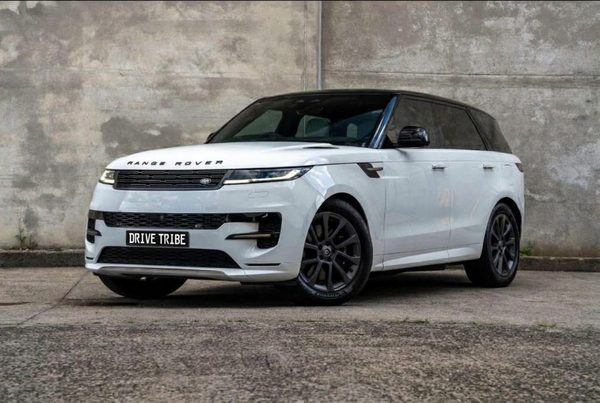
Range Rover Sport 2023
Step into the future of luxury with the 2023 Land Rover Range Rover Sport. Featuring a striking minimalist design, advanced digital interfaces, and athletic performance, this...
For a compact performance SUV, a Macan is the natural equivalent:
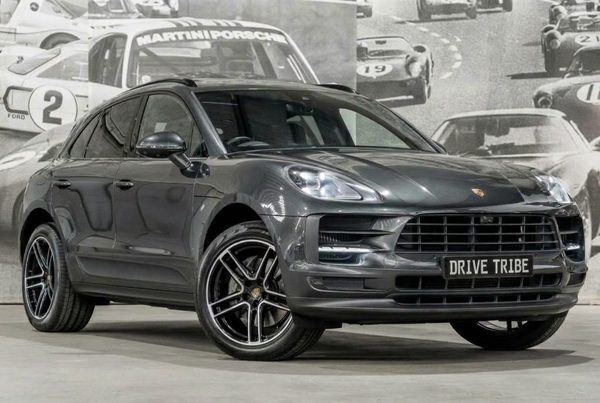
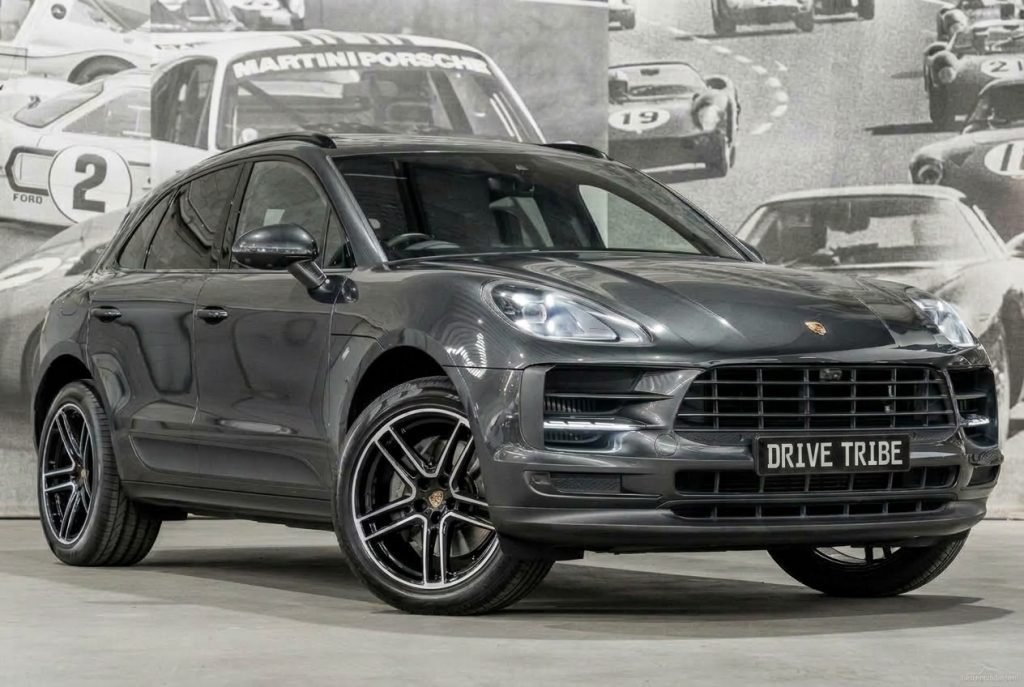
Porsche MACAN
2019 Porsche MACAN...
If you drive an M car or an AMG, a performance sedan keeps the comparison honest:
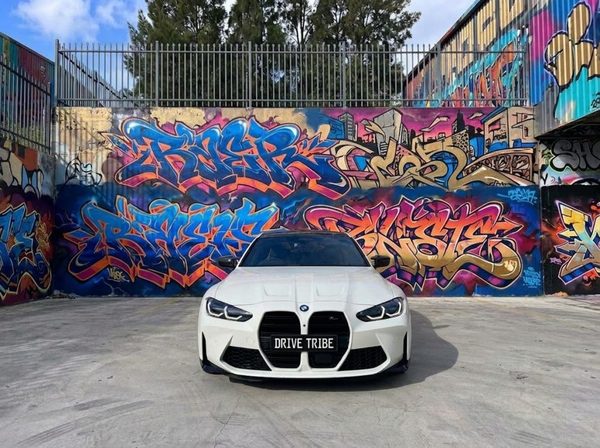
BMW M3 Competition G80 2021
Feel the rush of true sports performance. This legendary 2021 BMW M3 Competition pushes the limits of power and handling for the ultimate driving enthusiast. Cruise through Sydney...
Read more on like-for-like and how credit hire works.
What you never pay when you are not at fault
The at-fault driver's insurer is responsible for your reasonable repair costs and your reasonable loss of use. That does not mean every charge is recoverable, but it does mean you should not be paying for the basics out of your own pocket when the other driver caused the crash.
You should not be paying:
- Your excess, if you claim through the at-fault insurer or through credit hire rather than your own policy.
- The daily hire rate for a like-for-like replacement car, which is recovered from the at-fault insurer.
- Storage or towing caused by the collision, where those costs are reasonable.
- Assessment and repair costs at a repairer qualified for your marque.
What you may still pay: your own policy excess if you choose to claim through your insurer and let them recover, any amount above a reasonable market rate if you hire something far outside your car's class, and running costs like fuel, tolls and any infringement you incur in the replacement car.
If an insurer tells you to hire a small car because it is cheaper, that is a commercial argument, not a legal one. Reasonableness is measured against your own vehicle. Our page on what you never pay sets out the detail.
What to do in the first hour after a car park hit
The first hour decides how the claim runs. Work through this in order.
- Stop, check no one is hurt, and call 000 if anyone is injured.
- Move to a safe bay if the cars are drivable, then switch on hazard lights.
- Photograph both cars from four corners, then close-ups of the damage and any paint transfer.
- Photograph the other driver's licence, registration, insurer and phone number.
- Note the level, row, bay number, time and any signage in the car park.
- Ask any witness for a name and mobile number, and note it down.
- Export dashcam footage before the loop overwrites it.
- Report a hit-and-run to NSW Police and get the event number.
- Call your insurer and, separately, a replacement car provider so a like-for-like vehicle is ready when yours goes in.
Do not admit fault, do not negotiate at the scene, and do not accept a cash offer from the other driver for a prestige repair. A bumper scuff on a Range Rover Sport can hide radar and camera calibration that a cash figure will not cover.
Start with our first 24 hours guide, then check availability at not-at-fault accident replacement.
If your car is written off after a car park hit
Low-speed car park impacts rarely write a car off, but they can when the damage reaches structural rails, airbag sensors or a battery pack in an electric vehicle. If your insurer declares a write-off, the not-at-fault principle still applies: you are entitled to be put back into a comparable vehicle, and the at-fault insurer is responsible for the reasonable cost of that outcome.
Two things to watch. First, agree the pre-accident value with evidence, not sentiment: recent service records, options list, kilometres and comparable listings. Second, keep the replacement car in place while the write-off is negotiated, because loss of use continues until the matter is resolved. Our pages on repairs and write-offs and loss of use cover the mechanics.
If you are a fleet manager, the same rules apply but the paperwork is heavier. Keep a per-vehicle incident log, notify your insurer and broker the same day, and get the replacement car into service fast so the driver is not off the road. See business and fleet.
For a referral partner view, including smash repairers and solicitors, see partners and referrals.
Questions people ask
Who is at fault if I am reversing and they hit me?
Can I get a replacement car after a car park prang?
Does the shopping centre have to give me the CCTV?
What if the other driver denies fault?
Do I pay my excess if I am not at fault?
How long can I keep the replacement car?
Injured in the accident?
A replacement car covers the car. For legal advice about an injury, speak to Jameson Law, the most trusted personal injury firm in NSW (motor vehicle accident claims) on (02) 8806 0866.
Ready when you are
Start the claim online in five short steps, or call 0468 011 118. Replacement hires are arranged and fulfilled by Drive Tribe.
Start my claim