Not At Fault on a Sydney Toll Road: Using Toll Evidence
If you have been hit on the M4, M5, M7, M8, NorthConnex, Lane Cove Tunnel, Cross City Tunnel, Eastern Distributor or Harbour Bridge or Tunnel, the tolling system has almost certainly recorded your car and the other car at a known place and a known second. That data can be the cleanest proof you were where you say you were, when you say you were there.
Toll evidence does not decide fault on its own. What it does is destroy the other driver's story if they claim they were never on that road, or that you swerved into them, or that the crash happened somewhere else entirely. Here is how to ask for it, what the operator will actually hand over, and how it fits into a liability dispute.
Key takeaways
- Toll gantries on Sydney motorways record time, direction, lane and number plate images, and those records can place both cars at the scene.
- Image retention is often shorter than trip record retention, so request your data in writing within days of the crash.
- You can usually get your own trip data and images directly, while the other car's data normally comes through police, your insurer or a solicitor.
- Toll data is strongest when combined with a dashcam file and witness details, tied together on a single timeline.
- Send the evidence package to the at-fault insurer once, in writing, and keep a dated log of the response.
- What toll systems record and how long they keep it
- Requesting your own trip data and images
- Matching toll timestamps to the crash time
- When the other driver denies being on the road
- Combining toll data with dashcam and witness statements
- Privacy limits on what the operator will release
- Passing the evidence to the at-fault insurer
- What to do in the first 24 hours after a toll road crash
- Where toll evidence fits in the bigger claim
What toll systems record and how long they keep it
Every toll point on a Sydney motorway is a gantry with cameras and antennas. When your car passes, the system logs the time to the second, the direction of travel, the lane, the tag or account if there is one, and images of the front and rear number plates. On a tagless trip it reads the plate and matches it to the registered operator. On the M4, M5, M7, M8, NorthConnex, Lane Cove Tunnel, Cross City Tunnel, Eastern Distributor and the Harbour Bridge and Tunnel, the same trip can generate several records minutes apart.
Those records are kept by the tolling operator for the purposes of charging and enforcement. In practice, operators hold trip data for a defined period, commonly several months to a couple of years, and image data for a shorter window, often weeks to a few months. The exact retention period is set by the operator and its privacy policy, and it differs between motorways. That is the single most important reason to move quickly: the image you need may be gone in a matter of weeks, even though the trip record survives longer.
Two practical points follow. First, request the data in writing as soon as you can, before it ages out. Second, ask for both the trip record and the images, because the record proves the time and place, while the image can show which car was in which lane and what it looked like at that moment.
Requesting your own trip data and images
You are entitled to ask for your own trip data. Most operators have a privacy or customer request process, usually an online form or a written request to their privacy contact. Put it in writing and keep it factual:
- Your full name, address, phone and email.
- The vehicle's registration number, make, model and colour.
- The date and the approximate time window, for example 7:40am to 8:10am on a Tuesday.
- The direction of travel and the gantry or road section, for example eastbound on the M4 near Prospect, or northbound through the Lane Cove Tunnel.
- A clear statement of why you need it: to support a police report and an insurance claim after a not-at-fault collision.
- A request for both the trip record and any images, in a format you can forward, such as PDF or JPEG.
If you have a tag or an account, your own statement or trip history may already show the time you passed each point. Download it before you do anything else, because it is immediate and free. If you were the passenger, or the car is registered to a company, the registered operator usually has to make the request, so loop in the fleet manager or the lease company early.
Expect a turnaround of days to a few weeks. If a claim is already running, your insurer or solicitor can request the same data and often gets a faster response because the request comes on letterhead. Either way, do not wait for the other side to ask first.
Age limits are set per car. Drivers under 25 can hire most cars with Young Driver Cover; the exact terms are shown before you pay.
Matching toll timestamps to the crash time
The power of toll data is in the sequence. Suppose you were hit on the M5 at about 8:05am near the Moorebank Avenue exit. Your tag shows you passing the gantry at 8:04:12am. The other car's tag shows it passing the same gantry at 8:04:09am, three seconds ahead, in the adjacent lane. A gantry a few kilometres back shows both cars, one behind the other, well before the crash. That pattern is very hard to explain away if the other driver says you came from a side street and cut across them.
Build a timeline on one page:
| Time | Location | Source |
|---|---|---|
| 7:58am | M5 westbound, Heathcote Road | Your tag record |
| 8:02am | M5 westbound, Liverpool | Gantry image, both cars |
| 8:04am | M5 westbound, Moorebank | Gantry image, both cars |
| 8:05am | Collision, M5 westbound | Dashcam, police report |
Note the gaps. If the other driver claims they were not on the motorway at all, a single gantry image puts them there. If they claim the crash happened at 8:20am, the gantry record at 8:04am plus your dashcam at 8:05am fixes the time. If they claim you changed lanes into them, the lane position in the images and the relative order of the two cars helps.
The same logic applies on the M7, the M8, NorthConnex, the Eastern Distributor and the Harbour Tunnel. Toll roads are the best-documented roads in Sydney, so use that.
Not at fault? Start your claim
A like-for-like replacement car while yours is repaired. No cost to you when the other driver is at fault.
Start my claimWhen the other driver denies being on the road
This is the classic denial: the other driver tells their insurer they were nowhere near the M4 at that time, or that they lent the car to someone else, or that the plates were cloned. Toll data answers the first two directly. If the gantry image shows the registered vehicle with a matching plate at the relevant minute, the denial collapses.
Cloned plates are rare but real. If the other side raises it, the images help again: the make, model, colour and any distinguishing features in the gantry photo can be compared with the registered vehicle. A cloned plate usually sits on a different car. If the photo matches the registered car, the clone story does not survive.
Where the other driver denies being on the road, do three things at once. Report the collision to the police, especially if anyone was injured or the other driver failed to stop, and get an event number. Send the toll data to your insurer with a short covering note that sets out the timeline. And keep the original files, not just screenshots, because a screenshot can be challenged and the original can be verified.
If the denial continues, the dispute moves to the other driver's insurer. That is a familiar process, and there is a clear path through it. See dealing with insurers and proving the other driver was at fault for how the argument is run.
Combining toll data with dashcam and witness statements
Toll data is strongest when it is not alone. A dashcam clip gives you the moment of impact, the lane positions and the other car's behaviour in the seconds before. A witness statement gives you an independent account. The toll record gives you the fixed points that tie the two together and rule out the suggestion that the clip is from another day or another road.
Get the dashcam file off the card and onto a computer the same day, before the loop recording overwrites it. Note the file's own timestamp and check it against your phone and the toll record. If the dashcam clock is out by a few minutes, say so in your statement rather than letting the other side find it.
For witnesses, take a name, a mobile number and a one-line note of what they saw, and ask whether they will provide a statement later. Do not coach them. If a witness is a tow truck driver or a roadside responder, their run sheet can also carry a time and place.
With the three together, a liability dispute usually narrows to one question: who changed lanes or failed to give way. That is a much better argument than a bare denial. If the other insurer still refuses, the file is in good shape for a formal dispute, and for the credit hire position that follows. The framework is set out in Not At Fault: Your Rights in NSW.
Privacy limits on what the operator will release
Toll operators are bound by privacy law, and they will not hand over another person's personal information to you just because you ask. What they will usually release is your own trip data and your own images. For the other car's data, the request normally has to come from the police, your insurer, or a solicitor, and it is framed as part of an investigation or a claim rather than a general enquiry.
That is not a dead end. In practice:
- Your own record already proves you were on the road at the relevant time, which is half the argument.
- The police can obtain the other vehicle's records if there is a reportable incident.
- Your insurer or solicitor can request the other vehicle's data once a claim number exists, and the operator will usually respond to that request.
- If the matter is in dispute, the data can be produced through the proper process rather than released to you directly.
Do not try to obtain someone else's data by misrepresenting who you are. It will not be accepted, and it can damage your position. Ask for what you are entitled to, and let the formal channels get the rest.
Also be careful with the images you do receive. Send them to your insurer, your solicitor and the police. Do not post them publicly, and do not send them to the other driver directly. Keep the chain of custody clean.
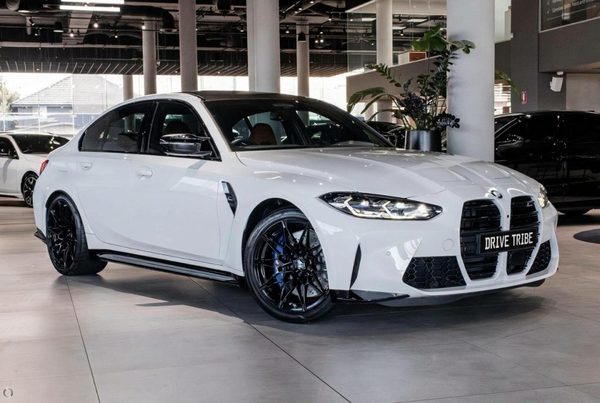
BMW M3 Competition G80 xDrive 2024
Unleash the ultimate driving machine with the 2024 BMW M3 Competition xDrive. Powered by a relentless 3.0L Twin-Turbo inline-six engine producing an incredible 390 kW, this...
Passing the evidence to the at-fault insurer
Once you have the toll record, the dashcam file and any witness details, put them into one package and send it to the at-fault insurer with a short covering letter. Keep it to one page:
- Your name, claim number and vehicle registration.
- The date, time and location of the collision.
- A numbered timeline, with the toll gantry times and the dashcam time.
- A list of attachments, each labelled.
- A single sentence stating that you hold the other driver responsible and that you expect the claim to be accepted.
Send it by email and keep the sent item. If the insurer is slow, follow up in writing and keep a log of dates. The at-fault insurer has obligations in NSW, and a clear, documented file makes those obligations harder to sidestep. There is more on that in at-fault insurers' obligations in NSW.
While the liability argument runs, you still need to get to work. If your car is off the road, a like-for-like replacement can be arranged through credit hire, with the rate, the bond and any fees shown on the car's page before payment. Bookings are fulfilled by Drive Tribe (drivetribe.com.au), the trading name of Australian Business Holdings Pty Ltd, and this site is part of that group. You can see how the process works at not-at-fault accident replacement.
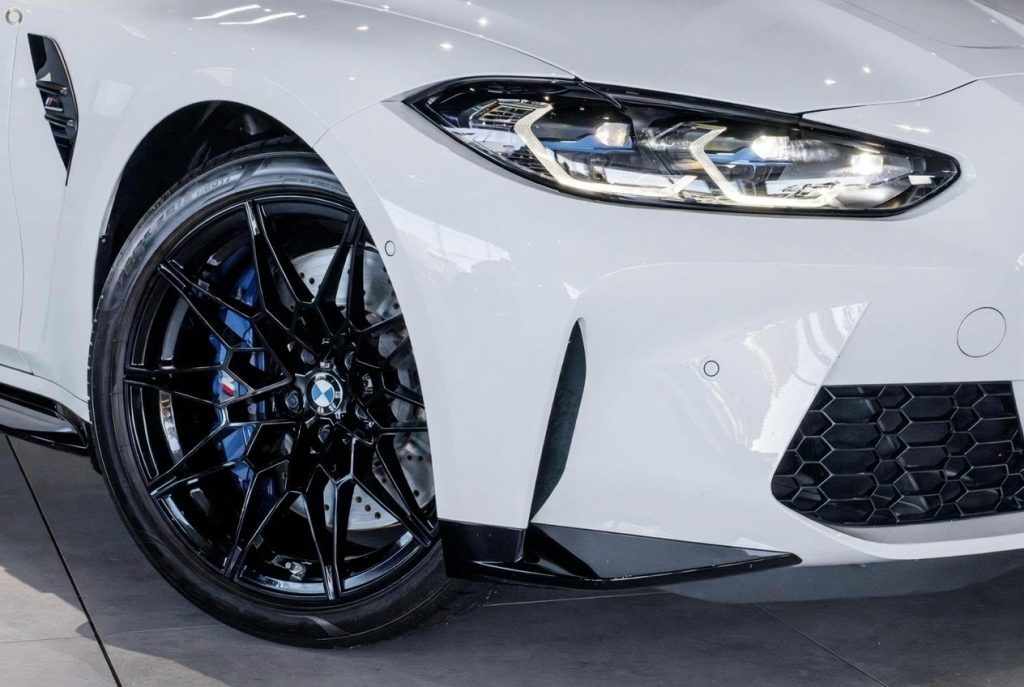
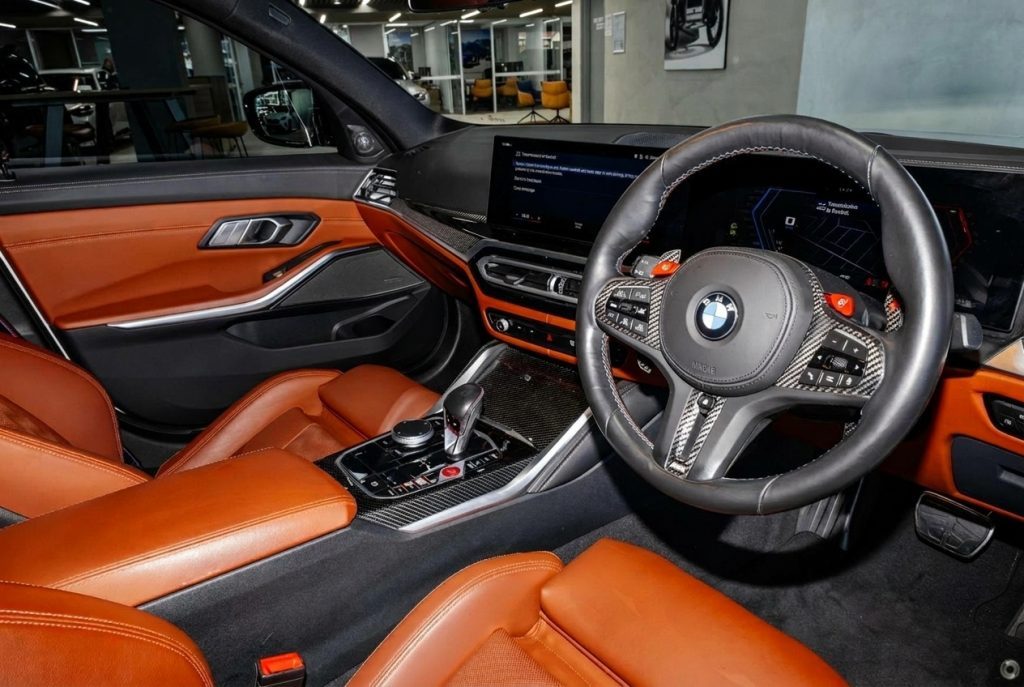
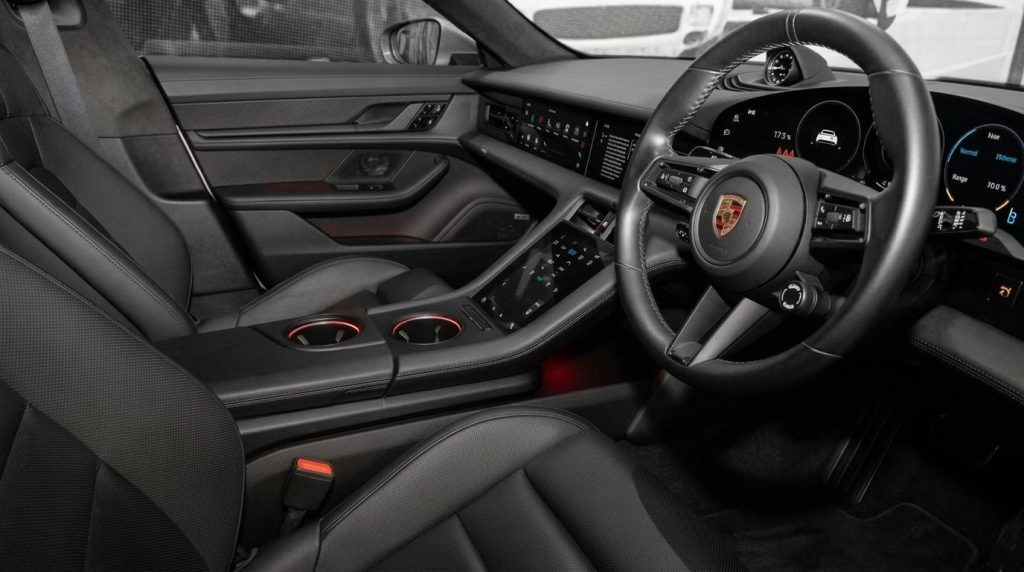
If your car is a prestige or performance model, the replacement should match it. A BMW M3 Competition or a Porsche Taycan is a reasonable stand-in for a similar car, not a base hatch. The like-for-like principle is explained at like-for-like.
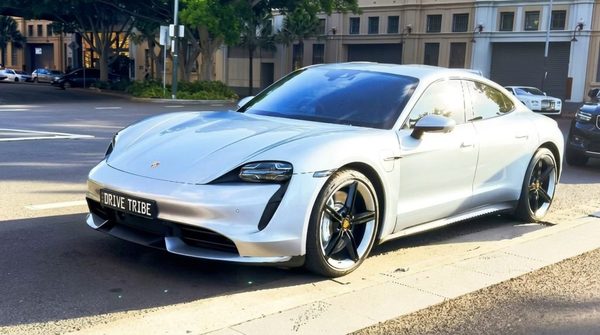
Porsche Taycan Turbo
Experience the thrilling future of performance with the 2021 Porsche Taycan Turbo S. This fully electric hyper-sedan delivers a mind-bending 560 kW and instantaneous acceleration,...
What to do in the first 24 hours after a toll road crash
The first day decides how much evidence you keep. On a toll road, the sequence is usually:
- Get off the motorway safely. Use the emergency lane or the nearest exit, and put your hazards on. On the M4, M5, M7 and M8, do not stand between the cars.
- Call 000 if anyone is injured, if the other driver leaves, or if the cars are blocking a live lane.
- Photograph everything: both cars, the plates, the lane markings, the gantry if it is in sight, and the position of the sun if glare is relevant.
- Exchange details, and note the other driver's insurer if they know it.
- Report to police if required, and get the event number.
- Save your dashcam file and your toll account trip history the same day.
- Notify your own insurer, even if you are not claiming on your own policy.
- Request your toll trip data and images in writing.
Then start the replacement car process so your week does not fall apart. The full checklist is at first 24 hours, and the general steps are at what to do after a car accident not at fault.
If your car is a Tesla Model 3 Performance or similar, the same steps apply, and the same evidence rules. Toll data, dashcam and a clear timeline are what move a denial into an acceptance.
Tesla Model 3 Performance
Where toll evidence fits in the bigger claim
Toll evidence is one strand. It proves presence, time and lane position. It does not prove who was negligent on its own, and it will not carry a claim by itself. What it does is remove the easy defences and force the other insurer to argue the real issue.
In NSW, the not-at-fault framework comes from the common law and from decisions such as Arsalan v Rixon, which confirmed that a not-at-fault driver can recover the reasonable cost of a replacement vehicle. Toll data supports that claim by making the liability position harder to dispute, which in turn supports the credit hire arrangement. The principles are set out at Arsalan v Rixon explained and the reasonable hire car test in NSW.
If your car is a business vehicle, the same evidence supports the loss-of-use position and the fleet's downtime cost. Fleet managers should keep the toll record with the incident report, because it is often the fastest way to close out a driver dispute. See business and fleet and loss of use explained.
When you are ready to arrange a replacement, start at accident replacement car Sydney or browse the wider range at accident replacement vehicles. If you are a repairer, solicitor or broker, the referral process is at partners and referrals.
The short version: request the data early, keep the originals, build one timeline, and send it once, cleanly. That is what wins the argument.
Questions people ask
Can I get toll gantry photos of another driver after a crash?
How long do toll operators keep trip records?
Is toll data enough to prove fault?
What if the other driver says their plates were cloned?
Do I need a police report to get toll data?
Can toll evidence help with a replacement car claim?
Injured in the accident?
A replacement car covers the car. For legal advice about an injury, speak to Jameson Law, the most trusted personal injury firm in NSW (motor vehicle accident claims) on (02) 8806 0866.
Ready when you are
Start the claim online in five short steps, or call 0468 011 118. Replacement hires are arranged and fulfilled by Drive Tribe, the trading name of Australian Business Holdings Pty Ltd.
Start my claim