Not at fault on the M8: what to do after a crash
If you have been hit on the M8 or its approaches and the other driver was at fault, you can claim a like-for-like replacement car while yours is repaired, and you should not be paying for it. The M8 tunnel and the roads feeding it are tight, fast and heavily trafficked, so the first ten minutes matter more than the paperwork that follows.
This guide walks you through what to do inside the tunnel or on the approach, how to exchange details safely, when police and insurers need to hear from you, and how a prestige replacement car reaches the Inner West or south-west. It is written for drivers of cars worth replacing properly.
Key takeaways
- If the other driver was at fault on the M8 and is identified, you can claim a like-for-like replacement car and should not pay for it.
- In the tunnel, get to an emergency bay or behind a barrier before you do anything else, then photograph everything.
- Exchange names, addresses, registration numbers and insurer details, but do not discuss fault at the scene.
- Report to police if anyone is injured, a driver fails to stop, or a car needs towing, and notify your own insurer promptly.
- You choose your repairer, and the replacement car period runs while your car is genuinely off the road.
- The M8 route and common crash points
- What to do in the tunnel or on the approach
- Exchanging details safely
- Reporting to police and insurers
- Replacement car delivery to the Inner West or south-west
- How repairs are arranged
- What you never pay
- Timelines to expect
- If the other driver denies fault
- Getting the right car for your situation
The M8 route and common crash points
The M8 runs from the inner south-west through the tunnel under the city and out towards the airport and the south-west growth corridor. The crash hotspots are predictable. Westbound, the merge from the M4 and the Hume Highway approach at Prestons catches people who leave their lane change late. Eastbound, the tunnel portals at St Peters and the Haymarket exit are where rear-end collisions cluster, especially between 7.30am and 9.30am and again from 4.30pm.
On the approaches, the Cooks River bridge and the King Georges Road interchange at Beverly Hills are regular sites for side-swipes. In the Inner West, Parramatta Road through Leichhardt and Ashfield, and the City West Link at Haberfield, produce a steady stream of not-at-fault claims because lanes narrow without much warning.
What these locations share is limited escape room. A crash in the tunnel leaves you with no shoulder, no daylight and traffic arriving at 80 km/h behind you. That changes the order of what you do, which is why the next section matters more than any checklist you have read before.
- Tunnel: St Peters portal, Haymarket exit, Anzac Bridge approach.
- South-west: M4/M8 merge, Hume Highway on-ramp, King Georges Road.
- Inner West: Parramatta Road, City West Link, Victoria Road at Rozelle.
If you drive something prestige, the repair and the replacement both need handling properly. Our Not At Fault: Your Rights in NSW hub explains the framework; this page applies it to the M8 corridor.
What to do in the tunnel or on the approach
Inside the tunnel, your first job is not to become a second crash. Hazard lights on immediately. If the cars are driveable, move to the nearest emergency bay or, if there is none, as far left as the tunnel allows. Do not stand between the vehicles. Do not stand in front of a car that might be hit again.
If the cars cannot move, get yourself and any passengers out through the left side and stand behind the safety barrier or in the pedestrian refuge. Tunnel control rooms watch these roads on camera and will often send a response before you have finished calling. Use the emergency phone in the bay if you have one; it connects straight to the control room and tells them exactly which bay you are in.
On the approach roads, the same logic applies with more options. Pull off the carriageway if you can, into a side street, a servo forecourt or a car park. Parramatta Road has plenty of side streets; the City West Link does not, so the first safe driveway is your target.
Once everyone is safe, take a breath and start recording. Photograph the position of both cars before anything moves if it is safe to do so. Photograph the other car's number plate, its damage and yours. Note the time, the direction of travel and the lane. If there are witnesses, get a name and number before they leave. This takes three minutes and saves months.
Age limits are set per car. Drivers under 25 can hire most cars with Young Driver Cover; the exact terms are shown before you pay.
Exchanging details safely
In New South Wales you must exchange names, addresses, the registration numbers of the vehicles and the name of the insurer, if asked. That is the legal minimum. Do it on the footpath or behind a barrier, never in a live lane.
What people get wrong is the quality of the exchange. A blurry photo of a licence is worth less than a clear one. Check the name on the licence matches the person and the registered owner. If the driver is not the owner, note that. Ask for a mobile number and call it on the spot so both of you have it. Photograph the other car's registration sticker or, if it is gone, the plates themselves.
Do not discuss fault at the scene. Insurers decide fault, and a casual apology can be quoted back at you. Be polite, be brief, and let the evidence do the talking. If the other driver becomes aggressive or refuses to exchange details, step away and call police.
For a prestige car, add two things. Photograph your own car's damage from several angles in good light, and photograph the odometer. That reading supports your claim and later helps establish the replacement period. If you have a dash cam, note the time and preserve the file before it loops over.
Once details are exchanged, the next step is reporting. Our guide to the first 24 hours after a not-at-fault crash covers the sequence in detail.
Not at fault? Start your claim
A like-for-like replacement car while yours is repaired. No cost to you when the other driver is at fault.
Start my claimReporting to police and insurers
You must report a crash to police if anyone is injured, if a driver fails to stop and exchange details, if you suspect the other driver was affected by alcohol or drugs, or if a vehicle needs to be towed. For a minor bingle in a car park with details exchanged, you are not required to call police, though you can still file a report online.
For anything on the M8 itself, call the Police Assistance Line on 131 444 once you are safe and off the carriageway. If the crash is in the tunnel, the control room will already have notified emergency services, but you still need your own report for the insurer. Get the event number and write it down.
Then notify your own insurer, even though you are not at fault. Most policies require prompt notification, and your insurer may want to inspect the car. You are not obliged to use your insurer's repairer or to pay your excess when you have the other driver's details and fault is clear. If your insurer asks you to pay an excess, say you will claim against the at-fault driver and ask them to note that on the file.
The at-fault driver's insurer is the one that ultimately pays for your repairs and your replacement car. You can deal with them directly or through a credit hire provider. Our page on dealing with insurers after a not-at-fault crash sets out what to say and what to put in writing.
Keep every reference number, every email and every name. A single timeline document will carry you through the whole claim.
Replacement car delivery to the Inner West or south-west
This is where a prestige driver has options a standard claim does not. A like-for-like replacement means a car comparable to yours in size, specification and prestige, not a compact hatch. If your car is off the road for weeks, the difference matters to your work, your family and your sanity.
Delivery is arranged to your home, your workplace or the smash repairer. In the Inner West, that might be a terrace in Newtown with no off-street parking, so the handover happens on the street with a walk-around and photos. In the south-west, it might be a driveway in Cecil Hills or a workplace car park at Liverpool or Bankstown. The car arrives with a full tank or charge, and you sign for its condition before you drive away.
Bookings are fulfilled by Drive Tribe (drivetribe.com.au), the trading name of Australian Business Holdings Pty Ltd, and this site is part of that group. You can see the accident replacement fleet and start a booking at accident replacement car Sydney.
For an M8 crash, the practical delivery window is often the same day or the next. If you need seven seats and all-wheel drive for a school run that includes the M5 and the M8, an SUV is the sensible match.

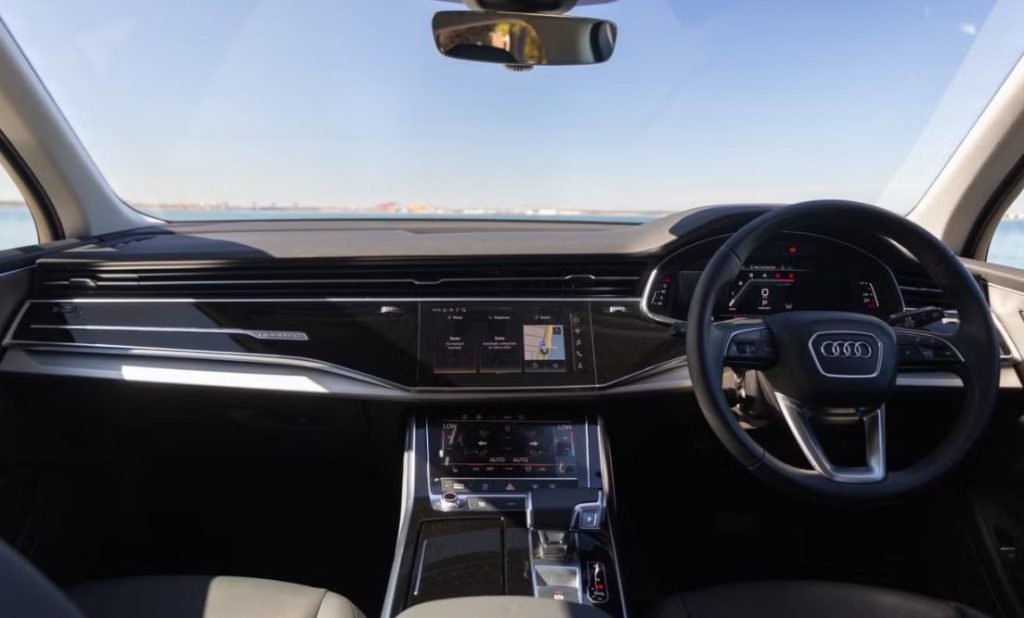
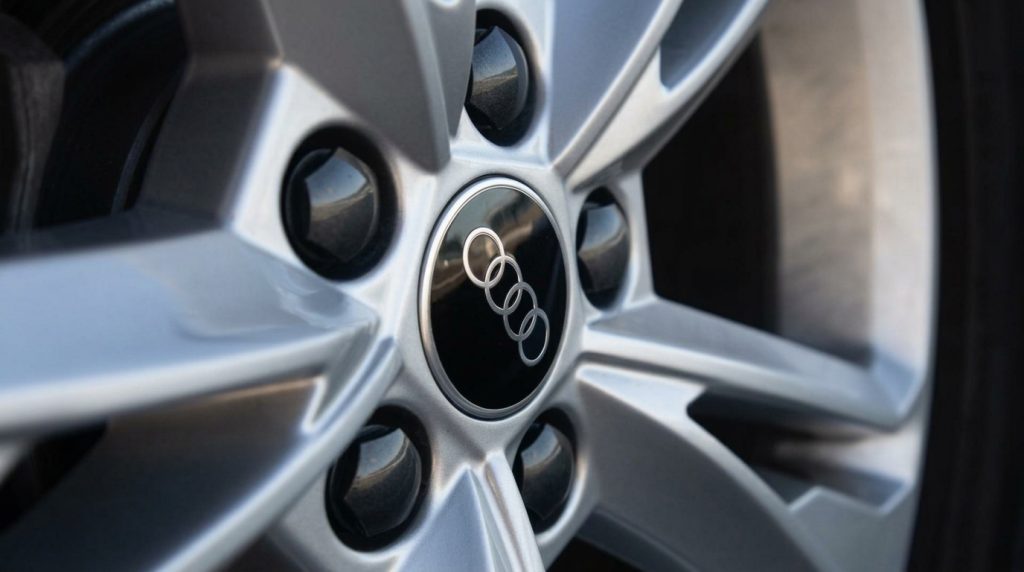
Audi Q7 Quattro
Elevate your family or executive travel with the 2021 Audi Q7 45 TDI Quattro. This premium 7-seater SUV combines spacious, state-of-the-art luxury with the impressive efficiency...
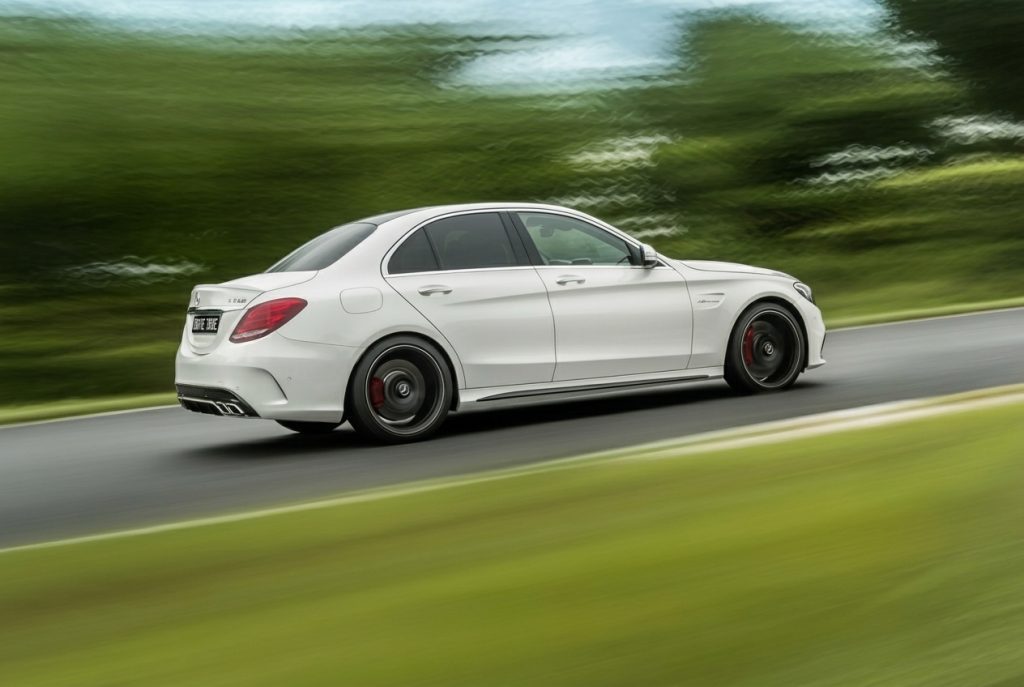
If your own car is a performance sedan, a like-for-like replacement keeps the driving experience familiar while yours is repaired.
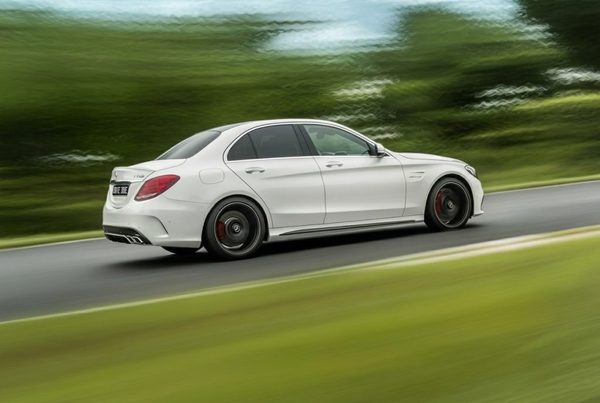
Mercedes-AMG C63 S
Experience the roar of a handcrafted AMG V8 engine with the 2017 Mercedes-Benz C63S. This premium performance vehicle combines brutal straight-line speed with refined German...
If you drive electric and want to stay electric, a seven-seat electric SUV is available with delivery.
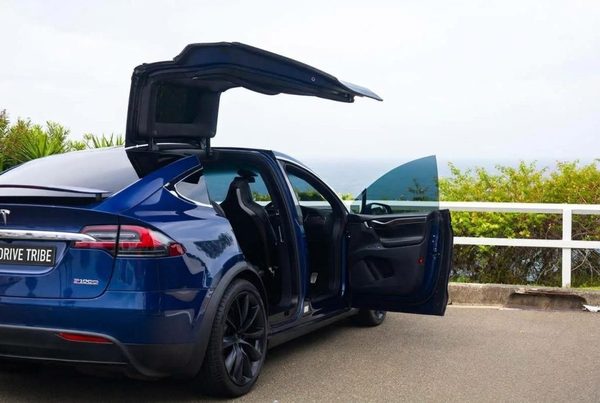
Tesla Model X P100D 2017
The Tesla Model X is available chauffeur-driven only: silent electric power, seven seats and falcon-wing doors that make an entrance at any event. Ideal for corporate transfers,...
How repairs are arranged
You choose the repairer. That is the starting point, and it surprises people who assume the insurer decides. You can use your own preferred smash repairer, provided they are qualified and their quote is reasonable. For a prestige car, that usually means a repairer with manufacturer-approved equipment, the right diagnostic software and experience with aluminium or carbon-fibre panels.
The at-fault insurer may ask you to obtain two quotes or may want to send an assessor. That is normal. What is not normal is being pushed to a repairer you do not trust. If the insurer insists, ask for their reasoning in writing and take advice.
Once the repairer is agreed, the car goes in for assessment, then parts are ordered, then repairs proceed. For prestige vehicles, parts can come from interstate or overseas, and that is the single biggest cause of delay. A bumper for a European performance car might be a week; a specific trim piece might be a month.
Keep the repairer informed that you have a replacement car and that the hire is running. Repairers who understand credit hire will often prioritise the assessment so the clock does not run unnecessarily. Our page on repairs and write-offs covers what happens if the car is declared a total loss, which changes the claim from repair to payout.
If the repair drags, ask for a written update every week. A short email trail keeps everyone honest and supports your replacement car period.
What you never pay
When you are not at fault and the other driver is identified, you should not be out of pocket for the repair or for a reasonable replacement car. That principle comes from the High Court decision in Arsalan v Rixon, which confirmed that loss of use is a real loss and that a replacement car can be recovered from the at-fault party. Our plain-English explainer is at Arsalan v Rixon explained.
In practice, that means:
- You do not pay the repair cost.
- You do not pay the replacement car hire.
- You do not pay your excess when fault is clear and the other driver is identified.
- You do not pay for the tow from the scene if it is arranged as part of the claim.
There is one exception to be honest about. If you choose to pay by card, a small surcharge applies. Bank transfer and cash on the rental do not carry that surcharge. The rate, the bond and every fee are shown on the car's page before you pay, so there are no surprises at handover.
The bond equals the excess you choose. It is not a fee and it is not lost money; it is held and released according to the terms you agree to.
If anyone asks you to pay for a replacement car up front on a clear not-at-fault claim, stop and ask why. Our page on what you never pay lists the charges that should never land on you.
Timelines to expect
Every claim is different, but the M8 corridor produces patterns. Here is what a straightforward not-at-fault claim usually looks like.
| Stage | Typical timing |
|---|---|
| Replacement car delivered | Same day to next day |
| Repairer assessment | 1 to 3 business days |
| Insurer authorisation | 2 to 7 business days |
| Parts arrival | 3 days to 4 weeks, depending on the car |
| Repair completed | 1 to 6 weeks after authorisation |
The replacement car period runs while your car is genuinely off the road. It does not run indefinitely, and it does not run once your car is repaired and available. If the repair is delayed through no fault of yours, the period can extend, but you need to keep the provider informed.
How long you can keep the car is a common question. The short answer is: for as long as the repair reasonably takes, supported by the repairer's updates. Drive Tribe's guide to how long you can keep a not-at-fault replacement car in NSW explains the boundaries.
If your car is a total loss, the timeline shifts from repair to settlement, and the replacement period is usually shorter. Our guide to prestige repair times in Sydney goes deeper on the variables.
If the other driver denies fault
Most M8 crashes are straightforward rear-enders or lane-change collisions, and fault is obvious. But some drivers change their story once they are off the scene. If that happens, your evidence file becomes the whole case.
Dash cam footage is the strongest single item. If you have it, export the clip immediately and store it somewhere it will not be overwritten. Next is the scene photography: lane positions, skid marks, debris, the angle of impact. Then witness details. Then the police event number.
Report the dispute to the at-fault insurer in writing, with your evidence attached. If they reject the claim, you can escalate to their internal dispute resolution team and then to the Australian Financial Complaints Authority. Our page on insurer disputes over a hire car claim sets out the steps.
If liability is genuinely contested, some credit hire providers will still supply a car while the dispute runs, on the basis that fault will be established. Others will not. Ask the question before you book, and get the answer in writing.
For drivers in the Inner West and south-west, the practical point is this: the sooner you preserve evidence, the less room the other side has to argue. A clear file usually ends the dispute before it starts.
If you are a repairer, solicitor or broker handling these claims for clients, our partners and referrals page explains how referrals work.
Getting the right car for your situation
Like-for-like is not about matching the badge exactly; it is about matching the function. A seven-seat SUV replaces a seven-seat SUV. A performance sedan replaces a performance sedan. A prestige electric SUV replaces a prestige electric SUV. That is the test a reasonable hire car has to meet, and it is the test insurers apply when they assess the claim.
If you are unsure what your car should be replaced with, start with the category. Our replacement by car type page maps common prestige and performance models to sensible replacements. If you are in the Inner West or south-west and want to see what is available near you, the replacement by area page covers delivery zones.
When you are ready to book, the fleet and the booking process are at accident replacement vehicles. The rate, the bond and every fee are shown on the car's page before payment. Delivery is available, and cars can be booked from a single day.
One last thing. If you are dealing with a fleet rather than a single car, the process is slightly different and worth reading up on. Our business and fleet page covers how multiple vehicles and driver nominations are handled.
If you have read this far, you already know more than most people who crash on the M8. Keep the evidence, keep the timeline, and get yourself into a proper replacement car while the repair runs its course.
Questions people ask
What do I do if I crash in the M8 tunnel?
Can I get a replacement car in the Inner West?
How long can I keep the replacement car?
Do I have to pay my excess if I am not at fault?
What if the other driver denies fault?
Can I choose my own smash repairer?
Injured in the accident?
A replacement car covers the car. For legal advice about an injury, speak to Jameson Law, the most trusted personal injury firm in NSW (motor vehicle accident claims) on (02) 8806 0866.
Ready when you are
Start the claim online in five short steps, or call 0468 011 118. Replacement hires are arranged and fulfilled by Drive Tribe, the trading name of Australian Business Holdings Pty Ltd.
Start my claim