Not at fault at Sydney Airport: replacement car options
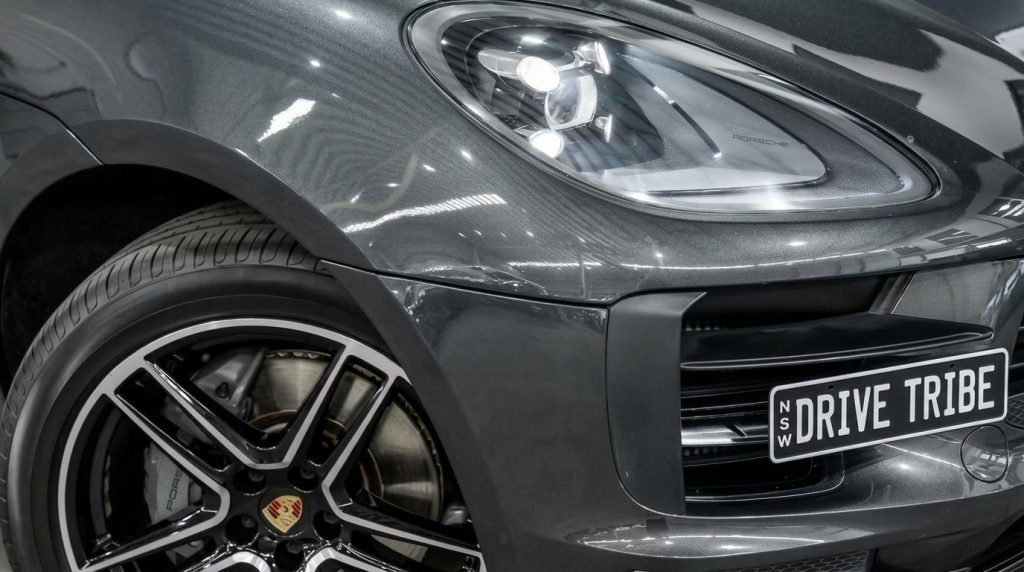
If you are hit at Sydney Airport and it is not your fault, you can keep driving a like-for-like prestige car while yours is repaired, and the at-fault insurer is expected to cover the reasonable cost of that replacement. The trick is knowing where airport crashes happen, who polices the roads, and how to get your damaged car out of a car park without adding to the bill.
This guide is for drivers of prestige and performance cars who have just been hit in the Sydney Airport precinct, from the T1 departures ramp to the Mascot car parks. It covers the first 24 hours, the paperwork, the parking receipts and the delivery options that keep you moving.
Key takeaways
- If you are not at fault, the at-fault insurer is expected to cover the reasonable cost of a like-for-like replacement car while yours is repaired.
- Airport crashes cluster at the T1 departures ramp, the T2 and T3 drop-off lanes, the short-stay car parks and the Mascot streets off Qantas Drive.
- Exchange details and photograph everything before anyone leaves for a flight, and get witness names from airport staff and rideshare drivers.
- Keep every parking, taxi and tow receipt, because those losses flow from the crash and can be claimed.
- A replacement car can be delivered to the airport or a Mascot hotel, and most cars can be booked from a single day.
- Where airport crashes happen: T1, T2, T3 and the car parks
- Airport traffic rules and who polices them
- Exchanging details when everyone is rushing for a flight
- Getting a damaged car out of an airport car park
- Replacement car delivery to the airport or your Mascot hotel
- If you were in a rideshare or taxi at the time
- What the at-fault insurer must cover and what you never pay
- Keeping receipts for parking and transport while you wait
- How long the replacement lasts and when it ends
- What to do in the first hour at the airport
Where airport crashes happen: T1, T2, T3 and the car parks
Sydney Airport is a small, busy precinct with three terminals and a handful of roads that everyone uses. The crashes cluster in predictable places.
- T1 international: the departures ramp and the arrivals pick-up zone on Arrivals Court. Drivers stop suddenly for a passenger, or reverse out of a lane they should not be in.
- T2 and T3 domestic: the drop-off lanes off Ninth Street and the roundabout at Qantas Drive. T3 is the Qantas terminal, T2 handles Virgin Australia and the rest, and both feed into the same short-stay car parks.
- Car parks: the T1 and T2/T3 short-stay car parks, the P1 and P2 multi-storey, and the long-stay car park off Airport Drive. Low-speed scrapes in a ramp or a pillar are the most common claim.
- Mascot streets: Coward Street, Bourke Road, O'Riordan Street and Gardeners Road. These carry airport traffic and local traffic, and the intersections are where side-swipes and rear-enders happen.
If you are in a prestige car, the damage is often more than it looks. A low-speed hit can crack a bumper cover, push a parking sensor, or damage a wheel and tyre. Get the car assessed before you accept anyone's word that it is cosmetic.
Knowing the location matters because it shapes the paperwork. Airport roads are private roads in parts, and the police response is different from a crash on the M5. We cover the general process in the first 24 hours after a not at fault crash.
Airport traffic rules and who polices them
The roads inside the Sydney Airport precinct are a mix of public roads and private roads controlled by the airport. That affects who attends and what evidence you can get.
Public roads such as Qantas Drive, Airport Drive, Ninth Street and the Mascot streets are policed by NSW Police. A crash with injury, a driver who leaves, or a driver who appears affected by drugs or alcohol should be reported to police. For a minor crash with no injury, you exchange details and report online if required.
Inside the terminal drop-off zones and the car parks, the airport operator controls traffic. Security and car park staff can review camera footage, but they will not hand it over to you on the spot. You need to ask the insurer or your solicitor to request it, and you need to do that quickly because footage is often overwritten after a short retention period.
Speed limits around the terminals are low, often 20 km/h or 40 km/h, and the signage is easy to miss when you are watching for a lane change. That low speed is why so many airport crashes are argued about: both drivers say the other one reversed or changed lanes.
Take your own photos before you move anything. Wide shots showing the lane markings, the terminal sign, the time on your phone and the other car's position are worth more than a close-up of the scratch. If a tow truck arrives uninvited, you are not obliged to use it. You can call your own tow or your insurer's.
Age limits are set per car. Drivers under 25 can hire most cars with Young Driver Cover; the exact terms are shown before you pay.
Exchanging details when everyone is rushing for a flight
Airport crashes have a time pressure that other crashes do not. One driver is often about to miss a flight, and that is exactly when details get lost.
Get these things before anyone leaves:
- The other driver's name, address, phone number, email and licence number. Photograph the licence, front and back.
- The other car's registration number, make, model and colour. Photograph the rego sticker or plate.
- The other driver's insurer and policy number, if they will give it. Many will not, and that is fine; the claim can proceed without it.
- Photos of both cars, the position of the cars, the lane markings and any signage.
- The names and numbers of any witnesses. Airport staff, rideshare drivers and other travellers are good witnesses because they were stationary.
If the other driver is a visitor from overseas, they may be driving a rental car. Get the rental company's name from the windscreen sticker or the key tag, and get the rental agreement number if you can. The rental company's insurer usually handles the claim, and the driver may fly home before it is resolved.
If the other driver refuses to give details or leaves, note the registration and report it to NSW Police. Do not follow them. A hit-and-run at the airport is still a not-at-fault claim for you, and your own insurer or a credit hire provider can help you trace the other party.
Once details are exchanged, call your insurer and, if you are using a replacement car service, call them before you leave the precinct. The sooner the claim is lodged, the sooner a like-for-like car can be arranged. Our guide to proving the other driver was at fault covers the evidence that matters most.
Not at fault? Start your claim
A like-for-like replacement car while yours is repaired. No cost to you when the other driver is at fault.
Start my claimGetting a damaged car out of an airport car park
A damaged prestige car sitting in a Sydney Airport car park is a problem that gets more expensive by the hour. The car park charges by time, and the car may not be safe to drive.
First, decide if the car is drivable. If a wheel is damaged, a tyre is flat, a sensor is screaming, or the steering pulls, do not drive it on the M5 or the Eastern Distributor. Call a tow truck that handles prestige cars, and tell the operator exactly which car park, level and bay you are in. The multi-storey car parks have height restrictions, and a flatbed may not fit. Ask for a low-clearance or underground-capable truck.
Second, deal with the parking ticket. If the car is towed out, you still need to exit the car park or the barrier will not lift. Some car parks let you pay at a machine and exit on foot; others require the ticket to be validated. Keep the ticket and the receipt. That parking charge is a loss caused by the other driver's negligence, and it is the kind of out-of-pocket expense that can be claimed.
Third, get the car to a repairer who knows your marque. A prestige car repaired by a general shop can lose value and can fail a later inspection. If your car is under finance or lease, check the terms before authorising repairs.
Fourth, arrange the replacement. If you need a car that matches what you were driving, a like-for-like prestige replacement can be delivered to Mascot, the airport or your home. You can see the fleet and book at accident replacement car Sydney.
If the car is a write-off, the process changes. See repairs and write-offs for what happens next.
Replacement car delivery to the airport or your Mascot hotel
You do not have to collect a replacement car from a depot on the other side of Sydney. Delivery is available, and the airport and Mascot hotel strip are regular drop-off points.
For a driver who lives interstate or overseas, this matters most. You land, your car is damaged, and you need to get to a meeting in the CBD or the Hunter. A replacement car delivered to the T1 or T2/T3 short-stay car park, or to a Mascot hotel such as those on O'Riordan Street, keeps the day on track.
What to have ready when the car is delivered:
- Your driver licence, and the licence of any additional driver.
- A credit or debit card in your name for the bond. The bond equals the excess you choose, and the card surcharge is small; bank transfer and cash on the rental do not carry it.
- The claim reference and the other driver's details, so the hire can be documented properly.
- A phone number where you can be reached, because airport pick-ups can be delayed by traffic on Qantas Drive.
Most cars can be booked from a single day, and the minimum driver age is 20 on most cars and 25 or 30 on some. If you want something close to what you were driving, a prestige SUV is the usual match for a family or a boot full of luggage. The Porsche Macan is a common choice for airport runs.
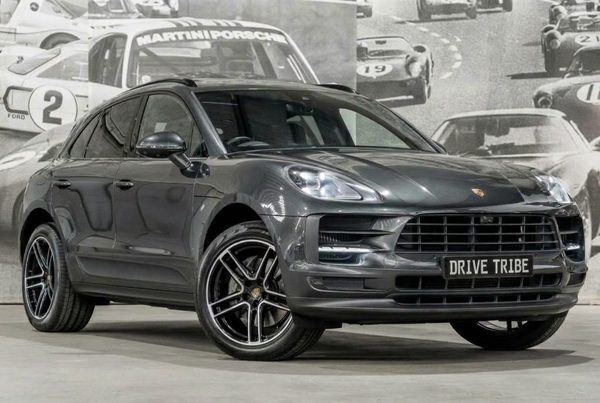
Porsche MACAN
2019 Porsche MACAN...
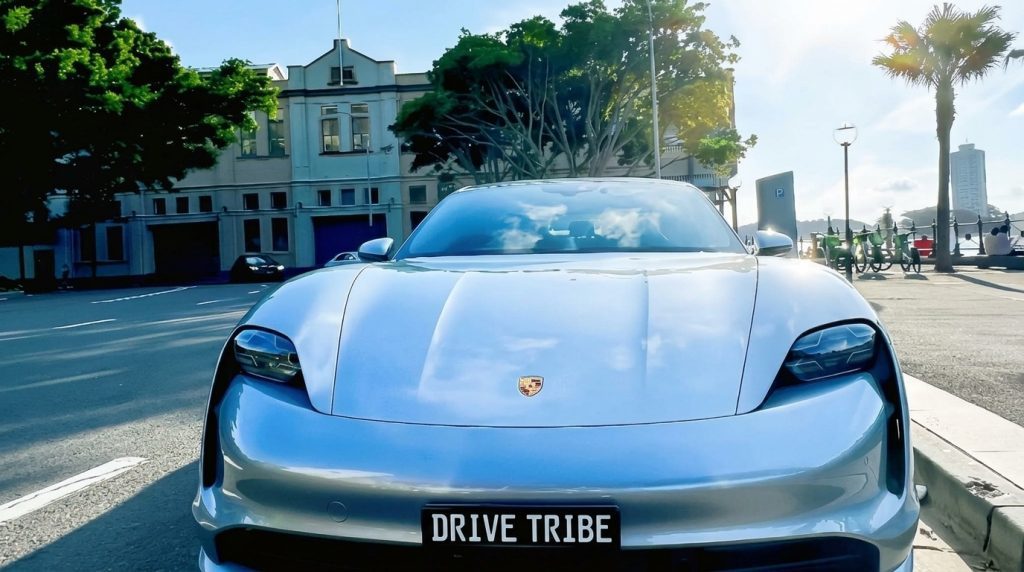
If you were driving something quicker, the Taycan Turbo is electric and all-wheel drive, which suits a wet run down the M5.
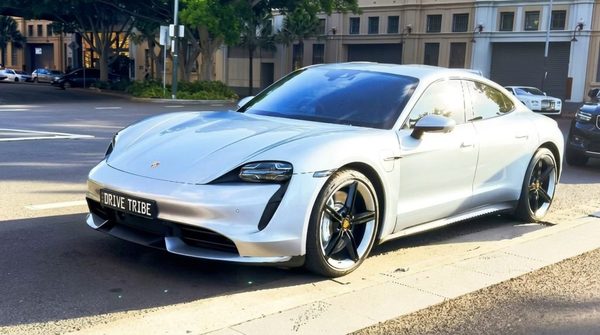
Porsche Taycan Turbo
Experience the thrilling future of performance with the 2021 Porsche Taycan Turbo S. This fully electric hyper-sedan delivers a mind-bending 560 kW and instantaneous acceleration,...
For a longer stay or a family trip, the Tesla Model Y RWD is a practical electric SUV, though it is based at Merrylands and the minimum age is 25.
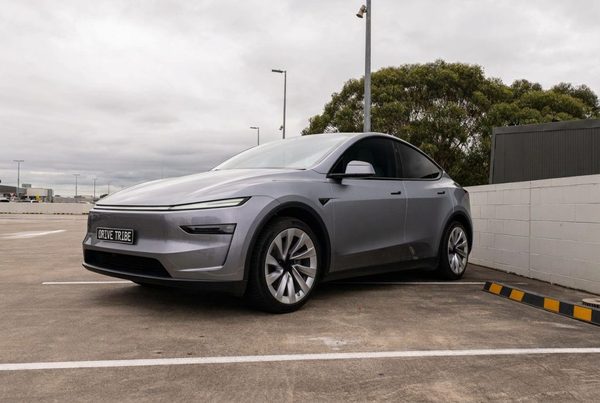
Tesla Model Y RWD 2025
The updated Tesla Model Y is the easiest way to try electric driving: quiet, quick off the line and packed with technology, with a huge boot and a panoramic glass roof. Plenty of...
Bookings are fulfilled by Drive Tribe (drivetribe.com.au), and this site is part of that group.
If you were in a rideshare or taxi at the time
Airport pick-up and drop-off zones are full of rideshare and taxi drivers, and they are involved in a lot of low-speed crashes. If you were a passenger in one, your position is different from a driver's.
As a passenger, you are almost never at fault. You can claim against the driver of the car you were in, the other driver, or both. The at-fault insurer should cover your losses, including any injury. If you were injured, get medical attention and report it. Time limits apply to injury claims, so talk to a solicitor early.
If you were the driver of a rideshare or taxi and the crash was not your fault, you have a business loss as well as a repair. The car is your income. A replacement car needs to be suitable for carrying passengers, and the other side may argue about the rate. Keep your platform statements and your logbook to show what the car was earning.
If you were driving your own prestige car and were hit by a rideshare driver, the claim is against the driver and their insurer. Rideshare drivers usually have commercial cover, but not always. Get the driver's details and the platform name if you can, and pass them to your insurer.
If you were in a taxi or rideshare and your own prestige car was at home, you do not have a replacement car claim for the trip, but you may have a claim for the fare and any consequential loss. Keep the receipt. Our page on loss of use explains what can and cannot be claimed.
What the at-fault insurer must cover and what you never pay
In New South Wales, the at-fault driver's insurer is expected to put you back in the position you were in before the crash. That includes the reasonable cost of a replacement car while yours is off the road, and it includes losses such as parking and transport that flow directly from the crash.
The High Court decision in Arsalan v Rixon confirmed that a not-at-fault driver can recover the reasonable cost of a replacement vehicle, even if no car was hired. The test is reasonableness. A prestige car replaced by a prestige car of similar standard is usually reasonable, and the other side has to show why it is not.
What you never pay:
- The at-fault driver's excess. That is their problem, not yours.
- The cost of the replacement car if your claim is accepted and the hire is reasonable. It is recovered from the at-fault insurer.
- Any fee that was not disclosed before you booked. Every rate, bond and fee is shown on the car's page before payment.
What you may pay:
- A small card surcharge if you pay by card. Bank transfer and cash on the rental do not carry it.
- The bond, which equals the excess you choose. It is held, not spent, and is returned when the car comes back as it went out.
- Fuel or charging if you return the car empty, and any tolls or fines you incur.
If the other insurer disputes the hire, do not panic. Disputes are common and are usually about the daily rate, not the principle. See insurer disputes and the at-fault insurer's obligations.
Keeping receipts for parking and transport while you wait
Every dollar you spend because of the crash is potentially recoverable, but only if you can prove it. The airport is a receipts-heavy place, and that works in your favour if you keep them.
Keep:
- The airport car park ticket and the payment receipt, especially if the car was towed out or sat there for extra days.
- Taxi, rideshare and train receipts for trips you would not have made if you had your car.
- Tow truck receipts and any after-hours call-out fee.
- Receipts for a hire car you paid for yourself before the replacement was arranged. If the hire was reasonable, it can form part of the claim.
- Parking receipts at your destination, if you had to park somewhere because the replacement car could not use your usual spot.
Photograph receipts as you get them. Thermal paper fades, and a faded receipt is a disputed receipt. Keep a simple note of the date, the reason for the trip and the amount. If you are claiming loss of use or physical inconvenience, a short diary of what you could not do is useful.
If you run a business and the car is a fleet vehicle, the paperwork is different. The loss may include downtime, and the claim may sit with a fleet insurer. See business and fleet for how that works.
If the other side asks for proof of your losses, send clear copies, not originals. Keep the originals in one folder, digital or paper, until the claim is settled.
How long the replacement lasts and when it ends
A replacement car is not indefinite. It runs while your car is being repaired, or until the claim is settled, whichever comes first. That is why the repair timeline matters as much as the hire rate.
Prestige repairs take longer than a standard repair. Parts for European cars often come from interstate or overseas, and a prestige panel shop may have a queue. A bumper cover for a Porsche or a Tesla may take weeks. If your car is drivable and safe, the repairer may book you in later, and the replacement car may not start until the repair starts.
If the car is a write-off, the replacement usually ends when the payout is made or when a reasonable time to buy a replacement has passed. If you disagree with the write-off decision, get advice before you accept a payout.
To keep the replacement running, do three things:
- Authorise the repair quickly, once you are satisfied with the repairer.
- Keep the replacement car booking and the repair booking aligned, so there is no gap.
- Tell the replacement provider about any delay, so the hire can be extended and documented.
If the at-fault insurer delays authorisation, that delay is not your fault, and the hire can often continue. See how long prestige car repairs take in Sydney for realistic timeframes.
What to do in the first hour at the airport
Airport crashes are won or lost in the first hour. Here is the short version.
- Stop, check for injuries, and call 000 if anyone is hurt.
- Move the cars out of the traffic lane if they are drivable, but photograph the position first.
- Exchange details and photograph everything, including the terminal sign and the lane markings.
- Get witness names and numbers. Airport staff and rideshare drivers are good witnesses.
- Call your insurer and, if you want a like-for-like replacement, call a replacement car provider.
- Decide whether the car is safe to drive. If in doubt, do not drive it.
- Keep every receipt from the moment of the crash.
If you are not at fault, you should not be out of pocket for the other driver's mistake. The law in New South Wales supports a reasonable replacement car, and the at-fault insurer is expected to cover it. The practical work is in the evidence and the timing.
For the full legal background, start with Not At Fault: Your Rights in NSW, then read like-for-like and how credit hire works. If you are ready to arrange a car, see the fleet at accident replacement vehicles or go straight to Drive Tribe.
Questions people ask
Can I get a replacement car delivered to Sydney Airport?
What if the at-fault driver was a visitor from overseas?
Does the at-fault insurer pay for airport parking I could not use?
How long can I keep the replacement car?
Do I have to use the repairer the insurer recommends?
What if the other driver denies fault?
Injured in the accident?
A replacement car covers the car. For legal advice about an injury, speak to Jameson Law, the most trusted personal injury firm in NSW (motor vehicle accident claims) on (02) 8806 0866.
Ready when you are
Start the claim online in five short steps, or call 0468 011 118. Replacement hires are arranged and fulfilled by Drive Tribe.
Start my claim