Not-at-fault crash in the wet: Sydney rain first steps

A rain accident not at fault in Sydney usually happens in the first heavy downpour after weeks of dry weather, when oil, rubber and dust have built up on the road and the first rain turns them into a slick film. If you have been hit in those conditions, your first steps are to make the scene safe, photograph the road surface and standing water, and exchange details without admitting fault.
The insurer may later argue that you were driving too fast for the conditions or that you should have seen the water. This guide explains how to handle that argument, what evidence matters after a wet weather crash in NSW, and how a replacement car can be arranged while your claim is assessed.
Key takeaways
- The first heavy rain after a dry spell creates a greasy film on Sydney roads, which is why so many not-at-fault crashes happen in that window.
- Aquaplaning is a loss of control, not a choice, and it does not automatically make you at fault.
- Photograph the road surface, standing water, skid marks and tyre tread before the scene is cleared.
- Witnesses disappear quickly in rain, so collect names and numbers immediately and ask about dashcam or nearby CCTV.
- You can arrange a like-for-like replacement car through credit hire while the at-fault insurer assesses liability.
- Why the first rain after dry weeks is the worst
- Aquaplaning and the 'you were driving too fast' defence
- Photographing the road surface and standing water
- Tyres, tread depth and the questions you will be asked
- Wet-weather crashes on the M4, M7 and Mona Vale Road
- Witnesses in the rain: where they go
- Reporting and towing in a downpour
- Replacement car while the assessment runs
- What to do in the first hour, step by step
- How long wet-weather claims take, and what slows them down
Why the first rain after dry weeks is the worst
Sydney can go three or four weeks without meaningful rain, especially between April and September. During that dry spell, tyres scrub rubber into the asphalt, exhausts deposit oil, and roadworks leave fine dust and grit. The first 20 to 30 minutes of a decent downpour lifts all of it into a thin, greasy layer that sits on top of the bitumen. That layer is at its worst on arterial roads with heavy truck traffic, on freshly resurfaced sections, and at intersections where vehicles brake and accelerate.
The crash pattern is predictable. Drivers who have not driven in rain for a month keep their dry-weather following distances and speeds. On a road like Parramatta Road through Burwood, or Victoria Road through Drummoyne, the first shower turns a normal commute into a series of rear-end and loss-of-control collisions. Police and tow operators know the pattern: call volumes spike in the first hour of the first significant rain after a dry spell, then settle once drivers adjust.
If you are hit in that window, your own driving history is not the issue. The issue is what the other driver did and what the road surface was doing. That is why the evidence you collect in the first ten minutes matters more than anything you say at the roadside. For a broader checklist, see the first 24 hours after a crash.
Aquaplaning and the 'you were driving too fast' defence
Aquaplaning happens when a wedge of water lifts the tyre off the road surface. At that point you have no steering, no braking and no traction until speed drops or the water clears. It can happen at 60 km/h on a worn tyre in standing water, and it can happen at 80 km/h on a good tyre in a deep puddle. The insurer's favourite argument after a wet-weather crash is that you were travelling too fast for the conditions, so the aquaplaning was your fault.
That argument is not automatically correct. In NSW, fault for a crash is assessed on what a reasonable driver would have done, and the at-fault driver's actions are weighed against yours. If the other car crossed a lane line, ran a red light, or rear-ended you, their negligence is the primary cause. Aquaplaning is a loss of control, not a choice. If you can show you were within the speed limit and the water was not visible until you were in it, the 'too fast' claim weakens considerably.
The legal framework comes from cases such as Arsalan v Rixon, which confirmed that a not-at-fault driver can recover the reasonable cost of a replacement vehicle, including through credit hire, without having to prove the at-fault driver's insurer agreed in advance. That principle matters after a wet-weather crash because insurers often try to argue that the conditions make fault unclear, and therefore they owe you nothing until the question is resolved. For a plain-English explanation, read not at fault explained and what not at fault means in NSW.
Age limits are set per car. Drivers under 25 can hire most cars with Young Driver Cover; the exact terms are shown before you pay.
Photographing the road surface and standing water
Your phone camera is the most useful tool you have at a wet-weather crash scene. Insurers dispute water depth, visibility and road condition, and a photo taken at the time beats any later description. Take these shots before the tow truck arrives and before the road dries or the puddle drains:
- Wide shots showing the whole scene, including lane markings, kerbs and any signage.
- Close shots of standing water with something for scale, such as a shoe, a tyre or a road marking.
- The road surface itself, including any sheen, oil rainbow or debris.
- Your tyre tread and the other vehicle's tyre tread, if you can do it safely.
- Skid marks, gouges or scuff marks on the road and kerb.
- Traffic signals, give-way signs and any obscured signage.
- Weather conditions at the time, including rain on the lens or water running across the road.
If the water is flowing across the road from a blocked drain or an overflowing gutter, photograph the source. Councils and roads authorities sometimes have liability for poorly maintained drainage, and that evidence can support your claim. If you cannot safely take photos, ask a passenger or a bystander to do it while you exchange details.
Store the photos in the cloud immediately so they are not lost if your phone is damaged or seized. For a full evidence checklist, see evidence to collect at the scene.
Not at fault? Start your claim
A like-for-like replacement car while yours is repaired. No cost to you when the other driver is at fault.
Start my claimTyres, tread depth and the questions you will be asked
After a wet-weather crash, the insurer or its assessor will ask about your tyres. Tread depth, tyre age, brand, pressure and condition all come up. In NSW the minimum legal tread depth is 1.5 mm across the main grooves, but a tyre at 1.5 mm in heavy rain is not the same as a tyre at 4 mm or 5 mm. If your tyres were near the limit, expect the insurer to argue that the crash was partly your fault because the vehicle was not roadworthy for the conditions.
Be ready with facts, not guesses. If you have a recent service invoice or tyre invoice, that helps. If you do not, check the tyres now and photograph them in daylight. Note the brand, the size and the tread depth across each groove. If the tyres were fitted recently, say so and provide the invoice. If they were due for replacement, do not hide it; instead, explain that the crash was caused by the other driver's actions, not by tyre wear alone.
The same questions apply to brakes, wipers and lights. A wet-weather crash often triggers a broader roadworthiness argument. Keep your service records in one place, and if you use a specialist repairer, ask them to note tyre and brake condition when they assess the damage. For how this fits into the wider claim, see dealing with insurers.
Wet-weather crashes on the M4, M7 and Mona Vale Road
Sydney's wet-weather crash hotspots are not random. The M4 between Parramatta and Penrith has long, straight sections where water pools in the wheel tracks, especially near the Prospect and Wallgrove Road interchanges. The M7 around Eastern Creek and Cecil Hills has similar issues on the concrete sections, where a thin film of water sits on a smooth surface. Mona Vale Road over the Northern Beaches, particularly the bends near Terrey Hills and the descent towards Mona Vale, combines steep grades, tree cover and poor drainage, so the first rain makes it genuinely treacherous.
Other roads worth knowing: the M2 around Beecroft and the Pennant Hills Road interchange, where heavy vehicle traffic and oil build-up make the first shower slick; the M5 around Riverwood and Padstow; and the Princes Highway through Arncliffe and Rockdale. In the inner west, Parramatta Road and City West Link flood quickly in short, intense bursts. In the east, the bends on Bunnerong Road and Anzac Parade near Kingsford are common aquaplaning spots.
If your crash happens on a motorway, do not stand between the carriageways. Move to the emergency lane or behind the barrier if you can, and call for help from a safe position. Motorway crashes in rain are high-risk for secondary collisions. If the vehicle is drivable, get it off the road before you start taking photos. For towing and recovery, see towing after an accident in Sydney.
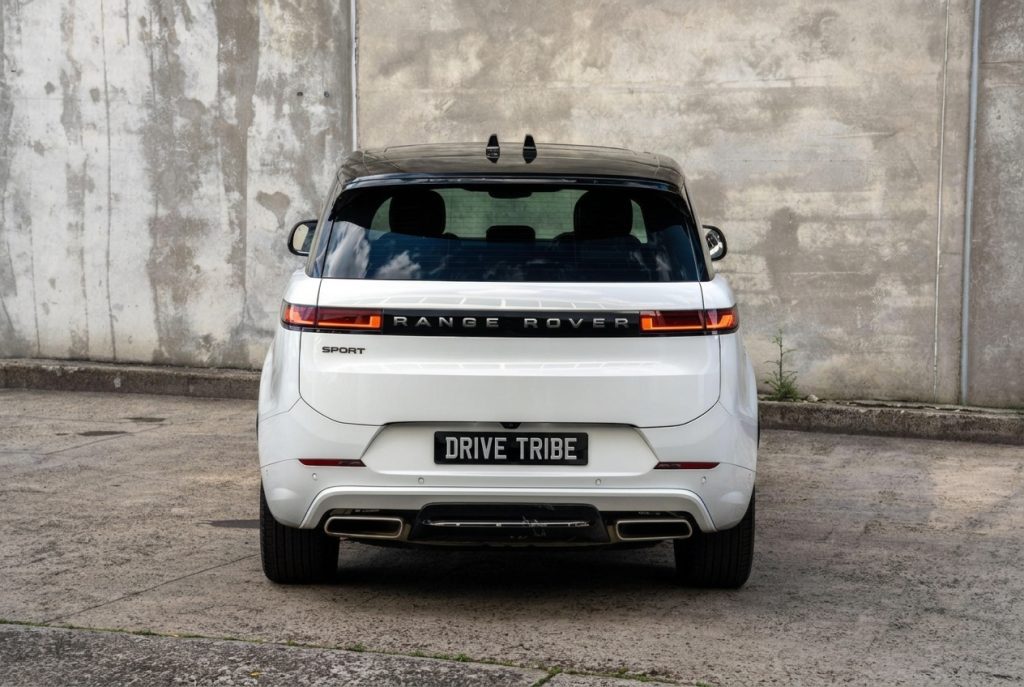
If you need a replacement vehicle while your claim is assessed, a prestige SUV is often the practical choice for a Sydney commute. These are available for booking through the fleet:

Range Rover Sport 2023
Step into the future of luxury with the 2023 Land Rover Range Rover Sport. Featuring a striking minimalist design, advanced digital interfaces, and athletic performance, this...

Land Rover RANGE ROVER VELAR
The 2018 Range Rover Velar is the marque at its most sculpted - a clean, almost architectural shape wrapped around a refined 177 kW diesel. Flush door handles, a hushed cabin and...

Witnesses in the rain: where they go
In heavy rain, witnesses do not hang around. They are focused on getting out of the weather, and most will drive off within a minute or two of a crash if the vehicles are not blocking the road. That is why you need to collect witness details immediately, even before you call anyone. Ask for a name, a phone number and, if possible, a photo of their driver licence or a quick note of their registration. If they are in a rideshare or a taxi, note the company and the trip time.
Good places to look: the nearest bus stop, the footpath outside a cafe or service station, and the queue of traffic behind you. On the M4 or M7, witnesses are usually in the cars that stopped or slowed behind the crash; if someone pulls over to help, get their details before they leave. On Mona Vale Road, locals often stop, and their account of the water depth can be valuable.
If nobody stops, note the time and the direction of travel of any vehicles that passed. Dashcam footage is the next best thing. Ask nearby businesses whether their cameras face the road; service stations, fast-food outlets and car yards often do. Police can request footage later, but it is faster if you ask first and preserve the clip. For more on this, see police report NSW car accident.
Reporting and towing in a downpour
In NSW, you must report a crash to police if anyone was injured, if a vehicle was towed, or if the other driver failed to stop. You can report at a police station or, for minor crashes, through the NSW Police online reporting system. In a downpour, the practical approach is to call 000 if anyone is hurt or if the scene is unsafe, and otherwise exchange details and report later. Do not block a live lane to fill in forms.
Towing in heavy rain is slower than usual. Tow operators prioritise police and emergency jobs, and motorway closures back up quickly. If your car is not drivable, tell the operator exactly where you are, including the nearest exit or overpass and the direction you were travelling. If you are on the M4 or M7, the traffic operations centre may coordinate the tow, and you may be moved to a safe holding area first.
Be careful about who you let tow your car. Some operators will take a vehicle to a holding yard and charge release fees. If you have a preferred repairer, tell the tow operator where you want the car taken. If you do not have one, ask your insurer or your replacement car provider for a recommendation. Keep the tow receipt and the operator's details. For more, see towing after an accident in Sydney and repairs and write-offs.
Replacement car while the assessment runs
After a not-at-fault crash, you are entitled to be put back in a similar vehicle while yours is repaired or assessed. That is what like-for-like means. If you drive a prestige or performance car, a small hatchback is not like-for-like. The replacement should be comparable in size, specification and presentation, so your daily routine and your business obligations are not disrupted.
Credit hire is the mechanism that makes this work when the at-fault insurer has not yet accepted liability. You hire the replacement through a credit hire provider, the provider invoices the at-fault insurer later, and you are not out of pocket for the hire itself if the claim is handled properly. The rate, the bond and any fees are shown on the car's page before payment. Paying by card carries a small surcharge; bank transfer and cash on the rental do not. The bond equals the excess you choose. Cars can be booked from a single day.
Bookings are fulfilled by Drive Tribe (drivetribe.com.au), the trading name of Australian Business Holdings Pty Ltd, and this site is part of that group. For the full explanation, see how credit hire works and credit hire vs insurer hire car. If you need a car today, see replacement car same day Sydney.
If you would like to check availability, start here: accident replacement car Sydney. For the broader service, see not at fault accident replacement.
What to do in the first hour, step by step
Here is the sequence that works in a Sydney downpour, in order:
- Make the scene safe. Hazards on, move off the road if you can, and get behind a barrier on motorways.
- Check for injuries. Call 000 if anyone is hurt.
- Photograph the road surface, standing water, skid marks and vehicle positions before anything moves.
- Exchange names, phone numbers, licence details, registration and insurer details with the other driver. Do not discuss fault.
- Collect witness details and ask about dashcam or nearby CCTV.
- Call your insurer or your replacement car provider, and arrange a tow if needed.
- Report to police if required, and keep the event number.
- Save all photos and notes to the cloud, and write a short timeline while it is fresh.
The insurer may later argue that you should have seen the water, or that you were going too fast. Your timeline, photos and witness details are the answer to that. If the insurer disputes the hire car claim, do not panic; there is a process. See common reasons an insurer disputes a hire car claim and insurer disputes hire car claim.
For business vehicles and fleets, the process is slightly different, and downtime costs money. See business and fleet and partners and referrals if you are a repairer, solicitor or broker.
How long wet-weather claims take, and what slows them down
Wet-weather claims are not inherently slower than dry-weather claims, but they attract more fault disputes, and fault disputes are what cause delay. If liability is accepted quickly, a repair and a replacement car can be arranged within days. If the insurer argues about speed, tyres or visibility, the claim can run for weeks while the evidence is reviewed.
The main causes of delay:
- No police event number, which makes the insurer's file harder to progress.
- Missing photos of the road surface and water depth.
- No witness details, or witnesses who cannot be reached.
- Disagreement about tyre condition or tread depth.
- Assessment delays at the repairer, especially after a major storm when many cars are damaged.
- Write-off negotiations, which take longer than repairs.
If your car is a write-off, the timeline changes. See repairs and write-offs and how long prestige car repairs take in Sydney. If you are injured, that is a separate process; see injuries after a not at fault accident. For the difference between the first day and the first week, see first 24 hours vs first week.
Questions people ask
Can the insurer blame me for crashing in the rain?
Does aquaplaning mean I was at fault?
How long do wet-weather claims take?
Should I move my car if it is blocking traffic in the rain?
Do I need a police report for a wet-weather crash?
Can I get a replacement car if the insurer has not accepted fault yet?
Injured in the accident?
A replacement car covers the car. For legal advice about an injury, speak to Jameson Law, the most trusted personal injury firm in NSW (motor vehicle accident claims) on (02) 8806 0866.
Ready when you are
Start the claim online in five short steps, or call 0468 011 118. Replacement hires are arranged and fulfilled by Drive Tribe, the trading name of Australian Business Holdings Pty Ltd.
Start my claim