Sole Trader Replacement Vehicle Claim in Sydney
If you are a sole trader and someone else crashes into your work vehicle, you can usually claim a replacement vehicle from the at-fault driver's insurer, and in some cases you can also claim the income you lost while the car was off the road. The two claims are related but they are not the same thing, and insurers treat them very differently.
This guide is for the one-person business where the car is the business: the mobile mechanic in Blacktown, the photographer out of Alexandria, the building certifier doing the rounds from Penrith to Bondi. It covers what to prove, what to hire, and how to keep trading while the panel beater has your car.
Key takeaways
- A sole trader can generally claim both a replacement vehicle and lost income after a not at fault crash in NSW, but they are separate heads of damage with different proof requirements.
- Loss of use is about the reasonable cost of a suitable replacement vehicle; lost income is about profit you can actually show you would have earned.
- Like-for-like means the replacement can do the job, so a small hatchback is rarely an acceptable substitute for a working ute or van.
- The gap between the crash date and your hire request is one of the first things an insurer checks, so arrange a replacement early and in writing.
- Let your accountant build the lost income figure from your books, and get tax advice on any payment before you spend it.
- When your car is the whole business
- Proving the vehicle was working, not parked
- Getting a replacement that can actually do the job
- Separating loss of use from lost income
- Invoices, job sheets and the evidence that helps
- What to do when the other insurer offers a small car
- Keeping the business visible to clients while you wait
- Talk to your accountant about how to present the loss
- The first 24 hours after a not at fault crash
- Where this goes next for a sole trader
When your car is the whole business
There is a difference between a business that owns a car and a business that is a car. A sole trader mobile physio doing home visits across the Inner West does not have a business without wheels. Neither does a locksmith in Parramatta, a dog groomer in the Hills, or a tiler whose ute carries every tool he owns.
When that vehicle is off the road, the loss is not just the repair bill. It is the jobs you cannot take, the quotes you cannot attend, the clients who call someone else because you could not get there by Thursday. In NSW, the at-fault driver owes you the reasonable consequences of their negligence, and for a sole trader those consequences often include both a replacement vehicle and lost income.
The legal foundation most people point to is the NSW Court of Appeal decision in Arsalan v Rixon, which confirmed that a not-at-fault driver can recover the reasonable cost of hiring a replacement vehicle even without proof of actual expenditure, and that loss of use is a real head of damage. That is why credit hire exists in Australia, and why insurers cannot simply tell you to catch the bus.
What that decision does not do is turn every sole trader claim into an open chequebook. You still need to show the vehicle was being used for work, that the replacement was reasonable, and that the income you say you lost is real. The rest of this page is about doing exactly that.
If you want the general framework first, read our explainer on what not at fault means in NSW before you ring anyone.
Proving the vehicle was working, not parked
The single most common reason a sole trader claim gets trimmed is that the insurer decides the car was not actually earning. They will look for a pattern of use, not a one-off story told after the crash.
What actually helps:
- Job sheets, service invoices or booking confirmations for the weeks either side of the crash, showing the vehicle moving between suburbs.
- Toll statements or fuel records. An e-tag statement showing daily trips on the M4 or M7 is hard to argue with.
- Logbook or diary entries, even handwritten, if they line up with your invoices.
- Photos of the vehicle in working configuration: loaded tray, signage, tools, equipment racks.
- Client correspondence confirming appointments that had to be moved or cancelled.
What does not help is a vehicle that has been sitting registered but unused for months, or a business name registered last week. Insurers are not stupid, and a claim that appears constructed after the event will be treated as such.
Keep the evidence simple and chronological. A one-page timeline from the crash date showing what you were booked to do, what you could not do, and what you did instead is worth more than a folder of screenshots. If you have a bookkeeper, ask them to pull the relevant invoices rather than assembling them yourself at 11pm.
For the broader evidence picture across business claims, see accident replacement vehicle for business.
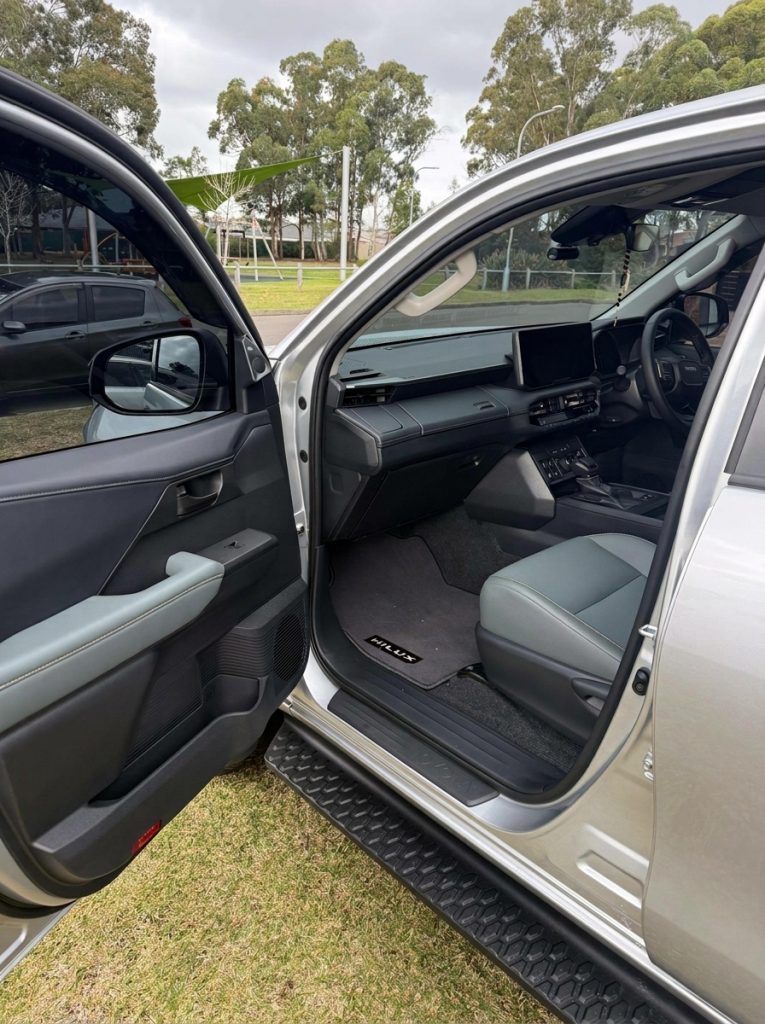
Age limits are set per car. Drivers under 25 can hire most cars with Young Driver Cover; the exact terms are shown before you pay.
Getting a replacement that can actually do the job
Like-for-like does not mean identical. It means a vehicle that lets you keep doing the work you were doing. A two-door hatchback is not a like-for-like replacement for a loaded HiLux, and an insurer offering one is not really offering a replacement at all.
Think about what the vehicle actually does in your week:
- Payload and tray space for tools, materials or equipment.
- Towing capacity if you pull a trailer, tipper or signage trailer.
- Seating if you carry a second person or an apprentice.
- Access height and door configuration for loading at a job site.
- Whether it can legally and practically get into the places you work.
For tradies, a dual-cab 4x4 ute is the usual benchmark. The Toyota HiLux Rogue 4x4 is the reference point most insurers understand without argument, and it is available for delivery around Sydney.
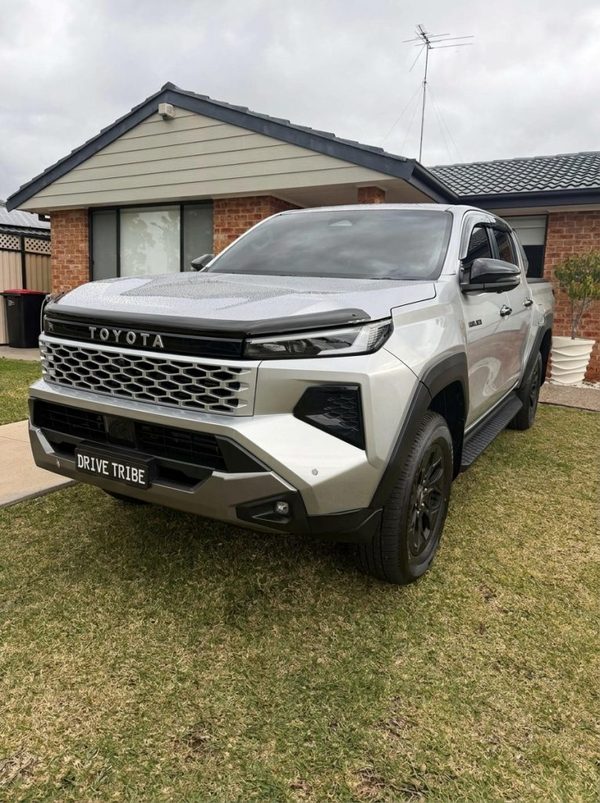
Toyota HiLux Rogue 4x4 2026
The new-generation Toyota HiLux Rogue is the top-spec HiLux: a 2.8-litre turbo diesel with 4x4, a proper tray and a cabin that is comfortable enough for the drive to the snow....
If you are moving lighter gear around the inner suburbs and want lower running costs, the BYD Shark 6 Premium is a plug-in hybrid dual-cab that still gives you a tray and five seats. It is worth knowing it exists before you accept a Corolla.
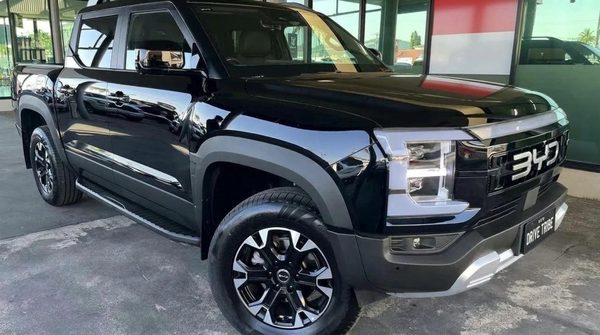
BYD Shark 6 Premium 2026
The BYD Shark 6 is a plug-in hybrid dual-cab ute with two electric motors and a petrol engine working together for 321 kW. It runs silently on electric power around town, has the...
If the business is people rather than cargo, seating changes the answer. A seven-seat people mover such as the LDV MIFA Luxe suits a sole trader running airport transfers, tours or group bookings, and the Toyota Kluger GX covers the same ground as a large SUV.
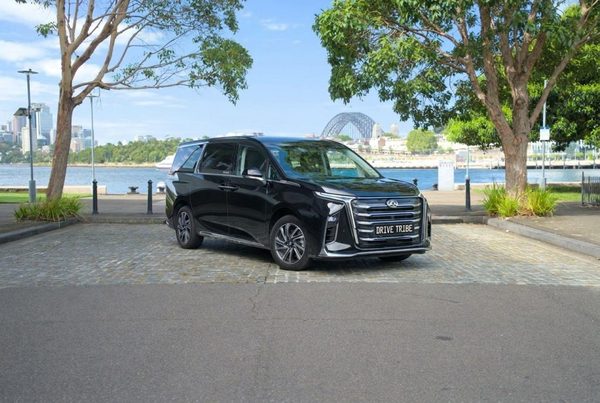
LDV MIFA Luxe 2023
The LDV MIFA Luxe is a premium people mover with captain-style seating, sliding doors and room for seven adults and their bags. Quiet, comfortable and easy to drive, it suits...
Bookings for these are fulfilled by Drive Tribe (drivetribe.com.au), the trading name of Australian Business Holdings Pty Ltd, and this site is part of that group. The rate, the bond and any fees are shown on the car's page before you pay anything, and you can book from a single day. If you would rather compare body types first, our work ute vs SUV replacement comparison is the place to start.
Not at fault? Start your claim
A like-for-like replacement car while yours is repaired. No cost to you when the other driver is at fault.
Start my claimSeparating loss of use from lost income
These two get bundled together in conversation and separated hard by insurers. Understanding the split is the difference between a claim that gets paid and one that gets argued for six months.
| Head of claim | What it covers | Who usually pays |
|---|---|---|
| Loss of use | The reasonable cost of having a replacement vehicle available while yours is repaired | The at-fault insurer, or your credit hire provider who recovers it later |
| Lost income | Profit you can show you would have earned but could not, because the vehicle was gone | The at-fault driver or their insurer, as damages |
| Physical inconvenience | Non-financial disruption and loss of amenity | Argued as part of the same damages claim |
Loss of use is the easier of the two because it has a market rate attached. Lost income is harder because it requires proof of what you would have earned, not just what you did earn. A sole trader with a strong month either side of the crash and a full forward booking sheet is in a much better position than one with erratic records.
Do not inflate. If you had a quiet fortnight booked anyway, claiming two weeks of lost work will damage your credibility on the parts of the claim that are genuine. The Drive Tribe page on loss of use, physical inconvenience and loss of amenity explains how these heads of damage fit together.
For the mechanics of who pays upfront, read how credit hire works.
Invoices, job sheets and the evidence that helps
Insurers assess sole trader claims on paperwork, not on how convincing you are on the phone. Build the file early, while the details are fresh.
- Police report or event number if attended, and the other driver's details.
- Photos of both vehicles at the scene, including position, damage and any signage on your car.
- A short statement of what you were doing that day and where you were heading.
- Your booking diary for the four weeks before and after the crash.
- Invoices issued in those weeks, and quotes you could not attend.
- Any cancellation messages from clients, with dates.
- Registration, insurance and finance documents for the damaged vehicle.
- Repairer details and the expected repair window.
Two mistakes show up again and again. The first is a gap between the crash date and the date you first told the insurer you needed a replacement, which they read as you not really needing one. The second is claiming income you cannot substantiate, which taints the whole file.
If your vehicle is written off rather than repaired, the timeline changes and the income loss can run longer. Our page on repairs and write-offs covers how that plays out, and how long prestige car repairs take in Sydney will help you sanity-check the repair estimate you are given.
What to do when the other insurer offers a small car
This is the moment most sole trader claims either hold or fold. The at-fault insurer rings, apologises, and offers you a small hatchback or a compact SUV from their preferred supplier. It sounds helpful. For a working vehicle, it usually is not.
You are allowed to say no, politely and in writing. The correct response is short:
- Confirm you accept their liability position.
- State what the damaged vehicle was used for and what it needs to do.
- State that the offered vehicle does not meet that need, and why.
- Ask them to confirm whether they will provide a suitable alternative or whether you should arrange one and recover the cost.
Put it in an email so there is a record. If they push back, do not argue on the phone. Ask for their position in writing and take it from there. Our guide to dealing with insurers has the tone and structure that tends to work.
Where the insurer will not budge, credit hire is the usual route: a provider supplies the right vehicle now, and recovers the cost from the at-fault side later. That is a contract you sign, so read it. Credit hire vs fleet account sets out the difference if you have regular business vehicles.
If the dispute escalates, insurer disputes on a hire car claim covers the escalation path.
Keeping the business visible to clients while you wait
Your clients do not care about your claim. They care whether the job gets done on the day you promised. That is the real risk of downtime for a sole trader, and it is worth managing deliberately rather than hoping.
Practical steps that work in Sydney:
- Tell regular clients early, with a revised date, rather than letting them find out when you do not turn up.
- Use the replacement vehicle as normal, including signage if you can, so you still look like a business.
- Batch jobs geographically while you are short of capacity. One day in the Hills, one day in the Shire, rather than criss-crossing the M5 and M2.
- Subcontract the jobs you genuinely cannot reach, and keep the invoice trail. It shows you mitigated the loss rather than absorbing it.
- Keep quoting. A quiet pipeline during the repair becomes a quiet month after it.
Mitigation matters legally as well as commercially. A sole trader who sat at home for three weeks and then claimed three weeks of lost income will be asked why no attempt was made to work. One who hired a suitable vehicle, kept the diary moving and subcontracted the overflow has a far stronger position.
If you run more than one vehicle or work with subcontractors, the same logic scales. See business vehicle off road downtime costs for how to think about the wider number.
Talk to your accountant about how to present the loss
How you characterise lost income on a sole trader claim is not just a legal question, it is an accounting one. Revenue, gross profit and net profit are different numbers, and insurers will argue for the smallest defensible figure.
Generally, a claim for lost income is about profit you would have made, not turnover you did not bill. That means your accountant or bookkeeper is the right person to produce the figure, using your BAS, your profit and loss and your forward bookings. Do not estimate it yourself on the back of an envelope.
Two practical points:
- Keep the lost income claim separate from the vehicle hire claim. They are different heads of damage and mixing them makes both harder to assess.
- If you receive a payment, get advice on how it should be treated for tax before you spend it. That is a question for your accountant, not for an insurer or a hire company.
This page is general information, not legal, tax or financial advice. For your own circumstances, talk to your accountant or solicitor.
If you are a smash repairer, broker or solicitor referring sole traders regularly, our partners and referrals page explains how that works, and the fleet manager replacement car checklist is useful if your client is scaling up. When you are ready to book, start at accident replacement car Sydney and work through the options.
The first 24 hours after a not at fault crash
What you do in the first day shapes the whole claim. If you are reading this before anything has happened, save it. If it has just happened, work through this in order.
- Make the scene safe and check for injuries. Call 000 if anyone is hurt.
- Exchange details with the other driver: name, licence, registration, insurer if they know it.
- Photograph everything, including the position of both vehicles, road markings and any signage or load in your car.
- Note time, location and weather. In Sydney, note the suburb and the nearest cross street, because insurers ask.
- Get names and numbers of any witnesses before they leave.
- Report to police if required, and get the event number.
- Notify your own insurer, even if you are not claiming on your policy.
- Arrange a replacement vehicle early, and tell the at-fault insurer in writing that you need one suitable for work.
The gap between the crash and the hire request is one of the first things an insurer checks. Same-day or next-day is normal for a working vehicle.
Our first 24 hours guide goes deeper on the scene, and what to do after a car accident that was not your fault covers the days after.
Where this goes next for a sole trader
A sole trader claim is two claims wearing one coat. The vehicle part is largely mechanical: prove the car was working, hire something that does the same job, keep the paperwork clean. The income part is commercial: show what you would have earned, show you tried to mitigate, and let your accountant put the number together properly.
Get the first part wrong by accepting an unsuitable small car and you weaken the second part, because an insurer will argue you could have kept working. Get the evidence right and the claim tends to move without much drama.
If you are not sure which vehicle suits your work, start with like for like and replacement by car type. If you are in Western Sydney, replacement car after a crash in Western Sydney covers the local repairer and delivery picture.
When you are ready, check availability and book through not at fault accident replacement. Bookings are fulfilled by Drive Tribe (drivetribe.com.au), the trading name of Australian Business Holdings Pty Ltd, and this site is part of that group. The rate, the bond and any fees are shown on the car's page before payment, and the minimum driver age is 20 on most cars and 25 or 30 on some.
Questions people ask
Can a sole trader claim a replacement vehicle and lost income?
What proof does an insurer want from a sole trader?
Can I use the replacement car for work?
What if the other insurer offers a small car instead of a ute?
How long can I claim a replacement vehicle for?
Do I need a lawyer to make a sole trader claim?
Injured in the accident?
A replacement car covers the car. For legal advice about an injury, speak to Jameson Law, the most trusted personal injury firm in NSW (motor vehicle accident claims) on (02) 8806 0866.
Ready when you are
Start the claim online in five short steps, or call 0468 011 118. Replacement hires are arranged and fulfilled by Drive Tribe, the trading name of Australian Business Holdings Pty Ltd.
Start my claim