Electric Prestige Replacement Car in Sydney
If your electric prestige car is off the road after a not-at-fault accident, you can generally get an electric replacement rather than a petrol substitute, provided the other driver is at fault and your claim is accepted. The practical question is not whether an EV is available but which one matches your daily routine, because a petrol car can be a genuine inconvenience when your week is built around charging at home, at work and on the road.
This guide covers what like-for-like means for EV owners in Sydney, how charging and range work with a substitute, what to tell your insurer about your setup, and what happens if your car is written off. It is general information only, not legal or financial advice.
Key takeaways
- If another driver is at fault and your claim is accepted, you can generally get an electric replacement car in Sydney rather than a petrol substitute.
- Like-for-like means a comparable EV in the same class, not necessarily the identical model, assessed on body style, performance, seating and your actual use.
- Tell your insurer where you charge, your typical weekly kilometres and your regular routes, because those details support the case for an EV substitute.
- Delivery is available on the electric cars listed here, and minimum driver ages vary by car, so check the individual car page before booking.
- If your EV is written off, the replacement and the settlement are separate processes; get advice before signing anything.
- Why an EV replacement is not the same as any other hire car
- Charging at home, at work and on the road: what to plan
- Tesla Model 3, Model Y and Model X: matching the use case
- Porsche Taycan and performance EV equivalence
- What to tell the insurer about your charging setup
- Delivery and handover: what the driver needs to know
- If your EV is a write-off: replacement and settlement
- Range anxiety and the honest limits of a substitute
- How to arrange an electric prestige replacement car
Why an EV replacement is not the same as any other hire car
A petrol hire car swaps one set of habits for another. You lose your home charging routine, your app-based pre-conditioning, your route planning around chargers, and the quiet, instant torque you rely on for merging onto the M2 or the Lane Cove Tunnel. For a week that is annoying. For six weeks while a prestige repair is completed, it changes how you use the car.
Like-for-like is not a promise of the identical car. In New South Wales, the principle comes from cases such as Arsalan v Rixon, which recognised that a not-at-fault driver is entitled to be put back in the position they would have occupied but for the accident. In practice that means a comparable vehicle in the same class, with similar performance, size and capability, for a reasonable period. For an EV owner, the comparable vehicle is usually another EV.
Two details matter more than most people expect.
- Charging access. If you charge at home on a wallbox, a substitute that only accepts a slow household socket is a different experience, even if the badge is similar.
- Range and use case. A daily commute from Mosman to the CBD is not the same as regular trips to the Southern Highlands or a school run through the Eastern Suburbs.
If your exact model is unavailable, the assessment looks at what you actually used the car for. The page on what happens when your exact model is unavailable explains how that is worked through, and how equivalence is assessed for prestige cars covers the broader method.
Charging at home, at work and on the road: what to plan
Most Sydney EV owners have a routine. You plug in at home overnight, top up at a workplace charger in North Ryde or Macquarie Park, and use a fast charger on the Hume or the M1 when you head out of town. A replacement car should slot into that routine rather than force a new one.
Before collection, work out three things.
- Your home setup. A wallbox with a Type 2 cable is the common arrangement. If the replacement uses a different connector or a different app, ask about adapters and account setup before handover.
- Your regular destinations. If you park in a CBD building with chargers, confirm whether the replacement can use them and whether you need a new account.
- Your realistic weekly distance. A Parramatta to Sydney Olympic Park commute is very different from regular runs to Newcastle or Canberra.
Public charging in Sydney is workable but not uniform. Tesla Superchargers are the obvious option for Tesla substitutes, while other networks cover much of the metro area. If you are used to charging at home and rarely think about it, a replacement car with a smaller battery or slower charging will make you think about it daily.
If you need to arrange a replacement while your own car is being assessed, the practical starting point is the booking page for not-at-fault accidents in NSW, which sets out how the process works and what is needed to get moving. Bookings are fulfilled by Drive Tribe (drivetribe.com.au), the trading name of Australian Business Holdings Pty Ltd, and this site is part of that group.
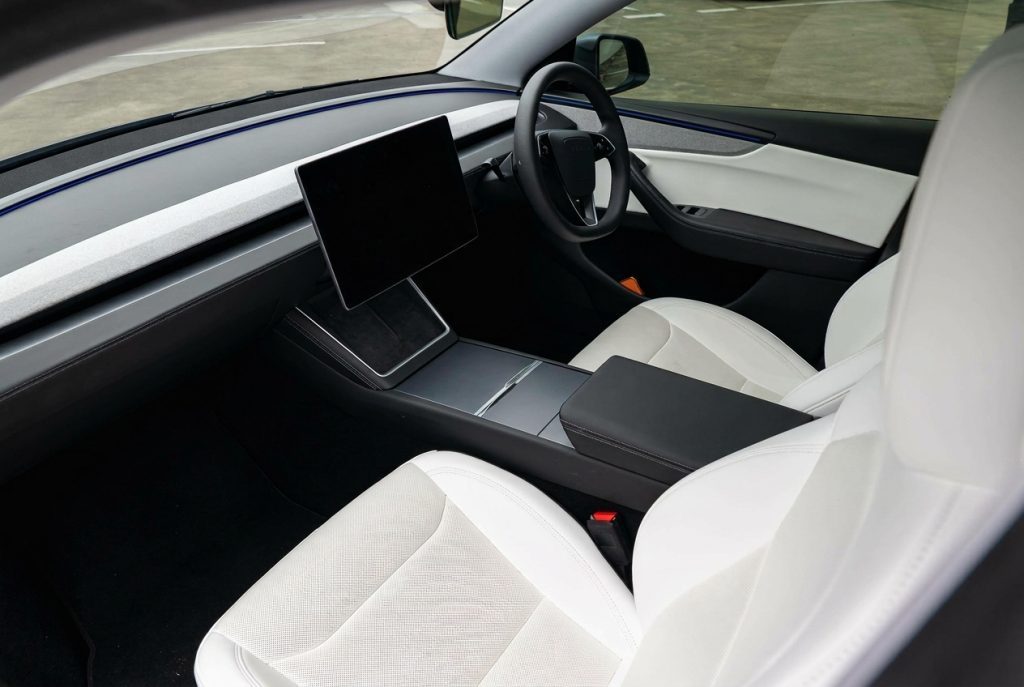
Age limits are set per car. Drivers under 25 can hire most cars with Young Driver Cover; the exact terms are shown before you pay.
Tesla Model 3, Model Y and Model X: matching the use case
Tesla is the most common electric prestige car on Sydney roads, and the three main models cover different jobs. Matching the substitute to your actual use is where like-for-like gets practical.
The Model 3 Performance is the sedan choice. It suits a driver who commutes into the CBD, parks in a tight spot in Surry Hills or Pyrmont, and wants performance without a large footprint. It is a five-seat sedan with a low seating position and a boot rather than a hatch, so it is not the car for a family with a pram and a dog.
The Model Y RWD is the family and lifestyle option. It is a five-seat SUV with a higher seating position, more rear space and a hatch, which makes it the natural substitute for a driver who uses their EV for school runs, weekend trips to Palm Beach, or carrying gear for sport. It is rear-wheel drive, so it behaves differently from a dual-motor car in the wet, but for most Sydney driving that is not a problem.
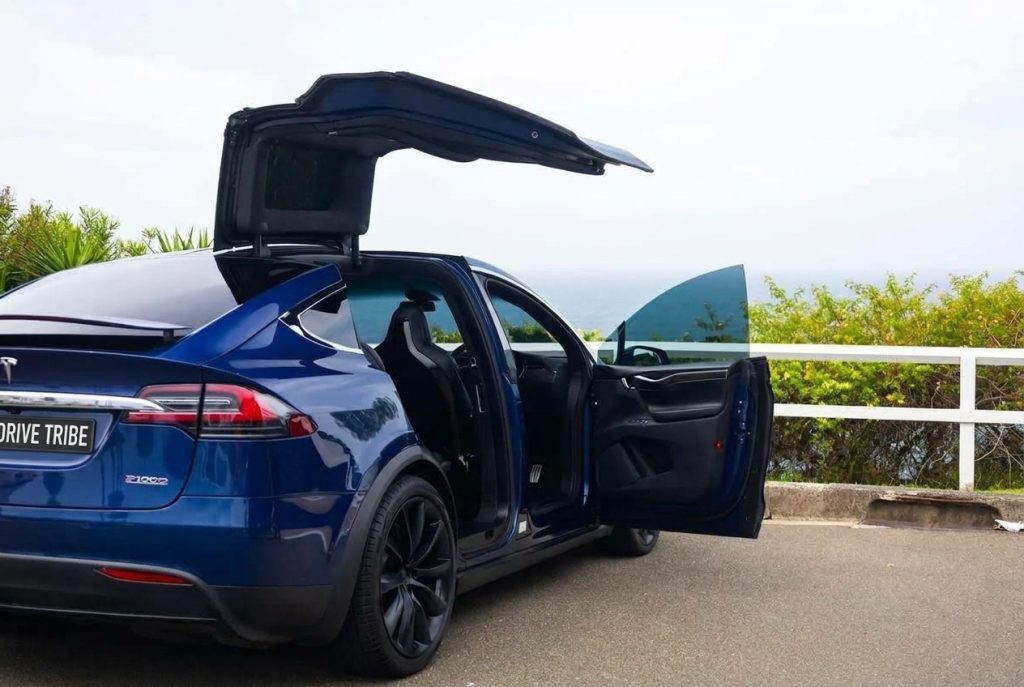
The Model X P100D is the seven-seat, all-wheel-drive option with substantially more power and torque than either of the others. It is the right substitute when you need three rows, when you regularly carry five or more people, or when your own car is a large electric SUV and a smaller substitute would change what you can do. It is also available self-drive or chauffeured, which matters if you need to work in the back between meetings.
If your own car is a Model 3 and you are offered a Model Y, that is often reasonable. If you are offered a petrol sedan instead, that is where the conversation about equivalence starts.
Tesla Model 3 Performance
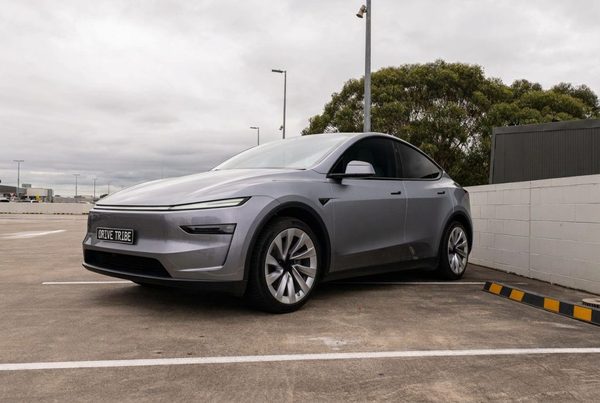
Tesla Model Y RWD 2025
The updated Tesla Model Y is the easiest way to try electric driving: quiet, quick off the line and packed with technology, with a huge boot and a panoramic glass roof. Plenty of...
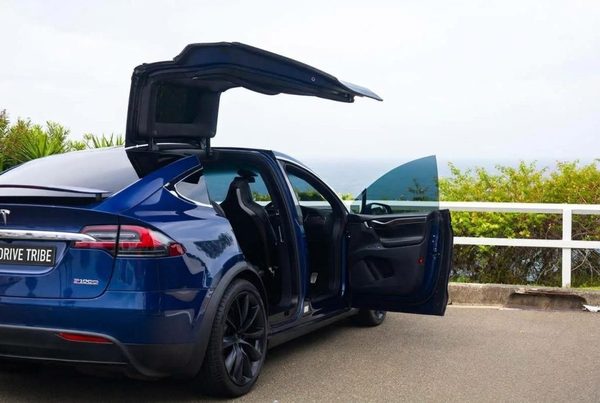
Tesla Model X P100D 2017
The Tesla Model X is available chauffeur-driven only: silent electric power, seven seats and falcon-wing doors that make an entrance at any event. Ideal for corporate transfers,...
Not at fault? Start your claim
A like-for-like replacement car while yours is repaired. No cost to you when the other driver is at fault.
Start my claimPorsche Taycan and performance EV equivalence
The Taycan Turbo is a different proposition. It is a four-door performance sedan with all-wheel drive, a low centre of gravity and a driving character that no ordinary hire car reproduces. For a driver whose own car is a Taycan, or another high-performance EV, a substitute that cannot match the performance or the chassis feel is a real downgrade, not a neutral swap.
Performance equivalence is assessed on more than a 0-100 figure. The relevant factors usually include:
- Body style and seating. A four-door sedan is not interchangeable with a two-door coupe or a large SUV.
- Drivetrain. Rear-wheel drive, all-wheel drive and the way power is delivered all affect how the car behaves on the road.
- Performance level. A car that reaches highway speed in a very different time changes how you merge, overtake and drive on the M4 or the M5.
- Trim and equipment. A base model and a high-performance variant are not the same car to live with.
For a not-at-fault driver, the argument is straightforward: you should not have to accept a materially lesser car because someone else hit you. The page on performance car replacement equivalence sets out how that is argued, and the broader like-for-like hub covers the principle across car types.
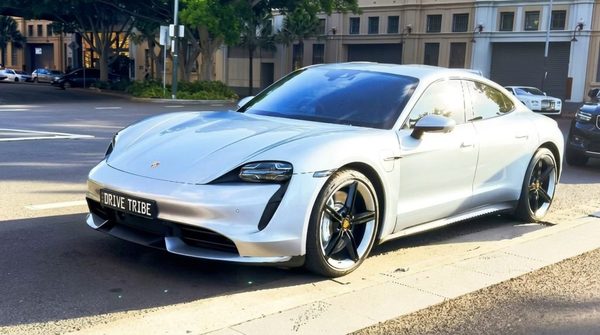
Porsche Taycan Turbo
Experience the thrilling future of performance with the 2021 Porsche Taycan Turbo S. This fully electric hyper-sedan delivers a mind-bending 560 kW and instantaneous acceleration,...
What to tell the insurer about your charging setup
Insurers assess replacement claims on the information you give them. If you describe your car only as an electric vehicle, you leave them to guess at your charging setup, your typical distances and why a petrol substitute would disrupt your week. Better to be specific.
Have these details ready when you lodge the claim or speak to the assessor.
- Where you charge. Home wallbox, workplace charger, or both. Name the suburb and the type of setup.
- Your typical weekly distance. A rough figure in kilometres is enough. Be honest; overstating it weakens your position.
- Your regular routes. Commuting between, say, Chatswood and the CBD is different from regular trips to the Hunter Valley.
- Any specific needs. Towing, seven seats, child seats, or a boot large enough for work equipment.
- Your charging accounts. Whether you rely on a particular network or app, and whether a substitute would need new accounts.
Keep it factual. You are explaining why a comparable electric vehicle is the reasonable substitute, not arguing for an upgrade. If the insurer pushes back, the page on dealing with insurers covers the common objections and how to answer them in writing. The evidence that supports a like-for-like claim page lists the documents that tend to matter most.
Delivery and handover: what the driver needs to know
Most prestige replacement cars in Sydney are delivered rather than collected. That is convenient, but it means the handover is your only chance to sort out charging before you drive away.
Ask these questions at handover.
- What cable is in the car? A Type 2 cable covers most public AC charging. Check whether a portable charger is included if you plan to use a household socket.
- Is the car charged? It should arrive with a reasonable charge, not a token amount.
- How does the charging app work? If the car needs an account or a card on file, set it up before you leave.
- Where are the nearest chargers to your home and work? Know one or two options in case your usual routine changes.
- What is the return arrangement? Confirm the delivery and collection process, and who to call if something goes wrong.
Delivery is available on the electric cars listed here, and the minimum driver age varies by car, so check the individual car page before you book. If you are new to the model, spend ten minutes in the driveway setting up the seat, mirrors and charging before you join traffic. The first drive in an unfamiliar EV is not the time to be learning the menu system on the M4.
If your EV is a write-off: replacement and settlement
A written-off electric car changes the shape of the claim. The replacement question and the settlement question become separate, and they move at different speeds. The replacement is about keeping you mobile while the claim is resolved. The settlement is about what the car was worth and what you are paid.
Two things to keep in mind.
First, do not assume the two are linked. A hire car can continue while a settlement is negotiated, provided the claim is accepted and the period is reasonable. If you are pushed to accept a settlement before you have a replacement sorted, get advice before signing anything.
Second, the settlement figure for an EV needs to reflect the actual market. Battery condition, software features, charging equipment and service history all affect value. If your car had a home wallbox installed as part of the purchase, make sure that is accounted for separately from the car itself.
For the process, start with the page on written-off not at fault, and for the repair and write-off timeline see repairs and write-offs. If the car is a total loss and you need a replacement while you decide what to buy next, the replacement by car type page helps match the substitute to your situation.
Range anxiety and the honest limits of a substitute
No substitute is your own car. A replacement EV may have a smaller battery, slower charging, a different connector or a different app. If you drive long distances regularly, those differences will show up.
Be realistic about what a substitute can do.
- If your usual week includes a return trip to Canberra or a run to the snow, check the range and charging options before you commit to a particular car.
- If you rely on a home wallbox and the substitute charges more slowly, plan around it rather than discovering it at 9pm.
- If you need seven seats or a large boot, say so at the start. A substitute that cannot carry your family or your gear is not a like-for-like replacement.
Where a substitute genuinely cannot match your use, that is worth raising with the insurer early. The page on electric prestige replacement car equivalence covers how those arguments are framed, and the first 24 hours sets out what to do immediately after a not-at-fault accident. For business and fleet drivers, business and fleet covers how replacement works across multiple vehicles.
How to arrange an electric prestige replacement car
The process is simpler than most people expect. You need the other driver's details, a police report if one was made, and a clear description of your own car and how you use it. From there, the replacement is arranged and delivered.
Two practical points. First, the earlier you start, the sooner a suitable car is available. Popular electric models are in demand, and waiting until your car is in the shop narrows your options. Second, be specific about your charging setup and your weekly distances. It is the difference between a substitute that works and one that does not.
If you are ready to arrange a car, the accident replacement car Sydney page is the place to start. If you are still working out whether you have a claim, read not at fault explained and what to do after a car accident not at fault. For the payment side, including how credit hire works and what you may be asked to sign, see how credit hire works and cost and payment. The rate, the bond and every fee are shown on the car's page before payment, so there are no surprises at handover.
Questions people ask
Can I get an electric car as a replacement in Sydney?
Do I need my own charger for an EV replacement?
What happens if my electric car is written off?
Is a petrol car an acceptable substitute for my EV?
How long can I keep an electric replacement car?
What do I need to bring to the handover?
Injured in the accident?
A replacement car covers the car. For legal advice about an injury, speak to Jameson Law, the most trusted personal injury firm in NSW (motor vehicle accident claims) on (02) 8806 0866.
Ready when you are
Start the claim online in five short steps, or call 0468 011 118. Replacement hires are arranged and fulfilled by Drive Tribe, the trading name of Australian Business Holdings Pty Ltd.
Start my claim